






Spotlight On: Bryan Brown, President, Energy Corridor
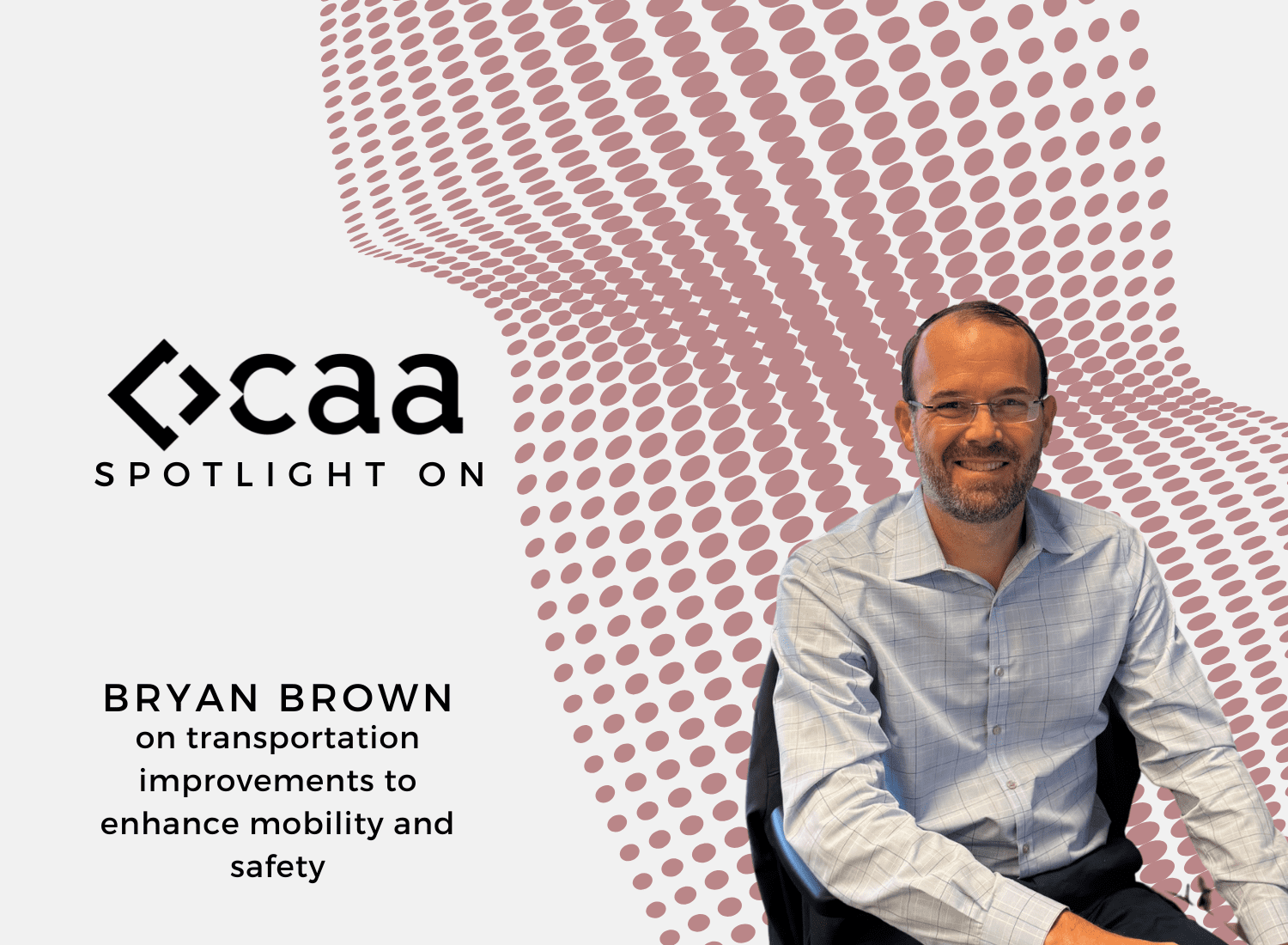 February 2025 — Invest: spoke with Bryan Brown, president of the Energy Corridor, about the district’s growth and initiatives, including updating its service plan, improving transportation, and hosting community events. Brown also discussed sustainability and supporting the energy transition through partnerships and innovation.
What initiatives have you prioritized to boost the district’s appeal to businesses and investors since starting your new role?
I’m less than a year into the job, still learning, but the team in place is solid and made it easy to hit the ground running. The first task was preparing the 2025 budget, approved in November. Our biggest initiative for 2025 is updating the district service plan, required every 10 years by Texas state legislation. This plan outlines our agreement with commercial property owners, who fund our budget through assessments. We use these funds for projects like public safety, beautification, and maintenance.
If we don’t update the plan, we lose the ability to assess property owners, effectively ending district operations. The draft is ready, and the board will consider it in February. Once adopted, we’ll collect signatures to finalize it. This is critical for our continued existence.
Other projects include transportation improvements to enhance mobility and safety, with bids for contractors underway. We’ve also redesigned streetscape and directional signage to align with our brand, reinforcing the Energy Corridor identity.
We host two annual community events: Energyfest in April, featuring live music, games, and a beer garden, and a holiday tree lighting in December with a 40-foot tree visible to 71,000 daily commuters. Last year’s tree lighting drew 2,500 people, and we’re already planning for 2025. These events celebrate the community and showcase local businesses.
What makes Houston an ideal market for people and businesses to locate, relocate, or to expand?
The Energy Corridor District is thriving, building on the momentum of the Greater Houston region. Houston has become special not just to locals but to the country and the world over the past 15 to 20 years. Its diverse economy, spanning energy, healthcare, and banking, is strong and well-managed. Houston’s economy now tracks, and sometimes leads, the national economy, rebounding faster than many other cities.
The heart of Houston is its people. With significant migration and immigration, the city attracts talent from everywhere, driven by its robust economy. Houstonians’ resilience and can-do attitude make the city special, especially in the face of challenges like tornadoes, floods, freezes, and power outages. The city consistently bounces back stronger.
We partner with agencies focused on the Greater Houston region, including Houston Stronger, a nonprofit advocating large-scale solutions to flooding. These efforts require multi-billion-dollar investments, beyond any single entity’s capacity. The Energy Corridor District, adjacent to two major reservoirs, was heavily impacted by Hurricane Harvey and other flooding events. While we’re sensitive to these issues, solving them requires collaboration with partners like Houston Stronger, which prioritizes the region’s best interests.
What makes the Energy Corridor an attractive location specifically for businesses?
The Energy Corridor is quite hot right now, especially in the office market. Vacancy rates are consistently below 10%, in the single digits, while other parts of the city and country face rates of 20-30% or more. Thankfully, we’re not experiencing that. We’re hot, with 27 million square feet of class-A office space. A trend in the real estate market is the “flight to quality,” with businesses moving from older Class-C buildings to Class-A spaces. The Energy Corridor is new, and virtually all our office space is Class-A, positioning us perfectly.
We also have over 19 Class-A apartments in the district, offering great places to live. Geographically, we’re the population center of Houston, as the city has expanded westward. Over 50% of Houston’s highly skilled STEM professionals — mathematicians, scientists, architects, engineers, and doctors — live within a 30-minute drive of the Energy Corridor. Additionally, 67% of district residents have at least a college degree, up to Ph.D.s. This highly educated, talented population feeds companies relocating here.
The community offers high-quality housing, new neighborhoods, excellent schools, and a mix of hospitality options like restaurants and bars. Companies want to relocate here to better serve employees, avoiding Houston commutes and providing good living conditions. Our tagline, “Thrive Here,” reflects everything needed to thrive, making the Energy Corridor special.
Could you share more about the trends you’re seeing in the district, beyond the office?
There’s a lot going on. The office market is strong, with significant growth in new businesses coming to the district last year. We’re also starting to see interest in multifamily rental and ownership, with potential for condo developments. A developer is converting an office building on the old BP site to residential, generating regional interest.
Public safety is a major focus. Like other major metros, Houston faces challenges with homelessness, especially in Sun Belt cities. We partner with groups like the Coalition for the Homeless and West Houston Assistance Ministries to support those experiencing homelessness in the district. We also work to keep the area clean and safe.
Our partnership with the Harris County Precinct Five Constable’s Office provides dedicated officers in the district Monday through Friday, morning and night. Their average response time is 92 seconds, compared to the Houston Police Department’s 7-10 minutes. This gives residents and business owners confidence in the district’s safety.
Are you also seeing a trend toward improved walkability and mobility in the district, alongside the shift to class-A housing and offices?
The district has always focused on pedestrian safety. Our mobility safety projects are designed to ensure pedestrians can safely traverse the area. We’re partnering with Harris County Precinct Four on a multimodal improvement project along Park Row. The project includes a 10-foot-wide shared-use path for bicyclists and pedestrians, spanning over two and a half miles and terminating at a Spring Branch ISD high school. It’s a Safe Routes to School initiative, encouraging exercise and community interaction. Design is set to begin in May 2025 with construction expected in 2026. The project is a 80-20 cost share with the precinct, which is leading the effort. Through partnerships like this, we aim to make the area more walkable, safe, and accessible, offering alternatives to driving.
How do you see the Energy Corridor evolving within the next three to five years, and what will ensure its success?
The future of the Energy Corridor District and Houston is bright. Wise decisions have set us up for long-term success. However, challenges include sustaining growth as property values and the economy plateau after an incredible run. Sustainability will be key.
The energy transition movement is fascinating, with stakeholders and resident companies heavily investing in it. While tax rolls are dominated by giants like ConocoPhillips, BP, and Shell, many ancillary support businesses in the district also play a crucial role. These smaller vendors support the big energy companies, and we’re at the epicenter of this evolving story.
Though not in the energy business ourselves, we facilitate discussions and partnerships through quarterly events, convening industry leaders to explore ways to further their mission. I’m tremendously excited about the district’s future.
For more information, please visit: