Spotlight On: Buddy Dyer, Mayor, City of Orlando
Key points:
- Orlando is managing rapid growth by streamlining development, expanding housing supply, and investing in regional mobility like SunRail and airport connectivity.
- Downtown redevelopment is centered on walkability, green space, and mixed-use projects that strengthen livability while protecting neighborhood character.
- The city is positioning for future jobs through advanced mobility, tech innovation, and public-private partnerships that support long-term economic resilience.
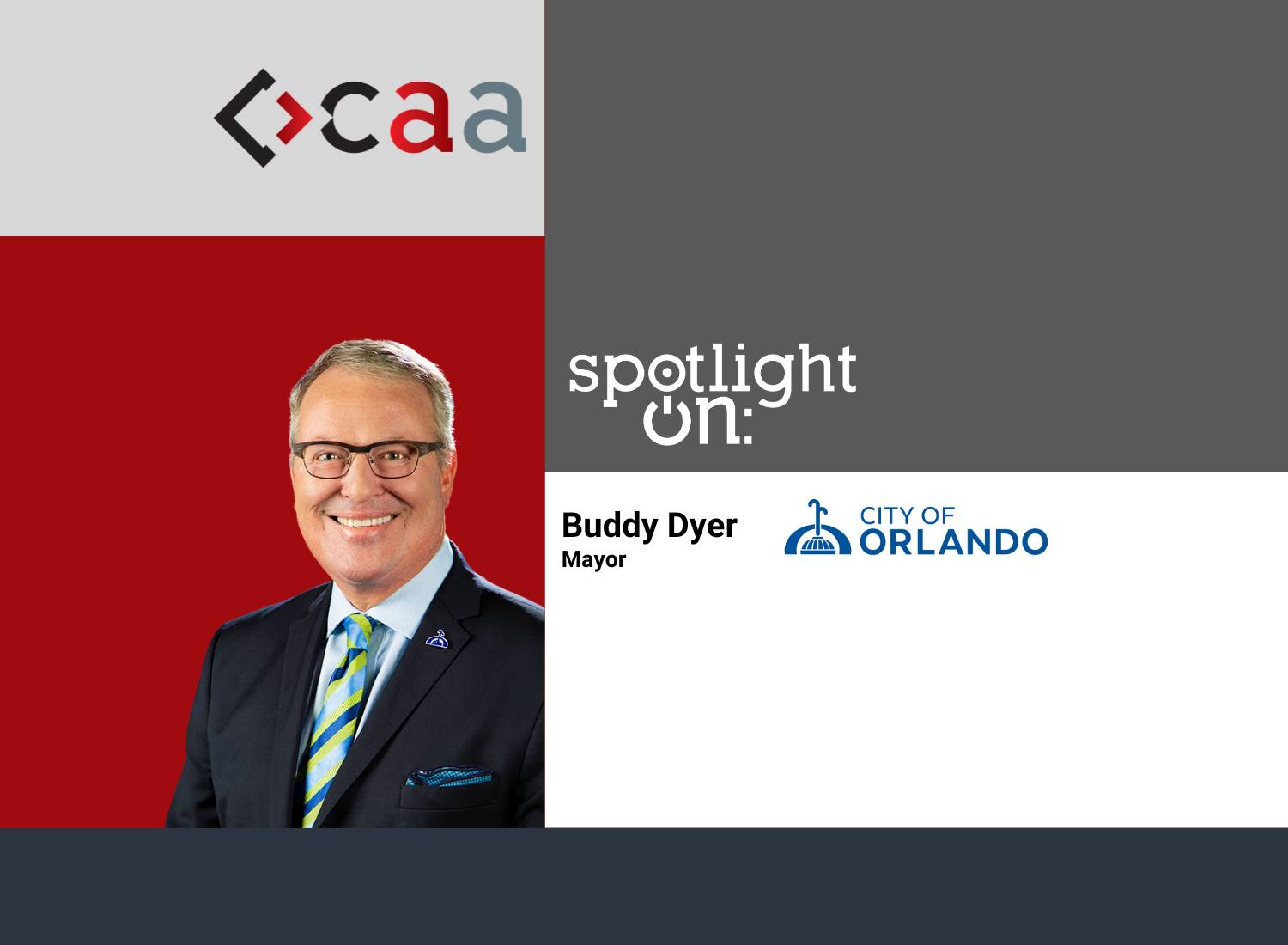 February 2026 — Invest: spoke with Orlando Mayor Buddy Dyer about managing sustained growth, expanding regional mobility, and guiding downtown redevelopment while protecting neighborhood character. “Our idea is to change all of downtown into a park,” Dyer said.
Join us at caa’s upcoming leadership summits! These premier events bring together hundreds of public and private sector leaders to discuss the challenges and opportunities for businesses and investors. Find the next summit in a city near you!
How has the past year been for Orlando, and what does it reveal about changes in the regional economy?
Orlando continues to be one of the country’s largest growth markets. In my 23 years as mayor, we have consistently been in the top tier for population growth and other measures, which creates a constant planning challenge: we have to manage growth responsibly.
The most acute pressure point is housing. We need more units for a growing population, and prices have risen across the spectrum, from affordable housing to higher-end product.
We have been working to streamline city processes tied to permitting and zoning so it is easier to do business with the city. The goal is to keep Orlando’s quality of life strong for long-time residents and newcomers alike.
We are also trying to reduce friction in the development pipeline. Permitting, inspections, and review timelines matter, especially when the market is under strain, so we have been updating internal processes to be more predictable and responsive while still protecting standards.
What recent successes best reflect Orlando’s effort to support growth with balanced infrastructure and public services?
Transportation is a major focus. Regionally, the expansion of SunRail is one of the most important efforts underway. SunRail currently runs 61 miles north to south through Volusia, Seminole, Orange, and Osceola counties.
A critical next step is connecting SunRail to the airport. Our airport is the busiest in Florida and among the busiest in the country, which puts pressure on parking and access. Brightline also connects at the airport, and local rail connectivity would help integrate that system.
Beyond the airport connection, we want to expand SunRail east and west to better serve job centers and the tourism corridor, and ultimately support the broader regional rail network.
How have Orlando’s tourism and sports momentum strengthened the city’s national and global presence?
Sports is a defining part of Orlando’s visitor economy. We’ve been recognized nationally for our ability to host events, and we host thousands of competitions and tournaments every year. We host events across every level, from youth and amateur tournaments to collegiate bowl games, along with professional sports like soccer and basketball. We also host signature events like the Florida Classic, a matchup between two historically Black colleges that draws visitors and community pride.
What makes sports especially important is consistency. Even in periods when discretionary travel tightens, families often still travel for youth sports, and those trips also support local hotels, restaurants, and venues. Many visitors who come primarily for theme parks also add a game or event to their itinerary, which broadens the economic impact.
Orlando also benefits from year-round outdoor recreation, from golf to water activities, and seasonal attractions like manatee viewing in the springs. In cooler months, the manatees move into warmer waters, and that creates a distinctive eco-tourism experience that surprises people who only associate Orlando with theme parks. We also host major indoor and outdoor concerts, which helps keep downtown and the broader region active throughout the year.
What progress has Orlando made in building its tech and future-jobs ecosystem?
We are focused on being future-ready. We want to position Orlando to attract and grow industries tied to the jobs of the future.
A major priority is advanced air mobility, along with related innovations like drone deliveries and autonomous vehicles. We are experimenting with these technologies, and Waymo is expected to begin operating here in the first quarter after extensive testing. We have also been pushing to be a national hub for advanced air mobility, and the airport’s planning reflects that ambition.
The airport master plan includes designated hubs for advanced air mobility, including space near Terminal C and the East Airfield, which has roughly 500 acres of undeveloped property. The details of how the network scales are still evolving, and federal approvals will shape timing and routes.
We also remain a national center for modeling, simulation, and training. All five commands from the various military branches are located in Central Florida, and a lot of people are surprised by how robust that ecosystem is. That capability also complements the region’s entertainment and immersive-technology strengths, where theme parks operate on the cutting edge of experience design and IT.
What downtown projects and planning priorities are most catalytic for Orlando’s next phase of growth?
Downtown has regained momentum as development interest has strengthened. One of the most significant opportunities is the nearly 20-acre former Orlando Sentinel site in the heart of downtown. A private development group is working with the city on a plan for that property, and the scale and location give it the potential to reshape the urban core. They are collaborating with Heatherwick Studio on design concepts, which is part of why there is so much excitement around what the site can become.
Another major project is Westcourt, near the Kia Center. Plans include a Kimpton Hotel, office uses, an entertainment component, and structured parking, adding energy and mixed-use activity to the west side of downtown.
Guiding that growth is DTO Downtown Orlando 2.0, a master plan focused on walkability, green space, and a stronger downtown experience. We want downtown to function more like a place to live, gather, and spend time, not just a place to pass through.
That includes expanding access to parks and public spaces, building on anchors like Lake Eola, and evaluating street conversions, including shifting some one-way corridors to two-way streets to support small businesses and calm traffic.
How is the city approaching downtown revitalization while also supporting neighborhoods and quality of life?
Downtown planning is anchored by a simple idea: Our idea is to change all of downtown into a park, so you can’t walk very far without reaching green space. That approach builds on existing civic assets and helps create a more connected, livable core.
At the same time, we are looking carefully at how streets function. Converting certain one-way corridors back to two-way can help small businesses, encourage drivers to use I-4 instead of treating downtown streets like thoroughfares, and improve the experience for residents and visitors.
How is the city balancing infill housing needs with neighborhood character near downtown?
Orlando is unusual in that you can reach established single-family neighborhoods within a short walk of City Hall in multiple directions. Many of those neighborhoods are protective of their character, and some have homes more than 100 years old.
At the same time, we know additional housing supply is necessary, including more multifamily options, so our work is centered on compatibility: how to add housing in a way that fits the scale and fabric of existing neighborhoods. That is where community input, design standards, and careful planning become essential in the long term.
What role are public-private partnerships playing, and what priorities will define the next two years?
Public-private partnerships are essential to delivering major projects, and several of the downtown and neighborhood redevelopments underway reflect that approach. Beyond the downtown projects, we’re also working on initiatives like the RoseArts redevelopment in the Rosemont neighborhood, which is transforming a former golf course site and bringing new community-focused investment to the area.
In my final two years of this term, two priorities stand out. One is continuing the work needed to advance SunRail connectivity to the airport. The other is delivering the permanent Pulse Memorial. The city assumed responsibility for the effort after the original foundation failed, and we are now moving through design and construction planning, including demolition of the existing building. Our goal is to complete the memorial in the summer of 2027.
Want more? Read the Invest: Greater Orlando report.