





Spotlight On: Cherelle Parker, Mayor, City of Philadelphia
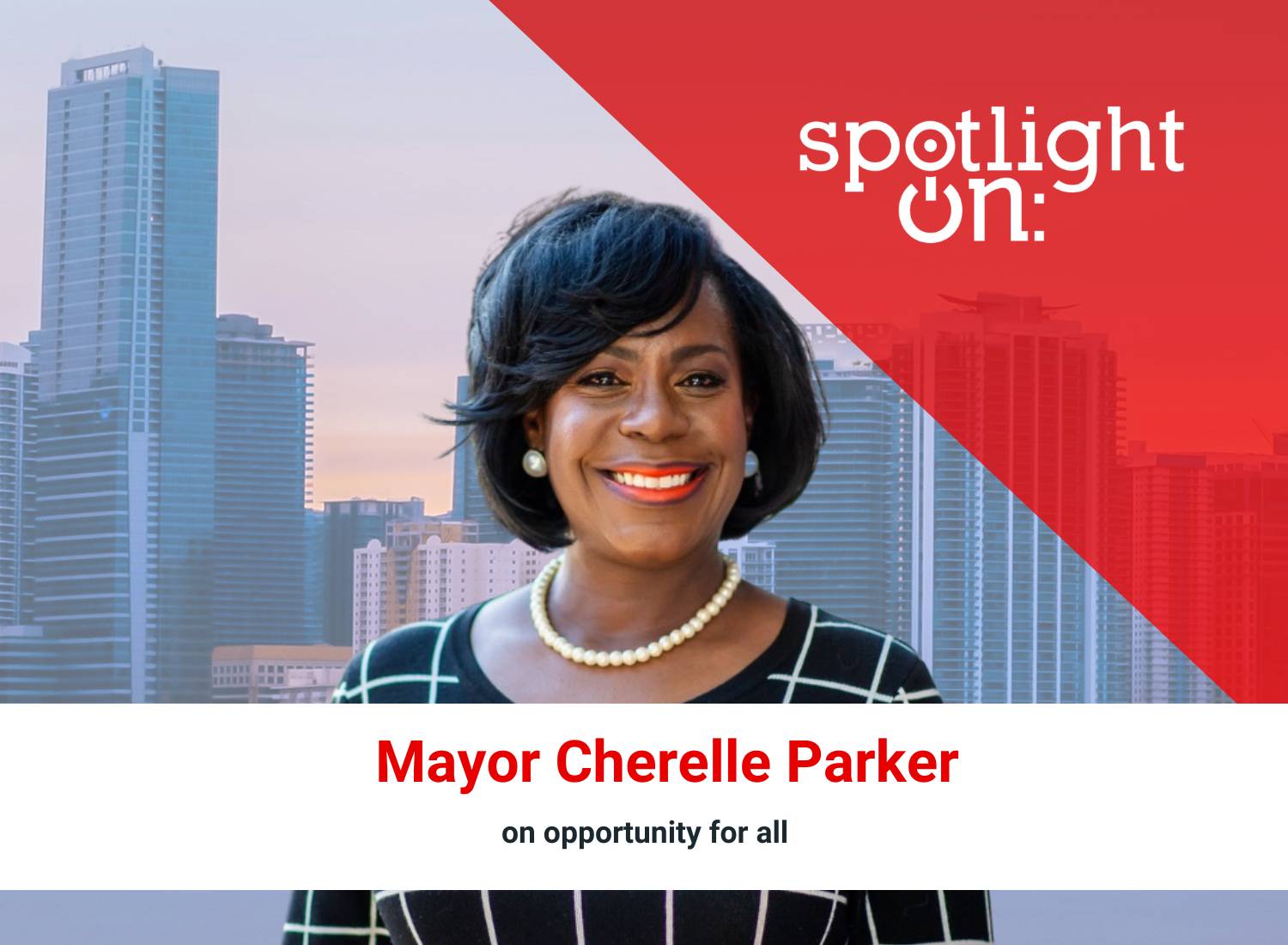 September 2025 — In an interview with Invest:, Mayor Cherelle Parker of the City of Philadelphia discussed her administration’s focus on public safety, inclusive economic growth, and citywide revitalization. “We are confronting deep, complex issues with solutions rooted in care, accountability, and coordination,” she said.
What changes over the past year have most impacted the city, and in what ways?
Since taking office, our agenda has been laser-focused on making Philadelphia the safest, cleanest, and greenest big city in the nation, with access to opportunity for all. We want residents to feel government working for them, where they live.
People are now seeing results. Our municipal employees and the Clean and Green Cabinet, which includes local, state, and federal entities and the nonprofit sector, are working together. No one is operating in silos.
We are challenging the status quo and rethinking how we deliver services. A visit to Amazon’s facility in Southwest Philadelphia showed me what efficiency can look like, and that experience reshaped expectations. Whether it’s ride shares or deliveries, people now want clarity, speed, and accountability. That same standard should apply to government services, and we’re aligning operations with those expectations.
What progress are you most proud of so far in advancing that agenda?
Improving public safety stands out. Whether during the campaign or now as mayor, residents have been clear: They want safer communities and more trust. They expect results.
And the results are real. In 2024, homicides dropped 36% and shootings declined 37%. That trend continues in 2025. Through May, homicides fell another 14.6%. Compared to 2021, we’re seeing about one-third as many homicides.
This progress stems from a clear strategy I call the PIE: prevention, intervention, and enforcement. It’s holistic and coordinated. More than 200 officers have been assigned to community policing across neighborhoods to strengthen trust and visibility.
We’ve also invested in programs targeting the root causes of violence — poverty, limited opportunity, and mental health needs. Our Group Violence Intervention program, or GVI, was expanded to support youth through Group Violence Intervention Juvenile (GVIJ). At the same time, we’ve worked to improve access to behavioral healthcare so people in crisis get support, not criminalization.
Community partnerships are key. In 2025, 147 grassroots organizations received nearly $24 million in grants to support violence prevention. We’re increasing that to $30 million for 2026. These efforts are essential to building safe, resilient neighborhoods.
Technology also plays a role. We’re expanding body-worn cameras and crime analytics to improve accountability and responsiveness. Community programs like Town Watch, Safe Routes Philadelphia, and integrated neighborhood services help residents take an active role in public safety.
Finally, we are focused on youth engagement. Mentorship, job training, and recreational programs like PAL and Little League provide connection and structure. When young people are engaged in positive spaces, they’re less likely to get pulled into crime. We want them to feel seen, supported, and part of something larger than themselves.
What regional or national trends are shaping Philadelphia’s economic growth and workforce priorities?
Philadelphia now leads major U.S. cities in reducing violence. A city that is safe, clean, and green attracts investment. We’ve taken steps to support growth by reducing both the business income and receipts tax and the wage tax in the same budget. That proves we are serious about being business-friendly.
We’re also working to eliminate what we call the “time tax” — the long delays businesses face when trying to get permits or approvals. Removing these barriers helps the private sector move faster.
Economic mobility is another challenge. Philadelphia consistently ranks low in national data. Our response is a workforce strategy focused on job access and training. Through Philadelphia Works and our Workforce Investment Board, we’re supporting training and placements in healthcare, tech, and the trades. I recently visited the Navy Yard, where young people are preparing for jobs paying $60,000 to $70,000 with full benefits. That’s what opportunity looks like.
Government must also lead by example. Public service has long been a path to the middle class, especially for Black and Brown communities. Instead of seeing job vacancies as a crisis, we saw a chance to create access. That’s why we launched the City College for Municipal Employment, the first program of its kind in the nation. It prepares residents for living-wage jobs in city government, including training in education, health, and hospitality.
We’re also working with universities, hospitals, and large employers to align hiring and procurement with local priorities, especially for minority- and women-owned businesses. Whether the issue is housing, climate, or infrastructure, these challenges cannot be addressed in isolation. They require cross-sector collaboration. That’s how we move forward effectively.
How do you see the H.O.M.E. Housing Plan creating meaningful change in housing, and what does success look like?
While running for office, we studied the city’s housing needs and waiting lists. That analysis led us to set a bold goal: to build and preserve 30,000 units. Some said not to name a number in case we fell short, but I believe we have to think big.
With City Council and Council President Kenyatta Johnson, we launched the $2 billion H.O.M.E. Housing Plan, Housing Opportunities Made Easy, to address Philadelphia’s affordability crisis. The plan supports both new development and the preservation of existing housing while expanding access across income levels.
It serves residents earning from 0 to 120% of the area’s median income. This is not about choosing between the most vulnerable and working families. Everyone deserves housing stability. The H.O.M.E. Housing Plan includes targeted programs for renters, first-time buyers, and long-time homeowners.
For example, the Basic Systems Repair Program helps residents who own their homes but can’t afford essential repairs. Many are working and paying their bills but still don’t qualify for traditional loans. This program fills that gap.
We also proposed One Philly Mortgage to help renters become homeowners. Some are paying more in rent than a mortgage would cost but can’t get past credit or underwriting barriers. This program aims to provide down payment and closing cost assistance to help them purchase a home.
This work is personal to me. I didn’t grow up with anyone who could help me buy a home, and many Philadelphians are in the same situation. The H.O.M.E. Housing Plan is built for them. It reflects our larger vision of a city that is safe, clean, green, and filled with real opportunity. Housing is a cornerstone of that future, and this plan helps make it possible.
How is Philadelphia preparing for 2026’s global events, and what are your priorities for ensuring it leaves a lasting impact?
In 2026, our country turns 250, and that celebration begins here in Philadelphia, the birthplace of democracy. We’ve already shown we can deliver world-class events, from national political conventions and the Pope’s visit to the NFL Draft. That legacy continues with the FIFA World Cup, MLB All-Star Week, major conventions, and the official 250th anniversary events citywide.
Our approach is comprehensive. While Center City will attract international attention, we’re committed to making sure every neighborhood feels part of the celebration. This is a citywide moment, not just a downtown event. That’s why we’re investing in public spaces and commercial corridors throughout the city.
Our One Philly 2.0 budget includes more than $100 million for 2026 preparations, covering neighborhood beautification, key infrastructure like I-76 and I-95, graffiti removal, and landscaping. These efforts are about more than aesthetics. We are preparing not just for visitors, but for ourselves.
This milestone ties directly to our vision: a safe, clean, and green Philadelphia with opportunity for all. Welcoming millions of guests starts with getting our own house in order. That’s the standard we are holding ourselves to.
How is your administration addressing complex challenges like addiction, homelessness, and behavioral health with a long-term strategy?
Public safety was the immediate priority when we took office, but we also inherited longstanding challenges like addiction, homelessness, and behavioral health. Neighborhoods like Kensington have been overwhelmed for years. We made a choice not to look away.
Instead, we brought every relevant stakeholder together and launched a coordinated citywide response. In my administration, we call it a “Cherelle Parker meeting.” If you touch the issue, you’re at the table. That’s how we created Riverview, a repurposed city-owned facility providing long-term care, treatment, and housing for people in recovery.
Short-term rehab is not enough. Many people relapse simply because they return to the same environment with nowhere else to go. At Riverview, they get healthcare, therapy, and a stable place to live for up to a year. That stability is essential for long-term recovery.
This work relies on public-private collaboration. Partners like the Black Doctors Consortium, H.O.M.E. Housing Plan, and local providers helped us build a model focused on dignity and sustainability. We are confronting deep, complex issues with solutions rooted in care, accountability, and coordination.
Philadelphia is not alone in facing these challenges, but we intend to lead by showing what it looks like to respond with urgency and unity.
How does investment in education fit into your broader strategy for workforce development and inclusive growth?
Education is central to building a skilled workforce. If a business wants to expand but finds the local talent pool lacking, that becomes a major obstacle. You cannot build economic opportunity without investing in education.
We addressed this by increasing the share of real estate taxes directed to the School District of Philadelphia. Over five years, this will generate an additional $124 million. With assessment increases, the district receives over $280 million annually through the city budget.
We also launched extended day and extended year programming. In higher-income areas, after-school enrichment like robotics, tutoring, and language support is standard. Too many Philadelphia students lack access to those resources. Now, over 40 schools offer extended hours and programs during breaks, giving more students a safe, supportive environment beyond the school day.
This work is about fairness. Every child deserves a chance to succeed, no matter their ZIP code. Education is not separate from workforce development or public safety. It is the foundation for building a stronger and more inclusive city.
For more information, please visit: