






Spotlight on: Chris Wallace, President & CEO, North Texas Commission
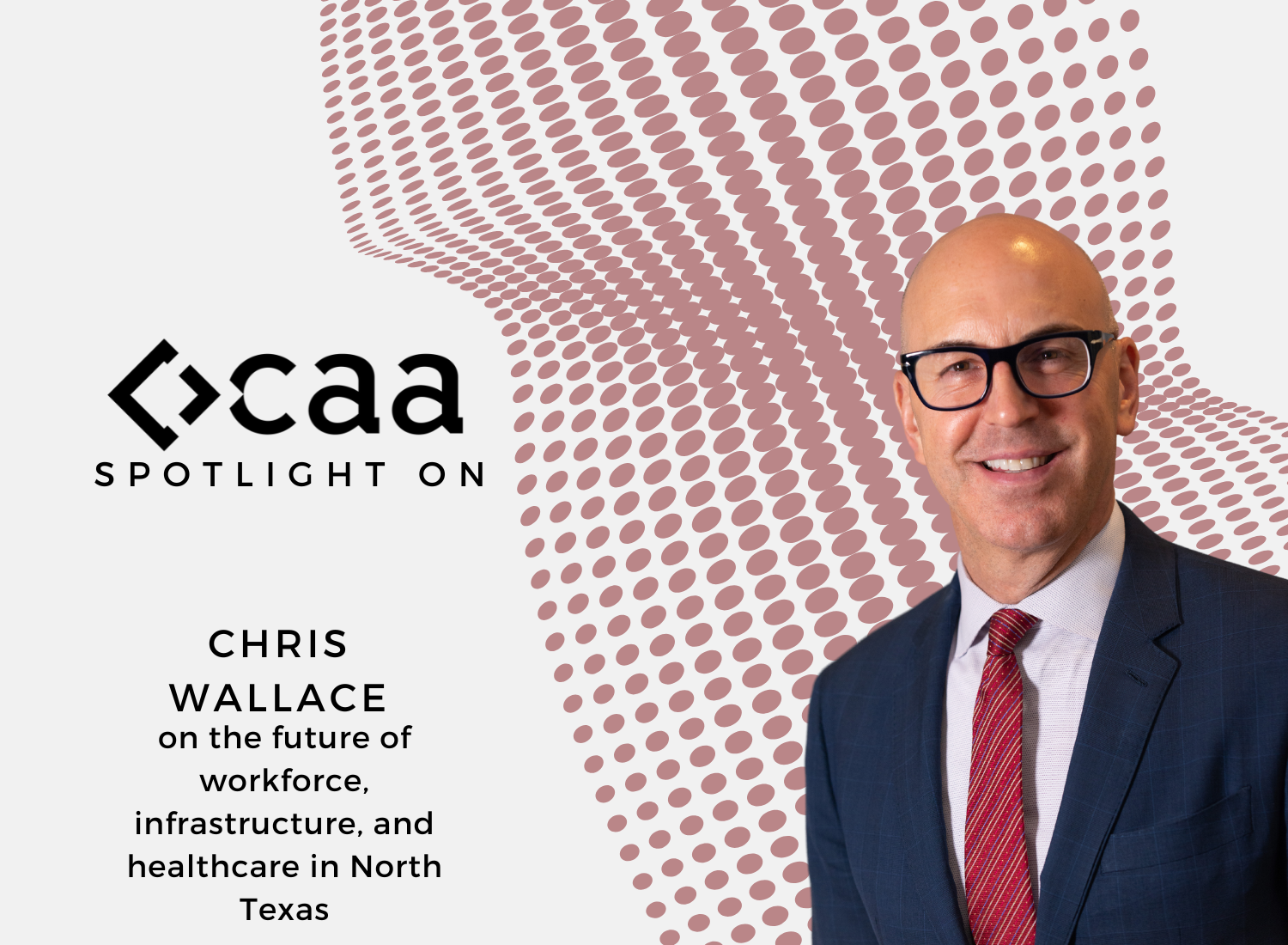
March 2025 — Chris Wallace, president and CEO of the North Texas Commission, told Invest: in an interview that workforce, infrastructure and healthcare will be at the core of the update of the organization’s 2050 plan. He also highlighted the importance of funding public schools to guarantee workforce development, the growth of the biotech, defense, aerospace and aviation industries in the region, and the challenges posed by housing issues.
What have been some of the significant milestones or achievements for the North Texas Commission in the past year?
We have launched a large initiative to update our region’s 2050 plan, which will be the common denominator for many projects. Economic development corporations, cities, and companies need a workforce, infrastructure and healthcare and trauma services for their employees, so those imperatives will be at the core of the update. Several regional leaders in the public and private sectors were called on to develop the 2050 plan 12 years ago, but many of them are not around anymore. That makes the updating initiative of the North Texas Commission and the Council of Governments critical.
What is the commission’s strategy to tackle workforce, infrastructure, and healthcare issues in its 2050 plan?
During our next forum we will have frank discussions with experts in workforce development and workforce pipelines to identify gaps and ensure the fulfillment of the future workforce needs of our employers. We will have another forum in October that will bring together the CEOs of our major hospitals as well as trauma care experts. The goal is to bring leaders up to speed on where our healthcare gaps are, which includes trauma services and mental health. In terms of infrastructure, transit is a big issue in North Texas. We have three transit agencies that do not work together at times because of the different types of assets on the ground. Additionally, broadband, water supply and electricity are among the infrastructure areas that we are tackling.
How is the North Texas Commission working toward addressing housing affordability in North Texas?
Many of our cities are working on housing affordability and attainability within their jurisdictions, but we look at a regional discussion or approach to land use and housing issues. We have some traction in the interim charges for the upcoming legislature session that focus on housing affordability. We may see more bills about the role of the state in housing affordability as well as bills that deal with land use being introduced in the next session. We will watch that closely with our cities as it is very important.
What steps has the commission taken to address workforce challenges in the region?
A lot of the workforce pipeline discussion is related to funding for basic allotment, which includes the school voucher debate and school finance debate. That is related to funds for our public schools, which is where the volume of workforce for our employers is. Around 88% of Texan students are in public schools. They are our future workers, so it is critical to ensure that public schools have the resources to train them. Unfortunately, we have not had any reset of school finance revenue to our school systems from the state, so they are still playing with 2019 numbers. There has been no increase to account for inflation, which has caused our districts to suffer.
Nevertheless, there has been a debate around vouchers and education savings accounts that involve taking taxpayer dollars and granting them to the private sector to offset education from public schools. There may be a place for some of that or for a partial formula but no decision has been reached about that formula or about placing guardrails to protect taxpayers. Many states that have adopted such a formula have clawed back because they are budget-strapped and cannot continue paying out those dollars for the ROI that they receive.
What is the role of community colleges in the development and training of a workforce?
The community colleges do a good job of linking people coming out of high school who need a certificate or additional training but who may not want or qualify for a four-year degree. We saw legislation in the last couple of legislature sessions that has helped community colleges from a funding standpoint. Our large systems in North Texas were already really practicing that formula, so they welcomed that new piece of legislation. We will see some tweaking of that in the upcoming sessions. Coordination between the Texas Education Agency, the Texas Workforce Commission, and the Higher Education Coordinating Board is vital. We need to ensure that legislators understand that in terms of funding.
What trends has the North Texas Commission identified in the regional business environment?
The biotech, defense, aerospace and aviation industries are growing a great deal in North Texas, and financial services companies continue to move here. Some of those top industries are experiencing a great deal of turnover, including in their top leadership. Many publicly traded companies that are based in North Texas are volatile. For instance, Boeing Global Services provides for the entire world from its location in Plano, Texas. We should not take that for granted. Moreover, we aim to promote more manufacturing. In the next legislature session, there will be a bill that helps renew our research and development incentives. That is primarily for manufacturers such as companies like Texas Instruments, Lockheed Martin, Bell-Textron and Boeing.
What are the most important challenges that the North Texas Commission has identified in North Texas?
As our region continues to grow at a rapid pace, more people will move here. That is a good thing, but it also means demand for housing will increase. We aim to promote initiatives to strike a balance between demand and supply where affordability is a major factor, and employees can purchase or rent a home close to where they work. Living expenses play into that as housing is often the largest liability of families. We are seeing how smaller cities are unable to recruit police officers or firefighters because larger cities pay them close to $100,000. Smaller cities have focused on offering advantages such as culture, work climate and schedule flexibility. Nevertheless, the common denominator is that those workers do not live where they work but commute in. Many cities are tackling the housing issue, and the legislature will explore it in the next session.
What are your top priorities and goals for the North Texas Commission in the next two to three years?
Our main goal is to collaborate with the public and private sectors to maintain the economic competitiveness of the region. There are six key components of our economic competitiveness. First is a safe and diversified economy with industries that are forecasted to expand. Second is a growing skilled labor force. Third is a reasonable regulatory climate that enables our region to thrive. Fourth is a rational tax system where there are tax incentives encouraging businesses to come. Fifth is embracing innovation as the products and services of tomorrow are tried, tested, and developed in North Texas. Finally, sixth is easy accessibility where we have the Dallas Fort Worth International Airport as an economic engine for North Texas. As the airport approaches its 50th anniversary and becomes one of the world’s busiest airports, we must ensure that it continues growing.
For more information, please visit: