






Spotlight On: Christi Fraga, Mayor, City of Doral
Key points:
- • Doral is focusing on defining its identity while balancing growth, quality of life, and business-friendly policies.
- • Public safety remains central, supported by proactive policing, visible presence, and community engagement.
- • Long-term strategy prioritizes affordability and diversified revenue to reduce reliance on property taxes.
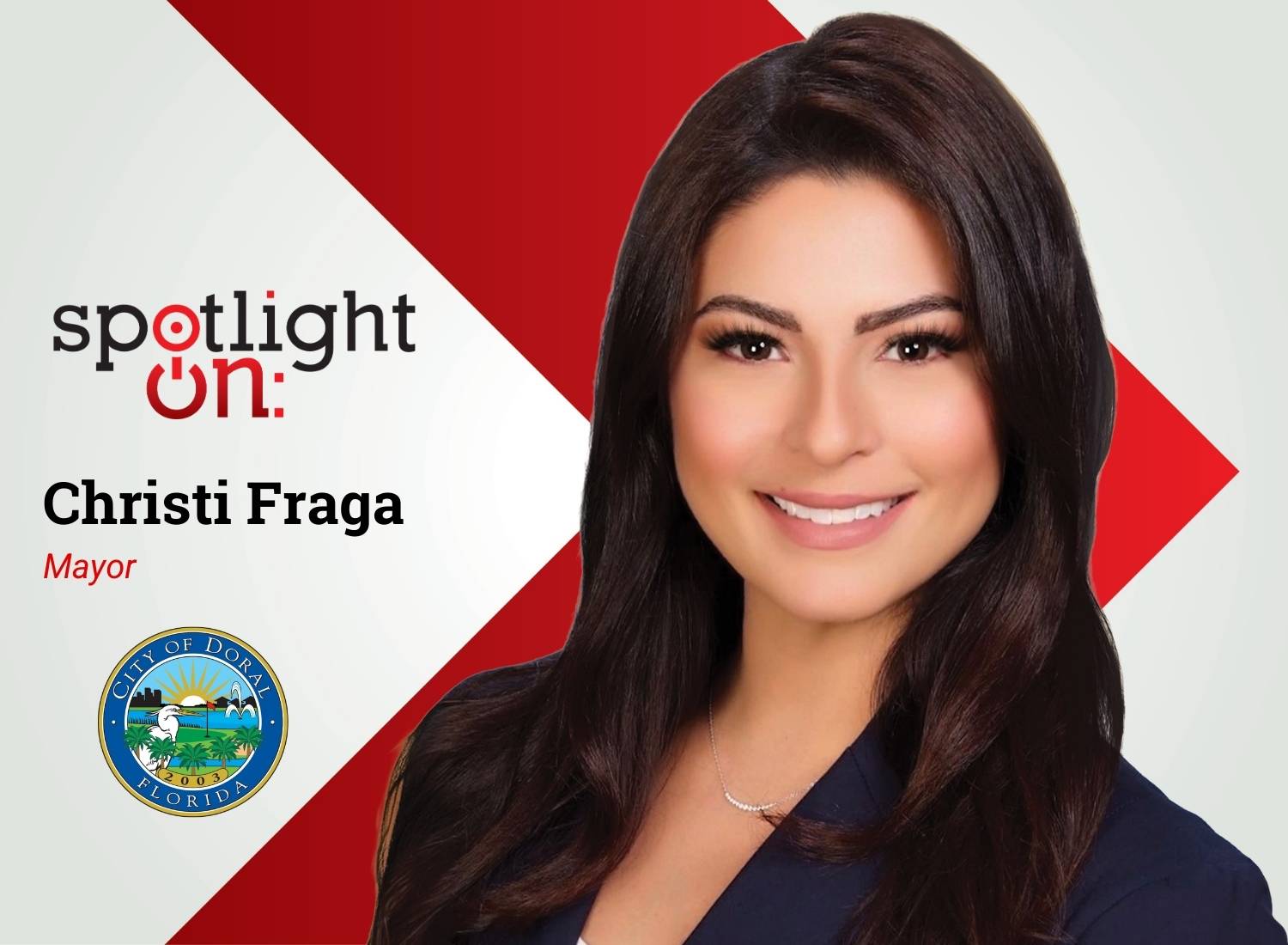 March 2026 — Invest: sat down with Christi Fraga, mayor of the city of Doral, to discuss the city’s evolving identity, public safety strategy, and long-term fiscal planning. “At this stage, our focus is on defining Doral’s identity and what we want to be known for,” Fraga said.
How would you describe your core vision for Doral, and which strategic priorities have guided your administration’s work over the past few years?
Doral has grown into an established community. There was a time when you could say Doral and people would ask where it was, but today the city is recognized across Miami-Dade County for both business activity and quality of life.
Location has been an advantage for us. We are centrally positioned in the county, and we have a strong tax makeup with a healthy balance of commercial and industrial development alongside residential neighborhoods. That mix helps us sustain services while staying focused on affordability and efficiency.
Our work has also been guided by a straightforward idea: residents should be able to live, work, learn, and play in their own city. We have invested in parks and programming, and Doral Central Park has become a regional destination for sports and community events. We are also seeing growth in dining and entertainment, which matters because for years, residents felt they needed to leave Doral to find that social component. Today, places like Doral Yard and a growing mix of restaurants are helping strengthen community life and keep activity here at home. Increasingly, residents do not have to leave Doral.
At this stage, our focus is on defining Doral’s identity and what we want to be known for. Part of that is protecting the basics, including strong schools, safe neighborhoods, and responsive city services. Part of it is making sure that when a business wants to open or expand, the city is a partner and bureaucracy is not a barrier.
This year, Doral also has a chance to showcase itself on a larger stage, with the G20 Summit coming to the city. I see that as an opportunity to highlight the broader economic strength of Miami-Dade, including the commercial and industrial sector that serves as an engine for the county.
Across all of it, our principles stay consistent: transparency, accountability, fiscal responsibility, and a people-first approach. If decisions check those boxes and clearly serve the public benefit, we move forward.
Public safety is a top focus, with specialized initiatives and a visible presence throughout the city. How do these efforts improve safety and residents’ sense of security?
Public safety is our No. 1 priority. Residents should feel secure in their daily lives, and businesses should feel confident that their investment is protected, especially in high-traffic commercial areas.
A big part of our success comes down to proactive leadership in the police department. Our chief is visible and hands-on. He is out in the community and sees concerns firsthand, which makes it easier to respond quickly and effectively.
We have built targeted initiatives around the issues residents consistently raise. One example is traffic enforcement. We created an aggressive driving unit focused on reducing dangerous behavior and preventable accidents, including distracted driving. We have also enforced quality-of-life issues that affect how people experience the city, such as illegal parking in handicapped spaces and fire lanes.
We also emphasize community policing and communication. Officers engage with residents and businesses, and the department puts out information consistently so people understand expectations and safety priorities. That communication matters because education and enforcement work best together.
Visible presence is another component. We maintain police coverage in parks and commercial corridors, and during peak hours, we station officers at major entrances and exits of the city, including key highways and corridors. We also keep officers in parks not only for enforcement, but to connect people to resources when they are vulnerable or in need of support, so issues are addressed early and responsibly. The message is simple: Doral takes safety seriously, and people can expect consistent enforcement.
The outcome has been lower levels of property crimes that concern residents, including vehicle-related theft trends that have affected South Florida more broadly. Our approach is that if someone comes to Doral to commit a crime, they should expect to be caught.
Doral’s communications strategy has drawn attention for being highly engaging and unconventional. Why has that approach been effective?
People are consuming information differently than they did even a few years ago. If the goal is to inform residents, you need to deliver important messages in a way that actually reaches them.
We have found that purely traditional government messaging does not always get the engagement it should, even when the information benefits residents. So we have worked to tell the city’s story in a more modern format, including using trends when they are appropriate and tasteful. We build the message first, then choose the format, so public safety campaigns, city updates, and community reminders remain clear even when the delivery is creative. There is a fine line for government, and we are mindful of it, but the priority is engagement.
When we connect an important message to a format people are already watching, we see higher views and stronger participation. The point is not entertainment for its own sake. The point is that residents absorb the information, remember it, and act on it when needed.
What are your biggest goals for Doral over the next few years, and how do you see the city evolving?
Affordability is one of the biggest challenges facing Miami-Dade County and South Florida. We are seeing young professionals question whether they can stay here long-term, especially when they want to start families. That impacts workforce retention and the long-term strength of the community.
One of the ways we respond as a city is by keeping taxes as low as possible without sacrificing services. We have consistently lowered our millage rate, and Doral currently has the lowest rate in Miami-Dade County. The goal is to ease the burden on taxpayers while maintaining high-quality parks, public safety, and core services.
At the same time, cities have to think carefully about long-term sustainability. Many residents do not realize that municipalities do not receive a share of sales tax. Our primary revenue sources are property taxes, utility taxes, franchise fees, and permits and licensing. Property taxes remain a major portion of the budget, and costs rise every year, from insurance and utilities to supplies and employee benefits.
That reality led us to look at the city more strategically and identify ways to develop revenue-generating assets that also serve a public purpose. We acquired 10 acres of land to expand what the city can do in the future. One concept we are pursuing is affordable senior living, which meets a need we do not currently address well and can also support city revenue over time.
We are also moving forward with a project at Doral Central Park that includes a parking garage and additional retail and civic space that can be leased. It will address parking needs during major events while creating new, recurring revenue for the city.
These are long-term decisions intended to reduce reliance on property taxes and protect services over time. The broader goal is balance: maintain quality of life, stay business-friendly, keep public safety strong, and build a financial model that can support the city as costs rise.
Want more? Read the Invest: Miami report.