






Spotlight On: Dan Fishbein, President, Sun Life U.S.
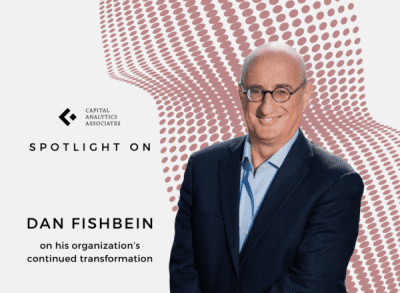 September 2023 — In an interview with Invest:, Dan Fishbein, president of Sun Life U.S., discussed the company’s transformation into a provider of health services and benefits that complement core health insurance and improve health outcomes. He also spoke on how embracing hybrid work models and flexibility has helped the company increase the productivity of its employees and how supplemental health benefits can help employers of all sizes retain and recruit employees.
How important is the state of Massachusetts for Sun Life’s global operations?
Massachusetts has a progressive and collaborative business environment, with a wonderful pool of talent. While Sun Life is a global insurance and financial services company headquartered in Toronto, our U.S. business, which focuses on health and benefits, has our largest office hub in Massachusetts. Sun Life U.S. has been part of the great Boston business community since 1972 and we partner with many Boston institutions to further health causes through philanthropic programs, including diabetes awareness and prevention with the Boston Celtics and Greater Boston YMCA, and working to end the opioid epidemic with the RIZE organization. In addition, the majority of our asset management business operations are based in the United States and headquartered in Boston. So, Massachusetts is a big part of our company.
What are some milestones that Sun Life U.S. achieved in the past year?
Sun Life U.S. is undergoing a couple of major transformations. We have focused primarily on employee benefits for the past several years, but have been transitioning to focus on helping people access the healthcare and benefits they need through services in our benefits offerings such as care navigation and clinical intervention. Our transition took a big step forward during the past year with the acquisition of a Boston-based company called DentaQuest, which is the second-largest provider of dental benefits in the United States and the largest provider of Medicaid dental benefits. This acquisition is a key step toward Sun Life U.S. becoming a bigger part of the U.S. healthcare ecosystem.
The other transformation we’ve undertaken is the rebuilding and reopening of the seven major hub offices of Sun Life U.S. to focus on the future of work. Our offices are not just locations, but tools that people use to do their work. Our offices are revolutionarily different than they were before. They have become meeting places for when people need and want to get together with teams and colleagues. They are also built out to combine the best of what the office used to be with the experiences that people had over the past two years working from home.
We have some individual workspaces, including both quiet and collaborative areas, meeting spaces and social areas. Everybody just comes in and uses the space that they think is most appropriate for what they are doing. We want our offices to be magnets, not mandates. This means we do not require people to come in, so there is no 9-to-5 in the office. We have adopted a hybrid model with tremendous flexibility. Our productivity increased during COVID-19 in this new way of working. We have trusted our employees to figure out how to get their jobs done and have been rewarded with increased productivity.
What are the top priorities of Sun Life U.S. to sustain your growth levels and expand in the near term?
Over the next three years, we plan to continue growing in the direction of becoming a healthcare business. While 10 years ago, we had around $2 billion in employee benefits business, that figure has reached $8 billion through a combination of organic growth and strategic acquisitions. We expect to continue growing and transforming into having our primary business in health-related benefits.
Right now, our primary business is still employee benefits with a growing base of health services, and we serve 50 million Americans. We do not offer health insurance but all the other coverages that make up a benefits plan, including benefits that are complementary to health insurance. Eighty-five percent of our business is health-related. We are in life, dental, vision, medical stop loss, disability and supplemental health insurance. We offer virtual health programs through our benefits as well as care navigation services and support many dental care practices. We provide these benefits and services through employers, industry partners and government programs.
What factors make the Bay State an attractive place for businesses to set up shop and operate?
Massachusetts is a great place to do business because of the talent that is here. A foundational element of that is its great higher education system. There are many great colleges and universities in Massachusetts and especially in the Boston area, so there is a skilled and experienced workforce available. I myself am a graduate of B.U., both undergrad and B.U. School of Medicine.
We have also worked closely with the Massachusetts state legislature on its paid family and medical leave program, which is offered by the state but can also be administered privately by companies like Sun Life U.S. The state’s commitment to helping businesses and workers is very aligned with our goals, so it makes it a natural fit to operate here.
We have about 8,300 employees nationwide, including associates in our partner dental practices and affiliated companies in asset management, and our largest employee base is in Massachusetts.
How has Sun Life U.S. integrated technology to make things more accessible and affordable to its customers?
We have a big commitment to technology and make substantial investments in that area. We have a strong digital platform that we continue to improve and expand so that all of our constituents are increasingly able to work with us digitally in a highly integrated manner. At the same time, we are investing heavily in finding ways to work with the rest of the U.S. healthcare ecosystem, which includes using new technologies such as APIs to move data back and forth smoothly and easily with other partners who are involved in the system.
We have also enhanced our benefits with virtual tools that meet members where they are. These include a self-care platform for group life members and their dependents, virtual behavioral health for those on disability for a cancer diagnosis, and virtual support for those on disability with neck or musculoskeletal issues.
What has the last decade since the beginning of your tenure looked like for Sun Life U.S. and what do you hope to achieve in the next five years?
Our exciting transformation started at the beginning of my tenure 10 years ago. Back then we were a life insurance company that had an employee benefits business on the side. We are now a major employee benefits business and one of the four largest specialty benefits providers in the United States, with $8 billion a year in revenues. With our transition to a focus on healthcare in recent years, my hope for the next five years is to continue growing rapidly and improving and expanding on our services to help people with their healthcare needs.
What is your outlook for the next three to five years?
We are optimistic about our business and have reached key milestones, such as becoming the second-largest dental benefits provider in the United States, one of the 10 largest providers of disability, group life and absence benefits, as well as the largest independent provider of medical stop-loss. We have good businesses in strong positions that we can continue to build on and we will add complementary capabilities to continue our growth trajectory.
For more information, visit: