






Spotlight On: David Armstrong, President, St. Thomas University
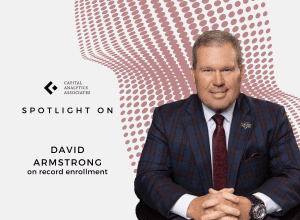 October 2024 — Invest: spoke with David Armstrong, president of St. Thomas University, about the institution’s achievements, trends in the education sector, and its strategic plans for the near term. “Our goal is to manage growth effectively while striving to become one of the Top 20 Catholic universities in the country,” he said.
Over the last 12 months, what have been some of the university’s main highlights and key milestones?
We’ve had our sixth straight year of record enrollment, which is quite impressive. We’ve nearly tripled our total enrollment and quadrupled the number of resident students. We’ve also added about 400,000 square feet of new buildings and field space, with even more to come this year. Our law school welcomed its largest and strongest class in history, and we achieved our highest bar exam ranking ever, coming in second in the state of Florida in February. Our July passage rate was 83%, the highest rate for July results in school history.
We have a solid extracurricular presence at St. Thomas University. Of the 31 sports we offer, 28 went to the national playoffs or sent individual students to national championships. This resulted in an eighth-place finish in the Learfield Cup, an impressive accomplishment given we are part of the NAIA, not the NCAA. There are over 250 schools in the NAIA, so finishing eighth speaks volumes about the success of our athletic programs. We also won our first-ever national team championship in men’s swimming and diving, with the women’s team finishing as runners-up. Our men’s soccer team is ranked No. 1 in the country, and our football team is ranked No. 6, the highest in school history. Our women’s volleyball team was ranked in the Top 10 for the first time ever, and they remain undefeated.
What do you believe is driving this growth in enrollment and the demand for your programs?
I’d attribute our success to a strong enrollment team and excellent academic programs that attract students. Miami’s population growth has also been a key factor, providing a large pool of students. Additionally, we’re expanding into professional development, offering certificates and badges for people already in the workforce looking to advance or transition. Our online programs are also growing, and we’re considering offering a hybrid J.D. law degree online.
What is your view of the education sector in Miami and South Florida?
We strive to be a key player in the regional economy by producing graduates who are well-prepared to enter the workforce. We consistently collaborate with industries, corporations, and other entities to ensure we meet the needs of Miami’s workforce. Additionally, our Institute for Ethical Leadership, College of Law, criminal justice program, political science program, and business programs are all focused on staying ahead of the curve in terms of technological and ethical developments, especially with the rise of AI. We aim to be a leader in ethical AI usage by establishing policies, procedures, standards, and ethical considerations.
With the rise of AI, how is Saint Thomas University preparing students for the ethical challenges that come with these technological advancements?
That’s a crucial point. Our focus on ethical leadership sets us apart, especially as we navigate the complexities of AI. We’re leaders in teaching students how to use AI responsibly. Our curriculum incorporates data analytics, cybersecurity, and ethical considerations in AI, particularly in our law school, where we explore the legal and moral implications of AI usage.
How does St. Thomas University ensure that its curriculum remains up-to-date and aligned with market demands?
We take pride in being very responsive to market needs. Our business program is large and well-connected. I serve on several boards, such as the Florida Chamber and the Greater Miami Chamber, and our staff holds leadership roles in various organizations. This involvement ensures we stay informed about workforce needs, which in turn helps us keep our academic programs relevant and beneficial to our students.
What is the value proposition for universities, especially considering changing student needs and market demands?
A college degree remains one of the best investments anyone can make. Studies show that college graduates earn over a million dollars more in their lifetimes, have better life outcomes, and enjoy longer lifespans. Despite what some media and politicians suggest, the return on investment is still significant. We also emphasize that students should pursue careers they’re passionate about, which leads to personal and professional fulfillment. At St. Thomas University, we’re focused on providing that value, not just in terms of earnings, but in holistic development.
What challenges is the education sector, particularly in Miami and South Florida, facing, and how is St. Thomas University addressing these issues?
Nationally, there’s concern about the “enrollment cliff” due to the declining number of high-school graduates. However, Miami’s population growth provides a buffer. We’re fortunate not to face the same challenges as some states, but we still need to stay vigilant by ensuring our programs offer strong returns on investment. We’ve also focused on adult learners who need additional education or retraining, which is an area of opportunity.
What are the university’s main priorities for the next two to three years?
Our main challenge is capacity. We’ve reached full occupancy, which is a great problem to have. Now, we need to expand. We’re building a new residence hall, which will open in fall 2025, with more to follow. We’re also looking to build more academic buildings and athletic facilities. Our goal is to manage growth effectively while striving to become one of the Top 20 Catholic universities in the country.
For more information, please visit: