




Spotlight On: David Duckworth, Principal – Capital Markets, Avison Young
Key points:
• Pricing gaps between buyers and sellers are keeping South Florida transaction volume subdued.
• Higher rates and slower rent growth are reshaping investor risk tolerance and underwriting assumptions.
• Land scarcity and in-migration continue to support long-term fundamentals, especially in Broward County.
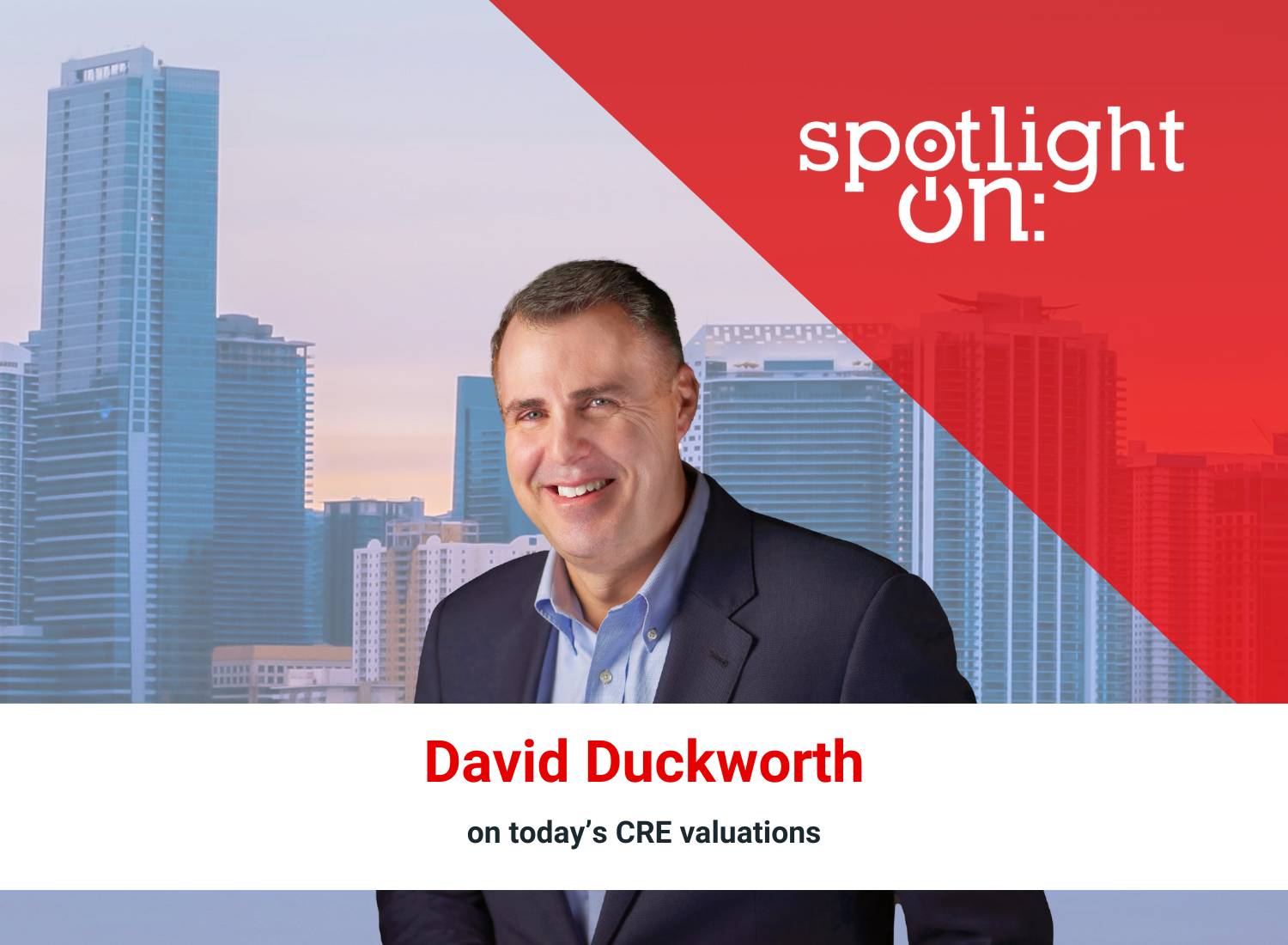 January 2026 — In an interview with Invest:, David Duckworth, principal of the capital markets group at Avison Young, discussed how shifting interest rates, moderating rent growth, and tighter capital markets are shaping investor expectations across South Florida. He noted that buyers and sellers remain far apart on pricing as the market recalibrates, creating a cautious environment even as long-term fundamentals stay strong. “Sellers remember 2022 pricing and don’t want to transact at today’s valuations,” Duckworth said, underscoring the disconnect that continues to define the current cycle.
Join us at caa’s upcoming leadership summits! These premier events bring together hundreds of public and private sector leaders to discuss the challenges and opportunities for businesses and investors. Find the next summit in a city near you!
How have recent shifts in the market influenced Avison Young’s strategy and operations?
If you go back to 2022, the market was incredibly robust. Everything was selling at aggressive prices, and rent growth was strong, especially coming out of COVID. There was so much liquidity in the system and no matter what someone paid on a cap-rate basis, it still felt like a good deal because rental rates were growing 7%, 8%, even 10% a year in some cases.
Over the past two years, a lot of that has changed. Rent growth has largely leveled off across most asset classes while the cost of operating, renovating, and financing has remained high.
Interest rates have been a significant factor. In 2022, borrowers could secure debt below 4%. That jumped into the mid-7% range before coming back down to roughly 6% to 6.5% today. That kind of volatility slows the market and transaction activity over the past two years has been significantly softer as both buyers and sellers waited for clarity.
Most in our industry expected 2025 to be the turnaround year, and it wasn’t. Now most believe the second half of 2026 will bring improved liquidity and better borrowing conditions. Strategically, that means we are focused on preparing assets for the market so sellers can move quickly when interest rates ease. Our goal is to position clients to ride the upward momentum when it comes.
How are investors adjusting their strategies when it comes to pricing expectations and risk tolerance?
Risk tolerance is definitely lower today. Investors are more focused on weighted average lease terms because longer WALTs reduce the need to re-lease space in a period of uncertainty. They’re also underwriting much lower rent growth than in the past. A significant amount of rent appreciation has already occurred since COVID, and without a major economic boom, you can’t assume those same increases will continue.
Because investors expect less rent growth and face higher borrowing costs, they need higher cap rates going in. They’re also analyzing downside risk more carefully. The only major economic boom underway today is in the AI sector, and that doesn’t translate directly into traditional office demand. Those users often require specialized real estate like data centers. As a result, traditional office demand drivers may not be as strong in the immediate future.
All of this has created a disconnect between buyers and sellers. Sellers are generally not overly motivated to sell at higher cap rates, and buyers feel they need stronger returns to offset higher interest rates and slower rent growth projections. Until those expectations realign, volume will remain modest, but as rates come down, that gap should begin to close.
What makes South Florida — and Broward County specifically — such an attractive market compared to other metros?
Broward County is extremely built-out, which is unusual compared to other major metros. Because the Everglades push so far east, the county has the smallest amount of developable land in the tri-county region. What exists today is essentially a small footprint that is already largely spoken for.
That land constraint is a major driver of long-term value. Most new development must be redevelopment. You can’t simply go a few exits up the highway and build out large tracts of land. This is a mature infill market with no large-scale expansion opportunities, even as the population continues to grow.
You see this clearly in areas like downtown Fort Lauderdale and the Las Olas corridor. Thousands of new apartments have been delivered, and they continue to lease up strong. Despite what seemed like potential overbuilding, demand has kept pace. Rents remain solid in these prime locations, which speaks to the strength of the region’s fundamentals.
For that reason, even if certain asset classes — like office — face structural challenges, the broader market remains resilient. Land scarcity and persistent in-migration create a natural floor under property values, and that makes Broward particularly attractive relative to other metros.
How would you describe the dynamics in the multifamily sector?
Multifamily experienced a significant construction boom over the past several years because the economics supported it. Developers added a large number of midrise and high-rise units, and those were largely absorbed. But similar to other asset classes, rent growth has slowed, and occupancy has dipped slightly.
The performance gap between A locations and B/C locations is widening. Class-A assets in highly desirable areas are still able to push rents and maintain high occupancy while B and C locations are experiencing more softness, so investors need to be selective about amenities, updates, and overall desirability.
From a supply perspective, the market is entering a constrained period. Rising construction costs, higher interest rates, and moderating rent growth make it nearly impossible to build a new midrise or high-rise today unless the site is exceptional. As a result, there have been very few new starts over the past year.
That’s good news for owners of existing product. It takes three to four years to deliver a new high-rise, and given how few projects are underway, the supply pipeline will be limited for at least the next three years. Investors who can acquire well-located multifamily assets at a reasonable basis should benefit from a naturally tightening market with less new competition.
What role are international investors playing in your deals today?
Historically, 20% to 30% of our transactions involved international capital. Over the past couple of years, that share has declined significantly. South America, once a major source of capital for South Florida real estate, has been noticeably reduced. Israeli capital remains active, often through U.S.-based family offices, and we’re seeing early signs of increased interest from investors in the Middle East. For example we sold the Champlain towers site to a Dubai based group for $120 million in a cash transaction.
Overall, international investment has been meaningfully lower compared to the prior decade. Some investors are reallocating capital to other global markets, and others are simply waiting for more clarity and better returns in the U.S. market. As conditions improve, we expect international participation to rebound, but for now it plays a smaller role.
Looking ahead over the next few years, what are your top priorities, and what are you watching most closely?
My priority is to continue building strong relationships with major investment funds and family offices and helping clients maximize value when they sell. That part of our business doesn’t change. What does change is the timing of opportunities and how quickly the market can shift.
Interest rates remain the most important factor. Many owners are unwilling to sell at today’s pricing levels. If borrowing costs decline by another 100 basis points, moving debt from around 6.5% toward 5%, deal economics will improve materially. That shift would unlock the pent-up demand from sellers who have been waiting for valuations to move back toward their targets.
We’re watching the market closely and preparing for whatever comes next. There is real light at the end of the tunnel, and as liquidity improves, we expect transaction activity and valuations to increase.
Want more? Read the Invest: Greater Fort Lauderdale report.