






Spotlight On: Edgardo Defortuna, President & CEO, Fortune International Group
Key points:
• Fortune’s customer-first approach and precise market timing set its development strategy apart in South Florida.
• Scarce waterfront land is driving growth toward the Miami River, northern coastal markets, and branded lifestyle projects.
• Growie and next-generation family leadership are expanding access to real estate investment and new asset classes.
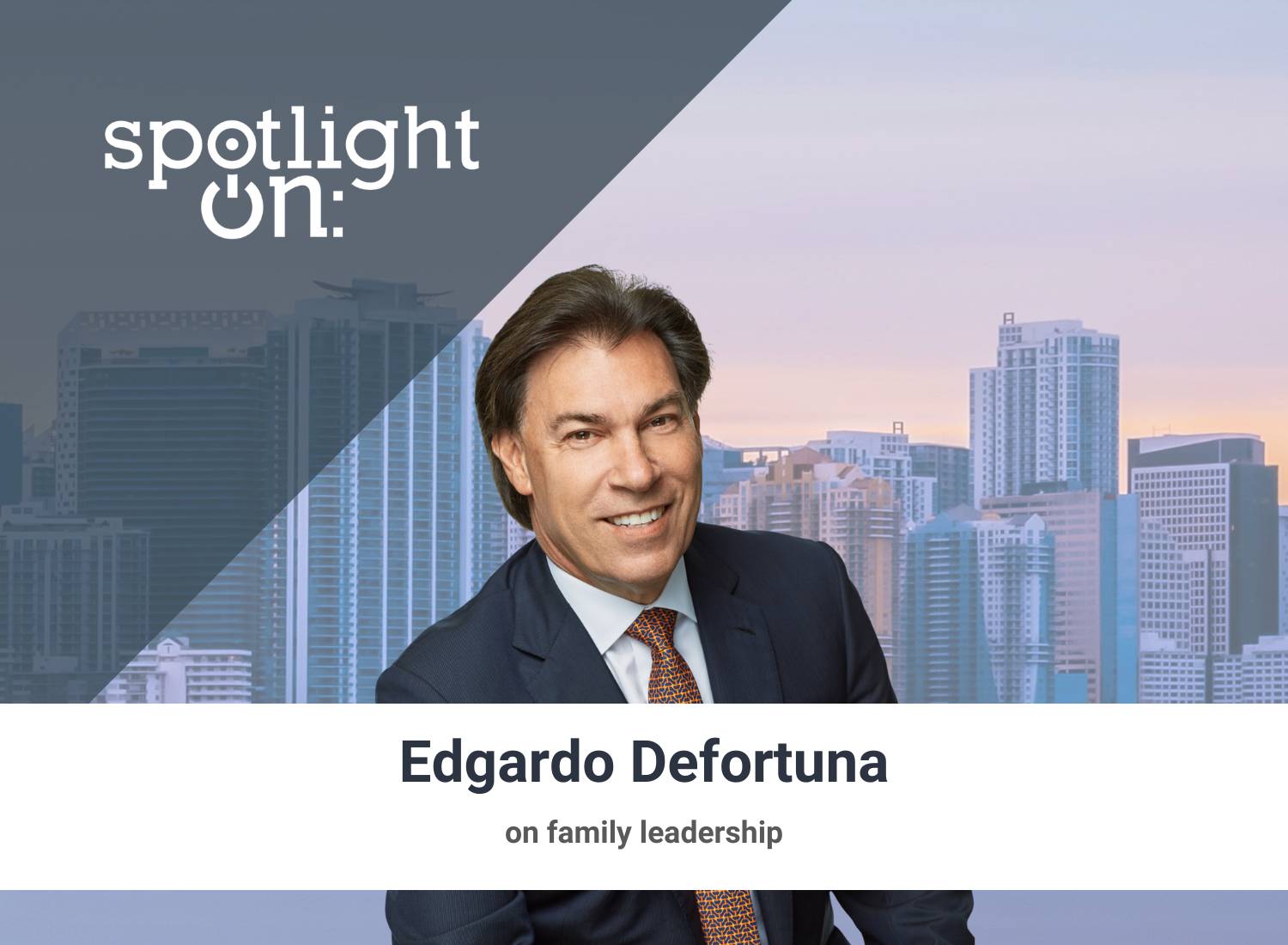 January 2026 — Invest: spoke with Edgardo Defortuna, president and CEO of Fortune International Group, about emerging trends in South Florida’s real estate market, the company’s customer-driven development philosophy, and how technology and family leadership are shaping its next chapter. “Timing is more important today than it has ever been,” said Defortuna.
Join us at caa’s upcoming leadership summits! These premier events bring together hundreds of public and private sector leaders to discuss the challenges and opportunities for businesses and investors. Find the next summit in a city near you!
What would you say sets Fortune apart from other real estate developers in the region?
We have always been deeply focused on the customer. Because Fortune began as a marketing and sales company, our instinct is to understand what buyers actually want and then design accordingly. We study the lifestyle they are seeking, the amenities that matter, and the price points and sizes that work for each submarket. Miami is large but diversified, with districts that attract different profiles of buyers and investors.
We do not develop for ourselves; the customer is the true developer. That is why many major firms hire us for marketing and sales. We contribute from the beginning, helping shape a product based on market intelligence rather than personal preferences.
A common challenge is that some developers hold a fixed idea of what a building should be, regardless of market realities. Early in our history, that disconnect is what pushed us into development. We felt that if we had the information and understood the market, we could create better-aligned projects by listening more carefully.
What areas or neighborhoods have the most potential for growth in the coming years?
Many neighborhoods across South Florida have their own identity and momentum. One area we are especially optimistic about is the Miami River. For years, it was overlooked, but today major projects are redefining it. Baccarat Residences, Viceroy Residences, and our Faena-branded project are clustered at the river’s entrance, creating a waterfront lifestyle that feels fresh and dynamic. We are actively pursuing more sites there.
The beach remains highly desirable, but finding developable oceanfront land is increasingly difficult. Many sites cannot be demolished, or the cost is prohibitive. We were fortunate to acquire what we believe is the last true oceanfront development site in Key Biscayne, near Oceana, which we developed with Eduardo Costantini.
Working with David Martin from Terra, we purchased nearly four acres and are planning a top-tier residential project with a hospitality brand that reflects today’s demand for wellness, healthy living and longevity. It is especially compelling because buyers seeking a southern location near Coconut Grove or Coral Gables have limited beachfront options. I doubt a comparable site will emerge in Key Biscayne for decades.
Beyond that, the Design District and Edgewater continue to evolve, and strong activity is moving north into Hollywood, Hallandale, and Pompano Beach. Our Ritz-Carlton Residences, Pompano Beach project is nearly sold out across both towers and will deliver next summer.
The lack of waterfront land in Miami naturally pushes developers and investors northward. In many ways, Miami’s boundaries extend as long as land and opportunity continue.
How does Fortune approach its partnerships with architects, designers, and other stakeholders?
Everything begins with the DNA of the project: who the customer is, what lifestyle we want to create, and what needs we must meet. For larger developments, we typically invite multiple architects and designers to propose concepts. We want to see who best understands the site, the brand, the market, and the lifestyle we’re building.
Miami attracts exceptional talent, including many younger firms entering the market. Selecting the right mix — architectural, design, and branding — is critical. The project has to reflect both the brand’s vision and the customer’s expectations.
We take longer than most in making these decisions because we focus on detail. The result is a better product, but we also recognize that perfection can slow progress. At some point, you need to move forward.
Timing is more important today than it has ever been. A perfect project launched at the wrong time will struggle, and an imperfect one launched at the right time can succeed. Miami’s market has become less cyclical as more residents live here full-time, but timing still matters. When an opportunity presents itself, you cannot overthink it.
Are there any updates on the Growie project, or on how you’re innovating today?
Growie continues to expand. We have raised more than $5 million through the platform and deployed it in several projects, which has allowed us to test its full cycle — capital raising, token issuance, reporting, and investor experience.
We are now scaling into additional product types. Instead of focusing only on equity in condominium developments, we are adding multifamily and other income-producing assets that can generate quarterly or monthly distributions. Many investors with smaller amounts of capital prefer consistent income rather than waiting years for a condo project to mature.
I recently experienced how compelling Growie can be when I spoke to more than 2,000 students at a university in Buenos Aires. A student asked why I had not mentioned Growie, then explained that after researching U.S. opportunities, he discovered our platform, studied our history, and ultimately sold his car to invest $10,000. He is now a partner in the Ritz-Carlton Pompano Beach project, and we estimate his investment will grow to roughly $26,000 at delivery. That is exactly the type of investor we hoped to reach — someone who wants exposure to real estate but lacks access to traditional development deals.
The biggest challenge is awareness. It takes time to educate the market, and most technology companies that appear to scale quickly actually took years to get where they are. Growie is only two and a half years old.
Investment is about trust. We have a four-person investment committee to evaluate which deals go on the platform. Returns matter, but safety matters more. That is why I travel to meet potential investors, including recent conferences in Córdoba and Buenos Aires. Word-of-mouth momentum — people bringing people — will ultimately help Growie scale.
Looking to the future, what excites you most for Fortune International Group and Growie?
We are a family company, and my children’s involvement makes this next phase especially meaningful. All three have grown up visiting job sites and sales centers, watching projects move from floor plans to skyline-shaping buildings. Their interest in real estate and their desire to contribute gives me tremendous optimism.
Our philosophy has always been to improve the way people live. As long as we continue doing that — innovating, listening and building thoughtfully — the future is bright.
We are also expanding into other asset classes, including multifamily, partly driven by our children’s interests. My youngest son, for example, is passionate about affordable housing. He was moved when a teacher had to relocate because he could not afford to live near the school. His view is that Miami cannot be a world-class city if essential workers are priced out of the community.
He interned with a firm specializing in affordable housing and believes these projects can be both impactful and profitable, especially with the right public-private partnerships and incentives to offset land and construction costs. These developments are critical for Miami’s long-term sustainability.
Seeing our children analyze the market, understand its needs and explore ways to contribute — whether through Growie, affordable housing or future asset classes — makes this an exciting moment for our company. They represent the next generation of leadership, and I am confident they will take Fortune International Group even further.
Want more? Read the Invest: Miami report.