






Spotlight On: Elizabeth MacLeod Walls, President, Washington & Jefferson College
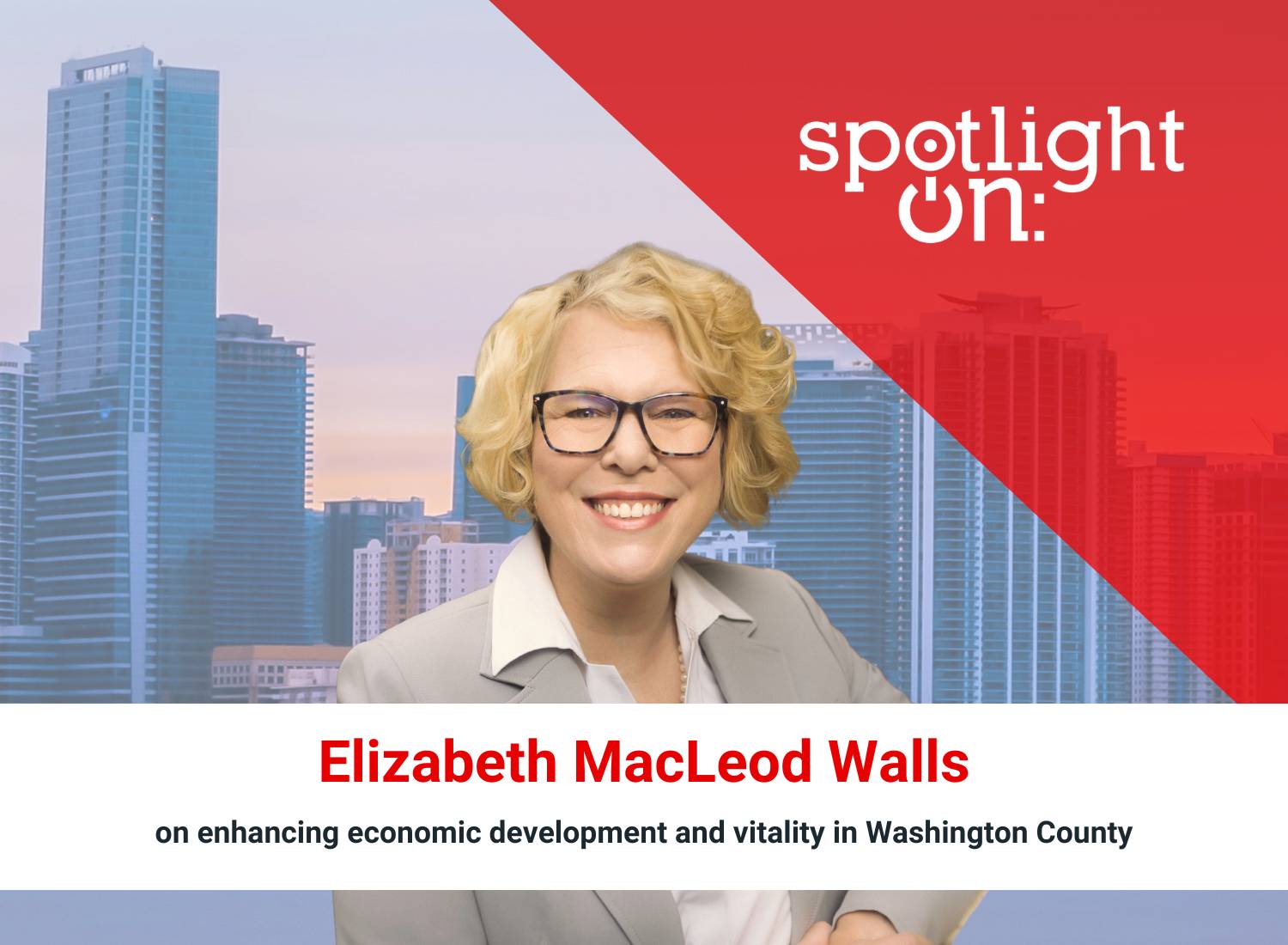 September 2025 — In an interview with Invest:, Elizabeth MacLeod Walls, president of Washington & Jefferson College, discussed the institution’s recent transformation, strategic initiatives, and community partnerships as she shared insights on navigating challenges in the higher education landscape while maintaining W&J’s commitment to adaptability and student success.
What changes over the past year have most impacted Washington & Jefferson College (W&J)?
There has been enormous change at W&J in the last year, and it has been truly exciting to be part of that transformation. Upon assuming the role as the president in July 2024, it was clear that we needed to accomplish at least two foundational objectives. The first was to crystallize our institutional identity. Higher education institutions often struggle to articulate who we are and what we do, and it is not uncommon to find ourselves communicating dozens of different messages about our mission. To address this, I engaged a strategic partner to lead a nine-month discernment process. We consulted thousands of stakeholders through surveys and discussions, ultimately reaffirming our ability to teach students to be adaptive as a core strength that has defined W&J for 244 years.
Whether majoring in biology or English, our graduates excel in rapidly changing environments because they know how to think critically. This clarity became the foundation for our five-year, board-approved strategic plan. Central to this plan is reimagining the liberal arts for the 21st century, ensuring W&J remains at the forefront of innovation in higher education.
Alongside this strategic work, we have seen remarkable enrollment growth. This fall, we have 615 committed students which is a significant increase from our typical incoming class of 350 to 400. This surge is driven by new programs, such as nursing, and the expansion of health sciences initiatives, building on our strong pre-med reputation. Additionally, a transformative $50 million gift from W&J’s first female trustee enables students from Washington County to attend tuition-free, further boosting enrollment. These efforts have also fueled fundraising success, with over $30 million raised in the past year.
Of course, we are also navigating broader challenges in higher education, from shifting federal policies to evolving workforce demands. Yet our focus on adaptability ensures we remain resilient. In Pittsburgh’s educational ecosystem, institutions like W&J, the University of Pittsburgh, Penn State, and community colleges each play vital roles in strengthening the regional economy.
How has your collaboration with George Washington Hotel influenced campus culture and strengthened ties between the college and Washington County?
When I arrived in 2024, I encountered a community that had grown somewhat complacent regarding the college’s responsibility to the region and the region’s responsibility to the college. Within the first two weeks of my tenure, I established a community partners group comprising business leaders, civic leaders, the president of the hospital, the city administrator, and members of my team. We began discussions on how to collaborate to enhance economic development and vitality in Washington County. Like many counties in southwestern Pennsylvania, Washington County faces economic challenges, and our goal is to transform Washington into a vibrant hub that attracts both residents and students.
These conversations have been highly productive. With an incoming large class, we faced a housing shortage, leading to a natural collaboration with the George Washington Hotel, one of roughly 315 officially designated historic hotels in the United States. The hotel is renovating its top two floors to offer premium housing. Demand has been strong, with nearly all spaces reserved shortly after the announcement. The hotel’s location on Main Street, just two blocks from campus, is ideal and allows students to live downtown, support local businesses, and easily access campus. The floors will be ready in August, featuring private bathrooms, laundry facilities, and secure badge access. This partnership exemplifies creative engagement with the city while addressing student housing needs.
How are the college’s programs aligned with workforce demands in Southwestern Pennsylvania?
While our curriculum emphasizes broad intellectual development, we also prioritize career-focused education in fields like nursing, pre-med, pre-law, and now, teaching. The nursing program, developed in partnership with UPMC Washington — formerly the Washington Hospital — admits 40 students annually, each completing intensive clinical rotations. This direct pipeline helps alleviate the severe nursing shortage in the region, with many graduates securing positions at UPMC immediately.
Similarly, the Master of Arts in Teaching (MAT) program, launching this academic year, offers career changers a one-year pathway to teacher certification. With growing demand for high-quality educators, this program will prepare graduates to teach at elementary and secondary levels, strengthening local schools.
Beyond these initiatives, our Health Sciences Task Force will propose five to six new undergraduate and graduate programs this month, responding to emerging needs in healthcare. To support this expansion, we are renovating a $20 million facility to serve as a health sciences hub, housing nursing, future health programs, and our computer and information science department. This co-location fosters collaboration between healthcare and technology fields, ensuring our curricula remain responsive to advancements like AI.
How is W&J expanding its digital offerings while preserving its traditional campus experience?
The MAT program marks our first fully online degree, reflecting our commitment to accessibility for adult learners. While W&J takes pride in our face-to-face, small-classroom model, we recognize the need to expand high-quality online education. Over the next few years, we plan to introduce additional online programs, catering to working professionals without compromising the immersive residential experience that defines W&J. We believe both modalities can coexist, allowing us to serve diverse student needs effectively.
How has your partnership with the Senator John Heinz History Center contributed to enhancing W&J’s presence and impact in the Pittsburgh community?
Over the past year, I have prioritized building relationships with Pittsburgh leaders, which led to a meeting with Andy Masich, president of the Heinz History Center. During a tour and lunch, I was struck by the museum’s exhibits, particularly those featuring Fred Rogers. Our conversation focused on how Washington & Jefferson College, with its deep history, could partner with the Heinz Center to explore Pittsburgh’s heritage.
One tangible outcome was relocating our annual Symposium on Democracy from campus to the Heinz History Center. Traditionally held in February, the event faced challenges due to weather and travel difficulties. This year, we hosted it at the Heinz Center with speaker Jon Meacham who is a famous journalist and biographer. The collaboration was seamless as the center provided the venue, our team managed logistics, and we jointly promoted the event to Heinz members, W&J alumni, and students. The turnout was exceptional, and the partnership so successful that we plan to continue holding the symposium in Pittsburgh, now moving it to April for better attendance. We are also exploring additional partnerships in Pittsburgh to expand our reach and provide more opportunities for students.
What are you observing in the higher education landscape, and how is W&J addressing any changes?
The evolving federal policy landscape is a significant concern, particularly potential changes to Pell Grant eligibility, which could affect student access. At W&J, accessibility is a priority. For example, our Rawnsley Scholarship program increased first-generation student enrollment from Washington County by 72% in just one year. This initiative has generational impact, transforming families and the region. While we hope Pell remains intact, we are prepared to adapt by seeking donor support to ensure low-income students can still attend.
Higher education faces broader challenges, including declining public trust and shrinking demographics. The impending enrollment cliff requires adaptability. Some institutions may struggle, but W&J is positioned to thrive by remaining relevant and responsive to market needs. Our strong enrollment trends reflect this, but we are not complacent. We continue highlighting our graduates’ successes to reinforce W&J’s value to southwestern Pennsylvania and Pittsburgh.
What are your key priorities for the next three to five years in terms of academic innovation and regional engagement?
Our strategic plan serves as our blueprint, with clear goals and metrics shared transparently with faculty, staff, the board, and the community. However, we remain flexible, ready to adjust if external factors demand it.
Key priorities include fundraising for major projects: $20 million for hall renovations and $30 million for a new student center. We aim to secure funding and begin construction within three years. Additionally, we will sustain enrollment growth by expanding access to high-quality education. Program development is another focus, particularly in health sciences, graduate studies, and online offerings, ensuring we meet market demands. In three years, I hope to report significant progress on these initiatives. If not, I welcome accountability.
For more information, please visit:
https://www.washjeff.edu