






Spotlight On: Francis Suarez, Mayor, City of Miami
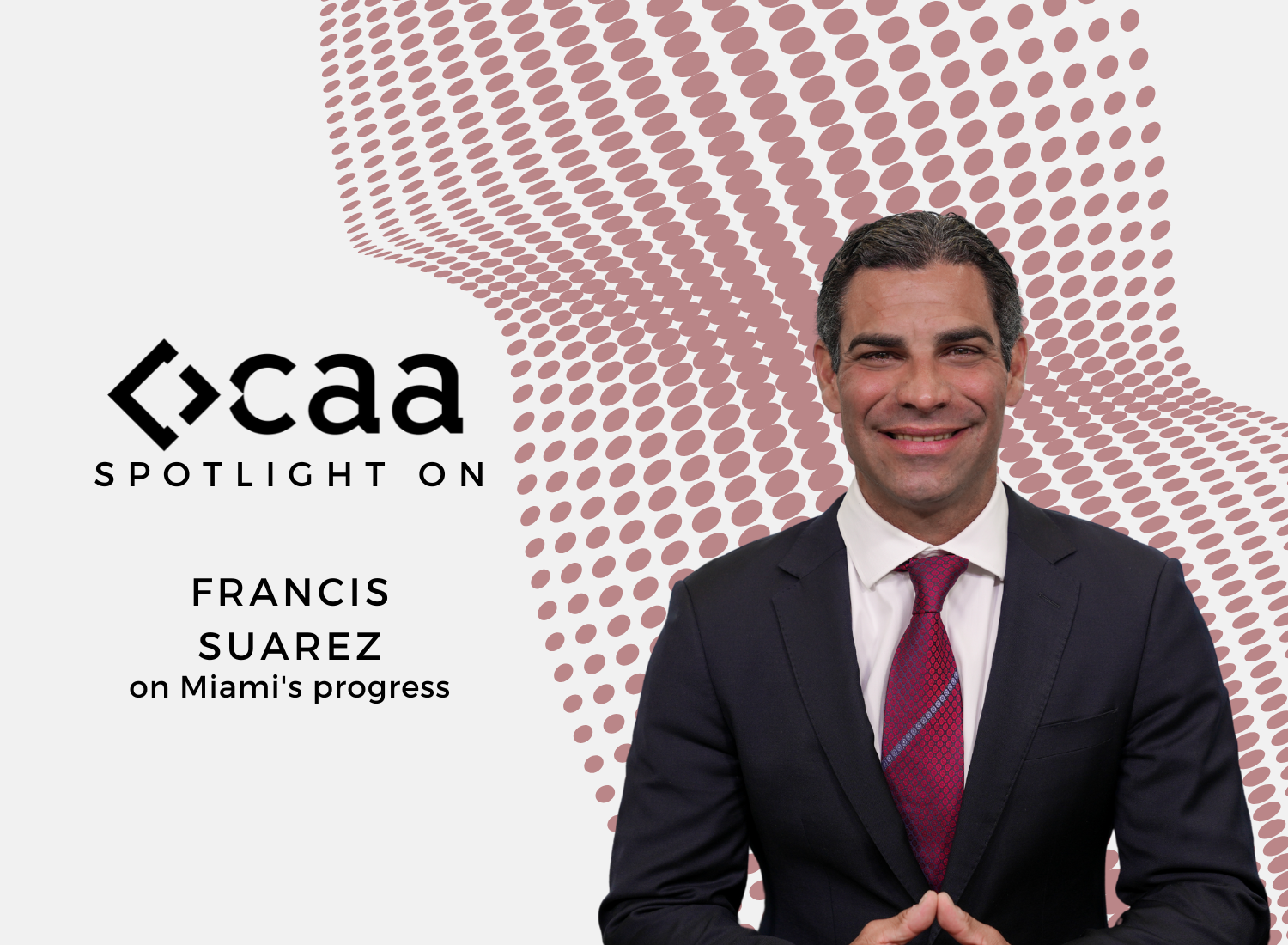
April 2025 — In an interview with Invest:, Mayor Francis Suarez of the city of Miami shared insights on the city’s milestones, its efforts to foster innovation, tackle housing challenges, strengthen resilience to natural disasters, and position Miami as a global hub for connection and opportunity.
Reflecting on your tenure, what have been Miami’s most significant milestones and achievements?
To fully understand Miami’s progress, we need to look beyond just my tenure and reflect on the past 20, even 40 years. In 1980, Miami had 220 murders. Last year, we ended with just 28 — a nearly 90% decline. The lowest number ever recorded was 24 in 1947 when the city was much smaller. With a significantly larger population today, we’re on the verge of becoming the safest city in our history, which is truly remarkable.
When I set out to transform the city, I focused on three priorities: safety, low taxes, and innovation.
In terms of safety, as mentioned, we’ve made extraordinary progress. For taxes, we’ve lowered them to the lowest combined rate in Miami’s history, fueling explosive growth. From 2015, when I was a councilman, to 2024 as mayor, our tax base has grown by nearly 140%, from $40 billion to $100 billion. To put that in perspective, imagine an investment that more than doubles in under a decade. That’s the kind of growth Miami has achieved, making it increasingly attractive to investors.
Lastly, we leaned into innovation. About 15 years ago, we recognized the shift from an industrial to a digital economy, driven by technology and finance. Technology drives productivity, while finance fuels the scaling of innovations. Miami aimed to be both the aggregation and distribution point for capital globally. Recently, we’ve achieved milestones like the lowest unemployment rate in the United States and the highest wage growth. Median income has risen from $50,000 to $70,000 in just a few years, creating explosive wealth for residents. This long-term vision has fundamentally transformed Miami.
What has Miami done to attract businesses, drive innovation, and create opportunities while staying inclusive and forward-looking?
Interestingly, I’ve had leaders from other cities call me, asking how we’ve done it. The strategies were intentional, capitalizing on macro opportunities like COVID-19, remote work, and shifting attitudes. For example, New York rejected Amazon’s HQ2, and California pushed Elon Musk out, sending clear signals. Meanwhile, Miami embraced the opportunity. When someone suggested moving Silicon Valley to Miami, I responded with, “How can I help?” That attitude shift was critical.
We built an ecosystem around that momentum. Venture Miami streamlined the onboarding process for companies, making us the top U.S. city for tech job migration and creation.
We also prioritized inclusivity through initiatives like Miami for Everyone. Programs such as the First and Family Scholarship Fund cover tuition for first-generation STEM students, while partnerships with companies like BrainStation provide upskilling for adults. We also created children’s savings accounts to prepare the next generation.
Our community investments include $1 million to the Overtown Youth Center, which grew from serving 500 kids to 5,000 — a 12.5x increase. These efforts reduce violence, keep people employed, and improve quality of life. Today, Miami ranks as both the happiest and healthiest city in America.
Additionally, we focused on emerging sectors like crypto, blockchain, AI, energy, microchips, and infrastructure. Over the past few years, we’ve attracted $10 trillion in assets under management and significantly increased our venture capital pipeline.
How is Miami positioning itself as a global hub for connection and innovation, beyond its traditional role as a gateway to Latin America?
For many years, Miami was seen as the gateway to Latin America or the capital of Latin America. While we deeply value that identity and continue to nurture it, we now see ourselves as more than just that. We aspire to be the center of the hemisphere — a hemispheric capital where Asia, the Middle East, Europe, and the Americas view Miami as a central hub for connection and business.
We’ve achieved this by hosting major conferences and events that serve as bridges to different parts of the world. For example, we’ve brought in tech conferences and other global events. Even something like the FII (Future Investment Initiative) from Saudi Arabia acts as a bridge to the Middle East. These conferences and events position Miami as a thought capital, connecting the world and fostering innovation and collaboration.
What is Miami doing to tackle housing affordability and homelessness while building a stronger, more prosperous community?
We’ve implemented the Miami for Everyone program, which has already shown great results. During my recent State of the City address, I shared exciting news: our homeless count dropped by about 25%. While the numbers aren’t official yet, our unsheltered homeless population decreased from 619 to 460, which is a huge step forward.
Our goal is to be the first major city in America with zero homelessness. We’re only 460 people away — each with unique challenges — but we’re confident we can get there. We’ve worked with nonprofits, raising $1 million to get people off the streets, and it’s working.
On housing, we’ve leveraged $50 million into $800 million in projects over the past year — a 16-to-1 ratio. This maximizes every dollar.
How has Miami strengthened its resilience to natural disasters, and what steps are being taken to ensure the city remains prepared for future challenges?
We’ve seen natural disasters devastate many places across the country, yet Miami hasn’t received enough credit for how resilient we’ve been. This resilience is the result of strategic investments made over decades, starting in the early 1990s.
In 1992, Hurricane Andrew hit, bringing 200 mph winds. My father was mayor at the time, and that storm became a turning point. Now, every single building in Miami, even those built as far back as the 1930s, like this one, has impact-resistant windows. We’ve become the most wind-resistant city on the planet, and our goal is to become the most water-resistant city as well.
Water presents a unique challenge through phenomena such as rain bombs, dry-day flooding caused by king tides, and storm surges from hurricanes. To combat this, we’ve implemented urban reservoirs, pumps, and raised sea walls to mitigate the effects. While we’re making incredible progress, there’s still work to do and more investment is needed. We’re collaborating with state and federal governments to maximize our resources and ensure every dollar goes further.
What is your approach to fostering a thriving community and positioning Miami as a global hub for innovation and opportunity?
My vision for Miami is to create a city where everyone can thrive. While my official title is chief executive officer of the city, I see myself as the chief ecosystem officer — responsible, in some way, for every resident. The challenge is figuring out how to achieve that vision amidst all the dynamism and disruption shaping the world.
The key lies in fostering premium human capital. This means giving our residents the best opportunities to educate themselves, build value, and share their talents with the world. Education is critical, and we need to push our institutions to provide exceptional opportunities. At the same time, we must encourage those who leave Miami for opportunities elsewhere to return and reinvest their talents here.
Economically, I believe Miami has the potential to become the central hub for capital aggregation and deployment globally. This vision will take time, energy, and strategic investments to attract the next generation of technological and financial companies. Human capital and innovation must go hand in hand to make this a reality.
How would you describe Miami’s evolution over the years, and what drives your vision for its future?
Miami’s story is about how we got here, where we want to go, and the challenges that lie ahead. From my perspective, Miami is a generational investment, and I’m incredibly bullish on its future.
I was born here, in Mercy Hospital, and I’m proud to be the first mayor of Miami who was born in the city. Leading the place where I’ve lived my whole life is deeply personal. It’s been a beautiful 16-year journey — one-third of my life — and every morning, I wake up energized to serve because I know who’s counting on me.
I love this city. Miami carries me, energizes me, and propels me forward. My commitment is to work tirelessly to ensure its success, for this generation and the next.
For more information, please visit:
https://www.miami.gov/Home