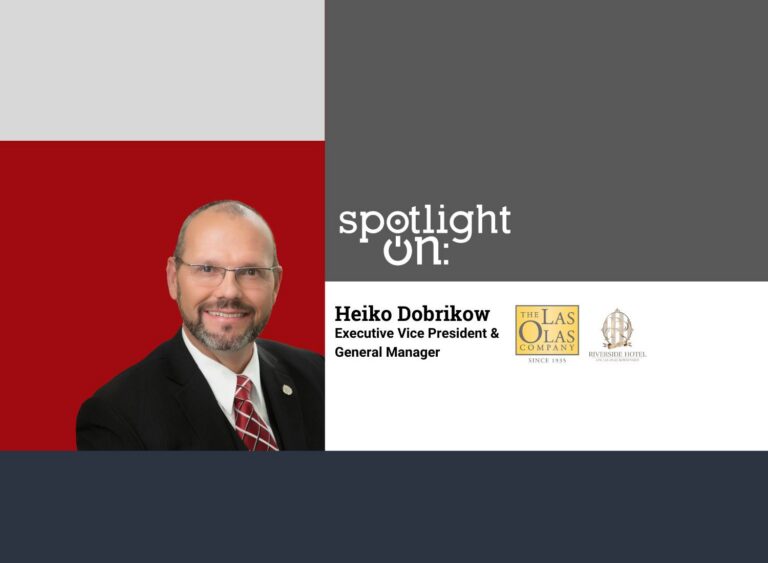







Spotlight On: Heiko Dobrikow, Executive Vice President & General Manager, The Las Olas Company & Riverside Hotel
Key points:
- • Riverside Hotel’s renovation and rising rates reflect a shift toward upscale, experience-driven hospitality.
- • Convention expansion, cruises, and major events like FIFA are fueling strong 2026 demand.
- • Long-term growth depends on infrastructure, workforce stability, and attracting higher-spending visitors.
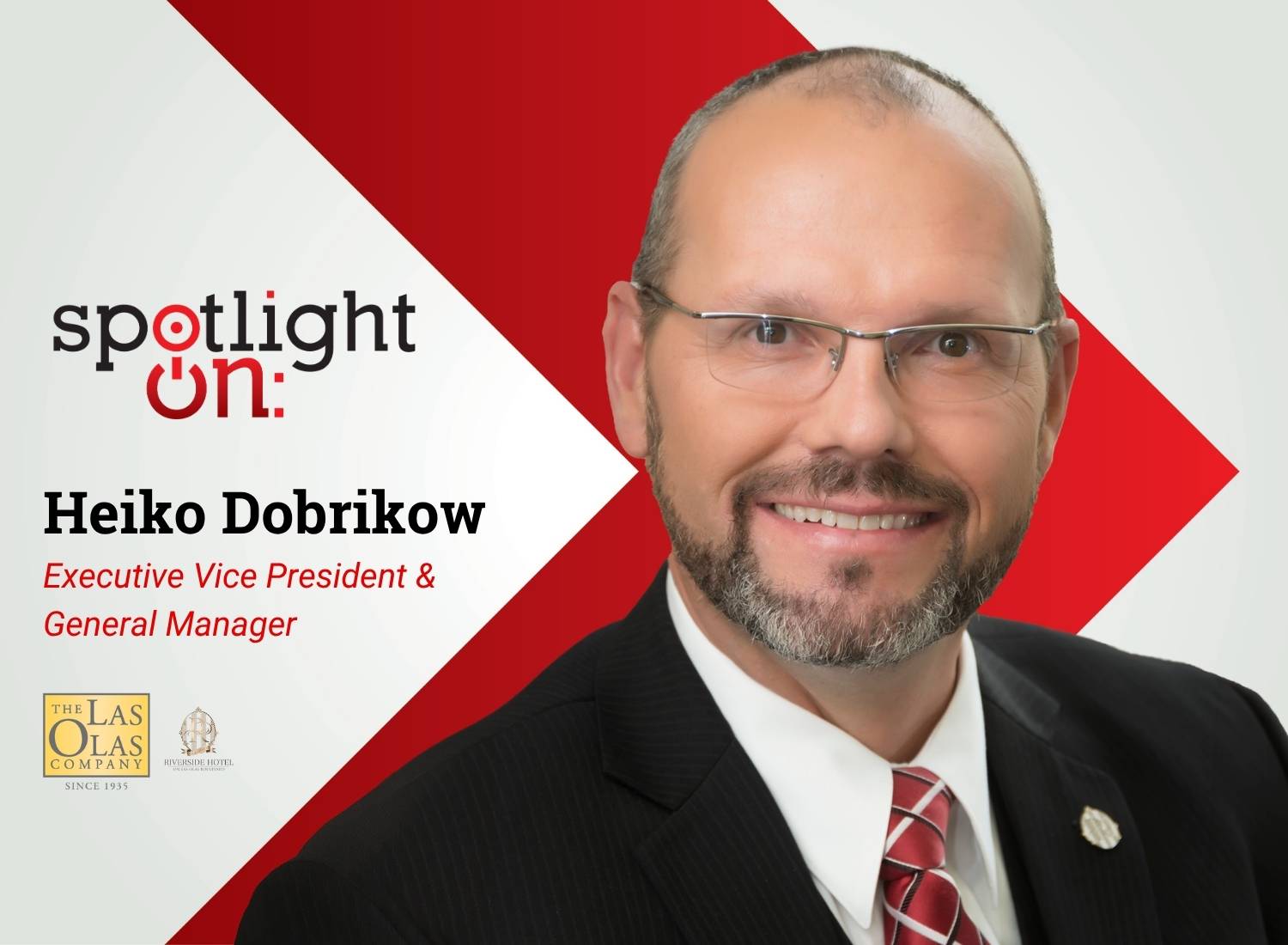 April 2026 — In an interview with Invest:, Heiko Dobrikow, executive vice president & general manager of The Las Olas Company and Riverside Hotel, shared how hospitality investment, infrastructure, and workforce strategy are shaping Greater Fort Lauderdale’s future. “We worked very hard over the last 20 years in order to really ripen all of our economic engines for our county,” Dobrikow said.
What major developments at the Riverside Hotel stood out over the past year, and how do they reflect broader trends in the local hospitality market?
The Riverside Hotel completed a full guestroom renovation last year, representing an $8 million investment. We also renovated portions of our conference center. The goal was to reposition the Riverside as an upper-upscale property and remain competitive in a market where thousands of new hotel keys are entering the pipeline.
Downtown Fort Lauderdale, in particular, has become the darling for visitors. Las Olas Boulevard has continued to evolve into a true shopping, dining, and entertainment corridor, and travelers increasingly want to stay where they can walk to restaurants, galleries, and nightlife. That energy is real, and it’s one of the reasons we felt confident making a major investment in the product.
From a performance standpoint, last year was relatively flat across the hospitality industry, and that was influenced by broader geopolitical messaging and uncertainty that affected certain feeder markets. We saw some softness in international demand, particularly from Canada, but we’ve already seen signs of that business rebounding.
How is demand shaping up for 2026, particularly with major events and seasonal trends?
We feel very optimistic about 2026. We’re already seeing record pace in the first quarter, and a lot of that is driven by strong winter travel patterns. When it’s cold and snowy in the Northeast, people want to be somewhere warm, and South Florida benefits.
The second quarter is also booking well, and we’re focused on building strategies that strengthen demand during the summer months. July, August, and September are always the months where the industry has to work hardest, and we’re collaborating with Visit Lauderdale to develop a joint market strategy that drives more business into that period.
Major events will also help. With FIFA-related activity in June and July, we expect meaningful demand, and since teams and locations were announced, we’ve already seen an uptick in reservations. Soccer fans are loyal travelers, and there should be overflow business coming into Fort Lauderdale even when games are played nearby.
How have rate and occupancy trends shifted as the market becomes more competitive?
We increased our rates significantly year over year, close to 10%. We took a more aggressive position because we believed the renovated product could support it, and we wanted to attract a more upscale traveler. Downtown competitors largely followed suit, increasing rates as well, which was good to see.
Occupancy was slightly down year over year, but our decline was heavily influenced by renovation logistics. During the summer, we had to take rooms out of inventory, which impacted occupancy. Once the renovation finished in September, the fourth quarter was outstanding. It felt like somebody turned on a faucet and travel demand surged.
What role does the new Omni Fort Lauderdale and the convention center expansion play in the region’s future?
The Omni Fort Lauderdale is a major milestone for the destination. For years, the market discussed the need for a true convention center hotel, and now it’s here. It’s an 801-room, convention-centric property, and it positions the destination to compete differently for larger meetings and citywide conventions.
The brand choice matters. Omni is a strong fit for a convention center environment, and the combination of the hotel, the convention center expansion, and new leadership on the sales side creates real momentum. The goal is to attract 18 to 25 citywide conventions that generate compression across the market, bringing spillover business to properties throughout the county.
How has group business evolved in recent years?
The most notable change is the booking window. Meeting planners are planning within a shorter horizon than they used to, often inside a 12-month window. That shift makes the business feel more short-term and sometimes more volatile, because you don’t always know how group demand will materialize until later in the cycle.
That said, group business remains essential. It provides base demand, stabilizes performance, and supports year-round occupancy. We’ve seen that the market can still deliver, but the planning behavior has changed and the industry has had to adjust.
What trends are you seeing across key demand drivers like air travel, cruises, and short-term rentals?
Air travel through Fort Lauderdale-Hollywood International Airport has been steady overall, with slight declines in certain periods. Over time, improvements like the international terminal expansion can make it easier for international travelers to access the market, and that matters for long-term growth.
Cruise demand has been a major positive story. The recovery has been impressive, and projections show millions of passengers coming through Port Everglades. Those passengers generate pre- and post-cruise hotel demand and create meaningful economic activity. A key point is that many of the ships in this market attract travelers who spend, which aligns with the region’s broader shift toward an upscale-to-luxury visitor profile.
Vacation rentals have also been steady and tend to mirror hotel seasonality. An interesting shift is that some short-term rental owners have been more confident in rate positioning, including during summer months, which suggests they are prioritizing higher-quality guests and stronger yield.
Downtown Fort Lauderdale has transformed dramatically. What stands out most from your perspective?
Downtown has become vibrant in a way that’s unmistakable. The return to office has been strong, and you can feel it in restaurants, retail, and street activity. There’s been meaningful job growth, population growth, and continued investment in public space and development.
Las Olas, in particular, has become a destination corridor. Since 2018, visitor counts have grown significantly, and demand for space has increased. As part of The Las Olas Company, we own and operate a sizable footprint along the corridor, and what we see is consistent demand across retail, restaurants, and office space. There’s a waiting list for many categories, and that is a strong signal about the market’s health and trajectory.
How is the workforce landscape evolving in Broward County, particularly for hospitality?
Workforce remains a defining issue for every industry, including hospitality. Employers have become more intentional about retention because replacing trained employees is harder than it used to be. The pandemic taught operators that retention needs to be a constant priority.
Wages have adjusted in response to cost-of-living realities, and employers have been more thoughtful about where pay increases are needed most, role by role. At the Riverside, our turnover is just over 27%, which is well below national averages for the industry. That reflects a deliberate focus on employee stability and culture.
From a broader labor perspective, there are periods where supply is higher than demand, which can benefit employers in terms of recruiting and selectivity. But the long-term success of the region depends on continuing to develop and reskill the workforce, especially as technology changes the nature of work.
What impact have immigration policy changes had on hospitality staffing?
It has had an impact, particularly on hotels that rely heavily on contract labor. Hospitality is required to use verification processes, and there have been instances where certain legal statuses changed or were revoked, which affected the available workforce. Properties that depend on contract staffing had to shift and find alternative labor partners to maintain operations.
Overall, the industry adapted, and while there was disruption, it was not as severe locally as some expected. The bigger point is that workforce planning now requires more flexibility, stronger partnerships, and a more proactive retention strategy.
Looking ahead, what gives you the most confidence in Greater Fort Lauderdale’s future?
We worked very hard over the last 20 years in order to really ripen all of our economic engines for our county. Investments in the port, the airport, convention infrastructure, and intermodal connectivity created the foundation for sustained growth.
The region has sharpened its focus on targeted industry development. Technology, marine industries, life sciences, and advanced manufacturing are becoming increasingly important, and whoever wins the technology game will be a major driver of future economic success. That means workforce development must keep pace with the skills those sectors require.
The final component is smart development. Growth has to be supported by infrastructure, mobility planning, and workforce housing strategies. Broward County has been thoughtful in pursuing those priorities, including planning for resilience and sea-level rise. When you look at all of those ingredients together, the outlook is very strong, not just for a good year, but for a stronger long-term future.
Hosting IPW 2026 in Greater Fort Lauderdale will serve as a transformative catalyst for the region’s tourism economy, showcasing its vibrant hospitality sector, world‑class beaches, diverse cultural offerings, and unparalleled accessibility to a global audience of travel buyers and media. The heightened international exposure generated by IPW is projected to significantly increase visitation over the following three years, driving an estimated $1.5 billion in federal tax revenue and $1.8 billion in state and local taxes. Beyond the immediate economic boost, the event strengthens the destination’s competitive positioning, fuels job creation across multiple industries, and reinforces Greater Fort Lauderdale’s reputation as one of America’s premier gateways for international travel and commerce.
Want more? Read the Invest: Greater Fort Lauderdale report.