






Spotlight On: Janet Simpson, President & CEO, TVS
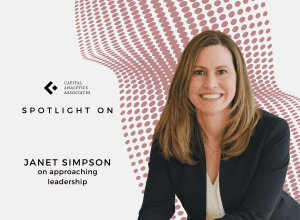 September 2024 — In an interview with Focus:, Janet Simpson, president and CEO of TVS, shared insights on the firm’s recent milestones, its strategic approach to leadership, and how it is navigating emerging industry trends. She also discussed the importance of innovative, socially responsible design and the role of technology in enhancing operations.
What have been the significant milestones and achievements for TVS over the last 12 to 18 months?
I can categorize them into two main areas: internal and external. Internally, we’ve made substantial progress in aligning our leadership team around common goals. We’ve also focused on creating a healthy team dynamic within the firm. Culturally, significant work has been done at the leadership level to ensure we are fully aligned and effective in what we do.
In other TVS news, we were recognized last year by the U.S. Green Building Council and International WELL Building Institute as the first organization to achieve both LEED and WELL Platinum for our 33,000 square-foot new office in Atlanta, the highest tiers for both certifications. We absolutely love our space and how it better enables our firm to deliver bold solutions to our clients and the communities we serve.
Externally, we’ve been involved in several notable projects. In Atlanta, we’re working on some of the first buildings in Centennial Yards. Additionally, we’re working on a significant mixed-use tower at 1072 W. Peachtree in the heart of Midtown. Outside of the state, we are the architect of record, collaborating with Manica Architecture on the Titans New Nissan Stadium in Nashville. These projects, both in Atlanta and the broader region, have a meaningful impact on the urban landscape.
Overall, our goal is to help people benefit from the built environment. When I talk about our various projects, it’s really about the broader impact they have on the community. Projects like the Titans Stadium are particularly rewarding because they involve collaboration with multiple firms.
How do the organizational principles of “listen, solve, and deliver” shape your approach to leadership and client relationships?
These principles guide both how we approach clients and how we bring them value by solving their problems. Our work is about helping people benefit from the built environment, and we see ourselves as part of a larger ecosystem that tackles significant challenges.
Internally, “listen, solve, deliver” is reflected in our talent experience pillars. We define these principles as listening to gain insight, solving the right problems, and delivering together. Delivering reliably speaks to the trust our clients place in us, and delivering with excellence underscores the importance of handling their investments with care.
This approach has both an internal and external reach. Internally, it aligns our efforts to ensure authenticity and real impact, rather than just creating a catchy tagline. We believe in aligning everything we do to these principles, making them genuine and meaningful in our day-to-day operations.
What emerging trends are you observing in the industry, and how is the firm positioning itself to stay ahead of them?
The trends we’re seeing span across several areas. One pragmatic trend involves the funding of projects, especially given the high interest rates and escalating construction costs. These costs often exceed original budgets, creating a significant challenge. Whether it’s private or public money, the alignment between project goals and costs has become critical, as these costs continue to rise. This misalignment has been a major issue, and it requires flexibility and innovative solutions to overcome.
Another trend is the need to reassess traditional benchmarks and assumptions, especially in commercial real estate. The old formulas no longer work, and there’s a growing recognition that we need to find new approaches. This shift requires a fresh look at data, understanding which data points are important, and considering cultural shifts that are also influencing change. Using ourselves as an example, we uncovered more than a million dollars in savings during the design of our Atlanta office because we looked at our own personalized data rather than national workplace benchmarks. This is something we’re helping our clients to achieve as well.
In this period of changing norms, there’s uncertainty and anxiety, but also an opportunity for businesses to evolve. If firms fail to adapt, they risk falling behind. However, this environment has fostered greater collaboration, particularly among industry leaders in Atlanta. When we come together, we’re more open to new ideas and collaboration, which might not have been as prevalent when the old formulas were still effective.
[fusion_images order_by=”desc” picture_size=”auto” hover_type=”none” autoplay=”yes” autoplay_speed=”3000″ flex_align_items=”center” columns=”1″ column_spacing=”0″ scroll_items=”” show_nav=”yes” mouse_scroll=”no” border=”no” lightbox=”no” margin_top=”” margin_right=”” margin_bottom=”” margin_left=”” hide_on_mobile=”small-visibility,medium-visibility,large-visibility” class=”” id=”” caption_style=”off” caption_title_tag=”2″ fusion_font_family_caption_title_font=”” fusion_font_variant_caption_title_font=”” caption_title_size=”” caption_title_line_height=”” caption_title_letter_spacing=”” caption_title_transform=”” caption_title_color=”” hue=”” saturation=”” lightness=”” alpha=”” caption_background_color=”” fusion_font_family_caption_text_font=”” fusion_font_variant_caption_text_font=”” caption_text_size=”” caption_text_line_height=”” caption_text_letter_spacing=”” caption_text_transform=”” caption_text_color=”” caption_border_color=”” caption_overlay_color=”” caption_align_medium=”none” caption_align_small=”none” caption_align=”none” caption_margin_top=”” caption_margin_right=”” caption_margin_bottom=”” caption_margin_left=”” parent_dynamic_content=””] [fusion_image image=”https://capitalanalyticsassociates.com/wp-content/uploads/2024/07/CAA24_Invest-Insights-S6-Web-Banners-7.jpg” image_id=”64377″ image_title=”” image_caption=”” link=”” linktarget=”_self” alt=”” /] [fusion_image image=”https://capitalanalyticsassociates.com/wp-content/uploads/2024/07/CAA24_Invest-Insights-S6-Web-Banners-10.jpg” image_id=”64380″ image_title=”” image_caption=”” link=”” linktarget=”_self” alt=”” /] [fusion_image image=”https://capitalanalyticsassociates.com/wp-content/uploads/2024/07/CAA24_Invest-Insights-S6-Web-Banners-9.jpg” image_id=”64379″ image_title=”” image_caption=”” link=”” linktarget=”_self” alt=”” /] [fusion_image image=”https://capitalanalyticsassociates.com/wp-content/uploads/2024/07/CAA24_Invest-Insights-S6-Web-Banners-8.jpg” image_id=”64378″ image_title=”” image_caption=”” link=”” linktarget=”_self” alt=”” /] [/fusion_images]
How do you ensure your projects are cutting-edge, socially responsible, and have a positive impact on the urban core?
This process begins with our “listen, solve, deliver” approach, starting with a firm understanding of the client’s needs and our expertise in identifying opportunities for each project. We always consider the surrounding area and the broader impact of our projects. Whether we’re working on convention centers, mixed-use developments, sports facilities, healthcare, K-12 and higher education, offices, or hospitality projects, our approach varies by market but shares a common goal: to benefit people through the built environment.
We focus on early conversations to understand sustainability and resiliency goals, who the facility is for, and how it can enrich the community. The idea is to define how many people the project will impact and ensure it benefits everyone involved. Although each project is unique in scale and requirements, our commitment to creating beneficial outcomes remains consistent.
How are you leveraging technology to enhance your operations?
If you ask industry leaders about the top topics today, AI and other disruptors are at the forefront. Many possibilities are within reach but not yet fully realized in our work. Right now, the industry is focusing on better understanding data collection and utilization. One challenge in architecture and interior design is the lack of shared data across the industry, which is essential for developing AI models.
While there’s talk about AI handling tasks like design creation and construction documentation with the push of a button, the reality is that it’s much more complex. The industry is still in the early stages of becoming data-enabled, with much of the information locked within individual firms.
However, this moment of change has created opportunities for better collaboration. The industry is coming together to explore what a data-enabled future could look like. Firms are increasingly willing to share data and work together to unlock the potential of technology. Interestingly, this drive to leverage technology is the catalyst that’s bringing the industry together in a way we haven’t seen before.
What are your top priorities for the firm in the next couple of years, and what strategies are supporting those?
I think everything ties back to our core principles of “listen, solve, deliver,” and our commitment to creating a benefit from the built environment. We had a leadership team kickoff meeting recently to begin our planning for 2025, so these priorities are fresh in my mind.
Our planning process is intentionally collaborative, and one of our key focuses right now is identifying where we can bring the most value in a time of rapid change. We’re particularly focused on how we can make the process of getting to the built environment more predictable and valuable. It’s not just about hitting financial targets; it’s about understanding the value we bring and how that value helps solve larger problems.
We’re not trying to predict the exact technology that will be the next big disruptor or pinpoint the market that will generate the most opportunity. Instead, we’re concentrating on how we can best position ourselves to deliver value. This means refining our processes and internal focus to ensure we’re prepared to address the significant challenges and opportunities ahead.
For more information, please visit: