







Spotlight On: Jim Szczesniak, Director of Aviation, Houston Airport System
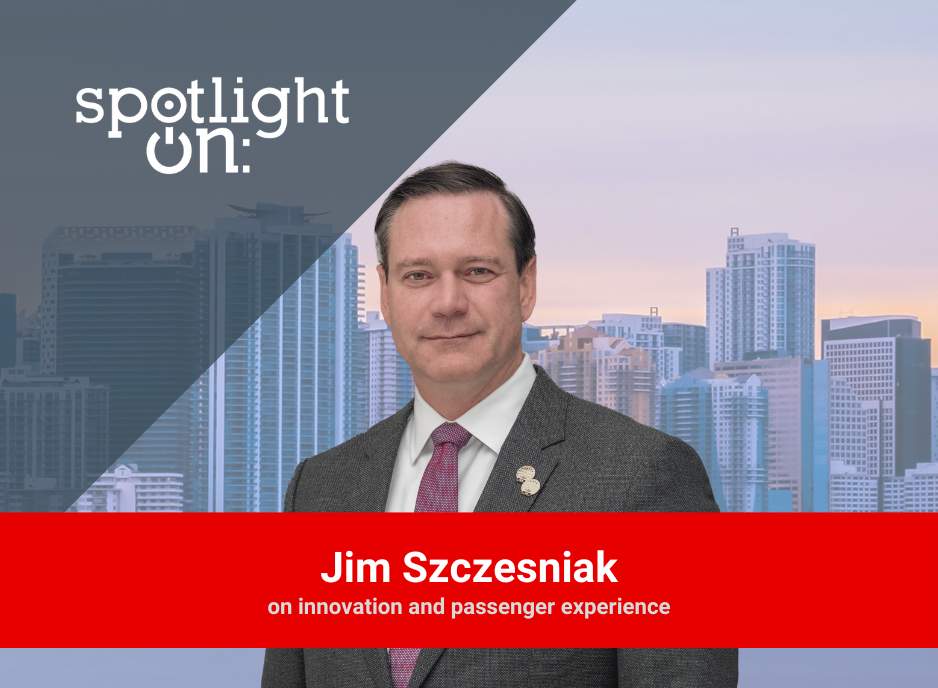 August 2025 — In an interview with Invest:, Jim Szczesniak, director of aviation for Houston Airports, highlighted the airport system’s pivotal role in regional economic growth and its strategic investments in cargo innovation, passenger experience, and infrastructure. “These infrastructure developments are setting Houston up for successful future growth,” Szczesniak noted, detailing major expansions at both George Bush Intercontinental Airport (IAH) and William P. Hobby Airport (HOU).
What have been the most significant operational or market changes for the airport system over the past year?
We’ve made major strides in preparing our airports for the next era of growth. At George Bush Intercontinental Airport (IAH), we opened a new international pier with six wide-body gates that can flex to 10 narrow-body gates, an adaptable design that supports evolving airline needs. To ease congestion, we also expanded roadways and increased curb capacity, delivering immediate traffic relief while planning for long-term volume.
At William P. Hobby Airport (HOU), we’ve broken ground on a new seven-gate expansion, part of a broader effort that includes completing our international project and launching Southwest’s new growth gates. Meanwhile, United Airlines has kicked off a full-scale transformation of Terminal B, replacing 1960s-era flight stations with two state-of-the-art concourses.
These infrastructure upgrades are more than construction projects; they’re a foundation for sustainable growth. Houston Airports drives $40.6 billion in annual economic impact and supports 207,000 jobs. Our cargo operations alone account for $13.8 billion in output, and these numbers will only grow as we continue modernizing.
What makes Houston a strong hub for aviation growth and innovation compared to other major U.S. gateway cities?
Houston is strategically positioned as a vital gateway between North and Latin America, and we’re leveraging that advantage every day. From a cargo perspective, our location on the I-10 corridor, with direct access to Mexico, makes us a natural hub for cross-border air freight. Cargo arriving at IAH connects seamlessly to a powerful roadway network, reaching the Sun Belt and West Coast with unmatched speed and efficiency.
Unlike many major airports, IAH isn’t bogged down by congestion. That gives us a significant operational edge. We can move cargo in, get it cleared fast, and get it on the road without delay. It’s a streamlined, high-performance model built for global commerce.
How are you shaping the airport’s offerings to continue attracting new business?
We’re preparing to issue a Request for Information (RFI) to guide future cargo development at IAH, ensuring that Houston’s continued growth aligns with long-term capacity planning. We’re not just expanding; we’re optimizing.
IAH brings unique strengths to the cargo industry, including a dedicated fumigation facility and a consolidated one-stop inspection complex that houses CBP, agriculture, and other federal agencies. This proximity streamlines cargo processing and adds measurable value for shippers.
For business travelers, Houston’s two-airport system delivers nonstop service to more than 200 destinations across Latin America, Oceania, Europe, and Asia. If you’re doing global business, Houston puts the world within reach.
What trends are you seeing, and what new airlines or destinations have been recently added?
We’re seeing strong momentum across our airline partners. United continues to expand its network from Houston, while other carriers are adding new routes and growing frequencies. We recently welcomed Zipair’s nonstop service from Japan, and we’re seeing sustained expansion from Mexican airlines in response to rising demand.
Houston’s also benefiting from a surge in tourism, particularly with cruise passengers traveling through IAH and HOU en route to the Port of Galveston. As we gear up to host the 2026 World Cup, we’re positioning Houston as the most connected and convenient base city. With our central location, travelers can easily fly to matches in cities like Los Angeles or Kansas City and return the same day. That connectivity enhances Houston’s global appeal.
What role does federal or FAA funding play in supporting resilience against challenges like energy outages, and what growth opportunities exist?
From a resilience and operational standpoint, Houston Airports is built for efficiency. At George Bush Intercontinental, our runway layout gives us ample capacity to manage air traffic reliably. Hobby complements that with on-time performance and agility.
We’re proud to be the first airport system in the nation to receive an FAA grant to develop a Resiliency Master Plan. That support, along with ongoing FAA infrastructure grants, helps us invest strategically in long-term strength and adaptability.
Additionally, when it comes to growth, we have a major advantage: land. IAH spans 11,000 acres, giving us expansion potential that most landlocked airports simply don’t have. The opportunity here is unmatched.
How are you working with local government, business groups, or Houston First to keep driving investment and innovation?
Collaboration is key to our strategy. We work closely with Houston First to expand our network of nonstop destinations, supporting airline partners while aligning with Houston’s business and tourism goals. Through the Greater Houston Partnership, we stay tuned into the needs of the business community and help secure routes that matter, like our nonstop service to Georgetown, Guyana, which strengthens ties between Houston, the U.S energy capital, and a key hub in South America for future oil development.
At the Houston Spaceport, we’re building momentum through partnerships with the Bay Area Houston Economic Partnership and attracting anchor tenants like Axiom Space, Intuitive Machines, and Collins Aerospace. These relationships prove that when we work together, we accelerate innovation and impact.
Innovation is key in Houston. What new technologies are you implementing?
We’re investing in smart technology that elevates the passenger experience. At Hobby, we’ve upgraded the entire security checkpoint with modern scanners that let travelers keep laptops and liquids in their bags, which makes a smoother, faster screening process. We’ve deployed the same technology at Bush, where it’s already making a difference.
We’re also completing a full upgrade of our automated parking systems, which now feature license plate recognition and contactless payment options like Apple Pay and Google Pay. Every investment we make in innovation is focused on one goal: creating a more seamless, customer-friendly journey from curb to gate.
Employees are crucial to a great customer experience. How do you assess the local labor pool, and what strategies do you use to attract and retain top talent at your airports?
One of Houston’s greatest strengths is its dynamic labor market. With hundreds of thousands of people relocating here each year, we benefit from a deep, diverse talent pool. While many airports struggle to fill roles, we’re seeing strong hiring conditions across our system.
We invest in our people by equipping them with tools to succeed, from staff-built apps created by our in-house IT team to the launch of an integrated coordination center that helps manage daily operations in real time. These innovations aren’t just about technology; they’re about empowering employees to deliver excellence.
At the Houston Spaceport, we offer something our competitors can’t: an urban location with world-class amenities and livability. It’s far easier to attract talent to Houston than to a remote launch site. We’ve got symphonies, theater, amazing sports teams, and a vibrant cultural scene, making us an employer of choice in aviation and aerospace.
Looking ahead, what are your top priorities over the next two to three years, and what is your overall outlook for the region?
Our top priorities over the next few years are clear: complete the Terminal B transformation at IAH, deliver the new concourse expansion at Hobby, and launch the next phase of cargo development. These are major, future-focused projects that will enhance capacity, efficiency, and customer experience across the board.
We’re aligning airport infrastructure with Houston’s evolving economy, particularly the surge in biomanufacturing and pharmaceutical investment. These industries rely on air cargo, and we’re building the capabilities to meet that demand head-on.
The outlook for Houston is incredibly strong. We’re not just keeping pace; we’re planning, building, and leading with purpose.
For more information, please visit: