

Spotlight On: Lee Rucks, President, Leadership Middle Tennessee
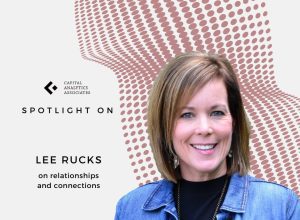 May 2024 — Lee Rucks, president of Leadership Middle Tennessee, talked about how LMT’s program helps individuals create connections with other business leaders across county lines in Middle Tennessee and how its events provide opportunities for leaders to learn about regional issues and find ways to improve their communities. She highlighted the importance of a regional focus in LMT’s program to empower leaders to better the region collaboratively.
What are the most important takeaways for the individuals who take part in the Leadership Middle Tennessee program?
The relationships and connections that are built during the program are among the biggest takeaways. It is all about not having to make six phone calls but one thanks to our alumni getting to know other people in different counties. They make those connections because of the classes and the experience that they go through at the Leadership Middle Tennessee program.
We have also seen how the regional topics that are discussed during the program sessions have an impact. People learn from regional issues, such as transportation and the need to find a solution for that. They take that knowledge back to their communities to make them better places. For instance, an alumnus from the LMT Class of 2016 developed a ridesharing app called Hytch after learning about transportation issues as part of the LMT program. Similarly, Dickson needed bus transportation to and from Nashville and thanks to LMT, they realized that was possible. That transit now exists.
What are the most important areas of opportunity for Leadership Middle Tennessee alumni to improve their communities?
One thing that we need to do a better job of is taking what we learn and putting it into practice. We need to take an initiative, such as a transportation issue, and move it forward. We are working on getting something in place to bring together our alumni after they graduate from the LMT program. We do bring them together to cover regional topics, such as sports, culture, and transportation so that they can get better information on what is going on in the area and how they can plug back into that. We recently brought our alumni to lunch at the Titans Sports Park. They not only heard a panel on the East Bank Development in Nashville but also had a tour of the park. This is one of the ways that we keep our alumni engaged and up to date on current regional issues.
How does the continuous arrival of people and businesses to Middle Tennessee impact the organization’s service offering?
We looked at our regional topics as we developed our next three-year forward plan in response to the needs and trends that we see. That three-year forward plan helps us know what our regional topics and programming dates are as well as to define the objectives of each session. We have researched a lot of different leadership programs throughout the country to determine what the trending topics are so that we could reassess our situation.
For example, globalization used to be a key topic in Rutherford County, but we discovered a need to focus on economic development. Similarly, Davidson County’s topics were the Music City brand, public policy, and government. We needed to keep government as a topic since we are the state capital, but we needed to also include culture and environmental issues.
How important are regional and local topics in the sessions of the Leadership Middle Tennessee program?
During our county sessions, 70% of our time together is focused on regional topics and the remaining 30% on the county level so that people can showcase things that might not fall under the regional topic. We put an emphasis on regional topics to identify issues, challenges, and weaknesses of a particular topic. We also bring in regional and state-level speakers so participants can get a bigger scope.
What do you think should be a top focus for local leaders in Middle Tennessee as part of the sessions of the LMT program?
The top goal of Leadership Middle Tennessee is that each of the class members of our program becomes more regionally minded. Many of us work and live within one county, so we want them to think across county lines and find ways to work together and better our region collaboratively. We want them to step outside of their comfort zone, roll up their sleeves, and make an impact. We also encourage them to run for office at any level if that is what they aspire to do, and quite a few of our alumni have done that.
What is the role of community involvement in Leadership Middle Tennessee’s program?
On the one hand, we are strengthening leaders by building their leadership skills and empowering them to get involved within their line of work. On the other hand, we empower them to be involved in their community. During our selection process, we put an emphasis on how the candidates for the LMT program get involved in their community. We look for people who are both strong leaders in their organization but who also are established in their community.
How is technology transforming the workplace and the conversations among business leaders?
Technology has really changed within Leadership Middle Tennessee. For example, we used to print our agendas but now we put them on WhatsApp. Anytime that I want to meet with someone who is interested in LMT but cannot attend an in-person recruitment event, I connect with them on Zoom. These technologies have helped how we reach out to our members and alumni. We also built a class directory into our website so that alumni can find their former classmates and reach out to them.
What is the biggest challenge that Leadership Middle Tennessee faces to reach out to business leaders in the region?
We need to do a better job of telling our story as many people do not know that we exist. The reason why Leadership Middle Tennessee is outside Davidson County is because people tend to confuse us with Leadership Nashville. While we have a good relationship with that organization, we need to separate ourselves from Leadership Nashville. We also need to focus on establishing more business partnerships to grow and achieve long-term sustainability. A lot of our funding comes from private individuals and corporate sponsors. Nevertheless, we do not have a lot of corporate sponsors outside of our county sessions. We need to restructure our development side and gain business partnerships that will help us grow.
What are the top priorities of Leadership Middle Tennessee for the next few years?
A priority for us is to keep bringing our alumni together by hosting a few annual events. We host a Nashville Sounds Night that usually has 100 to 150 alumni in attendance. Our holiday party is the Tuesday after Thanksgiving and we have had the great problem of outgrowing the venue where we hosted this event. We will need to find a venue to hold a group of 250+. Another priority is to continue growing our alumni base. After the graduation of the current class, we will have over 720 alumni. An important priority for us is to find ways to keep our alumni engaged. Jack Turner, one of our founders, wants the alumni to have a behind-the-scenes look at areas that they would not usually go to so they can have an exclusive experience. We need to produce these types of ideas for our alumni so that they know what an honor it is to have been through the program.
For more information, please visit: