





Spotlight On: Linda McMahon, CEO, Dallas Economic Development Corporation
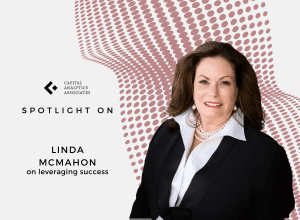
November 2024 — In an interview with Invest:, Linda McMahon, the first CEO of the Dallas Economic Development Corporation, shared her focus on collaborating with the Office of Economic Development and local leaders to pinpoint key areas for economic growth. She emphasized the importance of strategic partnerships to market Dallas as a prime business destination.
As the first CEO of the Dallas Economic Development Corporation, what are your immediate priorities?
My immediate focus is working with the Office of Economic Development, particularly with Kevin and Heather, to support the work they’re already doing. I’m also getting familiar with where the opportunities lie within Dallas by meeting with City Council members, touring their districts, and identifying areas for economic expansion. We’re putting together a strategic plan that we hope to unveil in the next couple of months. In the meantime, I’m meeting with the Dallas Regional Chamber (DRC) and other economic development agencies in the region to align our efforts for the benefit of the city of Dallas.
How do you plan to integrate your commercial real estate background into your strategy and the upcoming strategic plan?
One of our three main priorities is real estate development, along with business development and retention. My background and relationships in commercial real estate are going to be critical here. I’ve already been involved in conversations about redevelopment strategies in certain areas of the city. Site selectors and brokers are critical components of economic development – my knowledge of that business will be essential for advancing opportunities in Dallas. Connecting real estate opportunities with economic development and job creation is a key part of what we’re doing.
How will the EDC’s independence shape your approach to driving economic growth?
The relationships I’ve developed, especially during my time at the Real Estate Council, are going to be key in Southern Dallas. Redevelopment in this area has been a significant part of my work, and I expect much of that to carry over here. There’s a lot of potential along Martin Luther King Jr. Blvd., especially with the recent federal investment in transportation infrastructure that could revitalize this important stretch from the Cedars to Fair Park, which is one of the city’s architectural jewels. We’ll be engaging with neighborhood and community organizations to identify opportunities and work with the city to figure out the best tools for redevelopment in these areas. While we’re a new organization, I’m employee number one, and our understanding of the city and existing relationships will help us connect the dots. City staff have a lot on their plate, so in many ways, we’ll be an extension of their work, out there identifying and curating opportunities. We’ll also be involved in promoting the available incentives not only for business attraction and expansion but for redevelopment of key communities within the city. We do not control the incentives but we can play a role in communicating the opportunities, particularly for areas that have been disinvested for decades.
What challenges are businesses facing, and how do you plan to collaborate with nearby cities and the state to overcome them?
The biggest challenge for business is the cost of capital, which continues to be a significant issue. Businesses who want to expand or relocate will have to deal with the cost of capital as it relates to the real estate that they will be occupying. This challenge is tied to what the Federal Reserve decides regarding interest rates, so it’s out of our control. Incentives can provide some assistance, but not enough to address the long-term investment needs fully. Collaboration is key, not just with other EDCs but with the state of Texas and Dallas organizations including Visit Dallas, which handles our tourism marketing, and the Sports Commission, especially with the World Cup coming up. There’s a huge opportunity to market Dallas to a global audience through these events.
We’re also focusing on working with higher education institutions to ensure the workforce has the right skills and educational background for the jobs we’re trying to attract. For example, I’m getting involved with the semiconductor hub initiative that SMU has launched that aligns with the state’s approach to economic development by focusing on industry clusters. We are also working with Dallas College, which is focused on industry clusters like biotechnology, technology, and healthcare. Financial services are also a big focus for us, with companies like Goldman Sachs and others based in downtown Dallas. There’s even talk of Dallas becoming the “capital of capital,” and I think we have a real opportunity to build on that with the presence of major financial firms and the upcoming Texas Stock Exchange.
How do you plan to leverage the successes and ongoing initiatives in Dallas to better market the city and tell its story?
There’s no question that a lot of great things are already happening in Dallas, and one of my main tasks is to tell our story – the great story of the city of Dallas and why it is the best place to do business and to live. Dallas has incredible amenities, like the largest arts district in the country and the largest urban forest. You can reach downtown Dallas within 15 minutes from many areas, which is something no other major city offers. Plus, we have a rich culture and historic communities that make Dallas unique and interesting. My role is to highlight how great our schools, neighborhoods and infrastructure are, and to show how easy it is to do business in Dallas. Ultimately, I’m here to make sure we are communicating the benefits of being based in Dallas, one that resonates broadly and showcases why Dallas is such a great place to live, work, and invest.
For more information, please visit: