






Spotlight On: Mary Sol González, President & CEO, Hispanic Heritage Chamber of Commerce
Key points:
- • The chamber is helping Hispanic-owned businesses adopt technology and prepare for new manufacturing opportunities.
- • Entrepreneurs mainly need access to capital, information, and business support.
- • The organization is expanding regionally and building international connections.
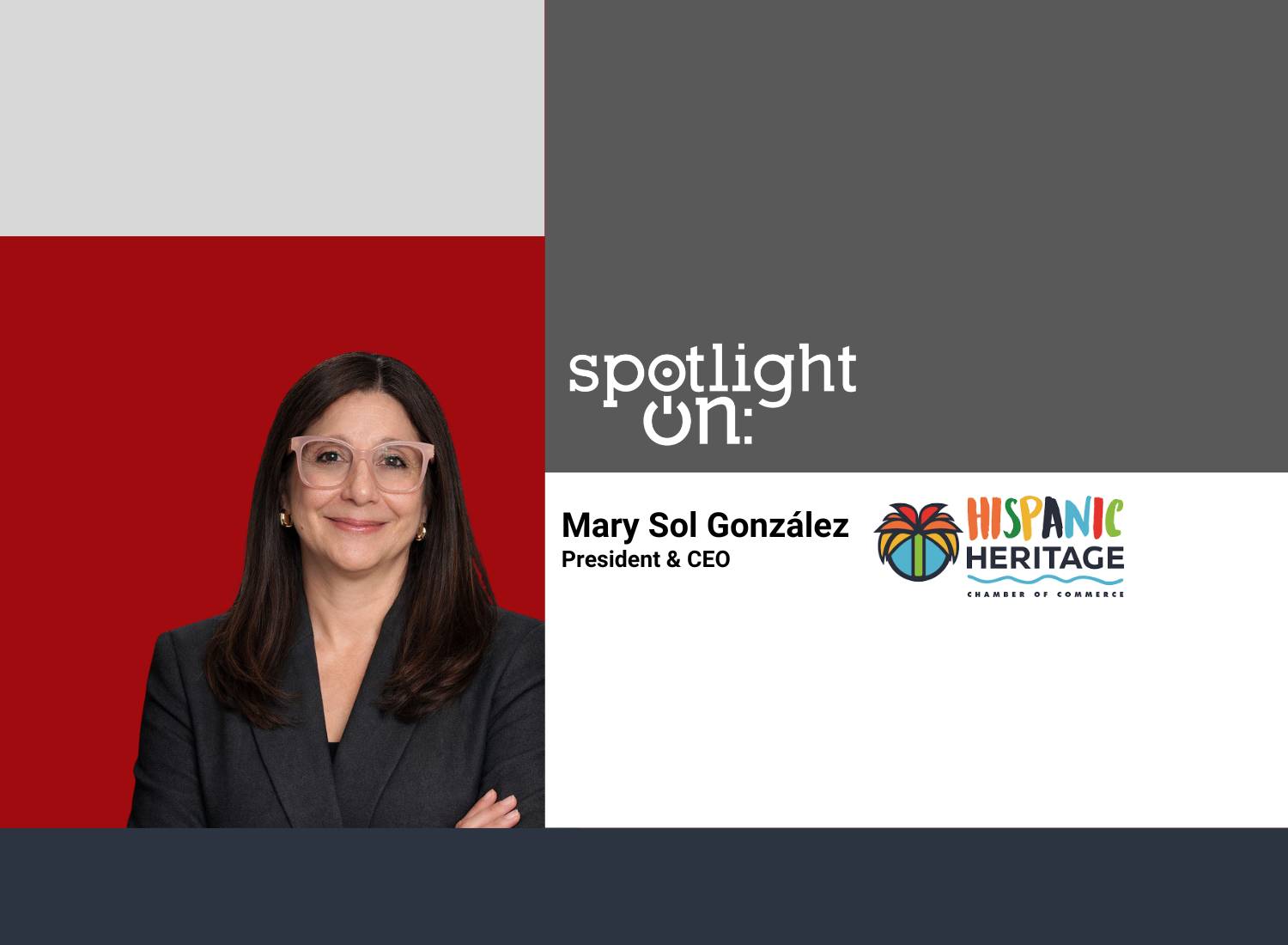 March 2026 — Invest: spoke with Mary Sol González, president and CEO of the Hispanic Heritage Chamber of Commerce, about how the organization is helping Hispanic-owned businesses embrace technology, respond to manufacturing shifts, and access new opportunities across Broward and Palm Beach counties. “We want to build a business community that is educated, that is ready, and that is well-connected.”
Join us at caa’s upcoming leadership summits! These premier events bring together hundreds of public and private sector leaders to discuss the challenges and opportunities for businesses and investors. Find the next summit in a city near you!
How would you describe the key shifts you’re seeing in the Hispanic business landscape?
I see these trends not only in the Hispanic community, but in the business community in general. The biggest shift is toward technology. AI is one of the most significant trends, and it’s also a major focus for the U.S. government. A lot of the investments being made in our communities are geared toward technology, so for us, the natural move was to support our members in becoming more qualified and confident in that space.
That’s why we are hosting our first technology summit, TechRise 2025, with panels on AI, quantum, and other tools, along with an expo featuring members who work in the technology sector. At the same time, we are graduating our first cohort of LEAP, our digital growth program. The goal is to close the digital divide by educating our members and making them more technology-ready for the opportunities ahead.
Another major trend is the movement of manufacturing back to the United States. People used to think of manufacturing as very manual, but today it’s highly technology-driven, with sophisticated systems and processes. Florida has benefited from strong economic development offices that are attracting these companies, and we work closely with them in Broward and Palm Beach counties.
Our role is to help members with certifications, understanding the bidding process, and becoming supply chain–ready so they can respond quickly to new opportunities.
We want to build a business community that is educated, ready, and well-connected. That’s why we see ourselves as a bridge organization — connecting members, resources, and communities. It’s also why we expanded this year beyond Broward County to include Palm Beach County. There is a real need for regional collaboration, and that is where we are heading as we look to 2026 and beyond. Our digital growth cohort is also helping us create a digital community, with participants not only in our counties but also in places like Colombia and Mexico. They share a common certification and language around technology, which means the opportunities for connection are now truly borderless.
What needs or challenges are you hearing most often from entrepreneurs and small business owners across Broward and Palm Beach?
The first is access to capital. Many of our business owners need to invest in technology, in their operations, and in their own capability growth. That requires resources, so we work directly with partners like the SBA, banks, and nonprofit organizations such as Prospera that focus on business owners. A very important partnership is with JPMorgan Chase through its Coaching for Impact program, which offers one-on-one mentoring for both clients and non-clients. Through the chamber, we help connect qualified businesses to that program so they can receive education and expert guidance.
The second need is information. There are many resources available, but our members often don’t know where to find them, how to access them, or how to apply. Our partnerships with the small business and economic development organizations in Broward, led by Maribel Feliciano, and in Palm Beach County, led by Axel Miranda, are essential. Together, we help members understand how to become certified, how to do business with the county, and how to navigate opportunities with larger government entities. On our new website, we are building out a resources section to share information on grants, new businesses entering the market, supplier opportunities, and certification pathways, so members can stay informed in one place.
The third need that has emerged strongly is mental wellness among business owners. The stress they experience day after day affects not only how productive and effective they are in their operations but also their lives and families. You cannot talk about true success if you don’t at least work toward a healthier balance, even if that balance sometimes feels like a utopia. We heard many members say there are not enough hours to grow a business, care for a family, serve the community. and volunteer.
In response, we created a wellness committee to address these issues and tap into experts within our ecosystem. We have a strong partnership with Florida Blue, and we hosted our first mindfulness session at their facility. Behavioral health is not always a central focus for chambers of commerce, but we believe it has to be addressed if we want sustainable, long-term growth for our members and their teams.
Given the strong momentum in Broward County, what are your members looking for most today — expansion, collaboration, access to new markets?
We see different needs depending on the tier of membership. Among our small businesses, the priorities are access to capital, how to expand, and how to grow in a sustainable way. Many are already thinking beyond their home county because they understand that regional expansion opens up more opportunities. I’ve also noticed, especially in the last three to four months, that small businesses are forming what I like to call “little coalitions.” They are joining forces and offering bundled services so they can serve larger corporations together. It’s a smart way to grow and allows them to scale in partnership rather than in isolation.
For our larger members and corporations, I also see a strong trend toward expansion and technology adoption. They are becoming more tech-savvy, implementing new platforms, updating websites, adding chatbots, and integrating tools that allow them to communicate with clients more effectively and in real time. They also want to stay informed about the economic and political environment, which in the U.S. can change minute by minute.
To support that, we work through our Government Affairs and Economic Development Committee and maintain strong partnerships with the U.S. Hispanic Chamber of Commerce and the Florida State Hispanic Chamber of Commerce. Through those relationships, we keep our businesses informed about what’s happening and what may affect them. For example, we have an upcoming roundtable with the Federal Reserve Bank focused on economic perspectives for 2026, which is of great interest to our larger companies.
What are your top priorities for the chamber over the next few years?
Our vision for the future is very clear. We want to continue positioning ourselves, as I mentioned at the beginning, as the chamber that is the bridge between the members, the resources, and the different communities. That is how we want to be known. At the same time, we are very focused on being a technology-forward chamber of commerce. Our digital growth cohort is central to that, and we are already expanding it. In this graduating cohort, we have participants from Colombia and Mexico who took the program remotely, and we will continue to grow that digital presence.
We have also started to welcome our first international members. Through initiatives like the International Commerce Committee, we are working with businesses outside the U.S. that want to connect with our market. Our goal is twofold: to strengthen our presence in Broward and Palm Beach counties and to serve as a bridge for companies that either want to do business in the U.S. or are exploring relocation and satellite offices here.
All of this is possible because of the ecosystem we have built through our board of directors and partner organizations. Our board members come from many different countries and bring their own networks and ecosystems to the table. Economic development offices and other partners refer businesses to us — including large companies in sectors like energy that are considering relocation — and we help connect them into our community. That ecosystem is what allows us to keep expanding the chamber’s footprint while staying true to our mission of connection and inclusive growth.
Want more? Read the Invest: Greater Fort Lauderdale report.