






Spotlight On: Matthew Love, President and CEO, Nicklaus Children’s Health System
Key points:
- Nicklaus Children’s is expanding precision medicine, virtual care, and advanced facilities to deliver faster, more personalized pediatric treatment.
- Regional partnerships and telehealth are bringing specialty pediatric care closer to families across South Florida.
- Community-based prevention, education, and workforce training are strengthening long-term child health beyond hospital walls.
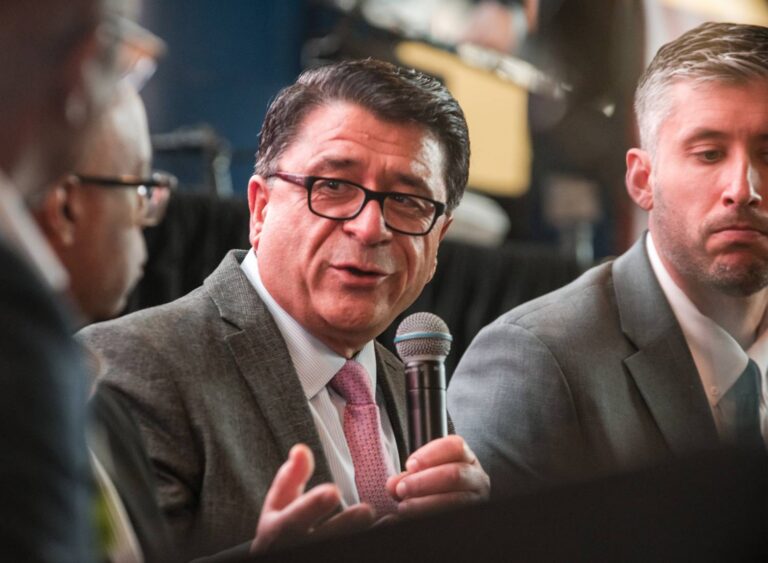
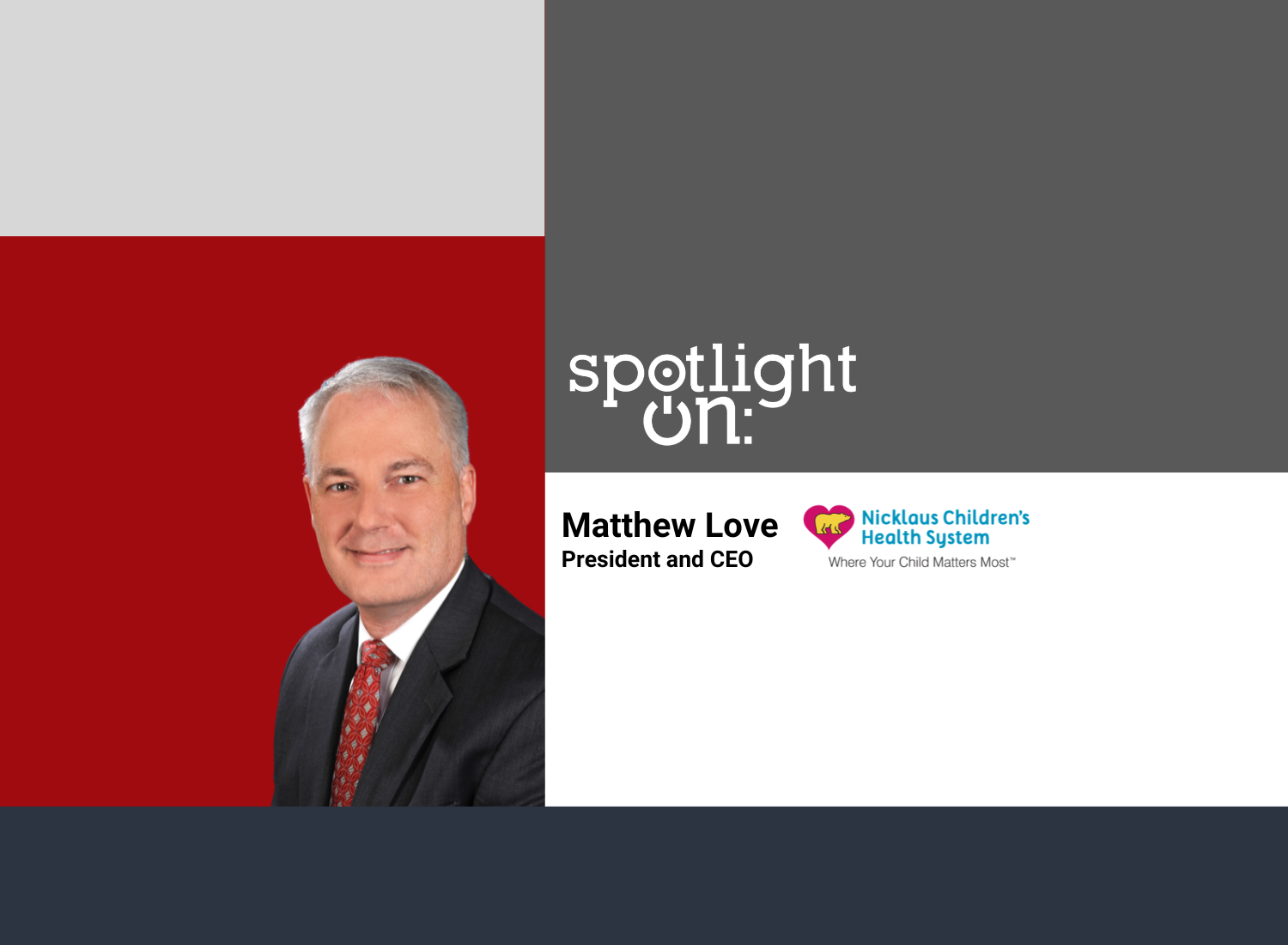 February 2026 — Invest: sat down with Matthew Love, president and CEO of Nicklaus Children’s Health System, to discuss how the organization is using precision medicine, virtual care, campus expansion, and regional partnerships to broaden access to advanced pediatric services across South Florida. Love also shared how community programs are helping the health system move upstream, strengthening prevention efforts while supporting families beyond the walls of the main campus. “We’re not just saving a child. We’re saving childhoods,” Love said.
Join us at caa’s upcoming leadership summits! These premier events bring together hundreds of public and private sector leaders to discuss the challenges and opportunities for businesses and investors. Find the next summit in a city near you!
How is Nicklaus Children’s Health System expanding precision medicine, particularly for children with rare and complex conditions?
The Center for Precision Medicine is a key component of children’s health. For sick kids, getting answers is important, and those answers need to be specific to each child’s individuality. Our focus is on how we deliver diagnoses that are more comprehensive, more accurate, and available more quickly for patients and families.
Years ago, some genetic tests could take months to come back. For families trying to understand what’s happening and what comes next, that timeline is stressful and can delay care decisions. Our goal is to shorten the path to answers, and we’re seeing broader momentum around this work.
One example is the Florida Sunshine Genetics Pilot Program, created by Gov. Ron DeSantis with an original $3 million investment from the state, along with Rep. Adam Anderson. That kind of statewide investment reinforces that precision medicine and genetics are priorities not only for our hospital, but for kids across Florida.
How are immersive tools such as virtual reality and other distraction technologies improving pain management, reducing anxiety, and enhancing the patient experience?
Immersive technology isn’t new in many industries, but in healthcare, it’s been expanding over the last few years. What matters most is that it’s not just “cool tech.” It’s a tool that can improve patient experience and clinical outcomes.
For example, adults can often tolerate procedures like MRIs without anesthesia, but children may need anesthesia to stay calm and still. What we’ve found with immersive technology is a documented decrease in anesthesia use in certain settings.
Whether it’s in an MRI environment or a dialysis room, distraction helps kids focus less on the procedure and more on an experience that feels safer and more manageable. Depending on age, it can reduce anxiety, lower perceived pain, and make the overall experience less disruptive for families.
How have telehealth and pediatric virtual care services evolved, and what role do these technologies play in expanding access to specialty care beyond a hospital campus?
For us, it’s all about access. How do we get care to kids in the communities where they live? Telehealth and virtual health help us reach more kids across a broader geographic area, including families who would otherwise need to travel long distances for pediatric subspecialty care.
That matters in rural communities, where a one or two-hour drive can be a barrier, and it matters in Miami, where traffic can also make access harder than it should be. Virtual care removes friction for families and helps us connect with patients in a way that fits their schedules and circumstances.
Technology is also much better than it was a few years ago. As it continues to improve, we’re going to see more virtual health, more patient connection, and more opportunities to deliver specialty care in ways that are convenient, timely, and clinically appropriate.
How does investment in facility growth, including advanced operating suites and new surgical towers, support your clinical mission and future care demands?
We recently opened the Kenneth C. Griffin Surgical Tower, which includes some of the most advanced pediatric operating rooms in the country. The expansion increases capacity, and we’ve hired additional surgeons to support growth, but it’s also about the complexity of the care we can provide because of the facility.
A lot of what we do is tertiary and quaternary care. The Griffin Surgical Tower enables advanced heart surgeries, brain surgeries, cancer surgeries, orthopedics, and more, all under one roof, supported by leading-edge technology and specialized teams.
Ultimately, these investments position us to meet future demand with the space, staff, and infrastructure required to care for the most complex pediatric cases at the highest level.
How are you leveraging collaboration to extend its pediatric expertise regionally and strengthen clinical and research capabilities for the state?
Nicklaus Children’s is not just a Miami-Dade organization. Our footprint extends north of Palm Beach and over to Collier County on the West Coast, including Broward County. There are a lot of kids across those counties, and our strategy is to bring services closer to where families live.
Our partnership with Broward Health means kids in Broward County don’t have to travel all the way to Miami to access world-class pediatric subspecialty care. That improves convenience for families, supports continuity, and helps ensure children get timely access to specialists.
Our partnership with Florida International University (FIU) is focused on the academic mission and research. We know a shortage of pediatricians is going to hit the country hard over the next decade, and Florida will feel that, too. Working with FIU allows us to train more pediatricians and pediatric specialists, while also advancing research and discoveries related to pediatric illnesses and diseases.
How do community connection and social responsibility programs, such as One Nicklaus, align staff engagement with broader community health and outreach goals?
Nicklaus Children’s is a people organization. We take care of kids, and we have a lot of people who work here, and we wanted to be intentional about how we show up in the communities we serve.
The idea behind One Nicklaus Children’s is not just being in the community, but being part of the community. That means our leaders and teams are out volunteering, supporting causes that align with our mission, and building relationships outside the hospital setting.
Everyone in the organization has community time off, which creates a practical way for people to participate. Whether it’s a camp for autism, Habitat for Humanity, or another mission-aligned effort, the goal is for families to see us not only as a healthcare provider but as a genuine partner.
From CPR education through Project ADAM to food rescue efforts, how are you addressing population health and prevention to create safer, healthier communities?
A children’s hospital is the last thing anybody wants to use, but people are grateful we’re here when they need us. That’s why the shift from illness-based thinking to proactive wellness and prevention has to continue in pediatrics, not just adult healthcare.
You can see that approach in programs like our hunger initiatives and screenings for every child who comes through our doors. The intent is whole health and the whole family. If we can identify needs like food insecurity and connect families with community resources, we’re supporting better outcomes beyond the immediate clinical issue.
Project ADAM is another example. It focuses on sudden cardiac arrest in schools. When seconds count, readiness matters. Through Project ADAM, we train school staff to be first responders, support drills, and help ensure the right tools are available so schools can act immediately.
We have trained every single public school in Miami-Dade County. We expect to have trained every school in Palm Beach County by the end of this school year, and we are on our way to training every public school in Broward County as well. That’s prevention work designed to get ahead of emergencies before kids ever need our facilities.
As you look to the future, how is the health system continuing education and clinical training programs to position itself as a leading pediatric teaching and learning center?
Nicklaus Children’s has the largest pediatric teaching program in the Southeast United States, and we’ve grown it over the last couple of years by expanding specific pediatric subspecialty training programs.
The workforce is directly tied to access to care. Right now, for example, there are challenges across the country getting timely access to pediatric neurologists. We’re expanding our programs to address shortages like that, and to build a stronger pipeline of pediatric specialists.
Over the next few years, especially with our academic affiliation with FIU, we expect to accelerate growth on the clinical education side. The goal is to train more specialists, strengthen pediatric capacity for the region, and ensure kids can access the right care without unnecessary delays.
What is the importance of children’s hospitals overall to the communities they serve?
I always like to re-emphasize how specialty licensed children’s hospitals are in communities. When you look across the country, great communities have great children’s hospitals. It’s a special place, from the people to the technology, to the environment, to the patient experience.
I heard it best when one of our physicians said something that really hit home: we’re not just saving a child. We’re saving childhoods. That’s a powerful statement in pediatric healthcare, because the work is not just about outcomes, but it’s also about protecting what childhood is supposed to be.
Want more? Read the Invest: Miami report.