






Spotlight On: Michael Meekins, Executive Director, Port of Palm Beach
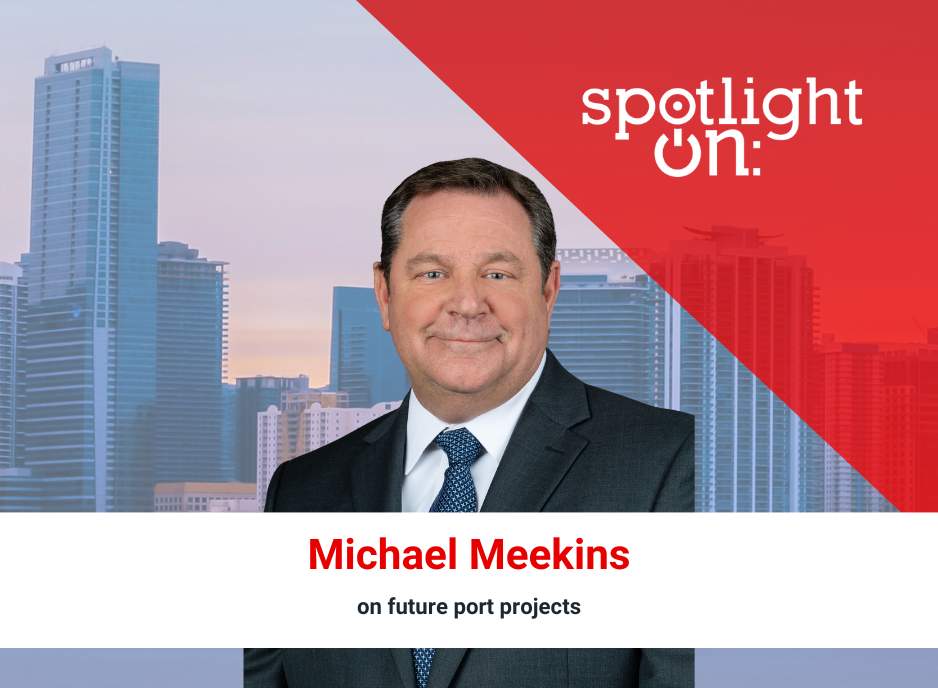 August 2025 — In an interview with Invest:, Port of Palm Beach Executive Director Michael Meekins discussed the port’s role in regional tourism, infrastructure upgrades, and economic impact. “The presence of the cruise line has a massive effect on the county, and we anticipate continued growth in this sector,” said Meekins.
How does the Port of Palm Beach’s cruise operations contribute to promoting tourism in the region?
The cruise line Margaritaville at Sea has been operating successfully at the port for a number of years. Recently, the company modified its itineraries, which has positively affected the local community. The ships are filling up, attracting more visitors who stay both before and after their cruises. These guests come from across the country and spend money in Palm Beach County, which benefits the local economy. Additionally, the cruise line sources its food and other supplies locally from Palm Beach County. The cruise line has a massive effect on the county, and we anticipate continued growth in this sector.
Although cruise lines generally set their own itineraries with minimal input from the port, in 2025 Margaritaville at Sea updated its routes to include stops, Nassau, Key West, and Mexico.
The cruise line has expanded its offerings from an every-other-day schedule to include voyages lasting two, three, or four nights. This variety helps attract customers from different regions, further boosting tourism and economic activity.
What factors have contributed to the port achieving record revenue in fiscal year 2024?
The expansion has been a gradual process over the past two years. During this period, we have increased revenues by approximately 25% and have grown our adjusted net income by 174%. Financial success is critical because it enables us to maintain and improve port infrastructure, which is costly due to our waterfront location. These gains enable us to better support our tenants’ growth and strategically invest in future projects.
By generating sufficient revenue, we ensure the port remains a vital economic engine for the region.
What can you tell us about the Port of Palm Beach’s Port Infrastructure Development Program (PIDP)?
The infrastructure project began a few years ago and represents an investment of nearly $30 million. It involved replacing and upgrading all rail systems within the port, including switching mechanisms, which enhances operational flexibility for cargo handling. Additionally, the front entrance roadway system is becoming more automated, incorporating AI and other technologies to expedite truck movement. The port already processes trucks faster than many other ports, and these improvements will further reduce transit times. This modernization supports increased rail usage, reduces truck congestion, and enhances overall efficiency.
Furthermore, the PIDP is a federally funded initiative, and it is a good example of how the port collaborates with federal and state agencies to streamline operations and advance both port and regional interests. We are already preparing for the next phase of PIDP funding as financial sustainability is crucial, and it enables us to match federal grants and reinvest in port improvements. Our ability to generate revenue ensures we can continue enhancing services for our tenants and the community.
Given the corporate relocations, business expansions, and population growth in South Florida and Palm Beach County, how has this trend impacted job creation at the port?
The port continuously collaborates with its tenants to facilitate growth, not just in the present but also with long-term planning for the next 10 to 15 years. Job creation is a key focus, as we aim to maximize revenue per square foot given our limited space. We support various industries, including logistics, trade, construction, and agriculture and are committed to fostering employment opportunities that align with regional economic expansion.
What are the primary destinations for exports, both domestically and internationally, given that the port is an 80% export-oriented facility?
The majority of exports from the port go to the Caribbean. However, this ratio is gradually shifting. Over the next five years, we anticipate a more balanced distribution, potentially reaching 60% exports and 40% imports. We are diversifying our trade by increasing inbound shipments of bulk commodities such as cement and granite, which are essential for Florida’s construction industry. This adjustment reduces our reliance on Caribbean exports and strengthens regional supply chains.
In what ways does the port create ripple effects across key industries?
The Port of Palm Beach operates 165 acres, processing more than $14 billion in commodities, 2.5 million tons of cargo, and 400,000 cruise passengers annually, which means that the port significantly impacts multiple sectors, particularly construction and tourism.
Across Florida, the 16 ports collectively support 1.2 million jobs, contributing approximately $195 billion in economic value. The ports also generated about 13% of the state’s gross revenue and $7.4 billion in local and state taxes. These figures demonstrate the extensive economic influence of port operations, extending far beyond immediate maritime activities.
What initiatives or programs is the Port of Palm Beach implementing in order to promote workforce development?
The port offers a fantastic internship program that provides young professionals with exposure to port operations, potentially inspiring future careers in the industry. Additionally, our tenants run various workforce initiatives. For example, Tropical Shipping offers training programs for managers, truck drivers, forklift operators, and warehouse personnel. These efforts strengthen community partnerships and ensure a skilled labor force to support ongoing and future port activities.
What are the main cargo types and ocean carriers that you work with, and which of them represent the largest market share in your trade and logistics activities?
Tropical Shipping handles the most cargo in terms of 20-foot equivalent units (TEUs). TEUs can encompass nearly any type of cargo. On our exports to the Caribbean, furniture is one of the largest commodities shipped, which may come as a surprise. For imports, gold and currency are significant, along with frozen French fries from Canada. The range of commodities is highly variable, but approximately 60% of all goods consumed in the Caribbean pass through this port. This includes a diverse array of products. On the import side, bulk cement, granite, and rock are major commodities, particularly as building materials. These items are currently being imported in large volumes, and we anticipate even greater movement in the future.
What are some of the main challenges that the Port is facing at the moment?
Our two most significant challenges are land space limitations and berthing capacity. As a smaller port, we must be highly creative in optimizing our available space. Regarding berthing, vessels must be unloaded and dispatched efficiently. Delays can cause congestion, as we have limited capacity to accommodate multiple ships simultaneously. While we currently do not have a waiting list, there are instances where berthing becomes complex due to overlapping vessel arrivals. Looking ahead, we are planning for the next 10 to 15 years to ensure we can handle future growth without operational disruptions.
Another important issue we faced in 2025 involved proposed tariffs on companies using Chinese built ships. The tariffs could have severely impacted some of our tenants including our largest tenant Tropical Shipping. Initially, these tariffs were highly restrictive and posed financial challenges. However, the Port of Palm Beach was among eight U.S. ports invited to meet with the Office of the United States Trade Representative. We provided recommendations to mitigate the financial burden, and many of these suggestions were implemented. Additionally, we maintain strong partnerships with agencies such as the Department of Commerce and the Florida Department of Transportation. Their grant funding is instrumental in port development, with every $1 invested generating approximately $4 in economic return. These collaborations benefit not only the port but also Palm Beach County and the broader region.
Is the port considering expansion through new infrastructure, additional terminals, or increased land occupancy?
Yes, we are exploring multiple solutions. One approach involves relocating certain commodities that do not require direct port access. For example, some goods could be transported via rail to off-site facilities near the turnpike. This would free up port space for tenant expansion while reducing truck traffic through the city, alleviating congestion at the port’s front gate and on local roads. We are continuously evaluating ways to improve efficiency and prepare for future demands.
Looking at the future, what are your main priorities and growth plans over the next two to three years?
Our primary focus is on creating additional space. As existing leases expire, we assess the most effective use of the vacated areas. We are also working to relocate non-essential commodities off-port to maximize capacity. Additionally, we are refining our berthing strategies to accommodate growing demand from our partners, ensuring we can support their expansion without operational bottlenecks.
For more information, please visit: