






Spotlight On: Orlando Roche, Market President, First Horizon
Key points:
- • First Horizon combines a relationship-driven model with the scale to deliver integrated banking, wealth, and advisory services.
- • Strong wealth, trust, and family office demand is rising in Miami as global capital and high-net-worth families relocate to South Florida.
- • The bank is investing heavily in technology, AI, and cybersecurity while maintaining a client-focused service model.
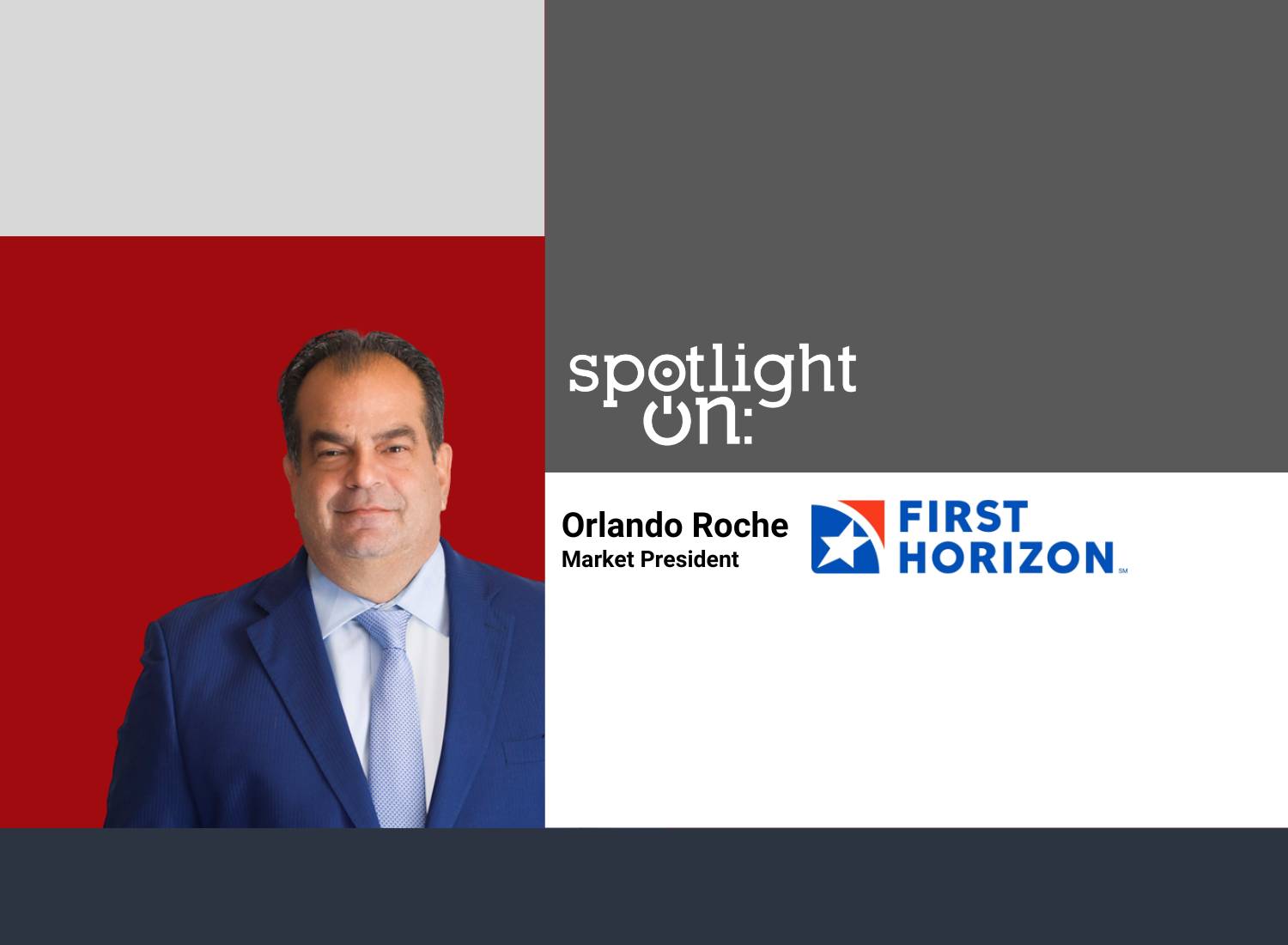 March 2026 — Invest: spoke with Orlando Roche, market president of First Horizon, about how the bank combines a relationship-first model with the scale to deliver wealth, commercial, and digital capabilities across South Florida. “At the end of the day, the difference between banks is the way you service clients. Everybody has the same products, so it really comes down to the relationship and the experience,” Roche said.
Join us at caa’s upcoming leadership summits! These premier events bring together hundreds of public and private sector leaders to discuss the challenges and opportunities for businesses and investors. Find the next summit in a city near you!
How does First Horizon enhance client engagement and deliver more personalized solutions across private, business, and retail banking?
At the core, we are a relationship bank, and we’re focused on helping clients wherever they need us. One thing that makes us a little unique is our size and how we’re structured. We’re close to $85 billion in assets, so we’re approaching that $100 billion mark. At the same time, we run it much like a community bank.
In many large banks, someone in my role wouldn’t exist. I’m a market president, and the lines of business report to me. That structure makes it easier to ensure private banking, wealth management, and commercial banking work together to find the right solution for a client. In larger institutions, where everything is separated by line of business, you can end up with silos, and sometimes you don’t operate as efficiently in meeting a client’s overall needs.
We work to build the relationship, and we try to lead as thought leaders. We do financial planning and other work that adds value beyond what we sell. The goal is to understand what the client is trying to accomplish and bring the right people together to support them.
Wealth management and private banking are key offerings for First Horizon. What initiatives are underway to deepen those services?
That has been at the core of what we’ve done for a long time. We take care of companies and firms as they grow, but we also focus on the individuals behind those businesses. We have a strong wealth management offering and trust platform, and we also have a strong financial planning group that adds value, including retirement planning and long-term guidance.
We also provide family office services, and we’re seeing meaningful demand for those capabilities in Miami and South Florida. There’s been a significant amount of wealth moving into the region, and Miami has been a major destination. Early on, some of that was driven by tax considerations. Today, we’re also seeing people bring businesses and investment activity with them, which creates more complex planning needs.
Miami has always been international, but it has become more global in its mix of clients and capital. We’re seeing growth from a wide range of geographies, and that’s why we’ve continued building a model that can support multigenerational families with banking, planning, trust, and advisory needs under one roof.
How is First Horizon leveraging digital platforms, technology, and other tools to modernize banking services and improve operational efficiency for clients locally?
At the end of the day, the difference between banks is the way you service clients. Everybody has the same products, so it really comes down to the relationship and the experience.
Technology is now a major part of service. Clients want answers on their phone. They want to make transfers, access information, and manage services quickly and securely. The bank has been investing heavily in technology. In the last year, we put more than $100 million into improvements that were needed, and we’re continuing to expand those capabilities.
AI is also going to impact every industry. We see it as a tool to help us be more efficient and to provide a better quality of service. We’re using it internally in different areas, and I don’t view it as something that has to replace people. I view it as something that can make people more successful at what they do.
In a rapidly evolving financial landscape, how do you balance innovation with risk management and cybersecurity to protect clients?
It’s critical. Fraud across the banking industry is rampant, and attacks come from many directions. Technology is a major factor in protecting the bank and protecting our clients, and we’re continuing to invest to maintain strong safeguards.
But it’s not only technology. Education matters, too, because a lot of the time, the way criminals get information is through phishing and other tactics that rely on human error. Banks are hard to attack directly, so bad actors often try to attack clients instead. That’s why we spend time training and advising clients on best practices, while also strengthening our own systems and controls.
As a regional bank with the capabilities of a larger institution, how do you differentiate First Horizon from competitors?
For a bank of our size, we have a lot of expertise across a wide range of services. We can help with residential mortgages, commercial mortgages, and C&I lending, and we continue to grow our commercial business. We also have specialty groups, including asset-based lending, a franchise group, a medical group, and commercial real estate capabilities.
The key is how you deliver. Clients don’t operate in silos, and they don’t want their bank to operate that way either. A client might own a company, invest in real estate, manage liquidity, and have treasury management needs all at once. Our job is to understand the full picture and bring together the right capabilities so the client gets a coordinated solution, not a fragmented one.
Given current economic and market conditions, what are some of the major financial concerns you are hearing from business clients, and how is the bank addressing these?
There was a period where uncertainty was the dominant theme. Even experienced operators weren’t sure what the rules of engagement were, and there were questions about tariffs and how different policy outcomes could affect business decisions.
That uncertainty caused some paralysis. Clients debated whether it made sense to invest, expand facilities, or make long-term commitments when they didn’t know what the next set of conditions would look like. Over time, people started to recognize it’s a process. Something may start high, but then it gets adjusted because, at the end of the day, there’s negotiation.
As that became clearer, we started seeing activity return. I see more confidence and forward motion, even though there are still issues under the surface. Our role is to stay close to clients, help them plan through uncertainty, and structure financing and liquidity in a way that supports the opportunities they want to pursue.
How do you cultivate and retain top talent, and what cultural qualities do you see as essential for success in market leadership?
If I had to narrow it down, this business is about people. Even with technology, it comes down to having the right team. If you have the best people, you usually win.
You need to be genuine, and you need a culture that cares about associates. A lot of organizations say clients first, and clients matter, but I put associates first in every decision I make. If you care about people and your team, and you have happy associates, you’re eventually going to have happy clients.
We invest in people through training and development, and we believe in giving opportunities internally so people can grow. That matters for retention, and it’s a big reason associates have stayed with us through mergers and acquisitions. That continuity is a real differentiator.
Looking beyond the bank, what stands out to you about Miami’s evolution, and where do you see both the opportunity and the challenge?
Miami is changing fast. I was born in Cuba and came to Miami at 13, so I’ve watched the city evolve over a long period of time. It’s becoming a global city with growing influence.
With growth comes challenges. Infrastructure has to keep pace, and traffic is an obvious example. Those quality-of-life issues have to be addressed if Miami is going to sustain its momentum.
I also think it’s important to invest in the community. We spend time giving back, and that matters to us. Personally, I sit on several boards, including FIU, and education is important. I also sit on the board of Baptist, which is a major health system in South Florida. We try to give back to the community that provides a lot for us, and that’s part of responsible leadership here.
Want more? Read the Invest: Miami report.