






Spotlight On: Phyllis Saathoff, Executive Director & CEO, Port Freeport
Key points:
- • Port Freeport’s long-term investments in channel depth, cranes, and infrastructure are strengthening competitiveness.
- • Diversification across energy, automotive, and cold-chain logistics is expanding growth opportunities.
- • Workforce training, technology adoption, and supply chain shifts are shaping the port’s next phase.
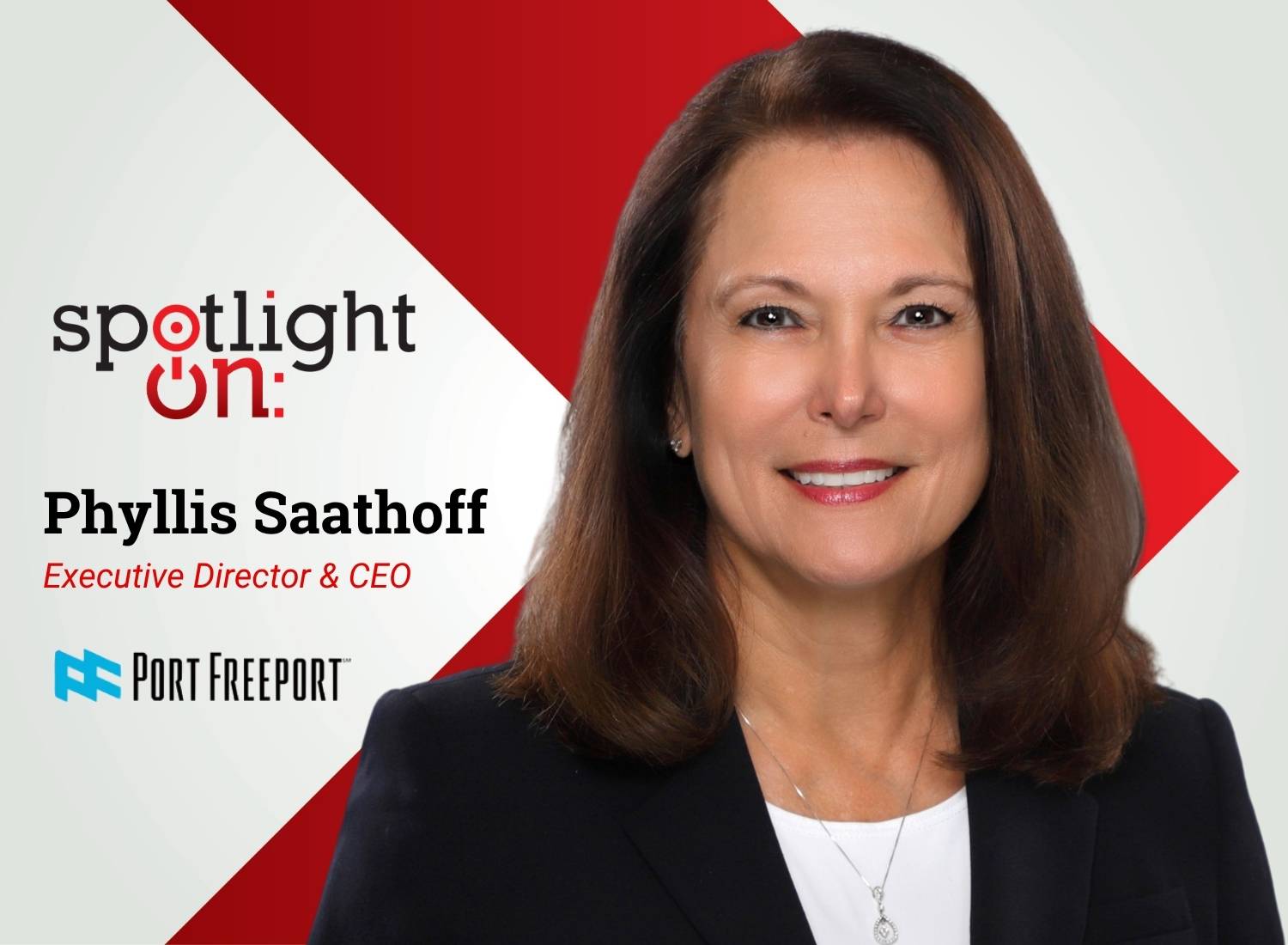 April 2026 — Invest: spoke with Phyllis Saathoff, executive director and CEO of Port Freeport, about the port’s centennial milestone, major infrastructure investments, and how trade, technology, and workforce priorities are shaping its next phase of growth. “To stay competitive, you have to plan ahead,” Saathoff said.
What recent trends, especially in the trade and energy markets, have had the biggest impact on Port Freeport?
2025 was a significant year for Port Freeport as we marked the centennial of the entity’s creation by the voters of Brazoria County. In 1925, voters established the port authority to engage with the U.S. Army Corps of Engineers to divert the Brazos River, so that the region would have a reliable port of entry, free from the siltation and flooding the river often brought. By 1929, the diversion was complete, and the old river was closed off. That decision set this region up for long-term success with a dependable gateway to global trade.
Celebrating 100 years underscores how much investment this waterway has brought to the community. It continues to support economic activity, create jobs, and sustain households across the region.
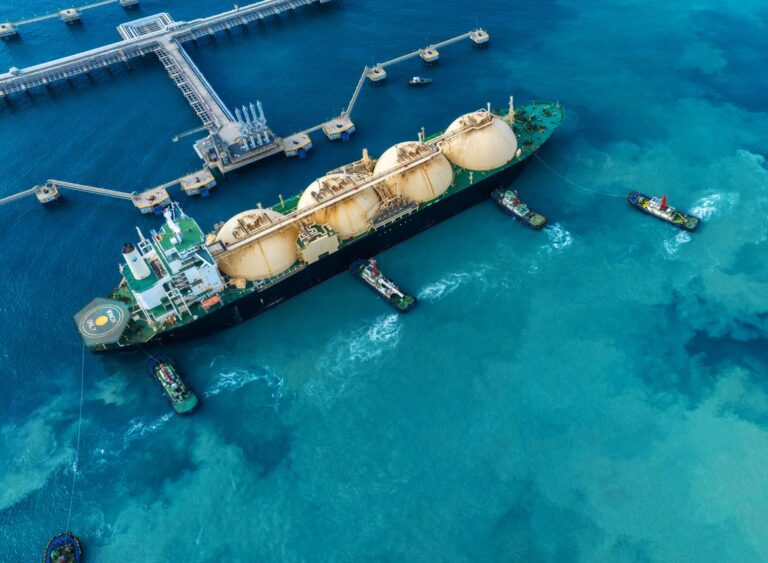
Texas remains a critical energy state and one of the nation’s largest exporters of energy products. Port Freeport was home to the first liquefied natural gas facility built in Texas, and today Freeport LNG continues to drive robust exports, alongside Phillips 66 and its refined gases, jet fuels, and liquid propane gas. Those energy-related commodities remain strategic growth areas for us.
At the same time, we have seen growth across all of our commodity sectors. Our roll-on, roll-off activity has expanded rapidly over the last decade, reaching just shy of 200,000 finished vehicle movements, imports and exports combined, in the most recent fiscal year.
We also serve as a major gateway for fresh fruit, with Dole Fresh Fruit, Chiquita Fresh, N.A., and Fresh Del Monte Produce all operating through Port Freeport. From chemicals and steel to agriculture and automotive, we support a diverse mix of industries that rely on efficient commercial gateways.
With the channel deepening project newly completed and terminal upgrades coming online, how do these investments change your competitive position?
Port Freeport has taken a methodical approach to executing a long-term vision for growth. To stay competitive, planning ahead is essential, and that effort began just after the turn of the century.
We are now completing a harbor channel improvement project that brings 56 feet of depth to our crude oil import-export facility and 51 feet into the port’s container terminal. Those depths were selected strategically after conversations with container carriers and other stakeholders, even before the Panama Canal expansion was underway. When the expansion moved forward, we were well-positioned with a channel depth capable of accommodating the larger vessels that transit the canal.
That alignment strengthens our competitive position in the container market and allows us to handle larger vessels efficiently.
We also invested in super post-Panamax ship-to-shore gantry cranes with a 22-container reach and the height to serve larger container vessels. These are long-term assets, and we made those investments with future growth in mind.
Altogether, between the harbor channel improvement project, new cranes, expanded berthing, storage area development, and rail infrastructure, nearly $750 million has been invested in the port through a combination of port funds, federal participation, and grant funding. Those investments ensure we can offer the water access, shoreside capacity, and inland connectivity that companies require.
Operationally, we also benefit from having the shortest deepwater channel in the Gulf of America. Pilot boarding occurs just a few miles offshore, and vessels can be in berth and working within approximately an hour to an hour and a half. Vessels do not navigate bays or estuaries, nor are there any air draft restrictions. That efficiency is a real differentiator for our port.
On the land side, state investments in highways, including improvements to State Highway 288 and the expansion of State Highway 36, enhance connectivity to and from the port. Those projects support long-term growth across Brazoria County and the greater Houston region.
We are receiving regular inquiries from companies seeking land and deepwater access. Momentum around reshoring and domestic manufacturing has accelerated interest, and Texas continues to provide a highly competitive environment for business.
How are you balancing diversification while building on your core strengths, and how are you keeping focus on what is best for the port?
We evaluate opportunities based on three primary factors: land availability, water depth, and existing infrastructure. Those fundamentals determine which sectors are the right fit for Port Freeport.
The port owns approximately 3,000 acres, with thousands of acres suitable for development. While not all of that land is directly on the channel, much of it is nearby and strategically located to support port-related activity.
We see opportunities for additional manufacturing, warehousing, and distribution facilities, whether on port-owned land or elsewhere in Brazoria County. As development expands along key corridors, we expect further opportunities in containers, roll-on, roll-off, heavy equipment, and automotive operations.
Our strongest emphasis remains on the container sector, given the scale of recent investments. We are focused on putting that infrastructure to work and realizing returns.
At the same time, we continue to pursue logistics infrastructure that supports cargo diversification. One example is Cross Dock 2, a new temperature-controlled facility that will expand our ability to handle refrigerated and frozen cargo and support cold-chain logistics at the port. We anticipate breaking ground in the second quarter, with construction beginning later in 2026.
We also have prime sites near deepwater access that could support additional liquid bulk activity and new berths over time. In addition, we have environmentally mitigated land ready for development, including a 250-acre site near our berthing facilities where we plan to extend rail infrastructure. That site could support manufacturing, packaging, distribution, or expanded roll-on, roll-off operations.
The key is identifying the right long-term partners who align with our infrastructure and growth strategy.
What changes have you seen in North American supply chains, particularly related to Mexico and nearshoring?
Our strongest connection with Mexico is in the automotive sector. One of our tenants operates facilities in Mexico and moves finished vehicles to Port Freeport by rail or short-sea shipping.
Mexico has long been a top trading partner, supported by the United States-Mexico-Canada Agreement (USMCA), which reinforces regional production and supply chain integration. Energy trade between Mexico and Texas remains significant, and we expect that to continue.
Recent tariff activity has introduced some disruption, but disruptions are not new in our industry. Whether it is storms, power outages, or policy changes, the key is resiliency — adapting and identifying opportunities within change.
We are seeing shifts in sourcing and manufacturing patterns. Port Freeport is open to global trade, not just north-south flows. Relationships with markets such as India may expand as manufacturing footprints evolve.
Supply chains are dynamic. Companies manufacture in multiple countries, and goods move in both directions. As reshoring progresses, we anticipate growth in exports of U.S.-manufactured products, alongside continued import activity.
What does the talent pipeline look like locally, and how are you addressing workforce and technology needs?
Ports rely on a diverse workforce. From longshore labor handling cargo to truck drivers and yard operators, every role is essential to keeping cargo moving efficiently.
We work closely with the International Longshoremen Association to modernize training and ensure safe, efficient operations. Training reduces injuries, improves productivity, and enhances reliability.
Technical expertise is equally important. Our ship-to-shore cranes are electric-powered and computer-driven, requiring skilled electricians and technicians. We collaborate with technical schools, community colleges, and maritime programs such as Texas A&M Galveston to help build that workforce pipeline.
Cybersecurity is another growing priority. As a landlord port, we manage infrastructure and security systems, and protecting those systems is critical. At the same time, emerging technologies such as artificial intelligence present opportunities to improve efficiency and data exchange. Leveraging those tools requires continued investment in IT talent and systems.
Remaining competitive means embracing technology while ensuring we have the right expertise in place.
Looking ahead, what are your top priorities for the next three to five years?
Our priorities include attracting new business, leveraging available grant funding to accelerate development, and continuing to build out port infrastructure.
We will remain focused on workforce development and strengthening our technology capabilities. Strong partnerships at the local, state, and federal levels are essential to making wise investments and maximizing the impact of every dollar, whether public or private.
Importantly, Port Freeport operates without a tax rate. Although voters previously authorized an ad valorem tax, it was eliminated in 2024. We are repaying existing bond obligations directly from port revenues, which underscores our business-minded approach.
For companies considering Brazoria County or the greater Houston region, Port Freeport offers efficient infrastructure, strategic connectivity, and a collaborative environment. We are well-positioned to help companies find the right port solution for long-term success.
Want more? Read the Invest: Houston report.