





Spotlight On: Ricky Smith, General Manager, Hartsfield-Jackson Atlanta International Airport (ATL)
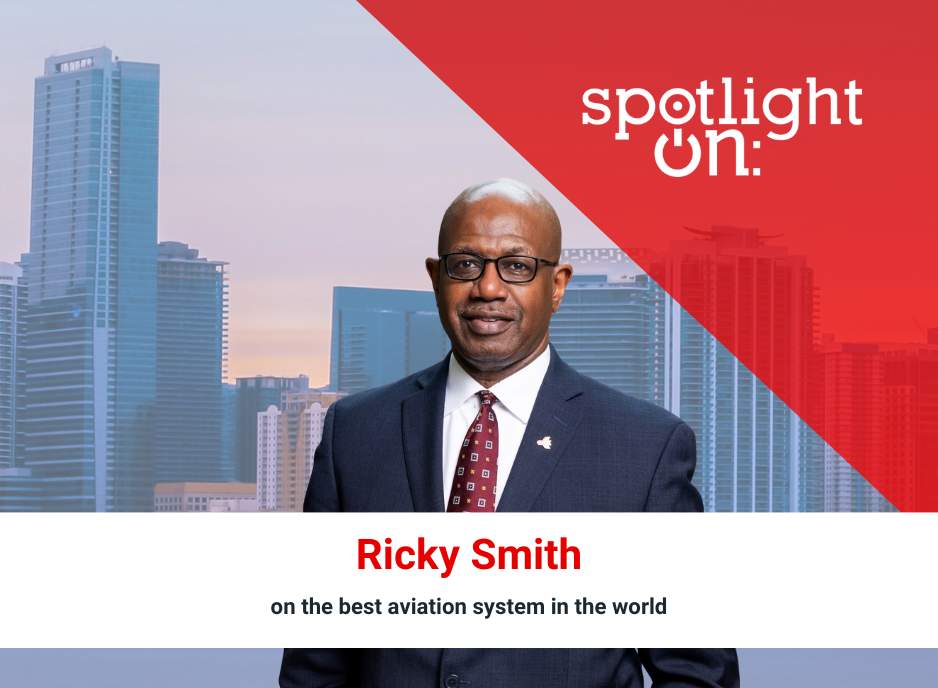 August 2025 — As Hartsfield-Jackson Atlanta International Airport commemorates its 100-year anniversary, the airport system continues to position itself as a key driver of growth for the region. With 108 million passengers passing through in 2024 — nearly surpassing its pre-pandemic record — ATL remains one of the busiest and most strategically significant airports in the world. Focus: sat down with Ricky Smith, general manager of Hartsfield-Jackson, to discuss how infrastructure investments, sustainability initiatives, and long-term planning are supporting the airport’s growth and reinforcing its critical role in the metro Atlanta economy. “The Centennial is a celebration not just for ATL and Delta, but for the entire community,” Smith said.
What immediate operational challenges have you identified since taking over, and what strategies are you prioritizing to address them?
A major challenge is rethinking how we view the airport system. The community already recognizes the airport as a major economic driver and the largest employer in the region. It is the busiest airport in the world, contributing more than $60 billion in economic impact and supporting over 300,000 jobs.
However, to maintain and grow that position locally and internationally, we must avoid resting on our laurels. While we are proud to be the busiest, that alone doesn’t make us great. Our strength comes from our talent, our geographic advantage, unlike most airports in the country, and an economy built on innovation, diversity, and community collaboration.
These factors create an environment that supports strong travel and commerce. As long as the region remains engaged in healthy domestic and international commerce, the airport will benefit.
Operationally, it is important to recognize that passengers are not coming to the airport; they are coming through it. No one plans to spend the day at the airport. It is a means to an end. Our focus is to make that experience as pleasant, convenient, and seamless as possible.
Although we are globally recognized, ACI named us the best airport in North America, that is not enough. We must continue to improve the passenger experience and maintain our role as a top economic driver, ensuring that all airport users have the best experience possible.
How do you view the current state of the aviation industry, and what major trends do you expect to shape it over the next few years?
Despite recent challenges, we still have the best aviation system in the world. Aviation remains the safest mode of transportation globally, putting us in a strong position.
However, there is work ahead. The skies are more crowded, and the infrastructure supporting that demand is strained. Staffing, technology, and funding all face pressure. National policy must sharpen its focus on improving infrastructure to maintain the safest skies.
Airports across the country are prioritizing customer experience, even as growing passenger volumes make that increasingly difficult. Higher traffic strains facilities, and greater investment is essential to maintaining quality service.
The federal funding model, particularly the Airport Improvement Program, has not kept pace with rising infrastructure needs. Inflation and higher costs have eroded spending power, limiting resources for critical projects.
Staffing remains a challenge, especially in technical fields like aircraft maintenance and air traffic control. Still, the industry has a strong record of resilience and will continue to lead as the best aviation system in the world.
What shifts in passenger preferences are most influencing airport operations and development strategies?
Passengers are seeking more predictability when traveling. They want to plan their journey to and through the airport using available technologies. Airports are finding ways to provide access to the airport experience before travelers even arrive, using social media and digital tools.
Once at the airport, passengers expect a sense of the local community, along with national and international offerings, often delivered through concessions and retail programs. Airports are also using art to reduce anxiety and enrich the travel experience.
With many passengers spending several hours at the airport, improving that time is critical. TSA processing remains a major factor. Even with advanced technologies, processing 108 million passengers annually still results in wait times of two to three hours, and we are working to reduce that.
Parking is another key part of the experience. We have a large parking infrastructure and are expanding it with a new deck offering between 1,300 and 6,400 additional spaces. It will feature a parking guidance system that keeps the facility open until it reaches 100% capacity by directing drivers to available spaces, reducing search time and passenger stress. As travelers become more familiar with the system, it should improve predictability and enhance the airport experience.
What initiatives does the airport have in place to support sustainability?
Sustainability means different things to different people, but it most often refers to reducing the carbon footprint. We are committed to this through construction programs aimed at achieving LEED standards. Our Concourse D project and others have earned high LEED ratings.
We are expanding recycling efforts, working with concessionaires on better food waste and compost practices, and increasing solar panel installations, starting with our fire stations and expanding across the airport campus.
Sustainability also includes workforce development. We are working to establish ATL as an employer of choice by implementing an integrated talent management system that aligns employee productivity with strategic priorities. A comprehensive training and development program will support this effort.
Beyond internal initiatives, we operate one of the largest workforce development programs in the country. We are not only inspiring talent to consider aviation careers but also actively developing and recruiting that talent. These efforts form the foundation of a comprehensive sustainability strategy we plan to expand.
What investments or upgrades does the airport have in place, and which do you consider most critical to future-proof ATL’s infrastructure?
Passenger travel is increasing and will continue to grow. We are preparing to accommodate 125 million passengers in the coming years. This growth will strain the roadway system, parking facilities, holding rooms, restrooms, and food and retail spaces.
One of our first steps to handle this growth is the renovation of Concourse D, where we are introducing next-generation restrooms. At BWI, I helped implement restrooms considered the best in the country. ATL’s will be even better. We are already modeling and engineering them carefully because restrooms are among the top passenger complaints. Getting this right will greatly improve the customer experience.
Beyond restrooms, we are using an innovative project delivery method to execute construction without disrupting terminal operations. The Concourse D expansion will widen the concourse and offer larger hold rooms, wider hallways, bigger restrooms, and more concessions, all aimed at meeting growing demand.
We are also preparing to refresh our master plan, which guides how the airport will use its property over the coming years. Updating the plan will help us reimagine the campus to support more than 125 million passengers annually.
Are there any new markets or routes that ATL is focusing on to maintain its competitive edge in global connectivity?
While I cannot reveal specific markets, we have a clear understanding of our unserved and underserved markets, especially internationally. That list is longer than we would like.
ATL has a robust international relations program, complemented by the City of Atlanta’s sister city program. We are aligning these efforts with air service development to present a unified front to potential carriers.
One example is India. There is a significant Indian population in the Atlanta region, but the market remains underserved. We are engaging both prospective and existing carriers to develop services to markets like that.
How is ATL positioning itself to capture future growth in air cargo and logistics?
It is often understated how much cargo is carried in the belly of passenger aircraft. Handling more than 100 million passengers provides significant belly capacity. Currently, we rank as the 13th or 14th largest cargo airport in the country.
We intend to leverage our passenger volume to strengthen our cargo position. Historically, cargo has not been a major focus for ATL, but that is changing. As we expand our air service development program, we are bringing in the expertise needed to sharpen our focus on cargo and freight development.
This strategy will build on our existing infrastructure and help us expand into new markets where relationships are already established.
Looking ahead, what is the outlook and what are the strategic goals for ATL?
New buildings, construction projects, and equipment like the 14 new cars in our Plane Train operation are exciting and visible. But the most important part of the organization is the talent, which is less visible yet critical.
We are making significant investments to align our organizational structure and workforce with the airport’s strategic priorities. This means not only leveraging the existing talent at ATL but also adding new expertise where needed.
Setting a clear vision that the entire organization can rally around is essential. There is a lot of excitement about finding that next level, and we will define it in partnership with the community.
We are also celebrating our centennial, marking 100 years of the airport and our first cargo flight. This milestone coincides with Delta Air Lines’ 100th anniversary. The two organizations have grown alongside each other, underscoring their importance to the region. The Centennial is a celebration not just for ATL and Delta, but for the entire community.
For more information, please visit:
https://www.atl.com/