






Spotlight On: Rory Ritrievi, CEO, Mid Penn Bank
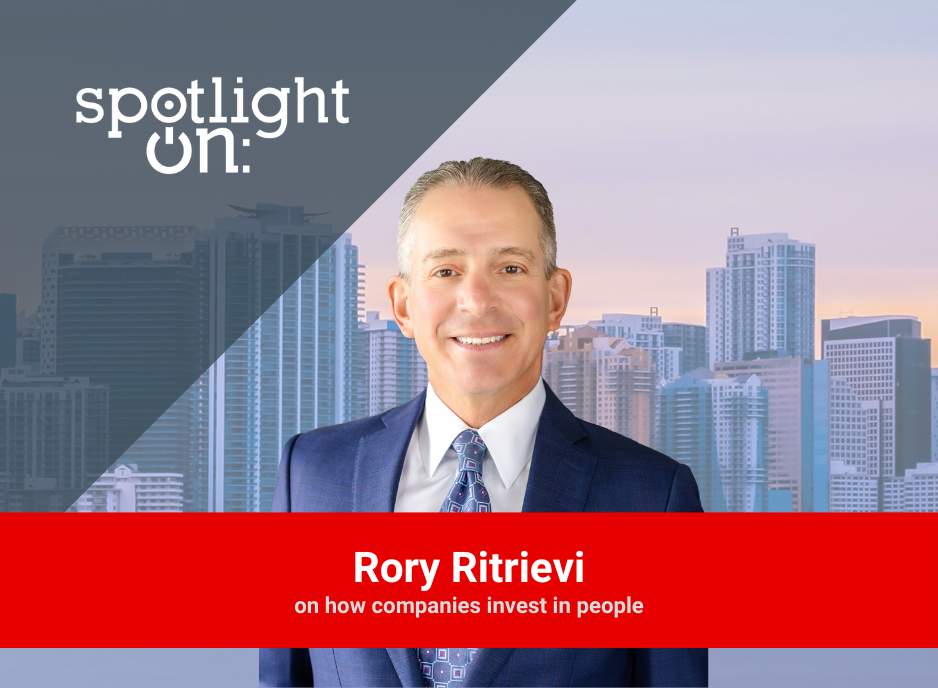 August 2025 — In an interview with Invest:, Rory Ritrievi, President & CEO of Mid Penn Bank, discussed navigating rate volatility, investing in community and employee growth, and expanding into Greater Philadelphia. “Our goal is not just to build a strong bank but to set a higher standard for how companies invest in people.”
What have been the biggest challenges facing the financial industry recently, and how are you addressing them?
Interest rate volatility, which intensified in 2022 and peaked in early 2023, has posed a major challenge. It contributed to instability at institutions like Silicon Valley Bank and Signature Bank due to poor balance sheet management. These elevated rates continue to impact everything from residential mortgages to commercial loans and really all spread-based businesses. Our ongoing focus is on finding the right balance of quality loan activity with solid pricing to offset rising deposit costs.
AI is another transformational force. We formed a task force last year to explore its role in banking. While we are already using AI, its impact will only grow. We’re not trying to become an AI company. Instead, we want it to help employees work more efficiently and provide customers with 24/7 access to advice and service. I recently addressed staff concerns directly, reassuring them that we won’t replace people with AI. Human interaction remains essential, especially in business development and customer service. AI will support, not substitute, our teams.
Younger generations expect digital convenience, but they still value real connection. We believe technology should enhance, not replace, those relationships.
What credit and growth trends are you seeing among business clients right now?
We just released our quarterly earnings. It was a solid quarter, but we had negative organic loan growth. The total loan balance grew due to our acquisition of William Penn Bank. Without that, we saw a decline, mainly because commercial real estate projects were refinanced after completion, often with non-recourse financing.
Loan demand was soft over the first four months of the year, maybe the softest I’ve seen in more than 15 years. Borrowers were being cautious. But, as trade deals occur, confidence is growing, as is our loan pipeline. There’s also ongoing uncertainty about interest rates. Businesses are unsure whether to borrow now or wait for a potential rate drop.
The broader economy feels unpredictable as indicators are telling mixed messages. One day, the markets look strong, but the next, they don’t. It makes long-term planning harder.
That said, I’m not sounding any alarms. We saw demand pick up in May and June. But overall, the first half of the year has been slower, driven by tariff concerns, interest rates, economic uncertainty, and international conflict.
How do you see small businesses playing a role in economic resilience, and how does the bank support them?
Small businesses are the backbone of the U.S. economy. Community banks like ours play a key role because many small businesses can’t get the financing they need from large institutions. Whether starting, expanding, or transitioning ownership, they rely on banks like us.
That relationship helped the country recover quickly after the 2007-2008 crisis. Small business owners are resilient. They make personal sacrifices and push through tough periods. Their dedication often drives the broader economy forward.
I’ve always believed in the power of small businesses and their deep connection with community banks. Behind every successful shop or restaurant is a family working hard to keep it going. That’s what makes them special, and it’s why we remain committed to supporting them.
What role does Mid Penn Bank play in supporting housing affordability and workforce housing?
We are active lenders in housing projects across our footprint. Construction lending has always been an important aspect of what we do and it is close to me. It was one of the first things I did as a young banker. I remember financing a builder who worked on a model home in the neighborhood I live in now. That was in 1990, and from that point on, I was hooked.
Helping people buy, refinance, or build homes is one of the most meaningful parts of banking. There is a lot of nobility in this work. Beyond lending, we also contribute to affordable housing initiatives. These contributions may be in the form of equity, which earns us tax credits, or as direct lenders on housing developments.
Affordable housing has become even more important to me personally. I have three daughters who are starting their adult lives and trying to buy homes. It is not easy. As a country, we should prioritize helping young people find homes they can afford. Strong families need a place to live, and ensuring access to decent, affordable housing is a responsibility I take seriously.
How does the bank support community engagement through events and financial literacy initiatives?
This year marked our 10th Mid Penn Bank Celebrity Golf Classic. To date, we’ve raised over $1.15 million for several breast cancer charities including the PA Breast Cancer Coalition, which advocates for mammogram access, supports newly diagnosed women, and funds research. A key part of the event is Project Pink, where celebrity spouses, employees and community members create care packages and write notes of encouragement. Over time, we’ve expanded our giving to include groups like the American Cancer Society, Penn Medicine Basser Center, and MD Anderson Cancer Center.
Years ago, we began working with Steelton-Highspire High School, a lower-income district in Central Pennsylvania. Employees taught weekly sessions on banking careers and financial basics, and I encouraged students to consider banking as a career. Today, we offer similar financial literacy programs across our growing footprint in Pennsylvania and New Jersey, coordinated by a dedicated team member. We also built an online platform where students can continue learning about budgeting, saving, and managing credit.
Our employees are the heart of it all. Last year, they contributed more than 13,500 volunteer hours, not including our fundraising events like No Shave November, which has raised another $1.3 million for prostate cancer. Growing up, I didn’t have access to financial education, so I know firsthand how impactful it is to equip young people with the tools to manage their futures. Whether it’s through lending, volunteering, or education, community work remains central to who we are.
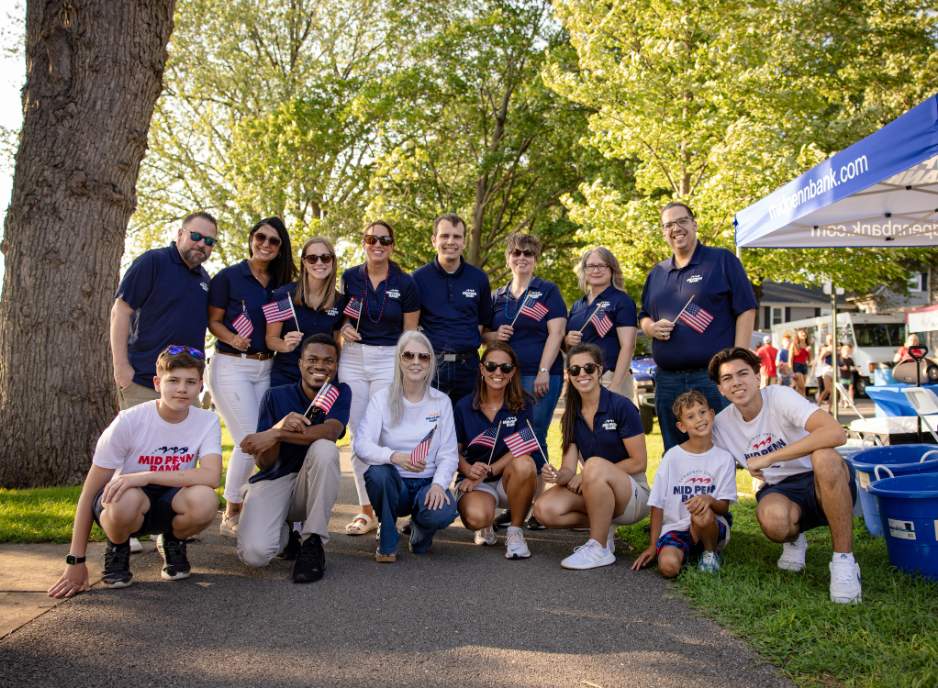
Image provided by Mid Penn Bank
Looking ahead, what are your top priorities for the next three to five years?
We finalized the acquisition of William Penn Bank on April 30 and completed customer system integration by mid-June. Our current focus is on fully integrating their employees and customers while achieving our cost-saving and service goals.
Greater Philadelphia is a major growth opportunity. That includes Bucks, Montgomery, Delaware, and Chester counties, the city itself, South Jersey from Camden to the shore, and northern Delaware near Wilmington. It’s a region of 6.5 million people, 600,000 businesses, dozens of thriving municipalities, and strong infrastructure. We currently manage about $2 billion in assets there and aim to grow that to $5 billion within five years.
We entered Philadelphia in 2018 with First Priority Bank, and added Brunswick Bank in Central Jersey in 2023. That expansion helped shape our geographic strategy, and William Penn built on that progress. We’re now investing in new business development teams to take full advantage of what I see as one of the most dynamic markets in the country.
How has the bank evolved under your leadership, and what organizational strategies drive that growth?
Sixteen years ago, the bank had $572 million in assets, 14 branches in Central PA, and 170 employees. Today, we have about $6.5 billion in assets, 59 branches across two states, and more than 700 employees. We have acquired nine companies, including six banks and three insurance agencies, while also expanding community efforts like our golf outing and No Shave November.
We hire for attitude, aptitude, and work ethic. Once onboard, we invest in each employee’s development through education and personalized growth plans that support both professional goals and personal well-being.
Our apprenticeship program offers high school graduates paid, entry-level positions and fully covers college tuition if they work at least 30 hours a week. After two and a half years, they graduate with work experience, an associate degree, and no debt. Many continue to earn a bachelor’s degree, also funded by us.
We also host 25 to 30 college interns each summer. Many return for multiple years, and some join us full-time. New hires, no matter their background, are paired with a mentor to help them navigate the organization.
Our university, development plans, apprenticeship and internship programs, and mentoring form the foundation of our culture. These programs were not designed to gain a competitive edge, though they certainly help. They were built to support the more than 700 families who work here. Our goal is not just to build a strong bank but to set a higher standard for how companies invest in people.
For more information, please visit: