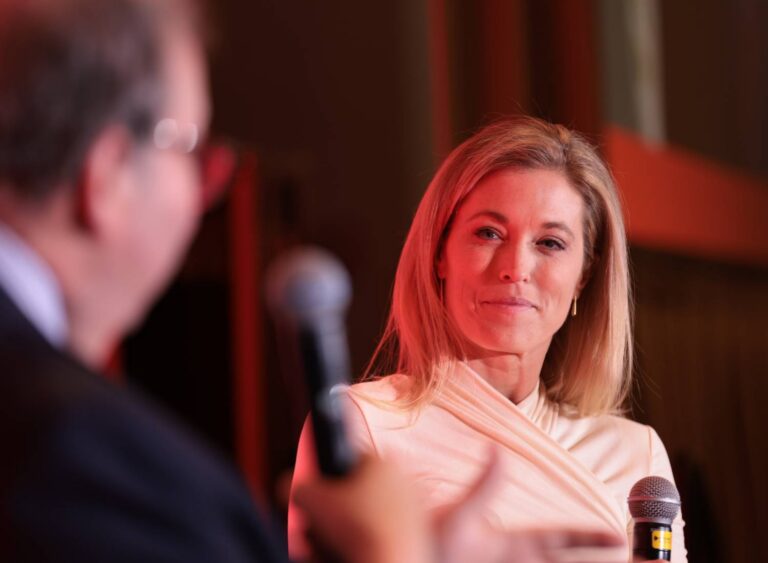







Spotlight On: Sarah Tol, Chief Strategy & Growth Officer, One Mind
Key points:
• One Mind is translating mental health science into measurable action through research, startups, and employer coalitions.
• Workplace mental health is shifting from ad hoc benefits to data-driven, prevention-focused strategy.
• Regional collaboration helps employers move from good intentions to scalable, equitable impact.
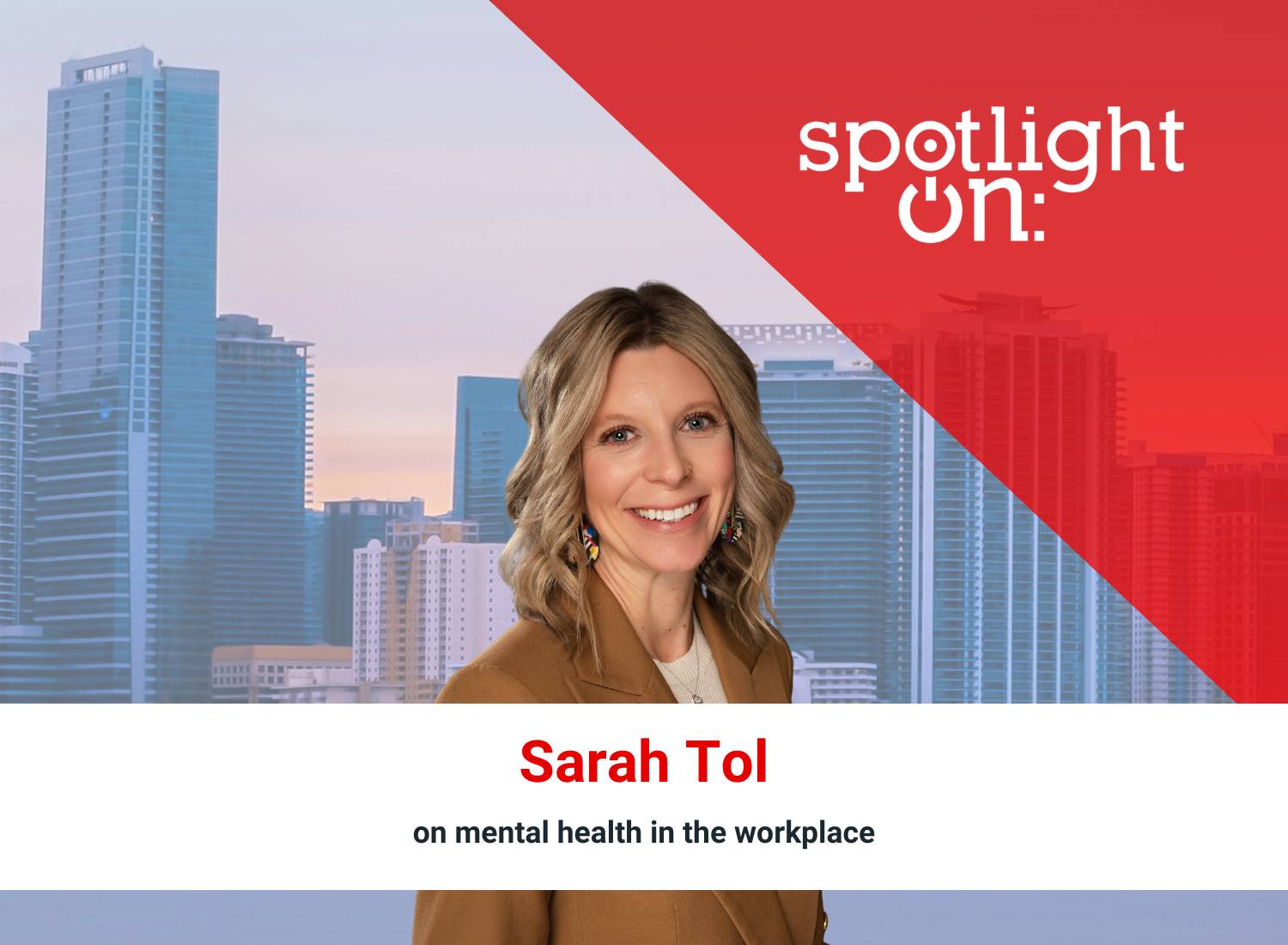 January 2026 — In an interview with Invest:, Sarah Tol, chief strategy and growth officer of mental health nonprofit One Mind, discussed the organization’s efforts in supporting healthier workplace practices through local benchmarking and global coalitions. “Many leaders genuinely want to support mental health at work but don’t always know where to start. Our role is to help them move from good intentions to concrete action — turning what can feel abstract into practical steps that make a measurable difference for their people,” Tol said.
Join us at the Invest: Pittsburgh 3rd Edition Leadership Summit! This premier event brings together hundreds of Pittsburgh’s business and regional leaders to discuss the challenges and opportunities for businesses and investors. Buy your ticket now!
How would you describe the organization’s mission and values?
One Mind is a nonprofit focused on mental health. The organization was started 31 years ago by Garen and Shari Staglin, when their son, Brandon, was diagnosed with schizophrenia. They started this nonprofit that, at the time, was focused on accelerating science. It was a philanthropic effort to fund research that improved diagnostics of mental health conditions and their treatments. Over the last 31 years, our programs have evolved to meet the current needs of the landscape.
With One Mind Rising Star Academy, we’ve funded over 50 early career scientists in the mental health space who typically have difficulty in securing funding for their research. We fund high-risk, high-reward scientists, and these scientists have gone on to do incredible things.
The One Mind Accelerator (OMA) backs bold and determined founders of early-stage startups with the network, education and capital to build category-defining companies that radically improve the lives of people facing mental health challenges. Launched in 2023, the highly competitive program selects a cohort of 10-15 startups each year from hundreds of applicants. The companies span care model innovations to diagnostics and treatments, and are prioritized for serious mental illness, youth mental health, maternal mental health, and precision psychiatry.
Designed from the ground up with a specific focus on mental health, the selected founders participate in ten weeks of programming, with in-person opening and closing weeks in Menlo Park, CA. The program leverages One Mind’s vast and influential network of leaders and domain experts to help the startups take their innovations to market faster and with greater impact for people facing mental illness.
With One Mind at Work, we work with leaders in nearly 150 member organizations, in over 100 countries, to equip them with skills and resources to create healthier places to work. We’re also very fortunate to have received a grant from the Richard King Mellon Foundation to launch a demonstration project in Pittsburgh that brings together local employers to collectively advance workforce mental health, creating a shared benchmark, practical tools, and a regional model for what’s possible when employers lead together.
The underpinning of all of our programs is lived experience. The Staglins’ son who was diagnosed with schizophrenia is now flourishing, and working as our chief advocacy and engagement officer. He is active in the space of reducing stigma, and creating pathways for individuals with serious mental illness to find purpose and meaning. With science as our cornerstone and people at our heart, we’re building a future where every mind can thrive.
What are the major emerging trends in the mental health space?
One of the blessings of COVID was this increased awareness from employers to do more to support the mental health of their employees. As that interest grew, there was insufficient research on how to respond. Over the last four years, we’ve enhanced our support for organizations that bring science, and measurement into that space. The employers are inundated daily with benefits, perks, and assistance programs, but they are not integrated. It’s hard to know what makes an impact directly on the employees.
Through our service model, we guide employers through what actually creates an impact. Because of the generosity of the Richard King Mellon Foundation, we’re able to do all of that in Pittsburgh, and offer all of our membership services free of charge to organizations. We want them to engage, and lean in. People at work are overwhelmed and under-resourced. Even with the passion from leaders who acknowledge the importance of supporting mental health, there’s still this challenge of trying to fit it all into the impossible day. So, we’ve structured some of our resources to be highly adaptable.
Our Mental Health at Work Index data show that only one in four organizations have a formal mental health strategy. Most efforts remain ad hoc, even though nearly 70% of leaders say they care. That gap between commitment and action is where One Mind comes in—we help institutionalize strategy, rather than rely on isolated initiatives.
More than 90% of employers offer mental health benefits, but fewer than half redesign work environments or job structures to prevent harm in the first place. It’s this shift—from treatment to prevention—that defines the next phase of workplace mental health leadership.
How do you balance the employer-employee dynamic in creating healthier places to work?
Balancing the employer–employee dynamic starts with recognizing that both have a shared stake in creating a healthy workplace. One of the most valuable resources available to employers is the Mental Health at Work Index. It’s a comprehensive, science-based assessment that helps organizations understand the maturity of their mental health programs, practices, and policies. The Index is completed by leadership teams and looks across ten core business categories, from communication and training to benefits, work design, and employee engagement.
What makes it unique is that it operates at the systemic, structural level — it evaluates how organizations do the work of work. Using our framework of the three Ps, Protection, Promotion, and Provision, the Index identifies what’s working well and pinpoints priority areas for improvement compared to both benchmark and target scores. It turns a complex topic into a clear roadmap for action.
Creating a regional benchmark for Pittsburgh is one of the goals of our grant with the Richard King Mellon Foundation. Once we have 30 organizations engaged, we’ll be able to publish Southwestern Pennsylvania’s first-ever workplace mental health benchmark, providing employers with local data they can use to measure progress, strengthen retention, and attract talent. Data from the Mental Health at Work Index show that organizations with more mature mental health strategies report nearly 50% lower voluntary turnover, and employees in those organizations are almost twice as likely to recommend them as a great place to work.
Just as important, we believe the employee voice must be part of the process. Managers play a pivotal role – they’re not therapists, but they are connectors. They need to know how to listen, how to respond, and how to guide people to the right supports. That’s why we’ve developed a new Manager’s Checklist, a practical tool to help leaders foster trust, respond effectively to feedback, and create day-to-day environments where well-being is truly built in, not bolted on.
What are the opportunities employers should be aware of?
The leaders know it is important. They want to do it. The challenge is how to do it. They’re either afraid to say the wrong thing, or they are afraid of what might happen by sharing vulnerability. In practice, that would look like inconsistent progress across organizations and industries. Our response to that is, through this coalition, we provide a peer-to-peer forum where leaders can learn from each other, as well as use our frameworks to give clarity and direction. What feels abstract to leaders becomes actionable. Through these resources, they can benchmark, compare, and adopt proven practices.
Another challenge we see is the resource gap between really large employers and smaller employers. Many of our members are small and mid-sized employers—often with workforces in the hundreds or low thousands—which reflects the reality of most U.S. organizations. Significantly larger employers are able to provide benefits and resources, but we don’t have that in the smaller workplaces. That creates an equity gap in support.
We see that across our membership base, not just in Pittsburgh. So, this coalition can be a knowledge and resource equalizer. The smaller organizations can learn from the larger ones. They can adopt scalable practices. We leverage shared learning, and because of the generosity of the grant, they’re able to access free tools. They don’t have well-being teams, and we want to help the strained resources.
Post-pandemic, in this time of uncertainty with the geopolitical environment, we need to maintain that sense of urgency around workplace mental health. We need to ensure that the attention doesn’t fade. Because of the data we have from the index assessment, we’ve worked on reframing mental health from just as a nice benefit into a business imperative. It’s a tool employers can use to signal to current and potential employees that they value the employees’ well-being. By tying well-being directly to economic impact, we can help organizations to, hopefully, keep this on the leadership agenda.
What are One Mind’s top priorities over the next few years?
Our focus is on accelerating the science of mental health, scaling innovation, and translating both into real-world solutions that improve lives. We’re doubling down on our early-career research funding, expanding our accelerator for mental health startups, and deepening our work with employers to create mentally healthy workplaces. Across all of it, our goal is measurable impact — improving outcomes for individuals, strengthening organizations, and building more resilient communities.
One Mind at Work in the Pittsburgh area is a grassroots effort, and it will likely be a multi-year project. Employers are busy, and grabbing their attention takes time. We need them to engage, and use the index to measure improvement year after year, before we can demonstrate the measurable impact of working as a coalition.
This challenge is a powerful motivator for me. We’re at 15 organizations in the coalition, many of whom are smaller and nonprofits. Attracting the attention of larger employers to join us would be a very powerful signal to the community. At the end of the day, I believe in what we’re trying to do here, and it could be a really powerful project for Pittsburgh, at a national level, to showcase what happens when a group of employers come together.
Want more? Read the Invest: Pittsburgh report.