






Spotlight On: Zabeth Teelucksing, President, Global Philadelphia Association
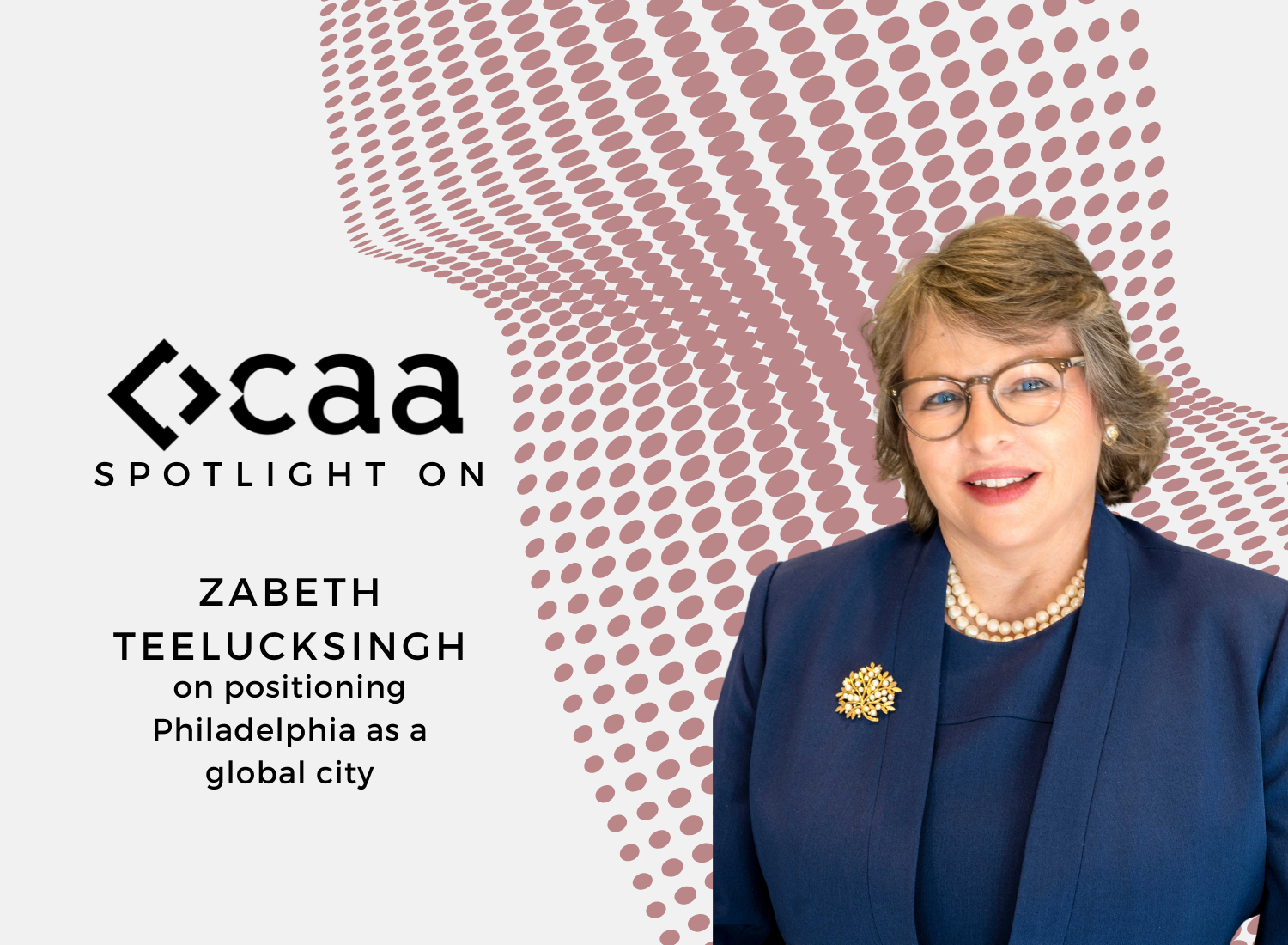
April 2025 — In an interview with Invest:, Zabeth Teelucksingh, President of the Global Philadelphia Association, shared insights into how Philadelphia leverages its historical landmarks and strategic location to foster tourism, business, and cultural exchange. She also discussed the organization’s efforts to position Philadelphia as a global hub.
What have been the most significant milestones for the Global Philadelphia Association during the last 12 to 18 months?
My work involves positioning Philadelphia as a global city. This includes two important frameworks for Philadelphia that encourage people to think more about our city globally. Both of these frameworks originate from the United Nations. One is the Sustainable Development Goals, and the other is the World Heritage designation. Let us discuss World Heritage first, as it is foundational to my work. Recently, I was thrilled to assist the state of Pennsylvania as it gained its third World Heritage nomination, located in Bethlehem in the Lehigh Valley. This is significant for several reasons. First, Pennsylvania is now the only state in the U.S. with three cultural World Heritage sites, which is a considerable achievement. Second, the designation is multi-site and international, aligning with UNESCO’s current approach. Originally, UNESCO would designate single sites, such as the Palace of Versailles or Independence Hall in Philadelphia. However, like all organizations, UNESCO has evolved. They now seek to maximize their impact, making multi-site and transnational designations more common. The Moravians in Bethlehem, a religious sect originating from the Far East of Germany near the Czech border, were displaced and unwelcome in their homeland. They eventually settled in various locations worldwide, including Bethlehem, Pennsylvania. Many influential figures in the U.S. emerged from this Moravian culture, which is deeply tied to education.
How do you anticipate this World Heritage designation to attract global businesses and investments to the region?
First, Governor Shapiro has launched a major initiative focused on tourism, recognizing Pennsylvania’s wealth of attractive sites and it is crucial to tap into them more than ever. This designation aligns perfectly with that effort. Second, international companies already operating in the Lehigh Valley were among the first to support this initiative. Companies like the German B Braun company have emphasized the importance of this designation. On a statewide level, this designation offers an opportunity to connect Pennsylvania’s three World Heritage sites: Fallingwater near Pittsburgh, Independence Hall i2026n Philadelphia, and the Moravian settlement in Bethlehem. This connection can encourage visitors to explore all three sites, thereby boosting tourism and economic activity across the state.
In what ways can Philadelphia leverage its historical landmarks to enhance its appeal as a global destination for tourism, business, and cultural exchange?
It is fascinating to observe how international leaders embedded in our region can educate American leadership on the significance of designations like World Heritage, emphasizing their importance and the need to leverage them effectively. To achieve such an awareness is precisely the mission of organizations like Global Philadelphia. Additionally, the multi-site component of such designations enhances the experience for travelers and tourists, allowing them to maximize their visits by exploring multiple cultural and historical landmarks. Locally, politicians are recognizing the value of these designations as a tool to engage diverse communities. For instance, the Lehigh Valley area, with its substantial Latin population, has shown a strong understanding of World Heritage, making it an excellent opportunity to activate those communities around such initiatives. This intersection of economic development, cultural engagement, and community activation highlights the broader global trends influencing our region and Philadelphia’s position as an international business and cultural hub.
What are some trends, initiatives, or partnerships in the pipeline that you are excited for?
One of the most significant trends right now is the focus on 2026. Many of our city’s agencies are preparing for major events, including the World Cup. The focus is not just about the World Cup itself, however, but also about how we welcome and accommodate visitors. For example, after the Eagles parade, the city transport agency, SEPTA, analyzed how to move large crowds efficiently, noting the instrumental role of messaging and local press coverage, as this will be crucial during the World Cup. Hotels, signage, and overall city navigation are being improved to ensure a seamless experience for visitors. This preparation is part of a broader effort to position Philadelphia as a global destination, not just for major events but for ongoing cultural and business engagement.
How is Global Philadelphia preparing to leverage the United States’ 250th anniversary?
We have several components we are working on. One of them is a map of the 67 National Historic Landmarks in our city. That is a big number, especially when you think about how our nation’s capital, Washington, D.C., for example, has 75. We initially put together a map in 2018, but it is outdated now, so we are developing a new one. This map will be available to both local residents and visitors, and it will focus on the historic fabric of Philadelphia, which is so important.
How do you think Philadelphia’s location contributes to the city’s economic and cultural growth?
Philadelphia’s location is highly advantageous. Situated strategically between New York and Washington, D.C., the city offers a unique blend of accessibility and affordability. Unlike its neighboring metropolitan giants, Philadelphia provides a high quality of life at a fraction of the cost, making it an attractive destination for both residents and businesses. Additionally, the market surrounding Philadelphia is massive, so much so that it is comparable in size to that of Germany. This economic potential, combined with the city’s rich history, vibrant culture, and excellent food and sports scenes, positions Philadelphia as a hub for tourism, business, and innovation. Its central location and affordability make it a compelling choice for those seeking a balanced lifestyle with easy access to major East Coast cities.
You mentioned Sustainable Development Goals (SDGs) as a key focus area of your work. Can you share an update on where Philadelphia stands with this initiative?
We are celebrating this by creating murals associated with the 17 SDGs within the city of Philadelphia. Currently, we only have two more works of art left to place in the city, SDG 9 and SDG 14, which we will be completing in the next couple of months. Once those are up, we will have a work of art for each of the 17 SDGs. After that, we plan to move all the artworks to one central location by 2026. This will allow people to visit one place to learn more about the SDGs and why they are so important. The execution of each work of art has been a big project, but we are really proud of it. It has not only increased the visibility of our city but also helped educate people about these critical global goals.
How does this educational message translate into real-life experiences?
On the education side, there is a wide range of knowledge about the SDGs. Some people are very familiar with them, while others, even in Philadelphia, do not know what they are. So, pure education about the SDG goals is crucial. Artwork helps people connect with the goals and understand their relevance. For example, our mayor is very focused on creating a greener, more sustainable city, which aligns with the SDGs. I have also noticed that more organizations and individuals are paying attention to sustainability. Young people, in particular, are thinking about how they can live more sustainably. Schools are teaching children sustainable practices, and even places like church campuses are looking at how they can operate more sustainably. Since we started this work in 2019, I have seen a growing awareness and engagement with these goals, which is really encouraging.
What lessons can other U.S. cities learn from Philadelphia’s approach to global engagement and cultural preservation?
One of Philadelphia’s strengths is celebrating our international identity. We embrace our globalness and put people in leadership roles who reflect that diversity. While there is always room for improvement, I think Philadelphia does a fine job of bringing diverse voices to the table. This leads to more holistic decision-making and better results. Other cities can learn from this approach by actively embracing their own diversity and ensuring that leadership reflects the community.
What is the importance of Global Philadelphia Association’s work in promoting Philadelphia’s global visibility and reputation?
I think it is important to emphasize that the work we are doing now is more important than ever. It’s about sharing a message of internationalism, acceptance, and visibility for our city on a global scale. Philadelphia still lacks recognition. While some know Philadelphia because of the Eagles, many others know little about the city itself. The efforts we are making to increase our visibility and celebrate our history, culture, and sustainability are crucial. Philadelphia is a great place to live, as we are more affordable than other cities, with plenty of things to do. Global Philadelphia helps to promote our city to others through the lens of major international frames.
For more information, please visit: