






The Iran war’s ripple effects, sector by sector

Key points:
- • Global conflict is driving oil volatility, supply chain disruption, and renewed inflationary pressure.
- • Energy producers benefit, while industries and consumers face rising costs and tighter margins.
- • Logistics, housing, and financial markets are adjusting to higher costs, delays, and uncertainty.
 April 2026 — The Iran war is testing the resilience of the global economy and, increasingly, that of regional markets across the United States. While geographically distant, the economic ripple effects are immediate and measurable: oil price volatility, shipping disruptions through critical trade routes, and renewed inflationary pressures are all feeding into local business conditions.
Join us at caa’s upcoming leadership summits! These premier events bring together hundreds of public and private sector leaders to discuss the challenges and opportunities for businesses and investors. Find the next summit in a city near you!
Recent instability has contributed to fluctuations in global crude benchmarks, with energy markets reacting quickly to supply uncertainty. At the same time, disruptions in the Strait of Hormuz — one of the world’s most critical oil export corridors — have forced rerouting of cargo, adding time and cost to already strained supply chains. For U.S. regional economies, the result is a complex mix of risk and opportunity, playing out across sectors from energy and logistics to real estate and financial services.
“As Middle East exports of oil and gas face significant disruption, countries in Asia and Europe will turn to other producers like the United States — creating a structural opportunity for domestic producers even as consumers bear the cost.” reported Deloitte.
Few sectors feel the immediate impact of Middle East instability as acutely as energy. For U.S. oil and gas producers, particularly in energy hubs like Houston, the price surge has been a direct revenue catalyst. Upstream companies with shale production capacity are reporting improved outlooks as Asian and European buyers pivot away from disrupted Middle Eastern supply toward U.S. LNG exporters.
The numbers are significant. Dutch TTF natural gas futures rose over 60% following the outbreak of hostilities, while urea prices climbed approximately 50% since the war’s start, as of late March 2026, with the Middle East and Persian Gulf accounting for roughly 30% of globally traded fertilizer.
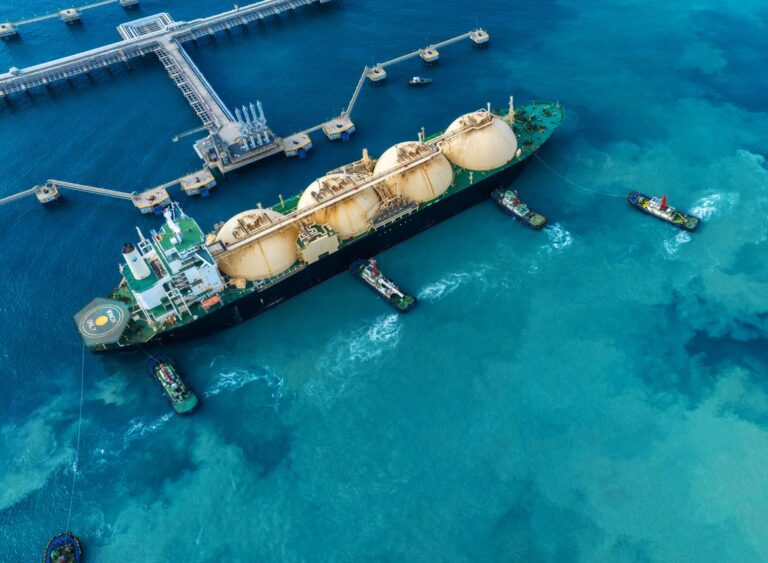
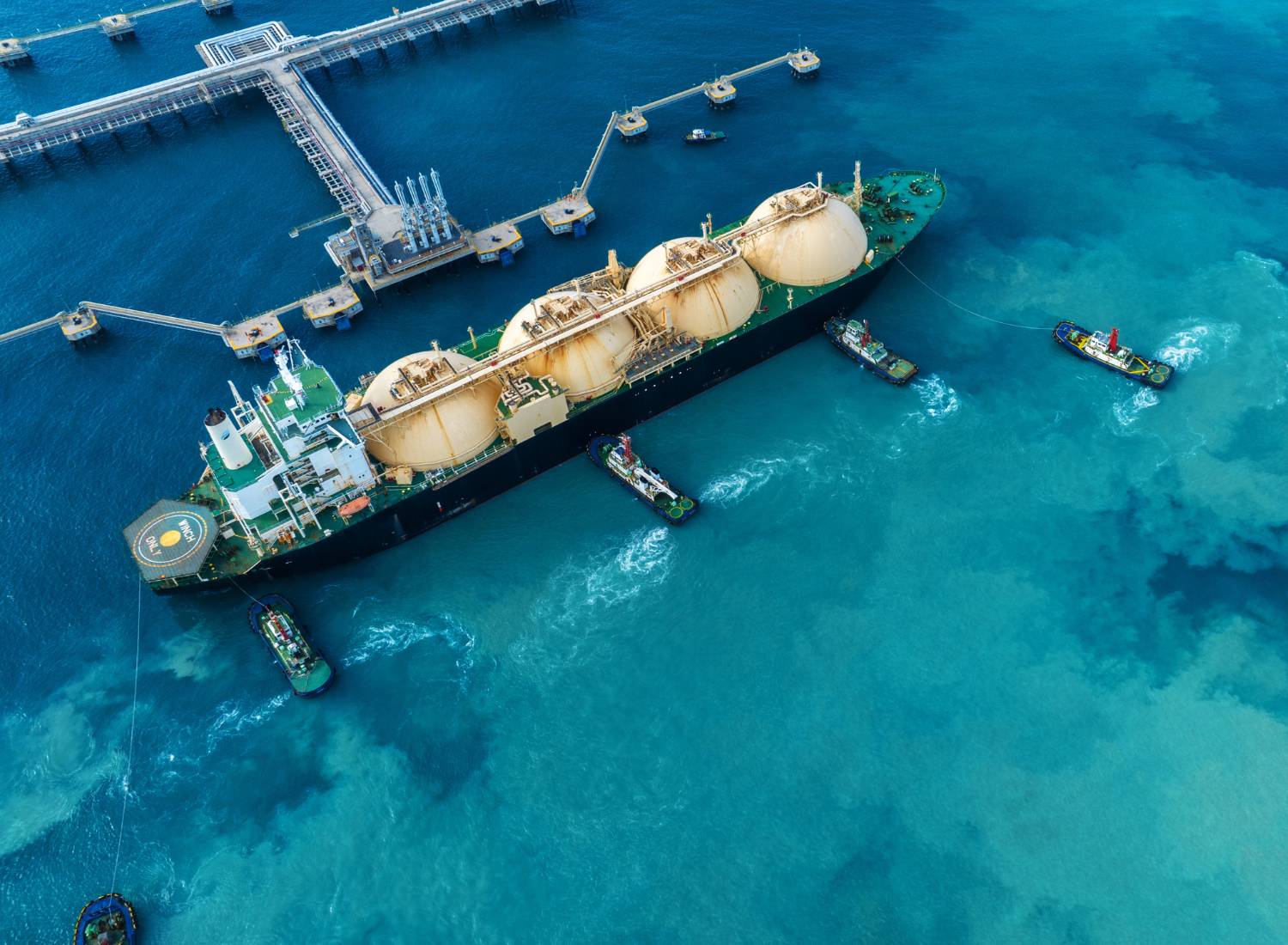
LNG export facilities along the U.S. Gulf Coast are capturing premium margins as European and Asian buyers compete for a shrinking pool of available cargoes — a dynamic accelerated by Qatar’s force majeure declaration and the shutdown of Ras Laffan, the world’s largest liquefaction facility.
The International Energy Agency responded with the largest coordinated emergency reserve release in its history — 400 million barrels across 32 member countries — which it described as a partial stop-gap measure.
However, the gains are not evenly distributed. Refiners face feedstock cost volatility squeezing downstream margins, and utilities are absorbing higher input costs that will ultimately filter through to households and commercial consumers.
Moody’s Analytics has warned that rising oil prices will “push up input, transportation and manufacturing costs at a time when demand remains fragile,” with chief economist Mark Zandi placing U.S. recession odds above 49% — noting a recession becomes “difficult to avoid” if elevated prices persist for even a few more weeks. For regional economies dependent on energy-intensive industries — chemicals, manufacturing, agriculture — this creates a compounding cost environment on top of already elevated tariff-driven input prices. Volatility, not just the price level, is the operative challenge for capital planning.
The disruption to shipping routes is not hypothetical — it is already registered in freight rates, transit times, and inventory buffers. Vessels rerouted around the Cape of Good Hope are adding 10–20 days to delivery times, while war-risk insurance surcharges, fuel surcharges, and emergency levies from carriers like MSC are making Gulf operations materially more expensive. Traffic through the Strait of Hormuz dropped by 90% in the first days of conflict versus the prior seven-day average, with Hapag-Lloyd, CMA CGM, and Maersk all suspending Gulf transits and rerouting around Africa.
For U.S. markets reliant on port activity, including Gulf and Atlantic hubs, these disruptions translate into measurable cost inflation for imported goods and longer lead times that are forcing businesses to restructure inventory strategies. The World Economic Forum’s Global Value Chains Outlook 2026 found that nearly 3 in 4 business leaders now prioritize resilience investments, with 74% viewing resilience as a driver of growth rather than a cost — a mindset shift accelerated well before the Iran war but now dramatically validated by it.
There is also an emerging semiconductor risk that warrants attention. Helium — a critical input for chip fabrication with no viable substitute — is sourced approximately one-third from Qatar, whose Ras Laffan facility was struck by Iranian drones on March 2. Helium spot prices have surged 40–100% since late February, and supply chain consultants estimate a minimum two-to-three-month production shutdown and four-to-six months before the supply chain returns to normal. Bromine — used in circuit formation — faces parallel risk, with approximately two-thirds of global supply originating from Israel and Jordan. Supply chain analysts have raised the prospect of a repeat of the 2021–2023 chip shortage, which cascaded through automotive, consumer electronics, and advanced manufacturing.
Construction and development — already navigating elevated interest rates and persistent labor shortages — are absorbing a new wave of material cost inflation driven by energy prices and shipping delays. Steel, imported components, and energy-intensive building materials are all subject to renewed upward pressure, compounding the affordability challenges that have defined U.S. housing markets for the past three years.
The transmission mechanism is direct. Goldman Sachs estimates that every sustained $10 increase in oil prices reduces U.S. GDP growth by roughly 0.1 percentage point, and Brent crude has surged from approximately $70 per barrel before the conflict to over $100 — a $30+ premium that compounds across energy and logistics inputs into construction costs. Moody’s Analytics has published a dedicated analysis on the conflict’s impact on U.S. regional economies, specifically flagging the oil price spike as the primary risk vector. For affordable housing projects where margins are thinnest, the cumulative drag on development economics is material.
Financial markets have responded to the conflict with a clear flight-to-safety dynamic. The U.S. dollar has strengthened as global investors seek refuge. The dollar index gained 0.95% in the opening days of the war, trading at its highest level in five weeks in the first days of March, with analysts describing the move as a “classic flight to safety.”
Treasury yields have risen on inflation expectations, with the 10-year yield climbing from 3.96% just before the conflict to 4.39% on March 27 — nearly half a percentage point — as bond auctions showed weak demand. Markets are pricing in the diminished probability of near-term Federal Reserve rate cuts, with Wall Street investors now seeing zero rate reductions this year per CME FedWatch, and 30-year mortgage rates rising to 6.22% from below 6% before the war began.
The sector picture is not uniformly negative. Energy and defense companies are attracting increased capital flows as investors reposition portfolios.
The travel sector is among the most immediately sensitive to geopolitical disruption, particularly given the impact of higher fuel prices. U.S. gasoline prices hit a national average of $4.018 per gallon as of late March — up more than 30% from pre-conflict levels around $2.92 — the highest since August 2022. Diesel crossed $5 per gallon and is more than 40% above pre-conflict levels, with broad implications for the freight and logistics costs embedded in food and consumer goods. Jet fuel, which typically comprises 20–25% of airline operating costs, is subject to the same crude price dynamics, and carriers are repricing forward bookings accordingly.
For U.S. destinations, including Florida markets, the near-term outlook is mixed but not uniformly negative. International inbound travel — already constrained by dollar strength — may soften further, while domestic tourism could see a relative boost as travelers substitute shorter-haul, drive-to destinations for international itineraries. Florida’s ability to capture this domestic reallocation will depend on whether fuel costs escalate to the point of suppressing overall leisure spending, or remain high enough only to redirect it.
Defense, cybersecurity & technology
Periods of sustained geopolitical tension have historically accelerated both government and private-sector investment in defense and security infrastructure, and the 2026 conflict is following that pattern. Defense appropriations, already elevated entering the fiscal year, are likely to be revised upward as the conflict extends. Companies operating at the intersection of technology and national security — cybersecurity, drone systems, satellite communications, and AI-driven threat analysis — are seeing expanded pipeline activity.
Critically, the Iran war has produced what analysts describe as the first confirmed military strikes on hyperscale cloud infrastructure: Iranian drones struck three AWS data centers in the UAE and Bahrain on March 1, taking down two of three availability zones in AWS’s UAE cloud region and disrupting banking, payments, and consumer services across the region. This has materially changed how companies assess geopolitical risk in infrastructure planning.
CNBC reported in March that the conflict is already impacting hyperscalers’ AI buildout plans in the Middle East — with companies slowing new capital deployments, pausing planned partnerships, and beginning to evaluate alternative regional hubs in Northern Europe, India, and Southeast Asia. This shift directly benefits U.S. data center development and cloud infrastructure investment.
The defense technology opportunity is not limited to prime contractors. Smaller companies with specialized capabilities in autonomous systems, electronic warfare, and resilient communications are increasingly attractive acquisition and partnership targets, a dynamic that is stimulating M&A activity and venture investment in tech-adjacent defense markets.
Want more? Read the Invest: reports.