





Twin Cities leaders meet to discuss the region’s future
Writer: Pablo Marquez
 July 2025 — As Twin Cities continue to build their reputation as a hub for business and innovation, regional business leaders recently gathered to discuss the city’s future at the latest Invest: Minneapolis-St. Paul leadership and networking conference.
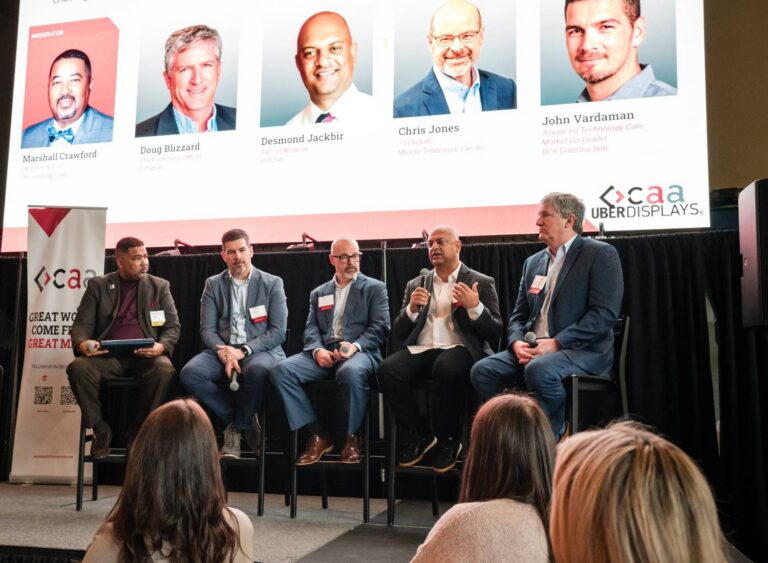
The summit, held at the Canopy by Hilton’s Mill District Event Spaces on Thursday, July 10, brought together 150 leaders from business, government, and academia for a morning of conversation, celebration, and strategic insight into the region’s progress and future priorities.
In her opening remarks, Abby Lindenberg, founder and CEO of caa, welcomed guests by reflecting on the significance of the day. “I’m proud to present this 3rd edition of the Minneapolis-St. Paul report. We are here to tell your story!”
“Minneapolis-St. Paul is a hub for innovation that is experiencing a renaissance. MSP is the 17th most diverse metro area in the United States. We believe that the biggest improvements come from embracing change. Our panel discussions today cover some of the most important changes that are shaping the business landscape in the Twin Cities,” added Lindenberg.
The event featured three panel discussions, each exploring a key dimension of the Twin Cities’ trajectory, highlighting historically underserved neighborhoods, economic progress, and reimagining the healthcare industry.
The opening panel, “Inclusive Growth: How is the Twin Cities reaching its historically underserved neighborhoods, and what more is needed?” was moderated by Beth Kieffer Leonard, partner-in-charge at EisnerAmper. Panelists included Leslie Dingmann, business development director of the Greater St. Cloud Development Corporation; Damon Jenkins, SVP and regional market president of First Independence Bank; and Matt Rauenhorst, president of Opus.
The conversation focused on how to move beyond supporting underserved neighborhoods to creating the conditions for them to truly thrive. Panelists expressed their views on what thriving communities look like, as well as the role organizations and business leaders can play in driving progress. The panel also touched on the systemic barriers that continue to limit inclusive growth, along with the bold reforms that could help overcome them.
“Job opportunities for underserved communities in MSP are really strong. Access to labor is one of the biggest factors that companies are looking at today, and underserved communities offer a huge opportunity. I think that affordable housing is clearly the challenge here. We need strong regional partnerships in order to find a solution for this,” said Rauenhorst.
The second panel, “Policy or Politics: What is holding back equitable economic progress in the Twin Cities – and what is being done about it?” was moderated by Dominic Iannazo, managing partner for the Minneapolis office of Ernest & Young. Panelists included Anne Burt, mayor of the city of Woodbury; Adam Duininck, president and CEO of MPLS Downtown Council; and Terrance Hopson, MW Regional Vice President of Western Governors University.
This panel focused on how to support the region’s underserved neighborhoods while addressing the challenges that hinder current progress and future success. Panelists shared recent policies aimed at promoting equitable economic growth in the Twin Cities and how to move from rhetoric to actionable resource allocation. This conversation explored how the region should prioritize these issues and what that means for leadership. Speakers also highlighted examples of private companies and nonprofit organizations stepping in where public policy has fallen short, and how these efforts can scale and align with broader economic strategies.
“The Twin Cities have done a great job in moving from rhetoric to actual resource allocation. Organizations are coming together to work for a brighter future. Capital and housing are the answer to this. That is the American Dream, every individual should wake up and not worry about medication, education, childcare etc. The Twin Cities have a lot of resources and we can work together,” implored Hopson.
The final panel, “Beyond the Clinic: Examining Minnesota’s healthcare performance and leading the charge in reimagining the future of the industry,” was moderated by Lindenberg. Panelists included Jeremy Cauwels, chief medical officer of Sanford Health; Dominica Tallarico, chief operating officer of Allina Health; and Krista Skorupa, east market president of Essentia Health.
The closing panel explored how to reimagine healthcare to ensure the Twin Cities remain a leader in the industry. Minnesota’s high rankings in healthcare outcomes are driven by certain structural and cultural factors, and the focus is on how organizations can scale these successes nationally. The conversation highlighted the growing momentum in areas like behavioral health, preventive care, and telemedicine outside of traditional clinic settings, while addressing the challenges preventing their broader integration.
“It’s an absolute necessity to focus on upstream factors that affect access to healthcare. The healthcare industry will not suffice in this aspect; we need strong cooperation with all of our community partners. Whole person care through community partnerships is the future,” said Skorupa.
Keynote speaker Jacob Frey, mayor of the city of Minneapolis, wrapped up the event and expressed the following in his closing remarks: “As a city, we have the recipe for success right here in Minneapolis. Not only because we have an abundance of Fortune 500 companies, but because these businesses are committed to the community.”
To access the Invest: Minneapolis-St. Paul 3rd Edition report, click here. (Subscription required.)
For conference panel discussions, please subscribe and stay tuned to our YouTube Channel as those videos are released in the coming weeks.
***
About caa & Invest: Minneapolis-St. Paul
caa is an integrated media platform that produces in-depth business intelligence through its annual print and digital economic reviews, high-impact conferences and events, and top-level interviews via its video platform, Invest:Insights.
Invest: Minneapolis-St. Paul is an in-depth economic review of the key issues facing the region’s economy, featuring the exclusive insights of prominent regional leaders. Invest: Minneapolis-St. Paul is produced with two goals in mind: 1) to provide comprehensive investment knowledge on the Twin Cities region for local, national, and international investors, and 2) to promote the Twin Cities as a place to invest and do business.
The report conducts a deep dive into the top economic sectors in the region, including real estate, construction, infrastructure, banking and finance, legal, healthcare, education and tourism. The publication is compiled from insights collected from more than 200 economic leaders, sector insiders, political leaders, and heads of important institutions. It analyzes the leading challenges facing the market and uncovers emerging opportunities for investors, entrepreneurs, and innovators.
For more information, contact:
Jerrica DuBois
Senior Editor
786-677-4016