Uncertainty in the air for South Jersey’s offshore wind industry
Writer: Pablo Marquez
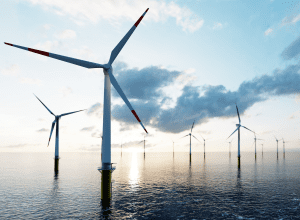 July 2024 — The future of offshore wind power operations in South Jersey is up in the air. As New Jersey inches closer to the deadline of its ambitious goal to produce 3,500 megawatts of offshore wind energy by 2030, recent project cancellations and potential shifts in political power with the upcoming U.S. elections in November create a state of flux for the industry.
Over the past year, a wave of offshore wind project cancellations hit the renewable energy industry in South Jersey as costs became too high to justify. Key players such as Danish clean energy company ˜rsted, Equinor, BP, and Avangrid, have either canceled or are renegotiating their contracts since the end of 2023, resulting in millions of dollars worth of cancellation penalties and other costs.
Governor Phil Murphy, a big supporter and defender of offshore wind energy, still sees renewable wind energy as required to align with the broader environmental goals of President Joe Biden’s administration.
“New Jersey can and will continue to remain a burgeoning offshore wind development hub that attracts new projects and their accompanying economic and environmental benefits for generations to come,” said Gov. Murphy when addressing the New Jersey Board of Public Utilities (NJBPU) in November 2023. “These new projects, along with the Atlantic Shores Offshore Wind project awarded in 2021, will support tens of thousands of good-paying, family-sustaining jobs for New Jerseyans while protecting the quality of the air our children breathe and making good on the promise of affordable clean energy produced right here in the Garden State,” he added.
Leaders often cite the workforce opportunities associated with investment in the industry, as wind turbine service technicians are the fastest-growing occupation in the United States, according to Bureau of Labor Statistics data.
In 2019, Gov. Murphy signed Executive Order 28, setting New Jersey on a path towards a 100% clean energy economy by 2050. The administration also doubled down on near-term goals such as Executive Order 92, which raised New Jersey’s offshore wind energy goal from 3,500 megawatts by 2030 to 7,500 megawatts by 2035.
However, project cancellations last year dealt a major blow to Gov. Murphy’s offshore wind goals and raised questions about the future of renewable energy projects in the United States. As Gov. Murphy’s second and final term draws to an end this year, the state’s offshore renewable projects could see a shift in priority under new leadership.
On a federal level, former president and current presidential candidate Donald Trump has sworn to put an end to offshore wind projects in New Jersey if he wins the upcoming election. “You don’t have to worry about Gov. Murphy’s 157 wind turbines. We want to make sure it ends on day one. I’m going to write it out in an executive order,” said Trump in a speech where he was invited to speak by Congressman Jeff Van Drew, a firm opponent of Governor Murphy’s offshore wind energy development aspirations.
South Jersey’s renewable energy goals could still be feasible since the state has a promising offshore wind hub that is currently under construction. The New Jersey Wind Port, located in Salem County, is expected to bring up to $500 million in new economic activity each year. It is also expected to create hundreds of permanent manufacturing jobs in the Garden State. This is the country’s first purpose-built offshore wind marshaling port. At the same time, the Bureau of Safety and Environmental Enforcement (BSEE) conducted its first wind turbine inspection at the South Fork Wind project, indicating a sign of maturity and continued growth in the U.S. offshore wind industry.
For more information, please visit: