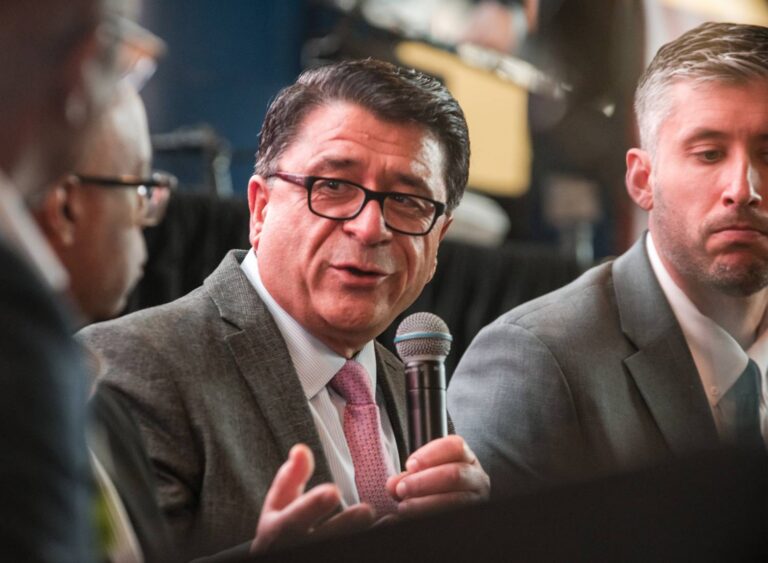






Vincent Mancini, Principal & Architect in Charge of Project Development, Landmark Architectural Design
 In an interview with Invest:, Vincent Mancini, principal at Landmark Architectural Design, discussed the shifting industry dynamics and Philadelphia’s evolving architectural landscape, problematic design trends, and the importance of classical training for emerging architects. “The built environment shapes communities for decades, and prioritizing thoughtful design over short-term savings is vital for long-term success,” Mancini added.
What have been some of the most impactful changes for Landmark Architectural Design over the past year?
We have noticed our business has reduced in size due to hesitation on the part of builders and developers to commit to certain projects, particularly in the residential and commercial sectors. As a result, we observed a significant reduction in business over the last year.
Given your expertise in residential, commercial, and industrial design, what urban planning challenges or opportunities are emerging?
It appears that renovations of smaller interior dwellings are steady, whereas larger developments requiring substantial financial commitments from developers are shrinking. Projects demanding significant funding from banks or financial institutions have decreased, but smaller-scale projects remain steady. This is likely because the financial burden is more manageable, presenting less risk compared to larger ventures.
From an architectural and real estate development perspective, how would you characterize the industry in Philadelphia?
Philadelphia is now competing with larger cities like New York, where many developers, builders, and homeowners have been priced out and are seeking more affordable, commutable alternatives. This shift has contributed to Philadelphia’s growth. The city benefits from New York’s rising costs, as individuals and businesses relocate to more economical and manageable environments. However, Philadelphia still struggles with a perception of being overly neighborhood-centric, lacking the cosmopolitan personality of an international city. There is an underlying inferiority complex that the city must overcome to fully realize its potential.
What are some specific urban revitalization or architectural development trends occurring in the region?
At the smaller development level, I have noticed a decline in the overall quality of work. Home construction and renovations are increasingly driven by economic decisions rather than a desire to create aesthetically impressive living spaces. This trend is problematic because cutting corners in the planning and design phases can lead to long-term deficiencies in the final product. When clients prioritize cost over quality in the initial stages, they miss opportunities to enhance both functionality and visual appeal, ultimately diminishing the project’s long-term value. Unfortunately, this economic mindset forces skilled architects and design firms to compete with less qualified practitioners, resulting in underwhelming urban landscapes.
What are the most critical skills and experiences young professionals need to lead in this new era of design?
Architectural students and professionals must develop a foundational understanding of classical design principles, including proportion, form, and historical context. Many emerging designers lack this essential knowledge, leading to haphazard and architecturally incoherent work. Additionally, young architects often lack hands-on construction experience, which creates a disconnect between their designs and real-world execution. Understanding the physical scale of buildings and the practical aspects of construction is crucial. Without these skills, architects risk producing designs that look acceptable on paper but fail in execution. The built environment shapes communities for decades, and prioritizing thoughtful design over short-term savings is vital for long-term success.
What specific changes would you like to see from the local government to make the development process more efficient and accessible to more minority-led firms?
I believe that is already happening. The increase of minority participation and women’s participation in fields generally dominated by men is ongoing. In my business, I prefer to hire women over men because I have observed that women are better at multitasking. The city, state, government, as well as the private sector, are increasingly requiring broader participation, which is taking our industry in a positive direction. For example, we recently completed a school project where minority participation was encouraged and resulted in the use of many minority owned contractors and vendors. In Addition, we also employed two local youths to assist in the construction. These individuals demonstrated remarkable talent and drive. They gained valuable experience and learned from seasoned professionals. Such initiatives are being implemented on a larger scale, and I believe architecture, development, and construction are the beneficiaries of inclusive participation.
How has Landmark Architectural Design leveraged digital platforms or new technologies to enhance operations?
The efficiency with which we now design and produce documents is astounding. In my generation, everything was done by hand, and entire drawings and documents were crafted differently. Today, digital tools have streamlined the process, making it faster and more efficient. This shift allows us to dedicate more time to innovation and improvement rather than documentation. I feel fortunate to have witnessed this transition from traditional methods to modern technology. My generation has experienced the full spectrum, from manual drafting to advanced digital solutions, and it has been a remarkable evolution.
What changes do you anticipate in project development processes, particularly regarding timelines and stakeholder relationships?
Ideally, we would like more time to dedicate to each project, but economic constraints often prevent this. Additionally, clients increasingly limit our involvement during construction to save on costs. This lack of oversight can lead to obvious as well as latent issues. Poor building execution without attention to detail is causing many building issues, such as water infiltration, structural deficiencies, and poor interior environments.
Many developers prioritize speed over quality, treating buildings as temporary assets rather than long-term investments. This mindset results in structures designed to last only 20 or 30 years, lacking the durability that should define construction. I hope future professionals entering the industry will address these challenges and advocate for higher standards.
Where do you see Landmark Architectural Design in the next three to five years, and what are your top priorities and challenges within this time frame?
Our primary challenge is justifying our value in a competitive economic landscape. Many clients focus heavily on cost, which forces us to continually demonstrate why our services are worth the investment. Fortunately, our strong reputation has led to repeat business and referrals, easing some of these pressures.
However, the most appreciative clients are those who have previously encountered problems with inferior services. When they experience our work, they recognize the difference in quality. Clients unfamiliar with the pitfalls of poor design or construction may take our expertise for granted, whereas those who have faced challenges truly understand our value.