







Why disaster-proofing is the new regional strategy for resilience

Writer: Mirella Franzese
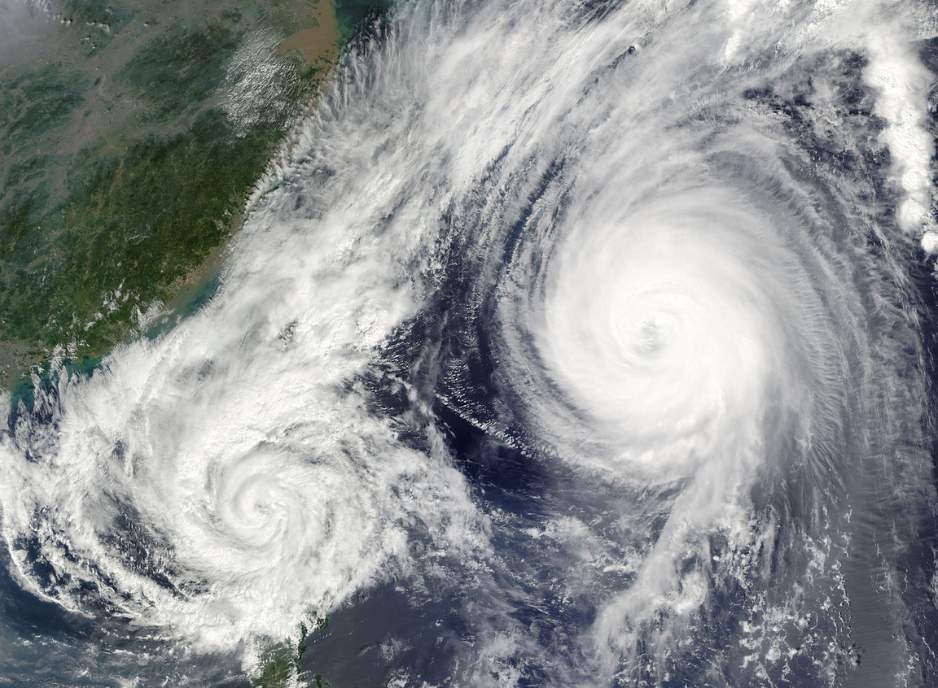
July 2025 — A new Federal Reserve Bank of New York report shows financial and physical losses from natural disasters hit $13.8 billion in 2023 and the NOAA’s National Weather Service forecasts an above-normal hurricane season in the Atlantic this year. For many regional leaders, it’s time to adjust strategies to prioritize disaster resilience.
It’s not just that the number of U.S. disaster incidences is climbing, as the NOAA report notes, but so is the wide-reaching financial toll on households, businesses, and local governments.
For homeowners, it means paying for more costly insurance premiums. For the private and public sectors, respectively, the mounting costs of disaster relief measures increase exposure to physical risks (leading to reduced revenues), and strain civic budgets.
In fact, 2024 was the fourth-costliest year for natural disaster damages since 1980 with a total financial toll of $1 billion, according to NOAA’s National Centers for Environmental Information (NCEI) 2024 billion-dollar disaster analysis. Last year’s losses were second only to 2017 ($395.9 billion), 2005 ($268.5 billion), and 2022 ($183.6 billion).
The NYFed report is the first comprehensive and publicly available dataset on county-level damages, injuries, and fatalities from natural disasters in the United States, which highlights the importance of proper weather preparation and investment in disaster-proof infrastructure, especially in highly vulnerable regions like those in the U.S. South.
Economic impact
Florida natural disasters created a loss of $448.58 million in 2023 with the most significant expenses recorded in Broward ($28.84 million), followed by Palm Beach ($394,202) in the Southern part of the state. Although the financial toll was even higher in the Northern districts: Dixie, Lafayette, Taylor, Madison, and Jefferson counties all lost upwards of $75 million in 2023.
Miami-Dade County, which borders Broward County, saw significantly less damages in 2023, however, with just $173,049 recorded costs. According to Miami Mayor Francis Suarez, the city’s decade-long investment into robust weather-proof infrastructure has been integral to ensuring public and private resilience, despite the increasing incidence of disasters.
“We’ve seen natural disasters devastate many places across the country, yet Miami hasn’t received enough credit for how resilient we’ve been,” Suarez told Invest:. “This resilience is the result of strategic investments made over decades, starting in the early 1990s. Every single building in Miami, even those built as far back as the 1930s has impact-resistant windows. We’ve become the most wind-resistant city on the planet, and our goal is to become the most water-resistant city as well.
Suarez acknowledged that water still presents a unique challenge, though, due to phenomena such as rain bombs, dry-day flooding caused by king tides, and storm surges from hurricanes. “To combat this, we’ve implemented urban reservoirs, pumps, and raised sea walls to mitigate the effects,” he added.
In Tennessee, the economic impact of natural disasters were similarly far-reaching. Nearly every county in the state faced damages in excess of $1 million, totaling $292.05 million in losses across the whole region.
Yet, the state of Texas experienced the greatest financial burden in all of the United States, surpassing $2.34 billion over the 1996-2023 period. The NCEI report also found that between 1980 to 2024, Texas was hit by a grand total of 190 confirmed weather and climate disaster events, ranging from droughts, floods, freezes, storms, tropical cyclones, wildfires, and winter storms, with losses exceeding $1 billion each to the state.
Tropical cyclones alone accounted for 56.9% of total costs, followed by severe storms (22.6%) and droughts (10.1%). The annual average for that time period was 4.2 events CPI-adjusted), while in the most recent five years (2020–2024) the number of events increased to 13.6 (CPI-adjusted).
Change in approach
Given this worsening scenario, the United States is seeing a major shift in how it approaches and prepares for extreme natural events. Counties across the nation are increasingly investing in natural disaster preparedness and weather-resilient infrastructure, with education and technology being among the core solutions.
Tampa Bay’s proneness to storm devastation, for instance, has bolstered demand for electrical and technical professionals, according to Pinellas Technical College’s Director Jakub Prokop, who recently spoke with Invest:. “We are looking to introduce evening classes and explore new infrastructure programs, such as electrical and lineman training, to address the increasing need for disaster response professionals following recent storms.”
In addition to skilling talent, emerging technologies like AI are similarly changing the approach to disaster resilience and recovery efforts by enhancing climate modeling and energy efficiency. “Following recent hurricanes, AI tools have been instrumental in mapping damage, analyzing hardest-hit areas, and improving resource deployment,” said Ana Cruz, Tampa Bay’s managing director at the U.S. lobbying firm Ballard Partners, to Invest:. “These advancements will undoubtedly enhance resilience and innovation across Tampa Bay.”
“In my 30 years at the National Weather Service, we’ve never had more advanced models and warning systems in place to monitor the weather,” echoed NOAA’s National Weather Service Director Ken Graham in the NOAA report. “This outlook is a call to action: be prepared. Take proactive steps now to make a plan and gather supplies to ensure you’re ready before a storm threatens.”
For more information, please visit: