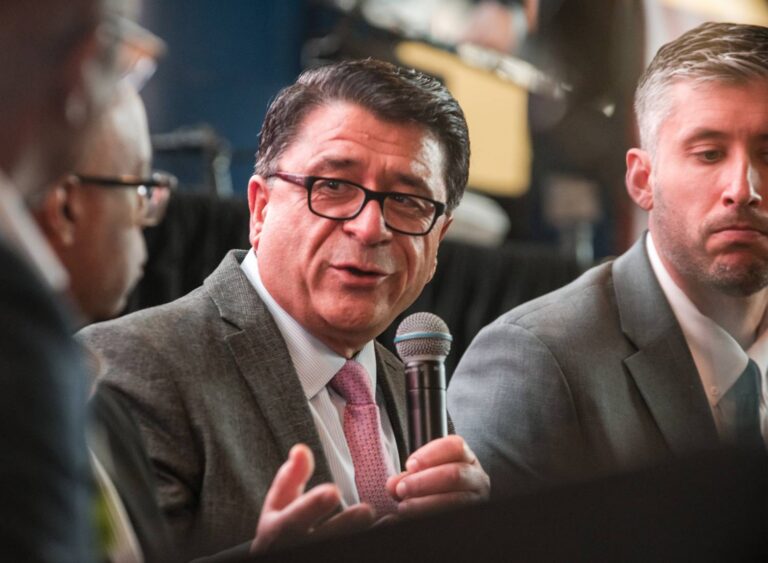







Zach Pannier, Business Unit Leader, DPR Construction
In an interview with Invest:, Zach Pannier, business unit leader at DPR Construction Charlotte, talked about how the company is diversifying its project portfolio through its Special Services Group (SSG). He also discussed the integration of sustainability practices into its projects, and the company’s workforce advantage.
What have been some significant achievements and milestones for DPR Construction over the past year?
Over the past year, we have faced significant challenges, with about 20 projects experiencing delays and interruptions. This scenario is not unique to Charlotte, as similar hurdles have emerged in pockets across the country. Despite these setbacks, what stands out is our unwavering dedication to nurturing enduring careers within our craft.
As a self-performing general contractor, our focus remains steadfast on various fronts. We handle concrete, drywall, doors, and hardware specialties, and we boast an electrical arm within our business. Our team diligently pursues craft development and apprenticeship programs, extending our outreach into the community. Collaborations range from associate degree programs in community colleges to partnerships with organizations like Goodwill Enterprises and initiatives with Charlotte-Mecklenburg Schools (CMS), engaging middle and high-school students to encourage a more skilled pipeline.
What truly distinguishes us is our crystal-clear vision and the future we are committed to building. Despite localized challenges, we persist in our mission to invest in our craftsmen for the long haul.
Considering DPR’s principle of “Ever Forward,” how does it fuel innovation and ongoing improvement in your operations?
We have four core values and Ever Forward stands prominently among them. It encapsulates our commitment to continually raising the bar while maintaining a clear operational standard, fostering consistency and continuity throughout our business. It serves as a catalyst for our team to seek out better, more efficient approaches, encouraging innovative thinking beyond conventional boundaries.
Our dedication to this principle is evident in our extensive prefabrication work. The construction industry’s evolution from traditional brick-by-brick methods to assembling building components aligns with our forward-thinking ethos. Through partnerships with entities like SurePods for volumetric bathroom pods and Digital Building Components for exterior wall systems, we are at the forefront of this shift. Last year, we proudly delivered our inaugural turn-key electrical rooms to clients, a testament to our commitment to innovation.
Ever Forward acts as a guiding beacon, urging us to remain at the leading edge of our industry. It prompts us to meet customer demands effectively and efficiently, continually seeking avenues for improvement and advancement in delivering results.
How is DPR addressing the economic challenges posed by high interest rates, inflation, and construction costs, and what strategies are in place to navigate them?
In our core markets – healthcare, advanced technology, higher education, commercial, and life sciences – we have noticed a slowdown in big project starts due to financial constraints in the commercial sector. All those tower cranes you see in Charlotte? Most are for multifamily developments, not commercial offices.
We have five core markets, all technical in nature. When some are up, others are down. As a result, we can adjust a bit; it’s not about abandoning our commercial customers but focusing on smaller projects through our Special Services Group (SSG). We are helping them upgrade their current assets which are medium-sized projects, such as lobby renovations, without breaking the bank.
Another strategy we have employed, especially since the COVID era, is working closely with supply chain experts. They help us understand current and forecasted material procurement trends, both in terms of cost and time. This way, we can advise our customers on the financial aspects of their projects and what sort of financial measures they should think about.
In terms of recent developments, over the past 18 to 24 months there has been an uptick in advanced tech projects. For us, that means mission-critical data centers and advanced manufacturing, particularly in the semiconductor and electric vehicle (EV) segments. We have seen data center customers moving south from Nova, Northern Virginia, looking for sites with sufficient power. Our partnerships with organizations like the Charlotte Regional Business Alliance and Duke Energy have been crucial in meeting market demands, especially as industries shift toward artificial intelligence.
Additionally, our focus on the battery belt region, spanning from Ohio to Georgia, has allowed us to support customers in the electric vehicle sector. We are helping take care of those customers that are in a bit of an arms race from an EV standpoint, offering our expertise and resources to aid in their growth and development. Those are some of the key areas we have been doubling down on lately.
How are you integrating sustainability and smarter construction practices into your projects?
Our national sustainability leader is based in Greenville, South Carolina. He used to be a project manager for us, so he is quite close to home and plays a pivotal role in driving outcomes. Sustainability initiatives do vary depending on the region. Having worked in Southern California for two decades before moving to Charlotte, I have witnessed a strong desire for LEED adoption throughout my career. Achieving LEED certification has become relatively commonplace nowadays, almost like a layup. Thus, we are assessing the baseline we aim to establish organization-wide regarding project setup, delivery, and office operations.
We have several offices — though not our Charlotte office — that operate on zero net energy. These offices serve as living labs, showcasing our sustainable technologies, methods, and operational efficiency to customers. Last year, we embarked on a project geared toward constructing a commercial zero-energy building. Unfortunately, I cannot disclose further details due to non-disclosure constraints, but I anticipate seeing substantial progress in the Charlotte region over the next few years.
Our sustainability endeavors also act as a recruitment magnet, particularly during our college recruiting drives. Prospective hires are keen to understand our sustainability focus and program, often making it one of their initial inquiries. Additionally, we have been early adopters of the Environmental Protection Agency’s climate challenge, striving to reduce our carbon footprint comprehensively. All in all, we have set a significant sustainability baseline that serves as a foundation for further progress.
How do you envision DPR’s role in shaping the future of the construction sector in Charlotte?
I am feeling bullish about where the market is headed. However, my concern lies in the sustained high demand for our services, even in the absence of a fully firing commercial market. What worries me is how we will manage this demand when the Federal Reserve decides to lower interest rates, potentially sparking a resurgence in projects. As interest rates decrease, the cost of borrowing money goes down, likely leading to a flurry of new projects. Consequently, the demand for skilled labor is expected to remain at a premium. We will likely witness talent wars not only among skilled professionals but also among skilled workers.
This brings me back to our earlier discussion about our investment in fostering careers for crafts. Being a self-performing general contractor sets us apart in the industry, particularly at the local and regional levels. While many firms operate as construction managers, our ability to deploy our own skilled craftspeople is a significant differentiator. What was once a challenge in selling our services has now become a strategic advantage. Having our own workforce allows us to show up to projects fully equipped, giving us a competitive edge in the market.