







5 reasons Houston is attracting more businesses and residents

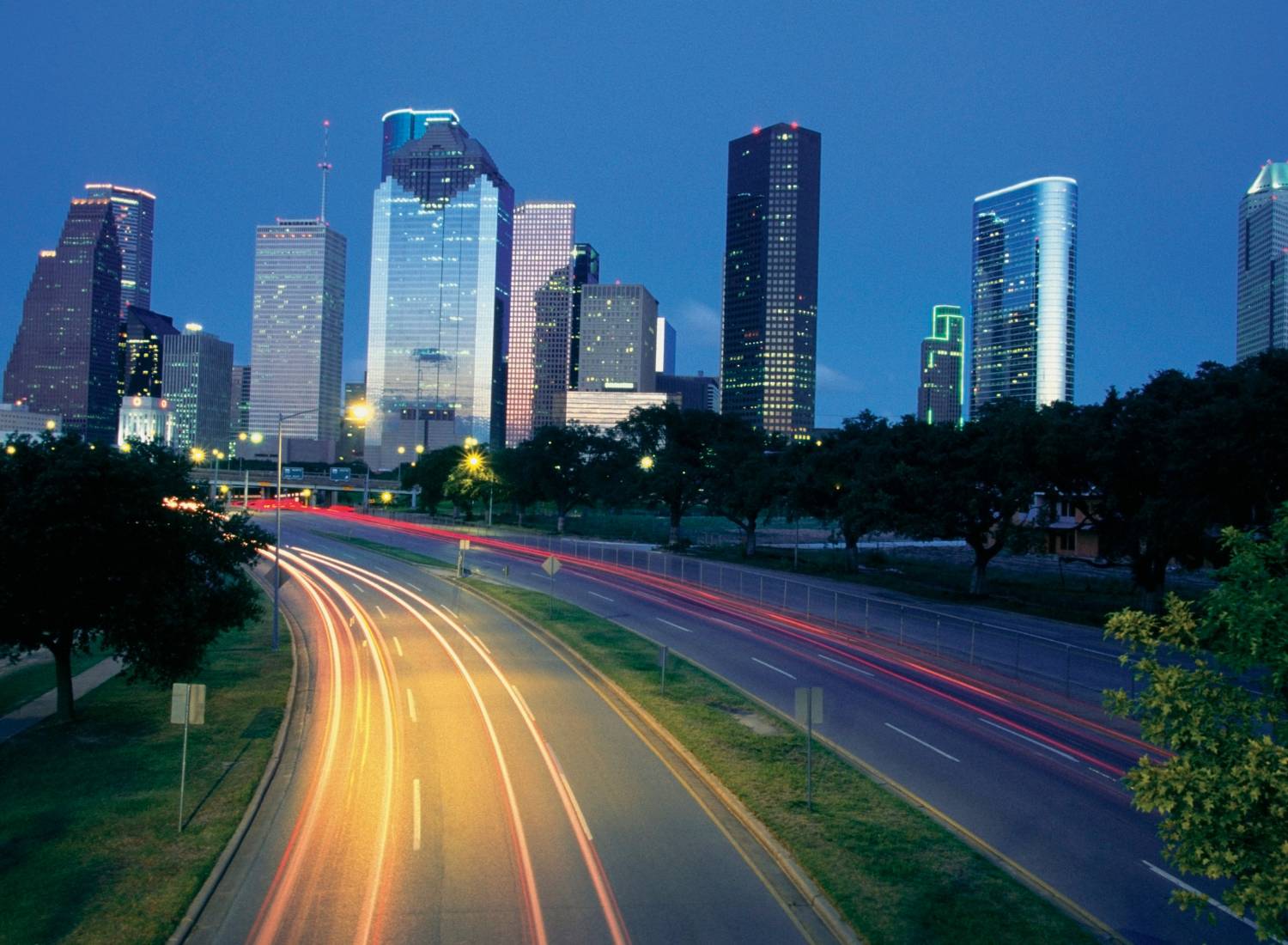 September 2023 — From a low-key trading post in the 19th century to an international hub of industry and innovation, Houston has developed into the fourth most populous city in the U.S., adding over 198,000 people between 2023-2024, alone — behind only the New York metro in terms of numeric growth, according to the Census Bureau. As one of the fastest-growing cities in the nation, Houston is poised to overtake Chicago as the nation’s third-largest city by 2035, according to analysis by the Illinois Policy Institute.
With 26 Fortune 500 companies headquartered in Space City –– behind New York and Chicago — the Houston-The Woodlands-Sugar Land area saw investment in 1,368 projects in 2024, as reported by the Greater Houston Partners. Even more noteworthy for businesses, Houston is one of just a few major U.S. cities earmarked for tech and manufacturing growth, highlighted by Apple’s $500 billion investment in the region and Tesla’s expansion to Waller County.
Houston’s claim to fame has long been as the energy capital of the world, trailblazing a path across industry segments from exploration and production to supply and technology. The city is also on a path to becoming the “energy transition capital of the world” given its diverse talent pool, infrastructure and established energy industry financiers, as cited by McKinsey. In the energy sector, oil and refined petroleum products remain key economic anchors, accounting for 52.1% of Houston’s total trade value.
However, Houston’s energy is derived from more than just pipelines and refineries, as the city is welcoming new residents at a faster pace than the majority of U.S. cities, attributable to increasing job opportunities, an underrated quality of place and much more. Invest: explores five reasons why Houston is climbing the list of landing spots for businesses and residents alike.
HOUSING AFFORDABILITY
Despite being the fourth largest U.S. metro area by population, Houston’s housing is surprisingly affordable. Housing costs in Space City are the second lowest among the most populous U.S. metros at 21.9% below the national urban average, according to the C2ER Cost of Living Index 2025. And while inventory continues to be a problem for many cities across the country, Houston’s housing market is the national leader: more homes are being built in Houston than any other U.S. city in 2025, as per a Consumer Affairs report. Houston’s reputation as a city without zoning has drawn developers and is part of the reason the city builds housing faster than many other U.S. cities.
EDUCATED WORKFORCE
With 14 premier public and private research universities in town, Houston’s talent pipeline remains steady for a large industry cluster. More than 315,000 students are currently enrolled in 500-plus degree and certification programs across the region, as reported by Visit Houston. Further, the University of Houston achieved a No. 42 among public universities in The Princeton Review’s “Best Value Colleges” for 2025, raising UH’s national profile and attracting more prospective students to the Houston area for studies at a time when the value of a higher education degree is being questioned. Among degree holders in the University of Houston’s College of Natural Sciences and Mathematics (NSM), more than 700 were awarded diplomas in STEM-related disciplines, such as biochemistry, biology, chemistry, computer science, geology, geophysics, mathematics, and physics.
Join us at the San Antonio 4th Edition Leadership Conference! This premier event brings together hundreds of San Antonio’s business and regional leaders to discuss the challenges and opportunities for businesses and investors. This year’s theme centers on how the region is balancing economic growth and authenticity. Buy your ticket now!
INDUSTRY LEADER
Houston is home to a robust grouping of sectors from energy and advanced manufacturing to aviation and life sciences. According to the Greater Houston Partnership, nearly one in three manufacturers are based in the city, while its location –– equidistant from the east and west coasts, makes it ideal for national distribution. Its status as a global trade hub is cemented by its No. 1 foreign trading port in terms of tonnage. And while trade and tariff fears are lingering across the nation, the Greater Houston area is well positioned to overcome headwinds given its economic sector diversity and strong export demand. As per the Greater Houston Partnership’s newly released 2025 Global Houston report, the Houston area led the U.S. in exports last year, shipping $180.9 billion in goods — the largest value of any other metro area. Additionally, the Perryman Group, a Waco-based economic analysis firm, estimated that 318,400 jobs will be added in the Greater Houston area by 2027 through the energy, life sciences and aerospace industries, as cited by Houston Public Media.
EMERGING INTERNATIONAL SPORTS CITY
Houston sports teams and events are having a moment. From the buzz generated with the 2024 CFP National Championship, CONMEBOL Copa America tournament and the Texas Bowl, Houston is garnering attention from the sports world. The economic impact of Houston’s sports industry is ever-growing, with an estimated $330 million in economic impact generated from major sporting teams and events in 2024, according to the Houston Business Journal. Building on the recent spectacle of the PGA’s Houston Open, which took place in March 2024, a number of exciting events are in the pipeline. From the upcoming FIFA World Cup to the World Baseball Classic in 2026, Houston is expected to continue to expand as a noteworthy sports town, driving growth in tourism, transportation, infrastructure, and beyond.
Update Date: This article was originally published in September 2023, and it has been updated in September 2025.