Spotlight On: Jochen Reiser, President, The University of Texas Medical Branch & CEO, UTMB Health System
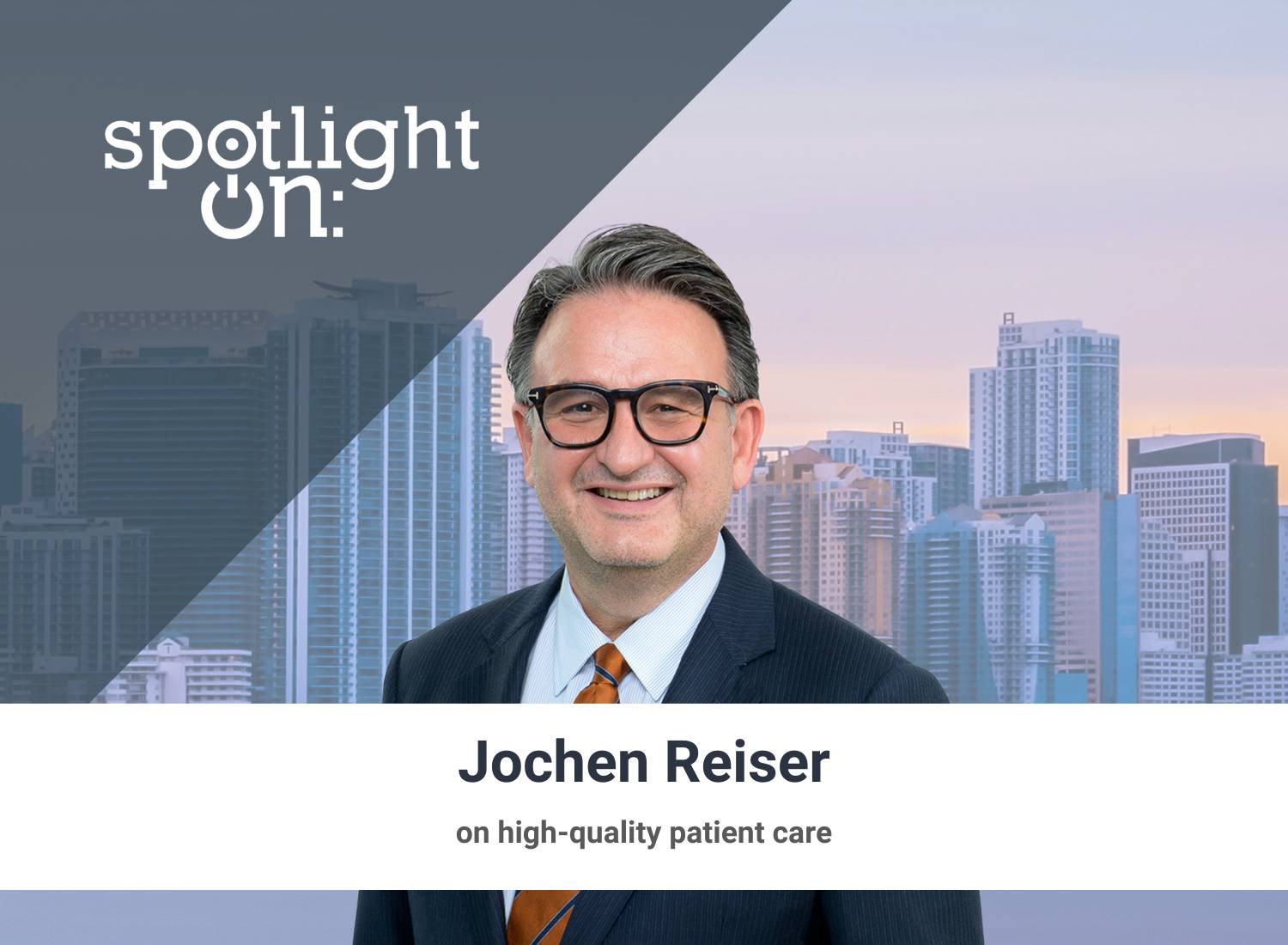 October 2025 — In an interview with Invest:, Jochen Reiser, president of The University of Texas Medical Branch and CEO of the UTMB Health System, discussed the organization’s role in Texas’ proposed $3 billion Dementia Prevention Research Program and the launch of the Moody Brain Health Institute. “We are living through a cognitive revolution—UTMB is positioned to lead in brain health, space medicine, and biotech innovation,” he said.
How has UTMB’s research and medical advancements positioned it as a leader in Texas and beyond?
The research enterprise at UTMB is rapidly emerging as a state and national leader in several areas. One major initiative, the proposed Dementia Prevention Research Institute of Texas (DPRIT), a $3 billion program championed by the lieutenant governor and on the November ballot for voters to consider, illustrates the state’s growing leadership in this field. UTMB is already uniquely prepared to contribute, thanks to the foundation established through the Moody Brain Health Institute, launched last fall with support from the Moody Foundation.
The Institute brings together world-class experts in neuroscience, neurobiology, clinical neurology, and neurosurgery to conduct breakthrough research that translates directly to patient benefit. One example is our Alzheimer’s nasal spray therapy, which has shown remarkable results in animal models by blocking defective proteins that cause memory loss. That treatment is now advancing to human trials—marking a potential milestone in dementia prevention.
We are also expanding our influence through partnerships. We are collaborating with Rice University, known for its strength in public policy, and the Wyss Center for Bio and Neuro-engineering in Geneva, Switzerland. Together, we participated in the Davos Brain Health initiative at the World Economic Forum earlier this year, where global leaders in capital markets, public policy, education, and health care discussed strategies to improve brain health, combat dementia, and sustain economic productivity. Given Texas’ leadership in brain health research and legislative support, UTMB is well-positioned to drive these advancements and make a lasting impact.
Join us at the Houston 2nd Edition Leadership Summit! This premier event brings together hundreds of Houston’s business and regional leaders to discuss the challenges and opportunities for businesses and investors. This year’s theme centers on Houston’s role as a leader in world innovation. Buy your ticket now!
What makes the Galveston and Greater Houston region an ideal location for UTMB’s growth?
Galveston has a rich history and a unique position in Texas. It was once envisioned as the “New York of the South,” with immigration levels rivaling those of the East Coast. That history played a key role in UTMB’s establishment, as it was founded where new immigrants arrived, making it the birthplace of medical education in Texas.
Today, despite natural disasters like the 1900 Storm and Hurricane Ike in 2008, Galveston remains a resilient community. The demographic mix here provides an ideal environment for research that reflects the broader population of Texas, and studying health trends in Galveston gives us insights applicable across the entire state.
Another major factor driving growth is the transformation of the I-45 corridor, which now connects Galveston to thriving communities. Improved schools, an enhanced quality of life, and natural beauty have made it an attractive place for new recruits. Increasingly, they are choosing to make Galveston home, something that was rare a generation ago. It’s a community where history meets innovation, where purpose meets passion—and where UTMB’s mission continues to thrive.
How has UTMB’s Life Science Incubator advanced research commercialization?
We consider innovation our “fourth domain” alongside research, education, and clinical care. Since we last spoke, this area has gained tremendous momentum, leading to new patents, startup partnerships, and technological advancements.
One exciting collaboration involves a German company specializing in a breakthrough diagnostic technology. Traditionally, detecting the smallest biological components required electron microscopy, a complex process that takes three to four days. This new technology allows us to see these microscopic structures using light microscopy in a few hours, enabling faster diagnostics and broader accessibility. UTMB is now working to secure regulatory approvals, including FDA clearance, and integrating this innovation into student training.
Another example is the work of Dr. Peter Kan, our chair of neurosurgery. He is a world-renowned surgeon, but having an in-house innovation platform has made him even more entrepreneurial. He no longer needs to seek external partners to develop new medical tools and biosensors; he can collaborate directly within UTMB. This has sparked discussions about a new type of professional: the “physician entrepreneur.” We are not only training future doctors and nurses but also giving them opportunities to innovate, which enhances patient care and accelerates medical advancements.
How is UTMB leveraging AI and emerging technologies to improve patient outcomes and operational efficiency?
We are living through a cognitive revolution—one as transformative as the Industrial Revolution. Artificial intelligence is not just changing how we work; it’s changing how we think, learn, and heal.
UTMB is harnessing AI across clinical, educational, and operational domains. We’re using predictive modeling to anticipate patient needs, AI-assisted diagnostics to improve accuracy and speed, and ambient clinical documentation tools to reduce the administrative burden on physicians. These technologies are enhancing care while allowing clinicians to spend more time with patients.
We are committed to integrating AI responsibly, through strong governance, rigorous testing, and ethical oversight. By combining human judgment with machine intelligence, UTMB is ensuring that innovation serves our ultimate goal: better health outcomes, delivered with compassion and precision.
With rising healthcare costs and economic pressures, how is UTMB ensuring affordability while maintaining high-quality patient care?
Balancing cost, quality, and sustainability is one of the biggest challenges in health care today. At UTMB, the focus has been on improving patient outcomes while eliminating inefficiencies.
Through our “Best Care” initiative, we closely track infection rates, hospital readmissions, and treatment effectiveness. This allows us to identify areas where care can be improved while reducing unnecessary expenses. Data-driven decision-making is helping us streamline everything from medical supplies to patient services. For example, rather than stocking multiple brands of the same surgical material, we analyze which options provide the best results at the most efficient cost.
Telemedicine has also been a major factor in controlling costs. UTMB has long been a leader in virtual care, providing medical services to the Texas prison system and cruise ships. Now, we’re applying those same principles to patient triage. If someone calls with a health concern, AI-assisted screening can determine whether they truly need a specialist or if a follow-up call is a better approach. This helps reduce unnecessary visits, lowering costs for both patients and the system.
Despite these efforts, economic pressures remain a challenge. Labor shortages, inflation, and shifting workforce dynamics are affecting healthcare nationwide. However, UTMB’s reputation continues to attract top talent, and our workforce and student population have now surpassed 20,000. Even in difficult financial conditions, we are positioning ourselves for long-term success.
What excites you most about UTMB’s future and its role in shaping healthcare?
The more time I spend at UTMB, the more I appreciate its extraordinary breadth and potential. Few institutions can match the scope of what happens here, from cutting-edge research to frontline care and global discovery.
We are home to one of only two university-based Biosafety Level 4 laboratories in the nation, the country’s last remaining space-medicine program, and a health system that cares for more than 80 percent of Texas’ incarcerated population. Our scientists are advancing groundbreaking therapies.
What excites me most is how these strengths converge. Education, research, innovation, and patient care are no longer separate pillars; they are part of a single ecosystem that serves people and drives discovery.
UTMB was founded more than 130 years ago on an island known for its resilience. Today, that same spirit fuels our vision for the future. We are building a model of academic medicine that serves Texas, influences the nation, and shapes the future of global health. I believe UTMB’s most transformative years are still ahead.
Want more? Read the Invest: Houston report.