
Brian Freedman, President, Bay Area Houston Economic Partnership
 In an interview with Invest:, Brian Freedman, president of the Bay Area Houston Economic Partnership, discussed the economic growth and development of Bay Area Houston, highlighting key industry advancements, business expansion opportunities, and regional partnerships. “The momentum here is undeniable,” said Freedman.
What have been some of the key highlights from the past year?
It’s an exciting time in Bay Area Houston, with many great projects coming to fruition. Some were just concepts when we spoke last year, but now they are in development or even completed. As a region, we focus on five major industry clusters: maritime, tourism, healthcare, petrochemicals, and aerospace. Each has seen significant activity over the past year.
One highlight is the opening of the Great Wolf Lodge in Webster. It’s a massive destination resort featuring a hotel, water park, and conference space, serving as a catalyst for our thriving tourism industry. We also continue to see growth in attractions like Space Center Houston, the Lone Star Flight Museum in Kemah, and the cruise industry, with 1.5 million passengers passing through Houston on their way to Galveston annually.
Another major development is the Texas A&M Space Institute, a state-funded project that recently broke ground and is on track for completion in 2026. This facility, located near Saturn Lane, will be a hub for research in Moon and Mars robotics, space suits, and other technologies essential for deep space exploration.
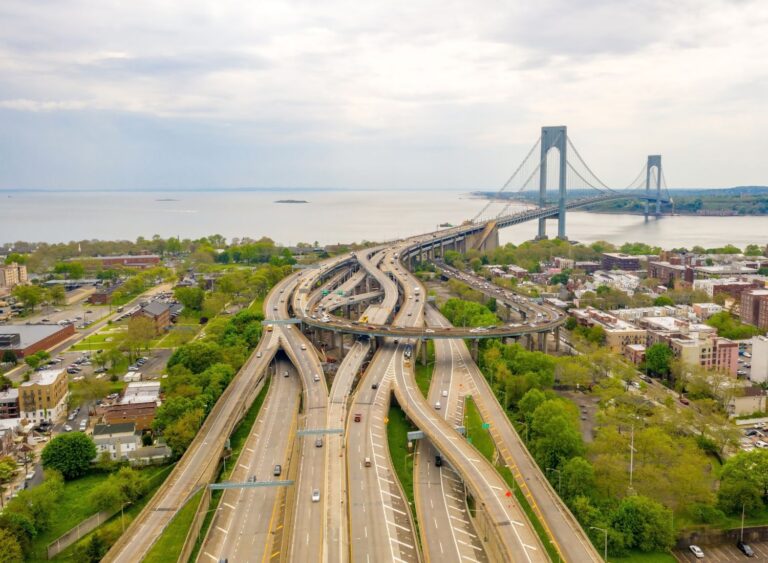
Beyond these specific projects, the region continues to expand. We’re developing the last available parcels in the core areas of Clear Lake and the Bay Area, and new projects are pushing growth outward. The momentum here is undeniable.
What makes this region an ideal location for business expansion or relocation?
Our value proposition is a strong one, and we’re fortunate in that regard. Several factors make this an attractive location. First, we have available, development-ready land with utilities in place, making it easier for businesses to establish operations quickly.
Second, our cost of living is highly competitive, allowing businesses to attract and retain employees at all levels, from entry-level workers to executives. We also have excellent transportation infrastructure — not just for businesses but for business leaders who need to travel. Houston is centrally located in the United States, providing relatively equal access to both coasts. Additionally, we have world-class shipping infrastructure, including the Port of Houston, the Port of Galveston, and the Port of Texas City, along with extensive rail and highway networks.
When you factor all this together, Houston consistently ranks highly as a business destination. The strong economic fundamentals and infrastructure keep attracting companies, fueling ongoing growth.
What aerospace and defense manufacturing initiatives are underway at the Houston Spaceport?
The spaceport continues to grow, with multiple projects in the pipeline. In addition to the three buildings we’ve already constructed, several other developments are underway. Unfortunately, most are still under non-disclosure agreements, so I can’t reveal specifics just yet, but I can say that exciting things are happening.
Another major initiative is Exploration Park. NASA has subleased about 250 acres of land, where Texas A&M is leading a development effort. Additionally, the American Center for Manufacturing and Innovation is establishing a business park there.
We’re also awaiting the confirmation of a new NASA administrator, but I’m optimistic about the future of human spaceflight. The previous administration set ambitious goals, and I expect that as new leadership takes shape, Houston will continue to play a key role in space innovation.
What services and resources does the partnership provide to support small businesses and startups in the region?
We offer a range of services to help small businesses establish themselves and grow. One key area is recruitment — assisting businesses in finding locations that meet their needs and budget. We also facilitate connections between companies, helping them build relationships with key suppliers and customers.
In some cases, we work with municipalities to secure economic development incentives for significant projects. Beyond that, we have a robust agenda focused on regional growth, and we actively involve our members in discussions about infrastructure, transportation, and government investments. This ensures that businesses not only have a seat at the table but also a voice in shaping the future of the region.
What new collaborations has your organization formed recently to strengthen the Greater Houston business community?
We maintain strong relationships with other business organizations in the region, particularly the Greater Houston Partnership. We frequently collaborate with them on economic development projects, submitting proposals to companies considering Houston as a location.
We also work closely with the 12 chambers of commerce in our region to ensure that the business community speaks with a unified voice. Another significant partnership is with the state of Texas and Texas A&M, which recently committed a $200 million investment in our region. That project is already under construction, and I can see the bulldozers working from where I sit.
One thing that sets this region apart is our collaborative mindset. Rather than competing over limited resources, we focus on lifting the entire business community. That mentality has been a key factor in Houston’s ongoing success.
What programs or partnerships are in place to enhance workforce skills and meet local employers’ needs?
Retaining talent ultimately comes down to compensation and cost of living. Fortunately, Houston remains an affordable place to live, which makes retention less of a challenge compared to other high-cost markets.
That said, workforce development is critical. We work with 11 school districts in the region to ensure students graduate with both technical and soft skills that align with industry needs. Our local community colleges — San Jacinto College, Alvin Community College, College of the Mainland, and Galveston College — are also highly focused on workforce readiness, particularly in trades that support manufacturing, maritime, and aerospace industries.
At the four-year level, institutions like the University of Houston-Clear Lake, Texas A&M-Galveston, and the University of Texas Medical Branch provide specialized training in engineering, science, and technology. With strong education partners at every level, we’re well-positioned to supply a skilled workforce for the industries growing here.
How is the partnership preparing for continued population growth?
Growth presents both opportunities and challenges. Ensuring a strong tax base is critical to funding infrastructure, utilities, and transportation. At the same time, we must continue attracting job-creating investments to support that tax base.
We work closely with municipalities, utility providers, and the Texas Department of Transportation to plan for infrastructure needs. Every time a new business considers locating here, we immediately coordinate with local entities to assess utility capacity, transportation access, and workforce impact. Long-term planning is key to ensuring that growth is sustainable.
What is the Bay Area Houston Economic Partnership’s outlook over the next three to five years?
The outlook is incredibly positive. We have strong opportunities and the resources to capitalize on them. Several companies have recently relocated here, particularly in innovation-driven industries.
For example, Venus Aerospace is developing a Mach 9 hypersonic plane that could make a trip from Houston to Tokyo in just a few hours. Their slogan is “Home in time for dinner,” which speaks to their vision. Another exciting addition is KULR Technology, which moved its headquarters from California to Houston. They specialize in lithium-ion batteries with improved safety features, particularly for aerospace applications.
Energy innovation is another priority. Companies in the petrochemical sector, particularly in Texas City, are making significant investments in next-generation energy technologies. Overall, the region is positioning itself for continued growth across multiple industries, and we’re excited about the future.