

US trade shifts signal broad economic impacts

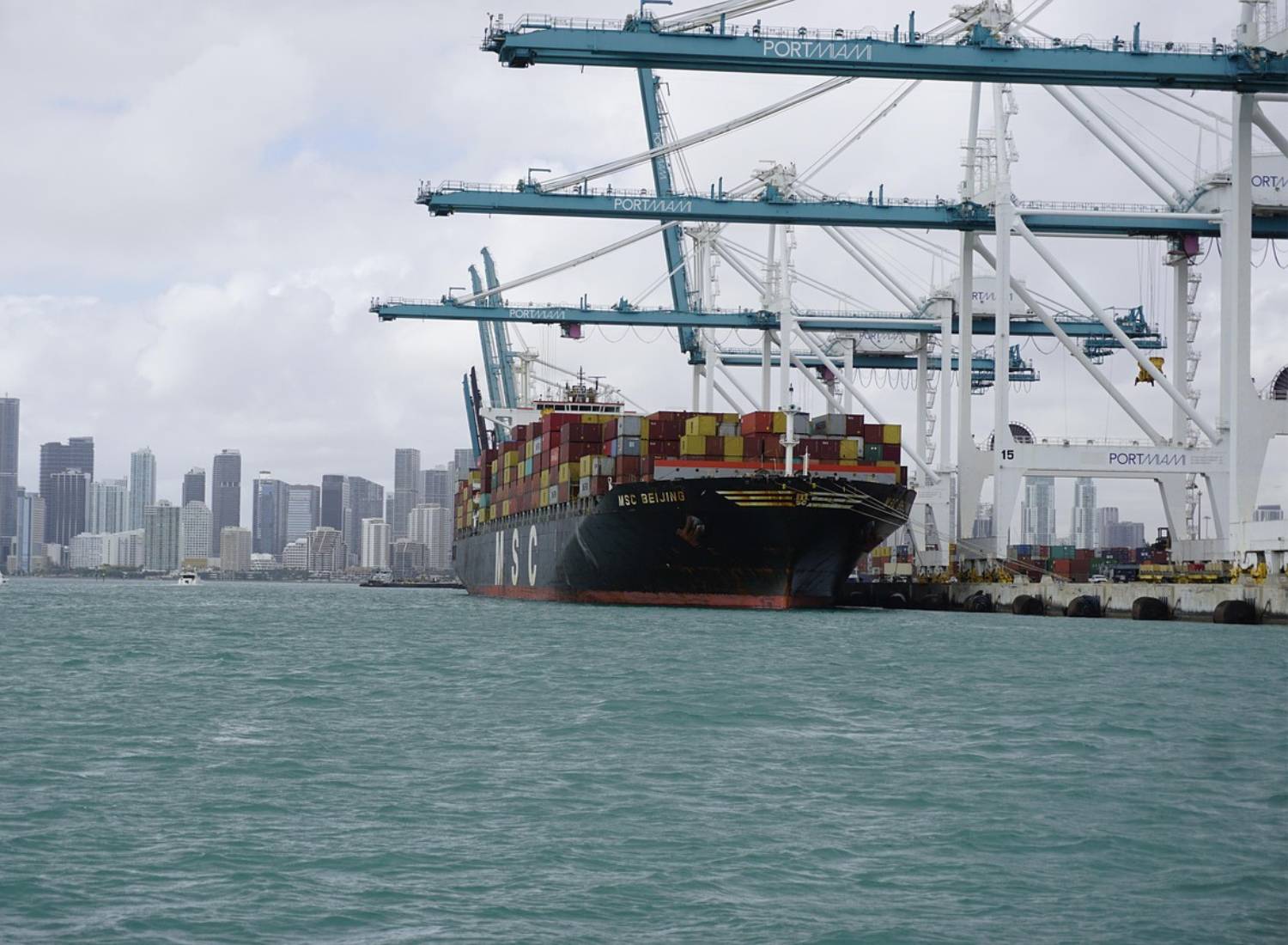 November 2025 — When the U.S. introduced major tariffs in April, economists warned it would disrupt global trade norms and weaken growth prospects. But the actual impact on the American economy remains complex, with consequences expected to vary widely across regions.
Join us at caa’s upcoming leadership summits! These premier events bring together hundreds of public and private sector leaders to discuss the challenges and opportunities for businesses and investors. Find the next summit in a city near you!
The U.S. economy is closely tied to trade, and its benefits reach deep into local communities. Expanding the production of goods and services for exports raises American incomes, which make up roughly 20% of the global total, and jobs supported by exports pay up to an estimated 18% more than the national average.
Exports also help lower average production costs through scale, while imports expand consumer choice, keep prices competitive, and increase purchasing power. With 75% of global purchasing power and 95% of consumers located outside U.S. borders, removing trade barriers could boost economic benefits to the nation by an estimated 50%, according to the Peterson Institute.
Regional impact
Trade’s influence is especially visible at the regional level.
In Texas, exports account for nearly 20% of state GDP. The Lone Star State exported $455 billion in goods in 2024, more than any other state — the Houston-Pasadena-The Woodlands metro contributing $175.5 billion.
In North Carolina, exports sustain thousands of businesses, 87% of which are small and midsize enterprises (SME). As the 15th-largest exporting state, North Carolina shipped $42.8 billion in goods in 2024, including $40.2 billion in manufactured products.
Florida also depends heavily on global markets. With 16 ports in Florida, the state has access to 96% of the global market, including Brazil – its largest export destination. In 2024, Florida exported $6.1 billion in goods to Brazil, followed by $5.3 billion to Canada, $4.5 billion to Mexico, $3.8 billion to the United Kingdom, and $2.5 billion to the UAE.
Overall, the state exported a record $72.2 billion of goods, supporting 4.5% of state GDP.
On the import side, Florida remains the largest consumer market in the country, accounting for 40% of total demand. Imports destined for Florida reached $117.2 billion in 2024, a 4.2% increase compared to the previous year. Key imports included electrical machinery, vehicles, industrial machinery, petroleum products, and medical supplies — inputs that support major sectors such as transportation, construction, manufacturing, and healthcare.
In Pennsylvania, foreign direct investment is a major source of employment. According to the latest available data from 2022, foreign companies employed 343,600 workers, or 6.4% of the state’s total private sector workforce.
In Tennessee, strong tech-sector growth has driven cross-industry expansion. Manufacturing accounted for $36.4 billion of the state’s $38.9 billion in exported goods in 2024, including significant output in computer and electronic products.
Lingering effects
This year’s tariff policies have disrupted trade flows and discouraged international commerce, as exports have not kept pace with the surge of front-loaded imports. From January through July, U.S. imports increased as companies rushed to place orders early ahead of tariff implementation.
According to the U.S. Bureau of Economic Analysis (BEA), the goods and services trade deficit increased 30.9%, to $154.3 billion, year-to-date, as compared to the same period in 2024. Exports rose 5.5%, to $103.1 billion, and imports grew 10.9%, to $257.5 billion.
The Peterson Institute notes that this reflects a widening gap between national expenditure and national production.
The overall trade landscape remains volatile. According to the IMF, “temporary factors that supported activity in the first half of 2025—such as front-loading—are fading.”
Imports are expected to decline in the near-term – dropping 22%, or $742 billion – and the average effective tariff rate is likely to reach its highest rate since 1941, according to the Tax Foundation.
For small businesses, tariffs have created barriers to entering foreign markets, said Sandra Marin Ruiz, regional director of the Florida Small Business Development Center (SBDC) at FAU.
“What we have noticed…is a significant gap in awareness,” Ruiz told Invest: “Many businesses do not consider international trade as a viable avenue for growth.”
Trade agreements, product restrictions, and logistics costs often discourage companies from pursuing international expansion.
“For newcomers, navigating these complexities can be expensive and challenging,” added Ruiz.
In response to rising economic pressures, the U.S. has begun adjusting parts of its trade policy.
“I found that conditions reflected in large and persistent annual U.S. goods trade deficits, including the consequences of those deficits, constitute an unusual and extraordinary threat to the national security and economy of the United States that has its source in whole or substantial part outside the United States,” announced President Donald Trump in a White House press release.
Still, even with recent shifts, earlier tariff actions have already set off major economic shifts in motion expected to continue through 2026.
“The tariff shock is further dimming already lackluster growth prospects,” said the IMF in a report. “We expect a slowdown in the second half of this year, with only a partial recovery in 2026… Even in the United States, growth is weaker and inflation higher than we projected last year — hallmarks of a negative supply shock.”
Want more? Read the Invest: reports.
Subscribe to Our Newsletters