
Martin Kimmel, President, Kimmel Architecture
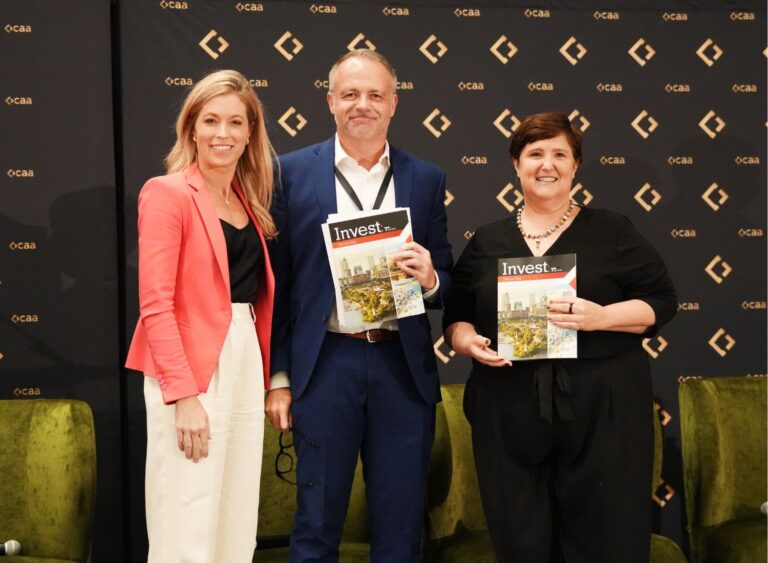
 In an interview with Invest:, Martin Kimmel, president of Kimmel Architecture, shared how strategic diversification and mission-driven design are key to long-term resilience in the architecture industry. “Because of that model, we’ve never had a layoff in 30 years. Even now, with the multifamily market struggling, we’re stable because we didn’t overextend into that space,” Kimmel said.
What key changes over the past year have most impacted your organization, and in what ways?
Over the past year, the most significant change has been the opening of our office in Pittsburgh. That move had been in the planning stages for about two and a half years, and it represents a major milestone for us. We were already deeply invested in the Pittsburgh area, with 13 or 14 active projects, and it became clear that it was time to commit to that market more fully, not just service clients from across the state.
We took the time to find the right local leader for the office and were fortunate to recruit Edgar Smith, who joined us from another firm. He’s doing an excellent job representing us on the ground. We also brought on a chief operations officer and just hired a new team member who recently immigrated from Italy, which brings an interesting European perspective to our office culture. That mix has been exciting for us.
Beyond the Pittsburgh expansion, another key factor has been how our long-standing diversification strategies have once again proven effective. As economic conditions shift and certain markets have taken a downturn, our diversified portfolio has allowed us to continue growing. In fact, we’ve grown every year for the past 30 years, and we expect that to continue. Our expansion into Western Pennsylvania, Eastern Ohio, Western New York, and West Virginia will play a big role in that future growth.
As you expand into Pittsburgh, how are you attracting and developing your workforce?
That’s been a real challenge. Honestly, I thought it would be a bit easier just to find qualified people to begin the conversation with. We reached out to our institutional clients, especially the universities we work with, asking if they could refer us to promising professionals, but that didn’t yield much. They understandably have their own priorities.
So we turned to recruiters, something I usually avoid, but in this case it was necessary. Over time though, as word of our presence in Pittsburgh has spread, we’ve seen more people reach out to us directly. Edgar has also been instrumental as he knows the local architecture community well, and he’s helped us identify talent. So it’s been a combination of efforts. There’s no silver bullet, but we’re optimistic.
What specific strategies set Kimmel Architecture apart from other firms?
We’ve always approached architecture delivery a bit differently. Most design firms aren’t considered scalable, but we’ve discovered that our model actually is. From the start, we’ve been committed to our mission: Extraordinary Solutions for Ordinary Budgets. Architecture is notorious for proposing big ideas that far exceed the client’s available resources, like offering a $14 million vision for a $10 million budget.
We approach it differently. We focus on maximizing the value of the budget a client actually has. That requires creative design thinking, not just in aesthetics, but in solving operational problems and eliminating inefficiencies. We invest heavily in designing waste out of the process so that clients can spend more on what really matters to them.
This mission has stayed with us since our founding and will continue to be our guiding principle as we are currently rebranding from Kimmel Bogrette Architecture + Site to Kimmel Architecture, and move into our next chapter. It’s a big part of why we’ve been able to grow into new markets and why clients continue to come back to us.
What are the biggest challenges you’re noticing in the architecture and site planning space?
Before I dive into that, I want to circle back briefly on diversification. The conventional wisdom in our industry — and something I read in a book called Owning Your Own Design Firm — is to specialize in a few building types. The theory is that clients want experts, so firms focus on just three or four building types. But even early in my career, I found that limiting.
I saw firms repeat the same types of projects, and it started to drain creativity and job satisfaction, especially for young designers. It was clear that repetition stifles innovation. So we took a different path: instead of specializing in building types, we focused on owner types, particularly mission-driven institutional clients.
These are organizations with boards, professional staff, and a duty to spend other people’s money wisely like universities and healthcare systems. This allows us to work on a wide variety of building types while serving clients with similar values and expectations.
Because of that model, we’ve never had a layoff in 30 years. Even now, with the multifamily market struggling, we’re stable because we didn’t overextend into that space. Other firms are laying off 20, 30, 40 people. We’ve avoided that by staying balanced. It’s been especially evident in Philadelphia, where the multifamily boom was even bigger than in Pittsburgh. I think Pittsburgh still needs to build more downtown housing, something that supports after-hours businesses and makes downtown more vibrant. But we’ll see how that evolves.
Are there any other trends that you’re noticing right now?
First, from a market perspective, the biggest trend is the tightening of capital. Major universities, for example, are holding back. Some have too much debt; others are facing declining enrollment or consolidating campuses, meanwhile, some schools have plenty of students but don’t have all the amenities they need to support them such as the right types of housing.
But in a strange way, this economic pressure works in our favor. When budgets are tight, clients are more receptive to our approach of stretching dollars and delivering value. We don’t just chase the big, glamorous projects — we take on the small, complex ones too. That’s something a lot of other firms avoid.
As for design trends, architecture follows a bell curve: 10% of firms are leading, 15% might be lagging or doing poorly, and everyone else is somewhere in the middle, following the latest trends. We strive to lead and remain timeless in our design aesthetic. We avoid being trend-driven. When you see buildings and immediately know the year they were built — “Oh, that’s 1998” or “That’s 2015” — you know the design has dated quickly.
We aim for designs that won’t feel tied to a specific era. Some developers don’t care as much, or just focused on ROI, but our institutional clients often do appreciate that timeless quality.
How do you balance those different needs, from design integrity to a developer’s focus on ROI?
When we work with for-profit developers or even nonprofits competing in a crowded market, we shift our focus to what is most important to them – return on investment and market dominance. Our focus is on creating value for them. We’re focused on helping clients win in their markets. That means being strategic, understanding their goals, and using design as a tool to support those goals. Personally, I find that much more satisfying than designing for design’s sake. While some architects are drawn to the “sculpture” side of the profession, that kind of work represents a tiny fraction of what gets built. I’d rather make a meaningful impact on the majority of projects that actually serve people.
What types of projects are currently driving the most demand?
For us, it’s definitely institutions building for a purpose – building to serve others. On a broader scale, logistics and warehouse construction are booming, but that’s not a space where we add much value. Those are concrete boxes, and others can handle those better than we can.
I believe the senior living market, where we are very active, is going to surge within the next 24 months, especially if interest rates drop even slightly. Demographics support the idea that baby boomers are aging, and the demand for quality senior housing is about to spike.
We’ve already opened six major senior facilities in the last four years, and those are big projects — 250,000 square feet or more, complete with dining, healthcare, and residential components. Interestingly, Pittsburgh is an outlier in this space. Very little senior housing has been built there compared to other markets. With the healthcare infrastructure already in place, I think demand will increase sharply, and now that we’re there, we’re well-positioned to serve that need.
Looking ahead to the next two to three years, what are your top priorities?
In 2025, we rebranded as Kimmel Architecture. I co-founded the firm with Jim Bogrette, and after I bought him out seven years ago, it made sense to simplify the name. We want the firm name to eventually stand on its own, something that can live on beyond any one person.
Currently, about 20% of our work is in the western third of Pennsylvania. Our goal is to triple that in the next two years. That doesn’t mean we’re not growing elsewhere, too, but Western PA is a major focus. Our mission remains the same: deliver outstanding experiences for our clients. We’ve found that when we work with a client once, we often go on to do multiple projects with them. In Pittsburgh, some of our clients are already on their fourth project with us.
We’re not chasing iconic, one-and-done buildings. We’re focused on building long-term relationships. Our brand is about helping other organizations build their brands through well-executed design. Whether it’s a small project or a large one, we aim to be there for the long haul, and we take pride in that.