



Aerospace investment in Central Florida – what’s underway and what’s planned
Key points:
- Central Florida’s aerospace sector is expanding rapidly, backed by major investment, NASA initiatives, and strong job growth projections.
- Universities and technical colleges are scaling engineering and applied programs to meet rising aerospace workforce demand.
- Airport expansions and advanced air mobility planning are positioning Greater Orlando as a long-term aerospace hub.
 February 2026 — Central Florida’s aerospace sector is accelerating, as rising investment, expanding talent pipelines and long-term infrastructure planning position the Greater Orlando region as a national hub for space, aviation and advanced air mobility. From the Space Coast to Orlando’s airport ecosystem, public leaders, universities and private industry strategies are aligning to support one of the region’s most strategic industries.
“We have been pushing to be a national hub for advanced air mobility,” said Orlando Mayor Buddy Dyer in a recent interview with Invest:.
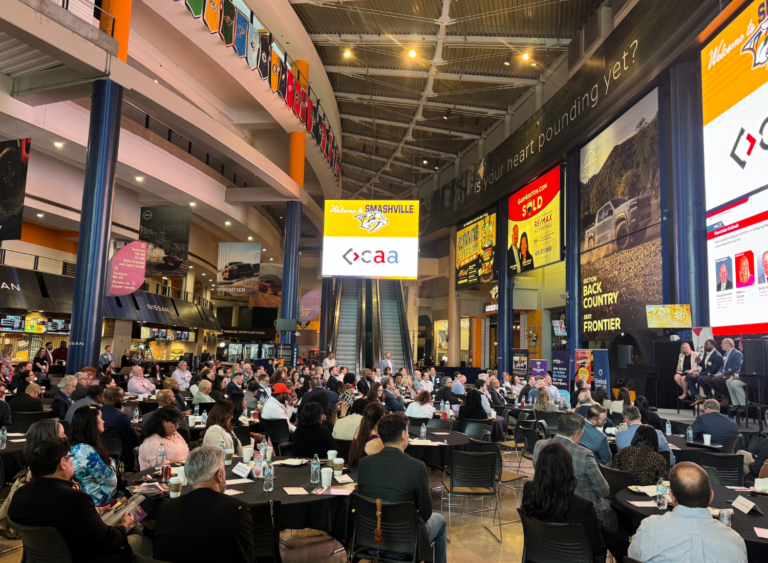
Join us at caa’s upcoming leadership summits! These premier events bring together hundreds of public and private sector leaders to discuss the challenges and opportunities for businesses and investors. Find the next summit in a city near you!
Aerospace’s Expanding Economic Impact
Aerospace and defense already represent one of Central Florida’s most powerful economic engines, supporting over 77,000 tech jobs and more than $7 billion annual regional output. Home to top aerospace and defense companies across the world, and the No. 1 workforce supplier for this sector, Orlando’s momentum is expected to intensify over the next decade.
“Our economic impact study showed that statewide, jobs in engineering and aerospace manufacturing in Florida are expected to grow by 17% by 2033, but on the Space Coast that growth is projected at 112%”, said John Nicklow, president of Florida Institute of Technology.
Major national initiatives such as NASA’s Artemis II mission, are reinforcing Florida’s role in long-term human spaceflight and advanced manufacturing, further anchoring aerospace investment across Central Florida. It represents both economic opportunity and competition, with private companies now building and launching in a space which was once monopolized.
Aside from rocket launches, the region is benefiting from manufacturing and aerospace investment as more private companies look to relocate into the Space Coast-Orlando region as an ideal place to find specialized talent.
Building the talent pipeline for aerospace growth
As investment accelerates, workforce readiness has become a defining priority. Employers across aerospace, aviation, and advanced manufacturing are seeking a mix of engineering expertise and hands-on technical skills.
“Scaling our impact — producing more highly skilled graduates and deepening our partnerships — will be essential to ensuring the Space Coast has the talent it needs to continue leading in aerospace, defense and advanced technology,” Nicklow said.
Florida Tech and other regional institutions such as UCF are expanding programs in aerospace, engineering, and AI-enabled technologies to keep pace with industry needs.
At the county level, workforce demand is also increasingly technical.
“Talent with skills in computer science, electrical and mechanical engineering, welding, and aircraft-frame work is especially sought after,” George Recktenwald, county manager of Volusia County, told Invest:.
To meet that demand, Daytona State College and other partners are developing two-year and applied programs that connect residents directly to aerospace and manufacturing careers.
Interconnectivity with other sectors
Aerospace investment in Central Florida extends well beyond manufacturing and launch activity. The sector is increasingly interconnected with healthcare, simulation, logistics, and advanced mobility.
“Our aerospace medicine group is working with NASA and private aerospace companies to improve the health of space travelers. We monitor astronauts’ health before and after flights, and we are working on a clinical model that supports pilots,” said Deborah German, vice president for health affairs and dean at the University of Central Florida College of Medicine.
Public-private collaboration is also shaping Orlando’s role in next-generation transportation. Florida is soon to become one of the first states to offer commercial Advanced Air Mobility options through flight taxis.
“A major priority is advanced air mobility, along with related innovations like drone deliveries and autonomous vehicles,” said Mayor Dyer.
Walmart’s drone delivery pilots in the Orlando-Kissimmee area illustrate how aerospace-adjacent technologies are already being tested at scale in Central Florida, with over 270 drone delivery locations expected by 2027 in Osceola and Orange counties.
Infrastructure investments powering the next decade
In order to sustain the established projects and programs, infrastructure remains a cornerstone of Central Florida’s aerospace strategy, particularly around aviation assets and innovation zones sponsored through public-private partnerships.
“The airport is one of our foundational assets,” Recktenwald said. “The focus is largely on aerospace and aviation-related uses. We’ve also invested about $30 million in terminal security and technology upgrades.”
Daytona Beach International Airport now has 350 acres in active development planning, supported by long-term utilities and stormwater systems that accelerate aerospace projects while maintaining environmental standards.
“When we absorbed the UCF-affiliated incubator, we re-launched it as the Innovation Hub at the airport,” Recktenwald said, noting that Daytona State College is collaborating on training programs that will eventually be located directly on airport property.
In Orlando, long-range airport planning reinforces the city’s aerospace positioning for the next decade.
“The airport’s planning reflects that ambition,” Dyer said. “The airport master plan includes designated hubs for advanced air mobility, including space near Terminal C and the East Airfield, which has roughly 500 acres.”
The Greater Orlando Aviation Authority’s visioning plan outlines future development to improve customer experience, cargo facilities, parking and gate expansions, as well as a fully operational business incubator by 2030.
With strong job growth projections, expanding talent pipelines, cross-sector partnerships, and billions in planned infrastructure investment, aerospace is emerging as a defining pillar of Central Florida’s economy.
As public and private stakeholders continue aligning around workforce, innovation, and connectivity, Greater Orlando is positioning itself not just as a participant — but as a leader — in the future of aerospace.
Want more? Read the Invest: Greater Orlando report.