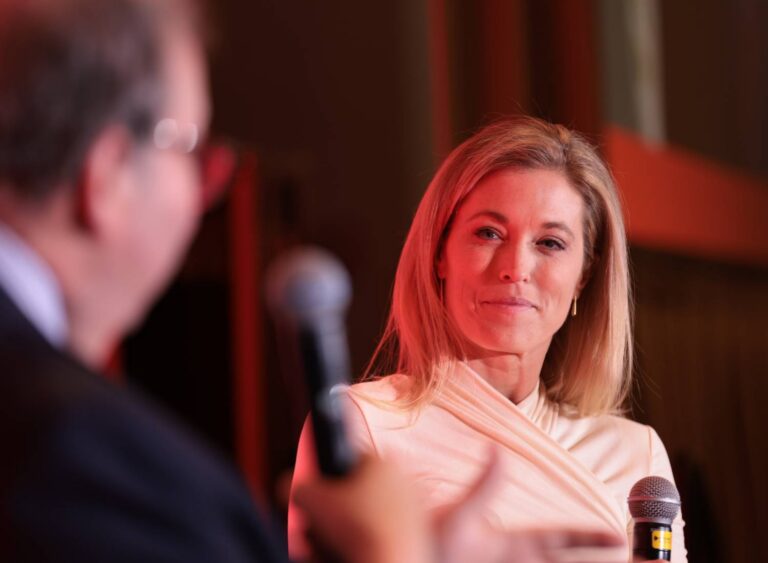







Andrei Savitski, Executive Vice President, CBRE
Invest: sat down with Andrei Savitski, executive vice president at CBRE, to discuss how commercial real estate is recalibrating after the pandemic, the widening divide between top-tier and outdated assets, and why Florida remains one of the country’s most resilient markets. “Those landlords that have adapted to the post-pandemic world are the ones capitalizing on it,” Savitski said.
How would you describe the past year for CBRE’s advisory business, and how does it reflect the broader commercial real estate landscape?
Overall, 2025 was one of the most pivotal years we have seen since before the pandemic. Coming out of COVID, the real estate market cratered, and there has been a lot of recovery taking place since then. Last year marked a meaningful return toward pre-pandemic baselines. We started seeing the office market rejuvenate, capital markets activity showing signs of pulse, and overall momentum improve across several sectors. It was the strongest year we have had since before the pandemic.
That performance also mirrors where the market stands today. In the office sector, we are seeing a clear flight to quality. Tenants are concentrating heavily on Class A buildings, and the gap between Class A and lower-quality assets continues to widen. Class A vacancies in many cases are in the single digits, while Class B and C properties are still struggling to find their footing. Those landlords that have adapted to the post-pandemic world are the ones capitalizing on it, while those that have not are seeing less and less interest from tenants.
Which sectors are showing the most strength, and where are you still seeing challenges?
Retail has been very strong since the pandemic, and industrial has remained extremely strong throughout. Capital markets activity slowed but is now showing signs of improvement, and office is performing much better than it was even a year or two ago. The sector that is still facing challenges is multifamily, largely due to interest rates and construction costs. Financing remains expensive, and that continues to create headwinds for new development. That said, most other sectors saw meaningful improvement in 2025.
What milestones or achievements stand out for your team at CBRE over the past year?
One of the biggest changes we have seen is the transformation of office space itself. Landlords that have invested in amenities and higher-quality environments are capturing demand, and that is pushing rental rates to levels we have never historically seen in Orlando. Rates approaching the $40 mark would have been unthinkable not long ago, yet we are seeing that today in top-tier assets.
From a team perspective, we had an exceptional year. We broke virtually every internal record, represented a number of large occupiers, and completed several major headquarters relocations. What has been particularly rewarding is helping clients right-size their footprints while dramatically improving the quality of their work environments. That combination has been a defining theme of the past year.
How have advisory services evolved as companies rethink office strategy and relocation decisions?
Our role has shifted significantly. Historically, the focus was on negotiating the best possible economics for clients. Today, the conversation is much more strategic. Clients are looking to us to help them understand where the office market is going, what trends are shaping demand, and how those trends affect their employees, culture, and long-term financial performance.
We have moved away from purely transactional roles toward a more consultative approach. Our job now is to help paint the right picture of what the office environment should be and how it can enhance productivity, collaboration, and overall experience. That shift accelerated during and after the pandemic.
How is CBRE leveraging technology and new service offerings to support that evolution?
Technology allows us to move further away from being transactional brokers and more toward true advisors. Clients now have access to tools and insights that were never previously available through corporate real estate firms. AI helps us optimize layouts, analyze portfolios, and improve decision-making without replacing the human expertise that remains essential in this industry.
How do you see AI shaping the future of commercial real estate and advisory work?
AI is a powerful tool, but it will not replace real estate professionals. Commercial real estate data is highly fragmented and private, which limits full automation. Where AI excels is in helping us work more efficiently and intelligently. For example, we can use AI to optimize office layouts, identify inefficiencies, and improve space utilization.
More broadly, AI represents another evolution, similar to the internet or earlier technological shifts. Some jobs may change, but many new roles will emerge. We are already seeing this in sectors like data centers and power infrastructure. One of our largest clients operates in the power space, and their growth has accelerated dramatically due to AI-driven demand for data centers. That growth creates new opportunities across multiple industries, including real estate.
What challenges are clients navigating most frequently today?
Labor is one of the biggest challenges. Identifying and attracting the right talent has always been critical, but it has become even more complex in today’s environment. That is where our labor analytics capabilities play a major role. We help clients understand where talent pools are located and how to align real estate decisions with workforce strategy.
Another challenge is encouraging employees to return to the office. There is still a negative perception of office space in some sectors, and companies need to rethink how they design and position their workplaces. Improving amenities, modernizing environments, and offering flexibility through hybrid schedules are all part of that equation. The goal is to optimize space while supporting productivity and employee satisfaction.
How does the hybrid work model factor into office design and strategy?
Hybrid work has fundamentally changed how companies think about space. Many organizations are now operating three to four days per week in the office rather than five. That raises important questions about desk sharing, open layouts, and overall footprint optimization.
Different companies have different needs. Creative firms may thrive in collaborative, flexible environments, while more technical organizations may require quieter, more focused spaces. Use drives need, and there is no one-size-fits-all solution. The challenge is designing spaces that support both efficiency and engagement.
How is CBRE attracting and developing talent internally while helping clients do the same?
From an internal perspective, CBRE’s global footprint and reputation give us a significant advantage. We operate in virtually every market worldwide, with more than 100,000 employees. That scale allows us to attract top talent and provide opportunities that many competitors cannot.
For clients, our labor analytics teams play a crucial role. These teams analyze regional and national workforce trends, working closely with chambers of commerce and local organizations. That data helps clients understand where talent is located and how to make informed expansion or relocation decisions. It is an unmatched dataset that supports both corporate growth and real estate strategy.
Looking ahead, what is your outlook for Florida’s commercial real estate market over the next few years?
Florida is exceptionally well-positioned. When you look at how states performed during the pandemic, Florida consistently ranks near the top. The state remained open for business, attracted significant corporate relocations, and maintained economic momentum.
Orlando alone has added roughly 50,000 new residents per year for more than two decades. That sustained population growth drives demand across housing, office, retail, industrial, and infrastructure. As the population grows, so does the need for distribution centers, data centers, and supporting services.
I remain very optimistic about Florida’s outlook through 2026, 2027, and beyond. While technology and AI will continue to reshape how we work, the overall trajectory for commercial real estate and the state’s economy remains strong. Florida’s fiscal health and pro-business environment are important indicators that this momentum will continue.