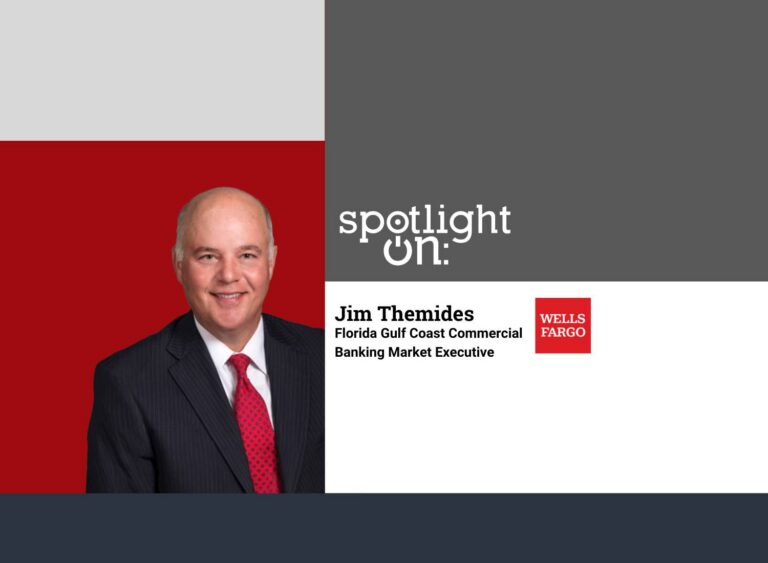
Charlie Crawford, Chairman & CEO, Hyperion Bank
 In an interview with Invest:, Charlie Crawford, chairman and CEO of Hyperion Bank, discussed the bank’s strategic growth, market diversification, and digital evolution. “We’re executing on our strategic plan and seeing strong local market adoption,” he said.
What have been the most meaningful achievements for Hyperion Bank in the past year?
Over the past year, we’ve continued growing steadily despite some economic fluctuations in the United States, particularly in Atlanta and Philadelphia, our primary markets. The bank has expanded across both markets. Our employee count, asset size, loan portfolio, and deposits have all increased. We’ve also brought new talent on board. We’re executing on our strategic plan and are seeing strong local market adoption.
What are the core drivers behind the organization’s consistent growth?
Our growth stems from expanding our customer base, loans, and deposits. Revenue, which is a key metric in those rankings, has risen with interest rates. While our deposit costs have increased, those combined trends have contributed to our growth. We’ve been recognized by the Inc. 5000 (2024) and the Philadelphia Business Journal’s Fast 50, previously known as the Soaring 76. We’ve made that list five or six years in a row, which is unusual for a bank. Most of the time, those rankings are filled with high-growth tech companies.
What differences or similarities are you seeing between the Philadelphia and Atlanta markets?
I get asked that more frequently these days. Atlanta’s economy is growing much faster than Philadelphia’s. But during the Great Financial Crisis of 2008 to 2010, Atlanta was hit very hard. Philadelphia, in contrast, remained more stable. I see Philadelphia as a slow-and-steady market — it doesn’t have the highs and lows that Atlanta does.
For us, having both markets provides balance and diversification. Demographically, there are differences too. In Philadelphia, most people I meet are from the area, and most of them were raised there or left and returned. Atlanta is more of a melting pot. Many people relocated for work or school and decided to stay. My wife is a native of Atlanta, but there aren’t many true natives left in the city.
The customer base also differs. In Philadelphia, our branch location is in a thriving part of the city that’s home to many trade professionals and essential workers, as well as lots of real estate investors and developers. In Atlanta, because of our location (Buckhead — the city’s financial district) and the bankers we’ve attracted, we tend to serve an affluent group: business owners, serial entrepreneurs, and professionals. Together, the two markets complement each other well.
How is broader macroeconomic uncertainty influencing customer behavior and Hyperion’s strategy?
It’s been quite dynamic. After the change in the presidential administration last November, bank valuations and outlooks improved across the industry. There was a sense we’d have a stronger economy with less regulation. Instead, we’ve seen a lot of instability. Valuations dropped, although they’ve since recovered somewhat. Like many industries, banking prefers stability and clear policy direction. For instance, take tariffs — they’re on, then off, then on again. Businesses can adapt to almost anything if they know the rules, but constant changes make it difficult.
Most of our client base isn’t international, so we’ve been somewhat insulated from the direct impact of tariffs. That said, we know one business owner who manufactures children’s products in China, and it’s been extremely disruptive for his operations. Overall, the unpredictability in today’s market requires a lot more flexibility and the ability to pivot quickly.
What lending trends are you seeing in small business and residential real estate, and how is Hyperion adapting?
Real estate lending in those sectors continues to perform well in both Philadelphia and Atlanta. We focus on one- to four-family residential properties, and fortunately, we do not lend on office buildings, which have struggled.
Loan demand remains strong for acquisition, renovation, and construction projects. There’s still a housing shortage in both markets.
One quieter piece of our business is our mortgage joint venture. That segment has seen less activity, largely because mortgage rates have hovered around 7%. Many homeowners locked in lower rates, around 3%, a few years ago, making them reluctant to move, refinance, or trade up. That dynamic has held steady over the past two years, and that consumer stance is now joined by more generalized economic hesitancy.
What trends or challenges are community bankers seeing across Pennsylvania?
Regulation is always a topic. The industry can manage compliance, but consistency is important. We’re also seeing cuts in regulatory staff, with experienced personnel no longer in place, which adds complexity.
Another ongoing trend is mergers and acquisitions. There are far more M&As than new bank formations. When I started in banking 40 years ago, there were around 18,000 banks in the United States. Today, that number is down to about 4,000. That’s still a lot compared to other countries, like Canada or the U.K., where only a handful of banks dominate the market. Starting a new bank has become very costly due to compliance and regulatory burdens.
Because of this, banks need to grow and scale. One major cost is technology. For smaller banks, it’s difficult to invest in the digital tools customers expect, which makes scaling even more essential. Thankfully, we’ve been able to stay ahead of that tech curve.
How are you cultivating and retaining talent at Hyperion amid increasing competition?
The “war on talent” has been ongoing for years and hasn’t let up. For example, we recently brought on a terrific senior officer in Atlanta, someone I’ve known for 25 years and always hoped to hire. The timing finally aligned.
She had worked at a small community bank that was acquired by a larger institution. That was manageable, but then a $30 billion bank bought them, and the environment shifted. Her customers value customized, nimble service and quick decisions, which is hard to find in very large institutions. She joined us because we offer that flexibility.
In community banking, customers often bank with the banker more than the bank itself. That’s why we prioritize taking care of our employees. If a great employee leaves, the customers may follow. Conversely, when we attract talent like this officer, many of their customers follow them to Hyperion.
How does Hyperion balance personal service with the digital scale customers expect today?
That balance has become increasingly important. Our three largest expenses are interest paid to depositors, salaries for employees, and technology. Two years ago, we hired a full-time IT director, a first for us, and retained a consulting firm to guide our tech strategy. We’re planning a major upgrade to our digital platform later this year for both business and individual customers. That’s necessary to stay competitive.
Most customers no longer come into branches. That’s why we only operate two offices — one in Philadelphia and one in Atlanta, 660 miles apart. These serve as workplaces for employees rather than traditional retail branches. Customers prefer to conduct transactions digitally. When meetings do happen, they’re more likely at a customer’s office, home, or over a meal.
What tech advancements have you made recently to improve customer experience and scalability?
Industry trends are shifting. I recently saw data showing that only 58% of new accounts are now opened in physical branches, and that number continues to fall. We expect digital onboarding to become the norm soon.
We’re focused on enhancing that digital experience. We have a core contract with Fiserv and have been interviewing vendors to upgrade how customers interact with the bank, whether opening an account, paying bills, or transferring funds. These improvements are slated for release in the fourth quarter and should deliver a noticeably better experience.
What are your top strategic priorities for the next two to three years?
We recently completed a strategic planning session with our board to map out the next three years. We’re keeping our strategy largely intact, but I’m focused on three core priorities: growth, profitability, and quality. All three need to remain in balance.
We’ve done very well on growth, significantly outpacing the industry. Looking ahead, we want to improve profitability. That should come naturally as we grow, since many recent investments in compliance and technology can now scale across a larger customer base.
As for quality, that’s non-negotiable. It applies to the people we hire and the loans we approve. The industry has enjoyed a strong run, with minimal credit issues in recent years. But we’re conservative in our underwriting because a recession will eventually come. We want to be well-positioned when it does.