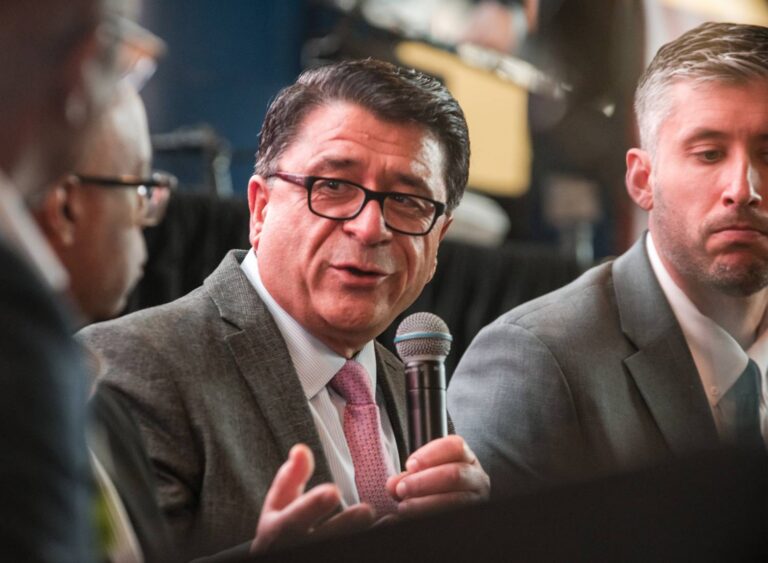







Chip Hunter, Dean, Fox School of Business and Management at Temple University
 In an interview with Invest:, Chip Hunter, dean of the Fox School of Business and Management at Temple University, discussed the school’s positive momentum and enrollment growth, a renewed focus on experiential learning, and the pervasive impact of generative AI across the curriculum. “Generative AI is permeating all aspects of the university. Researchers and students are utilizing and studying it, and the university is addressing concerns about its use. As a business school, the Fox School is focused on preparing students to work with these tools while understanding their limitations,” Hunter stated.
From your perspective, what major changes have most influenced Fox School of Business and its direction?
Temple University is experiencing a renewed sense of optimism among faculty and staff, largely due to the arrival of President John Fry. This positive atmosphere is also being felt by students. Undergraduate enrollment was already rebounding before President Fry’s arrival, and this fall, Temple University welcomed its largest freshman class ever. This is particularly significant for the Fox School, as approximately a quarter of all Temple students choose to study business. The Fox School is a major contributor to this growth and takes pride in serving the region’s students. The university feels a renewed energy, with more lively halls and engaged students.
The Fox School is also seeing an increase in graduate student numbers, despite significant challenges in obtaining visas for international students, particularly from China and India. These international students contribute greatly to intellectual diversity and talent development. The growth in graduate numbers, after several years of stagnation, is a powerful indicator of positive change in the school’s direction, culture, and mood.
In addition, the Executive MBA program has been relaunched with a strong first cohort of 20 students, after being out of step with the market, especially post-COVID. The school aims to grow this program to enhance the student experience. A similar reinvention is planned for the MBA program, with a soft relaunch in January 2026 and a full relaunch in September 2026.
Generative AI is permeating all aspects of the university. Researchers and students are utilizing and studying it, and the university is addressing concerns about its use. As a business school, the Fox School is focused on preparing students to work with these tools while understanding their limitations. This has been a significant challenge and an exciting opportunity for faculty. The school is considering new programs and integrating AI-related material into existing curricula.
What drove the decision to redesign the program, and how will this new approach help executives lead in today’s fast-changing business world?
The program faced challenges due to being out of sync with market demands, making it a difficult sell. We identified a unique market niche: offering an accessible yet high-quality program that emphasizes strong faculty-student interaction, distinguishing us from premium options like Wharton. We meticulously redesigned the program’s format, recognizing that Executive MBA students prioritize both exceptional faculty and peer networking. Striking the right balance between flexibility and commitment to networking was crucial.
Our recruitment process was highly selective. We ensured students understood their responsibilities, both on and off-site, believing that a cohesive cohort enhances the experience for everyone. My interactions with nearly all students have been positive. The program is now perfectly aligned with the market’s need for experienced leaders seeking an MBA without committing to full-time study, fostering a more seasoned peer group. Our dedicated faculty have revamped their materials, and we received significant support from the program’s alumni, who were upset when it went on hiatus. Their insights were invaluable in understanding market needs and advocating for the program’s return, making their influence particularly strong.
How is Fox helping students meet workforce needs while connecting employers with the talent they’re seeking?
We are enhancing our dedication to experiential learning, which takes various forms and is particularly valued by our undergraduate students. We aim to ensure they gain tangible skills alongside a strong theoretical foundation, allowing them to adapt their abilities as the world evolves. This involves a rigorous academic platform combined with practical experience. We have leading faculty in this area and acknowledge those who innovate in experiential learning.
With President Fry’s arrival, we will strengthen our commitment to place-based impact, focusing on Greater Philadelphia. Much of our experiential learning will integrate with the Philadelphia business community, providing students with valuable experience, community engagement and a greater emphasis on internships. Additionally, each of our master’s programs is dedicated to skills development. I am especially enthusiastic about the innovations in our MBA program, which will explicitly prioritize practical skills. Temple has always been recognized for preparing students for the real world, and with the MBA, we are updating the program to further embed this principle.
What are the biggest challenges for Fox and business education more broadly, and how are you turning them into opportunities?
Demographic trends, particularly the projected “demographic cliff” of fewer high-school graduates in the coming decade, are a critical concern, especially in the Northeast. However, we are confident in our ability to attract students, especially within Philadelphia, due to our strong market position. While we must enhance our efforts, our value propositions are robust. We understand that simply advertising is insufficient; we must offer relevant and high-quality programs. This challenge underscores our commitment to quality and relevance, strengthening our value proposition and transforming a market threat into a unique opportunity.
Looking toward the future, what are your top goals and priorities for the next year — for the school, for your students and for the wider business community?
My main priorities revolve around our academic programs, but I also recognize the crucial role of our faculty. For our undergraduate programs, our focus is on upholding and enhancing our excellent track record of placing students in outstanding post-graduation opportunities. Securing that first job is an integral part of our value proposition. We aim to amplify our influence by integrating more students into the Philadelphia economy. Their success after graduation is a vital objective, as is ensuring their retention during their time here. Student retention is paramount. We are proud that a majority of applicants to Temple are admitted, and it then becomes our responsibility to educate, retain, and prepare them for future opportunities.
We aspire for our graduate programs to serve a larger number of students globally, and we will intensify our efforts to focus on the Greater Philadelphia area. I anticipate a reimagining of our existing programs, and we are developing new programs specifically designed for the Philadelphia market. Finally, we aim to expand our team. We have experienced a higher rate of faculty departures than new hires. We are now in a position to rebuild a strong research staff. One of the reasons I joined the Fox School was the high caliber of its faculty. I also foresee a significant increase in the translational research component of our work. This is a crucial objective: to ensure that research findings are effectively translated into practical applications for managers.