






David Cummings, CEO, Atlanta Ventures
 The landscape of early-stage entrepreneurship has undergone dramatic reshaping over the past year, primarily driven by the rapid growth and integration of AI across all sectors. “From a startup point of view, AI is table stakes now,” David Cummings, CEO of Atlanta Ventures, told Focus:. He underscored the necessity for every new company not only to adopt AI but also to capitalize on the massive opportunity the technology presents.
What changes in the startup landscape over the past year have most influenced how you’re thinking about early-stage entrepreneurship in the Southeast?
Now that AI permeates everything, ChatGPT is in the news every day. From a startup point of view, AI is table stakes now. But even with that said, there’s still so much opportunity to create the new startups, but then also to help the transformation of the existing companies. Millions of companies worldwide are undergoing an AI transformation. You can imagine there’s going to be an opportunity for lots of new startups to help with that. So, AI is the big trend right now.
What feels different compared to a few years ago in terms of mindset, motivations, or expectations?
I think we went through a lull there for several years. We had the exuberant times of 2020 and 2021, when COVID hit and everybody was working from home, the software sector was hot because all these companies were buying tons of tools to help make their team more productive. So, software was going gangbusters. And then from 2022 to 2025 today, the software sector was kind of slow, kind of not as dynamic as it normally is. But now it’s come roaring back because of AI. We had a period of exuberance at the start of COVID. Then we had a lull for several years. And now we’re back with a vengeance with AI and how it’s going to transform everything. We’re just excited that the next wave is upon us.
What types of ideas or industries are standing out right now? And what does that signal about where the market is heading?
The hottest ones that we’re seeing are robotics. You can imagine how we’re on the cusp of a future that has robots everywhere, from cutting the yard to self-driving cars or robot taxis. We think robotics is a big one. We’re also optimistic about the continued rollout of AI. It’s going to touch everything. And then we’re also interested in other forms of deep tech. This includes things like new devices and clean tech. We anticipate a new golden age for physical inventions emerging from the startup community, driven by advancements in software, AI and their real-world applications in areas like physical devices, robotics, deep tech, clean tech and hardware.
What other external factors, like the economy and interest rates, are shaping the kinds of companies that get built and funded in this cycle?
Interest rates usually don’t affect startups too much. They can affect a little bit on the valuations that companies are willing to pay, like in an acquisition or funding, but they don’t have too much of an impact. On the geopolitical front, particularly concerning H1Bs, the startup world sees a wealth of talented founders globally. However, with the rise of distributed work and remote teams, many startups I collaborate with are now fully remote. This shift means that immigration and H1B discussions are becoming less relevant to these startups, allowing them to focus entirely on innovation.
What other trends do you see in the startup world today?
Time to market has never been shorter. And so, I think that’s a big benefit for startups because now they can iterate faster, and they can experiment more. The explosion of great tools out there has made it so that it’s never been easier to be an entrepreneur. The flip side of that is if the barriers go down to being an entrepreneur, then of course, that means there’s going to be more competition. There’s going to be more companies doing similar things and more entrepreneurs inventing their own products. Time to market is as fast as it’s ever been, but it’s also the most competitive it’s ever been because it’s so easy to launch something new nowadays. I feel like now the differentiators are in that creativity and imagining things that none of us have imagined yet.
What is your take on the ecosystem that exists both in Atlanta and in the Southeast, and how is that evolving?
Atlanta has been really strong on the idea stage, the seed stage and the early stage of the startup journey. So we’ve been really strong at going from an idea on a napkin to a prototype to the first 10 customers, to the first 100 customers, to raising venture capital. The opportunity ahead of us is to really get stronger at the next stage beyond the early stage, which includes the growth stage, the expansion stage and the pre-IPO stage. We have a handful of success stories, but we have tons of opportunity to develop out of that growth stage. This is when the companies have $5 million or $10 million of revenue and they’re growing fast. These are when the companies are thinking about going public or raising another expansion round. We’re really strong in the early stage, and we’re still developing our muscles when it comes to the growth stage.
How do you decide which ideas are worth co-founding?
We like to incubate new ideas as part of the studio. We’re looking for markets that are small today but very fast-growing. We like markets that have the opportunity for subscription revenue. So, some form of recurring revenue is part of the business model. And then we like to partner with entrepreneurs who typically have something to prove. We like to partner with entrepreneurs who are relentless. They just don’t take no for an answer and are ready to run through brick walls to get stuff done. And then we look for entrepreneurs who bring together both a level of sales skills and a partner on the team who has the technical skills. We want somebody who loves technology and loves to build great things. And then to have a business partner who loves to sell. That combination of builder and seller is an important component.
Can you talk about Atlanta Tech Village and the role these types of communities play in shaping the next generation of entrepreneurs?
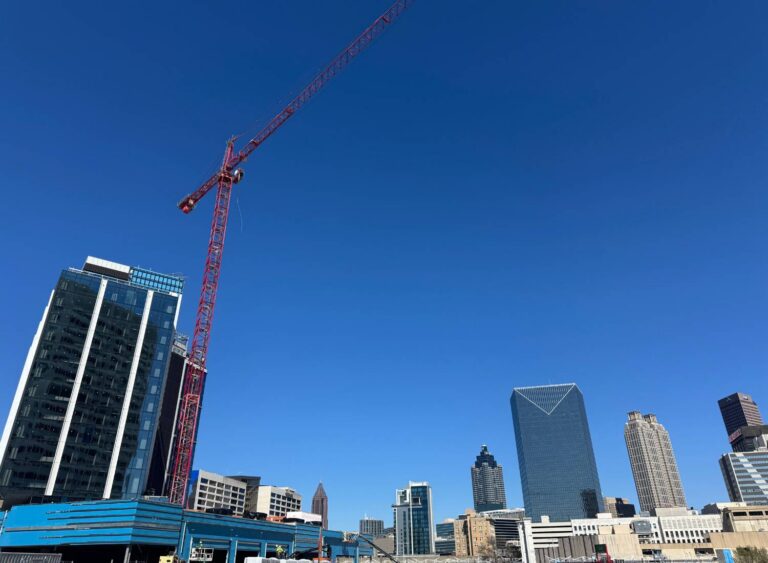
Atlanta Tech Village is one of the largest tech entrepreneurship centers in the country with over 300 startups. The big idea is that entrepreneurs enjoy being around other entrepreneurs, no different than any other affinity group. If you like golf, you want to go hang out with the golfers. The Tech Village is an environment that has community, mentors, programs and continuing education all centered around tech entrepreneurship. By bringing a bunch of entrepreneurs together and both helping them and creating a community among them, it increases the chance of success for everybody involved. At the end of the day, our goal is more success stories. We have 57 buildings, 10 city blocks, 91 properties and we’re building the largest tech startup district in the country. Our grand opening is June of next year to coincide with the start of the World Cup in Atlanta. South Downtown Atlanta will soon be the largest startup district in the country.
What are your top priorities for Atlanta Ventures, and what excites you most about where entrepreneurship is going next?
We’re just really excited that entrepreneurship and startups in general are not a zero-sum game. It’s not like we start up a new restaurant on the corner and by putting that restaurant in the corner, the two restaurants next door are going to have a harder time. The type of entrepreneurship that we’re involved in is entrepreneurship that moves society forward. It’s the type of entrepreneurship that is a net new benefit. We like this idea that you can create something, you can deliver that value to people, you can sell it to them and everybody is better off. It’s not a zero-sum game; it’s contributing to society.