






DFW leaders push for smarter, more resilient growth strategies
Writer: Andrea Teran
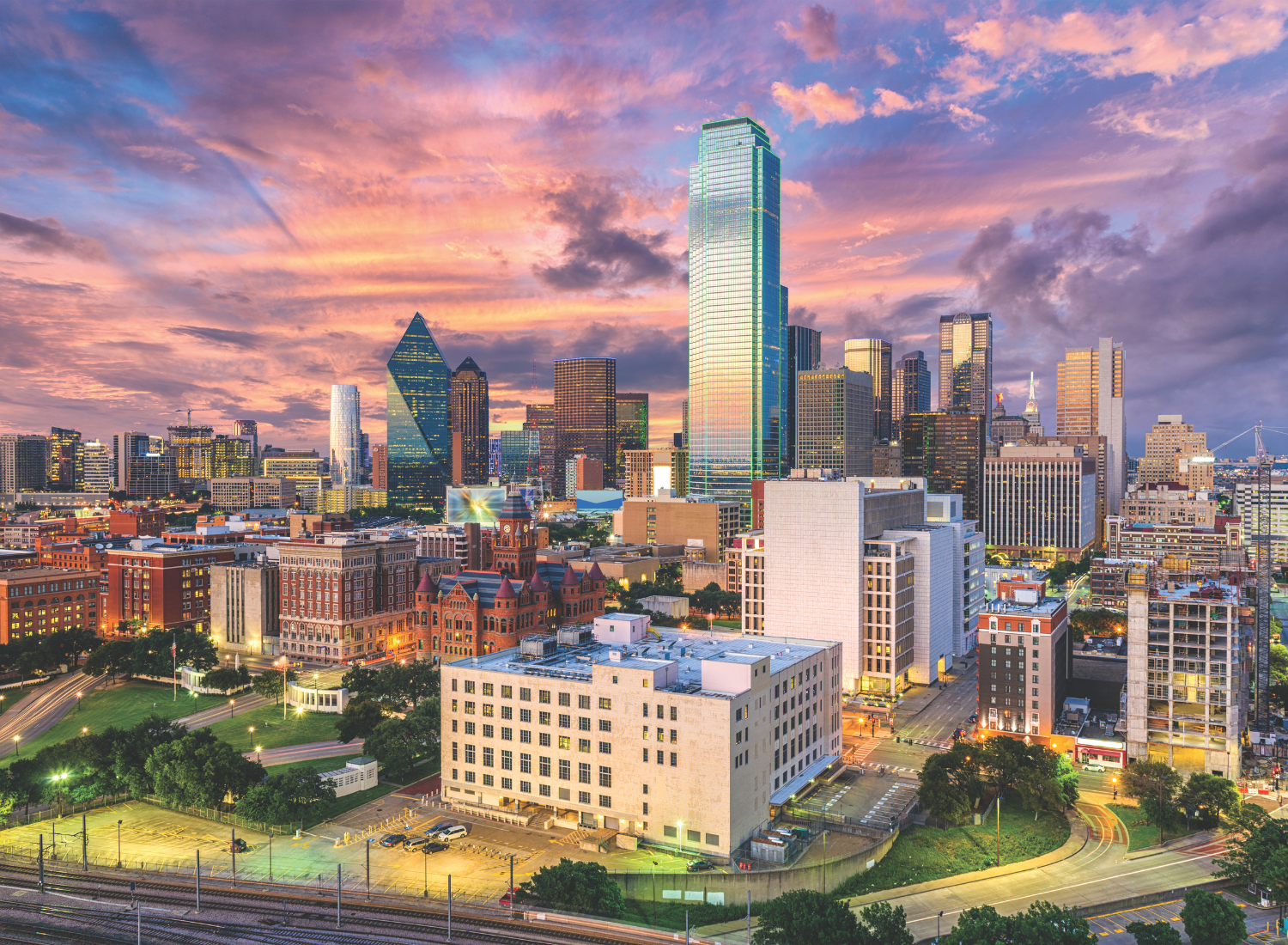
March 2025 — With the Dallas-Fort Worth-Arlington metro area adding nearly 178,000 residents in a single year to become the third-fastest growing U.S. metro in 2024, and Dallas County now ranking as the eighth most populous county nationwide, developers and city leaders are calling for a more strategic approach to growth. The priority: building resilient, livable communities without losing the affordability that once defined the region.
“The affordability lever is going away,” said Bill Cawley, CEO of Cawley Partners during the Invest: Dallas-Fort Worth leadership summit. “The cost to move here and live here isn’t as much of a bargain as it has been in the past.”
For Cawley, infrastructure is the line between success and failure. “Today, it’s about ease of life,” he said. “If you’re an office tenant, you want the shortest commute. You want the best environment to live in… Infrastructure drives it all. No developer will build in any location that doesn’t have great access or good infrastructure.”
Phill Geheb, senior vice president at Matthews Southwest, agreed but urged a broader lens. “Usually you think of roads, sewers, water, airports, etc.,” he said. “But thinking about convention centers, hotels attached to those convention centers, parks — all of this forms the fabric of social infrastructure that we still need to develop and grow to make DFW an amenity-rich area.”
He also pointed to mounting pressure on the region’s power grid. “The supply that Oncor has for even simple multifamily projects — there’s not enough capacity to get on the grid,” Geheb said, citing delays and high demand from AI-driven data centers. A $1 billion data center project is underway in North Texas and is expected to require up to 540 megawatts of power — enough to supply more than 100,000 homes. “North Texas is going to have to invest in more power infrastructure to power the growth going forward.”
Scot Bennett, regional director at The Beck Group, emphasized the role of design in shaping growth that feels rooted in community. “If development is going to be for the benefit of all residents, it has to take all residents into consideration,” he said. “We try to figure out how we can bring the context, the connection to the community into all the projects that we have and make them intentional.”
For Eric Gilbert, vice president at Scott + Reid General Contractors, development success hinges on quality, not just speed. “Responsible development… identifying key growth areas, affordable housing, and an effective tax base and property values—that’s something we need to always be looking at as we’re growing in the region.”
When it comes to transportation, panelists acknowledged North Texas’ car-centric culture as a stubborn hurdle. “There’s DART buses all over town that have nobody in them,” said Cawley. “I don’t want to get on a bus either.” While developers are incorporating walkability and transit access into new projects, shifting commuter behavior remains elusive. “We’ve been overbuilding parking for my whole life,” he added.
And now, the viability of major transit investments is under pressure. The long-awaited Silver Line commuter rail — set to connect six cities from Plano to Dallas Fort Worth International Airport — is facing uncertainty. Pending legislation in Austin could slash member cities’ financial contributions to DART by 25%. Agency leaders warn the line might only be operable for “a month and a half,” despite station construction being over 90% complete.
Still, the center of gravity is shifting. “The density is moving out into what were bedroom communities,” said Geheb. “We’re seeing nodes like Carrollton’s Trinity Mills project, Legacy [in Plano], Frisco… where you’re seeing density come to the suburbs.”
As that density increases, so does risk. “Really what you’re trying to do is get out of the risk,” said Cawley. “You’re always trying to mitigate risk, and density creates bigger projects, more risk, longer timelines. I think it’s really important to change the lens for all developers.”
Even the most carefully planned projects now face pricing unpredictability. “It’s hour by hour,” said Gilbert, speaking to the volatility surrounding recent tariff developments. Geheb cited a steel package for a convention center project that could jump from $300 million to $400 million if a 25% tariff is imposed. “That is going to increase the cost of goods in the trades that these two gentlemen are working with,” he said, referring to Bennett and Gilbert.
Cawley pointed to the broader macroeconomic picture. “Inflation is driving costs and making it more difficult for the everyday person to enjoy it,” he said. “A building we built for $100 million four years ago would cost $150 million today.”
In an industry built on coordination and timing, unpredictability around material costs, labor, and policy has made preconstruction planning a critical discipline. “We’re working with developers… we’re building it on paper first,” said Gilbert. “At 75% or 80% drawings, we know where we’re going to fall in line with that budget.”
Bennett put it plainly: communication is now the most valuable tool. “You have to be in constant communication with your owners, with your trade partners… because there’s a lot that hasn’t happened yet, but we’re scared about when it’s going to happen.”
With inflation, energy constraints, transit challenges, and tariffs reshaping the regional development landscape, panelists agreed that DFW’s future hinges on alignment between public and private sectors.
“This is the moment,” Bennett said. “We’re right on the fringe of massive growth and expansion. We just have to make sure we’re building smart — not just fast.”