


Evan Beattie, Principal, CEO & Chairman, GFF
Multidisciplinary design firm GFF is getting ready for the next growth cycle, according to Principal, CEO and Chairman Evan Beattie. “We have invested in improving our standards and processes as we’ve had some extra capacity this year. It’s been a great year to try to do as much as you can to get your house in order and get ready for the next boom,” he told Invest:.
What is your approach to the remote work trend?
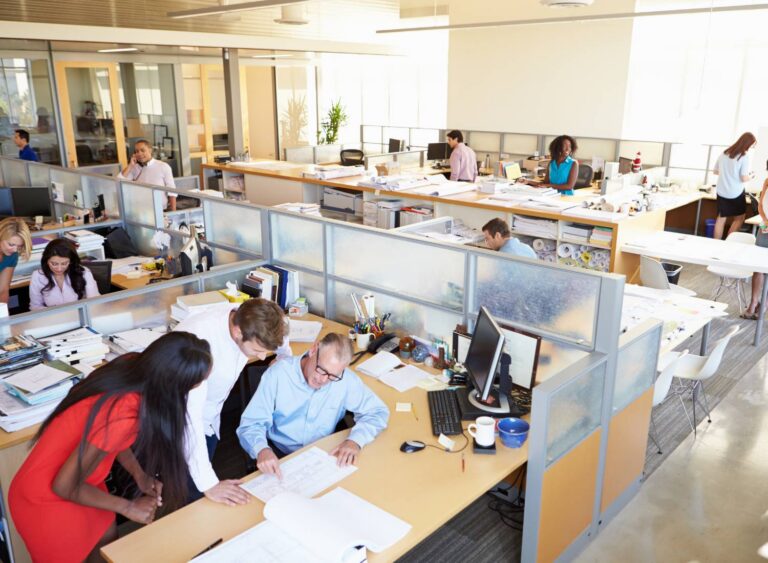
We believe fundamentally that the work we do is better when we’re together in person. Zoom calls and Teams meetings can work some of the time, but it’s hard to keep the culture of an organization strong when everybody’s remote. We’re big believers in being together to do the challenging work that we do as architects, interior designers, and planners. We’ve made a significant investment in moving our office to a vibrant new space in Victory Park and have implemented a schedule where everybody must come in four days a week, which has served us well.
How has the firm performed over the last 12 months?
It’s been an uneven last year for us. We have never had more backlog at GFF, but we’re having a difficult time getting projects to move into the later phases of design. We have tons and tons of really interesting work that’s holding at a schematic design level. Those projects are often pursuing a multiyear zoning change to increase entitlements, or they’re on hold because construction costs and interest rates are too high to make the significant investment they represent.
We’re optimistic that our work for developer clients will get moving in the fourth quarter of this year and the first quarter of next year as we expect interest rates will come down meaningfully in the near future. Construction costs are starting to trend down as well.
The institutional project focused areas of our practice have been in much better shape than the corporate and developer practice areas, where it’s hard to make sense of the return on investment right now.
What investments are you making in technology?
On the technology side, we’ve invested significantly in internet security out of necessity. We’ve had several peer firms suffer ransomware attacks. When you’re in a professional service company, and it’s all about the creativity and work that your team does every day, if you get a ransomware attack and have your files locked down for two weeks or a month, it’s disastrous. That’s been a big area of focus for us.
We’ve also been investing in new software and AI-based technologies to improve our efficiency and the quality of what we do. We’re seeing the influence of AI in our industry and think the pace of change in the next five to 10 years is going to accelerate as we see new tools become available to help us automate some of the more mundane aspects of what we do.
What parts of your work are now done with AI?
It’s been a helpful writing partner for communications, producing meeting notes and those kinds of things. It’s so good with writing at this point. It hasn’t effectively been integrated in how we develop technical building drawings that much yet, but I think it will find its way into BIM software in the near future. It just takes so much data and information to train these large language and generative AI models. It’s likely going to take a minute for it to get into Revit and AutoCAD and other advanced software we use, where most of our labor hours are invested in developing designs for highly technical buildings.
I’m not ready to go onto the operating table with an AI robot performing the surgery on me. That’s similar to building technology. You don’t want to be the first test subject!
How do you envision the future of the Dallas urban region?
The city of Dallas is actively working on a ForwardDallas plan update right now, which while it isn’t zoning, is the lens through which city staff will judge the appropriateness of all future zoning change requests and land use policy. That’s happening for the first time in about 20 years and there are many conversations happening about how land use policies impact the future of our city and the ability to continue to grow and meet housing needs. Dallas needs some zoning reform to remain competitive with both the inner-ring suburbs and the outer suburbs, where we’re seeing population growth and job growth, largely concentrated to the north of the City of Dallas.
Dallas’ growth has stagnated, and our infrastructure is aging. We need more residents and a growing property tax-base to keep up with cost increases to maintain our infrastructure that are in the future. Right now, to meet the housing demand, most of the projects we work on need a zoning change because the zoning rules don’t support the type of development that the land and construction costs demand.
As the city looks at new land use policies that allow more density and walkable areas close to mass transit, it will further encourage more investment in the urban core of Dallas.
What projects are underway that will bring the community together?
We love community building projects, and community centers and open spaces are huge to the livability of our city. We are excited about the West Dallas Gateway Park that the Trinity Park Conservancy is working on, which will be the first signature park that will create a gateway into the Trinity River. It’s such an unutilized asset in our city. You go out to White Rock Lake on the weekend, and it’s almost hard to ride a bike safely, given all the biking and pedestrian traffic that there is around White Rock Lake on a Saturday or Sunday when the weather is nice. We have this giant Trinity River basin that has huge amounts of open space that are underutilized. It is about embracing the Trinity and bringing our city together through the gateway parks.
I think people’s eyes have been opened in Dallas to the business case for great parks and great open space through Klyde Warren Park, which has just been phenomenally successful. The city’s return on investment in Klyde Warren Park has been tremendous. We need to keep investing in great parks and great open spaces that bring the community together and improve the quality of life here.
Looking ahead to the next three years, what would you like to see in Dallas, Fort Worth, as well as with GFF?
We’ll be on the world stage when the World Cup comes to Dallas in a few years. That’ll be a neat opportunity for our city to shine and is something exciting to look forward to. We’ve got great sports teams and a new, giant convention center project planned. We’re hoping to start construction on a high-speed rail line connecting Dallas to Houston and Fort Worth. There is just a lot to be excited about in North Texas – the job growth that’s coming here, Goldman Sachs HQ2 projects across the street from our new office, for example. There are so many things coming to build on.