







Face off: Regional airports take on a bigger role in Tampa Bay’s economy
Key points:
• Regional airports are becoming critical economic engines for Tampa Bay, supporting tourism, logistics, and workforce growth.
• Infrastructure investment and cargo expansion are driving job creation and operational scale beyond major hubs.
• Long-term competitiveness hinges on sustainability, community alignment, and emerging aviation technologies.
 January 2026 — Regional airports are increasingly central to Tampa Bay’s economic ecosystem, supporting tourism demand, logistics activity, and workforce growth across one of Florida’s fastest-growing regions. As population growth, visitor volumes, and e-commerce activity accelerate, aviation infrastructure beyond major hubs will play a larger role in facilitating regional connectivity, cargo movement, and business expansion.
Join us at caa’s upcoming leadership summits! These premier events bring together hundreds of public and private sector leaders to discuss the challenges and opportunities for businesses and investors. Find the next summit in a city near you!
This local shift mirrors the scale — and the structure — of regional aviation globally. McKinsey estimates the regional aviation segment supports about 9.3 million flights each year, and while regional aircraft represent roughly 25% of the global commercial fleet, they provide only about 11% of total commercial aviation seats — a reminder that the segment’s value is often measured in access, frequency, and nonstop reach, not just passenger volume.
In this environment, airports across Tampa Bay are evolving from supplemental facilities into strategic assets that underpin long-term economic development and resilience.
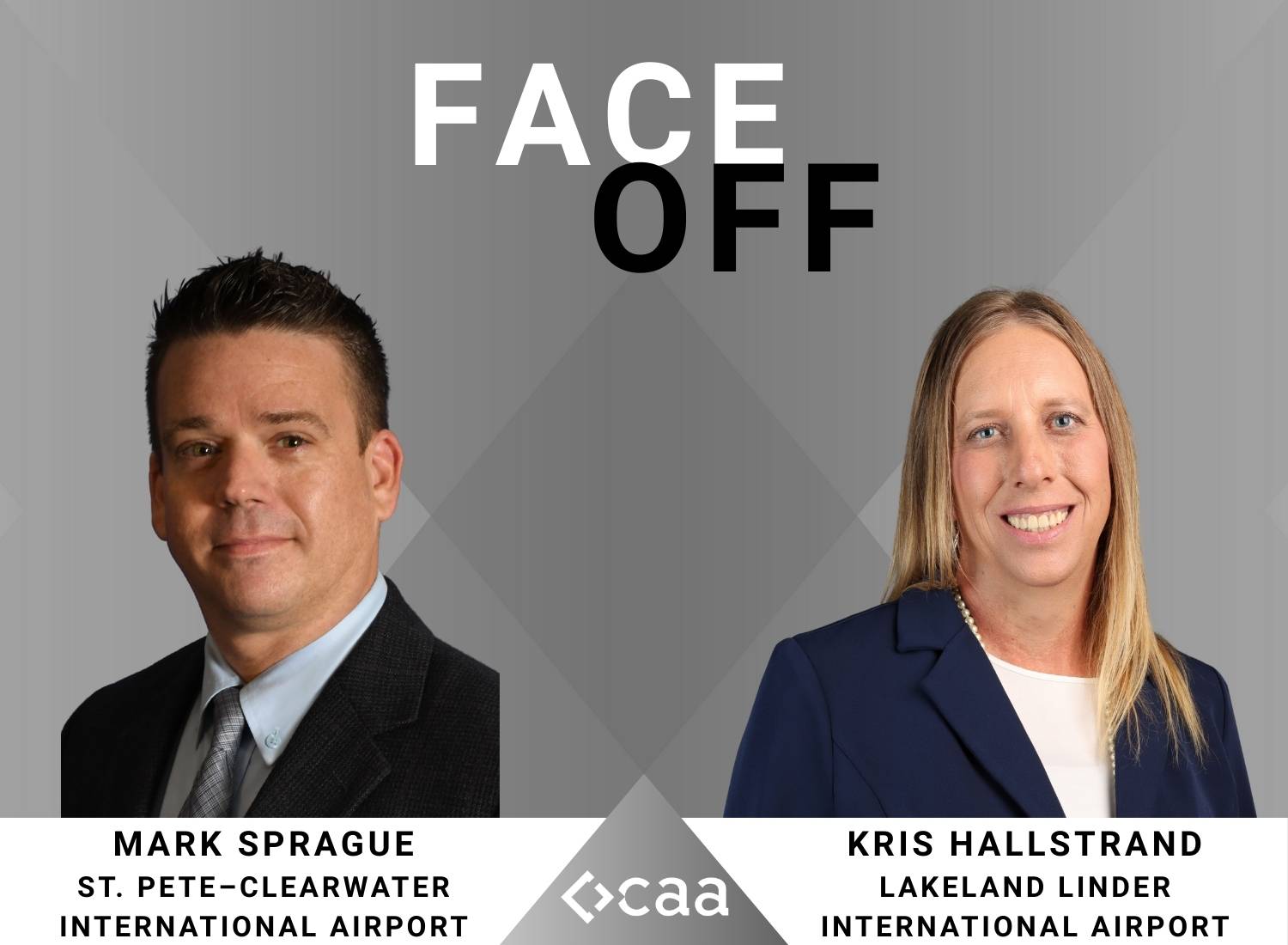
To explore how these dynamics are playing out in the air, Invest: spoke with Mark Sprague, interim director of St. Pete–Clearwater International Airport, and Kris Hallstrand, airport director of Lakeland Linder International Airport, on the evolving role of Tampa Bay’s airports.
How are regional airports shaping economic momentum and investment across Tampa Bay?
 Mark Sprague, Interim Director, St. Pete–Clearwater International Airport: We have one of the best beaches around, and we’re the closest airport to those beaches. People are also moving into this area. So, we are catering to not only the tourists coming in, but also the people living here who don’t have a whole lot of time for multiple flights. One of the great things about Clearwater is the nonstop flights to over 60 destinations. We never have to change airplanes, and we will keep it that way for as long as we can.
 Kris Hallstrand, Airport Director, Lakeland Linder International Airport: The major areas of focus were real estate, air service, and overall growth. Success breeds success, and we keep putting forth a perfect effort to achieve great results for Lakeland. Regarding real estate, we did a 16-acre lease to an investment company for a wide-body MRO facility. This project will be a couple hundred million dollar investment and will create more than 350 high-skill, high-wage jobs.
How are workforce, infrastructure, and operational priorities influencing airport development?
Sprague: As interim director, my focus has been on prioritizing our capital improvement programs to be both sustainable and affordable. We face the challenge of an aging airport infrastructure coupled with continually increasing passenger numbers. Since we have no available surface area for expansion, we are forced to build vertically. This vertical development involves numerous considerations, including securing funding, determining the optimal location and size, and planning for long-term obsolescence.
Hallstrand: Our cargo facility supports over 1,200 jobs, and we’ve expanded ramp and taxiway capacity to accommodate additional aircraft positions. This year, we’re over 150,000 aircraft operations. Amazon alone accounts for about 5,000 cargo operations, and Lakeland is now No. 3 in Florida for cargo for the second year in a row.
How are regional airports positioning themselves for long-term competitiveness and future demand?
Sprague: Our growth prior has been like a quilt of intertwined squares, which sometimes doesn’t make a whole lot of sense. We need to dial it back, and see what really makes sense, so we can build upon the same vision. We also want to stay sustainable, not only in growth, but also in profit. Of course, we hope to bring on a couple new air carriers as we increase our infrastructure and staffing.
Hallstrand: When deciding the airport’s vision, I say, ‘it’s not my airport, it’s the community’s airport.’ Lakeland has been identified as an FDOT partner to start working on AAM development in Florida, involving small aircraft capable of vertical or short takeoffs — essentially an air taxi service. The state’s goal is to lead the way in AAM and we’ve positioned ourselves on the leading edge by being part of the first plan to roll that out in Central Florida.
Want more? Read the Invest: Tampa Bay report.
Subscribe to Our Newsletters