







How industries are supporting Philadelphia’s eds and meds growth
 October 2025 — Greater Philadelphia’s economy continues to be defined by the strength of its ‘Eds and Meds.’
Institutions like Penn, Jefferson, Temple, and CHOP remain the city’s largest employers, anchoring a workforce in which healthcare and social assistance represent 32% of the total employment, up from 26% in 2009, according to Center City District’s Philadelphia Employment Report 2025.
Life sciences and healthcare investments have been a bright spot, yet the signals are mixed. Companies like Spark Therapeutics are moving ahead with a 500,00-square-foot Gene Therapy Innovation Center in University City, slated for completion in 2026, and the Wistar Institute has also expanded its lab footprint at uCity Square. At the same time, Spark announced nearly 300 layoffs in 2025, as part of a corporate restructuring under biotech company Roche. A spokesperson emphasized that the cuts would not affect the Innovation Center and that the remaining employees will be integrated into Roche’s broader operations in Philadelphia, however, the announcement reflects ongoing uncertainty in the sector, as similar volatility has been seen in recent lab space development slowdowns, where a cooling national capital market has tempered leasing activity in some parts of University City.
Join us at the Philadelphia 6th Edition Leadership Summit! This premier event brings together hundreds of Southeast Pennsylvania and South Jersey’s regional leaders to discuss the challenges and opportunities for businesses and investors. This year’s theme centers on the regional strengths of the eds and meds. Click here to learn more.
Those contradictions mirror the broader economic climate. Inflation, rising costs of care, and shifting federal priorities weigh on decision-makers, while Philadelphia competes with peer cities like Boston and New York for life sciences capital. CBRE notes that the city’s location and talent pipeline remain advantages, but Select Greater PHL reports only 42% of business leaders plan to expand locally in 2025, with most either holding steady or looking elsewhere.
Invest: spoke with leaders from across the region whose industries intersect with healthcare and higher education. Their perspectives highlight commitments to growth, technology, and service, reflecting both the opportunities and uncertainties shaping Greater Philadelphia’s eds and meds, as well as ways other industries are supporting the sector’s growth.
 Chris Cera, CEO of Arcweb Technologies
We focus on digital health companies, providers, and payers. The Arcwell platform we launched includes a clinical research component, which has also positioned us to play a significant role in clinical research and performance improvement projects at large health systems.
Leveraging AI happens at many different levels. In clinical care, much of the focus is on governance to ensure that whatever is produced is both safe and effective. But AI’s impact extends beyond clinical applications; it’s reshaping the entire healthcare delivery workflow.
For years, software development meant teams of engineers hand-coding applications line by line. Now, in a significant portion of our projects, AI is generating much of the code, with our engineers reviewing and auditing it. This shift represents a completely different workflow, changing how projects are built, what they cost, how long they take, and how they’re maintained. It’s disrupting nearly every aspect of the process.
 Aran McCarthy, president of FCArchitects
We’ve seen a gradual increase in AI use in healthcare, especially around telehealth, which became hugely important during COVID and has remained relevant since.
The aim is to improve the patient experience while also making things easier for caregivers. During COVID, we saw firsthand the importance of designing not just beautiful but clinically advanced spaces. A key trend now is using AI tools like auto-transcription, so providers don’t need to take notes during appointments. AI also helps interpret clinical data and assist in diagnosis. We do a lot of work in cancer care, such as building cancer centers, where AI is playing a growing role in diagnostics and treatments, especially with technologies like mRNA and others in vaccine development. We help support that.
Another major change is the sheer volume of data. Health systems are realizing their data infrastructure is outdated. There’s not enough storage for the volume of new data being generated, so there’s a significant shift toward cloud-based computing to store and analyze that data, on both the inpatient and outpatient sides.
One of the most exciting developments is how hospitals are starting to use AI in the design process itself. We’re seeing big advancements in metaverse technologies and digital tools that help us visualize and create healthcare spaces. For example, with twinning technology, if we design a cancer center for one client, we can digitally replicate it in a 3D format that allows users to virtually enter and evaluate spaces like infusion suites or hybrid operating rooms. Doctors can walk through the space virtually, give feedback on equipment placement, and suggest adjustments based on their workflow. It’s a game-changer.
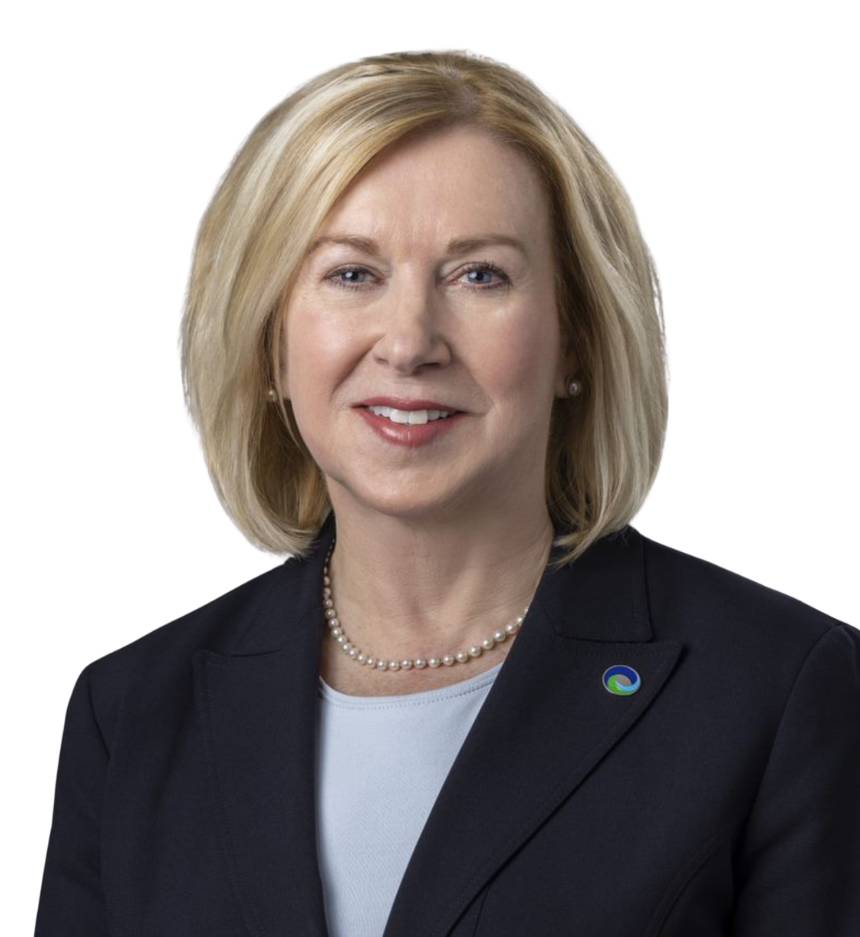 Susanne Svizeny, executive vice president and chief C&I banking officer of OceanFirst Bank
Our business is fundamentally about building relationships with companies and providing comprehensive banking solutions. The past year was one in which we focused heavily on investment and growth for the long term. Our focus was shaped by our commitment to thinking long-term in a market that experienced some uncertainty, particularly with inflation and broader economic conditions. Despite these challenges, our organization remained steadfast in prioritizing future growth. In my role, where I oversee all commercial and industrial business from Boston to D.C., we doubled the size of our team over the last 18 months in terms of relationship managers. It was an exciting year to make these investments providing more resources and options for our clients, especially given the broader context of inflation, an election cycle, and other dynamics within the banking industry. We stayed the course, advancing our strategy and expanding our business. We have also invested in new markets. Additionally, we built a new business line at the bank called our Premier Bankers, based in Long Island, New York. This team is dedicated to delivering high-touch customer service and experience while strengthening our deposit base.
 Youseff Tannous, market president for Eastern Pennsylvania at KeyBank
In the Greater Philadelphia region, healthcare, higher education, and retail continue to be strong economic drivers. Pennsylvania has also seen renewed momentum in manufacturing. Our team is equipped to support a wide range of industries through dedicated bankers and private banking services for business owners. Additionally, our digital platform, Key@Work, enhances employee financial wellness programs, addressing the rising costs of benefits by delivering financial education and personalized support to employers. This allows us to serve both businesses and their employees comprehensively.
We’re leveraging technology to enhance our offerings while continuing to support small businesses and reinvesting in the communities we serve. Our goal is to meet clients at every stage of life, whether they’re opening a first account, planning for retirement, or starting a family. By staying ahead of market trends and remaining responsive to client needs, we aim to maintain a competitive edge in both the regional and national banking landscapes.
 Marc Tepper, head of the Philadelphia office at Buchanan Ingersoll & Rooney
Energy, life sciences, healthcare, and finance, continue to be the cornerstones of our work. Over the past year and into 2025, life sciences and healthcare have led the way in terms of legal activity and exciting new work.
Our healthcare section has the transactional experience that makes the difference. The group has led 40+ major healthcare transactions valued at more than $20 billion dollars in the past few years. What sets us apart is our integrated approach: our government relations team works closely with our attorneys to represent clients across the healthcare landscape, from health systems and psychiatric facilities to physician groups and insurers.
In life sciences, our FDA practice is one of the top regulatory teams in the country. The team’s work spans FDA regulatory matters, IP, litigation, and government relations — all coordinated to provide comprehensive support for our clients in life sciences and healthcare.
Image provided by Academy of Notre Dame de Namur
Want more? Read the Invest: Philadelphia report.
Subscribe to Our Newsletters