How South Florida reflects a broader shift in corporate growth strategy

Key points:
- • Corporate expansion is becoming more selective, with greater focus on costs, risk, and workforce availability.
- • South Florida remains competitive, with Broward attracting cost-conscious firms despite moderated demand.
- • Talent pipelines, infrastructure, and sector specialization are shaping where future growth concentrates.
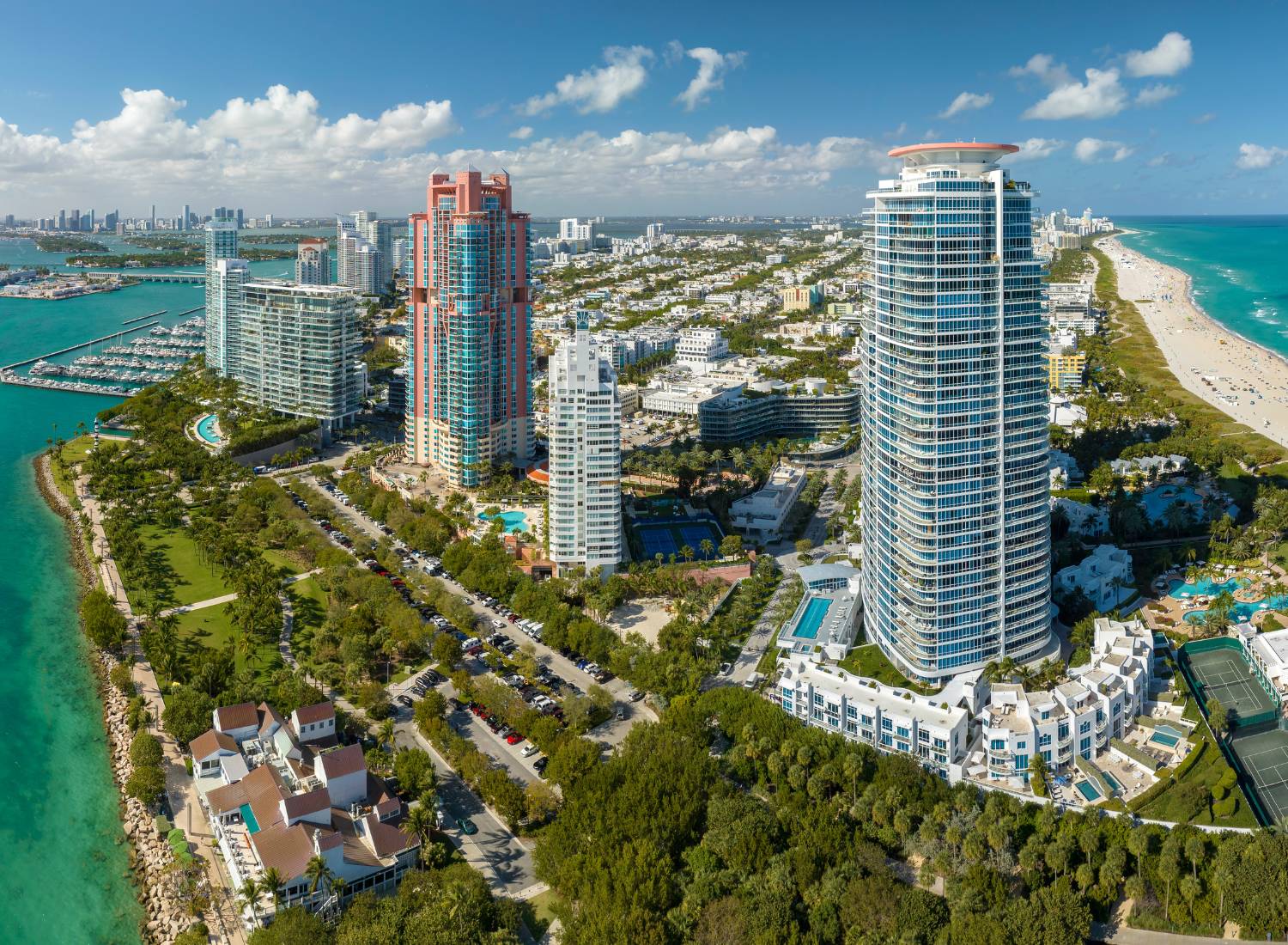 March 2026 — South Florida continues to attract corporate attention, but it is also emerging as a bellwether for how growth strategies are changing nationally. As relocation activity cools, companies are becoming more selective, placing greater emphasis on regulatory environments, operating costs, access to skilled labor and overall risk when evaluating where to expand.
“Risk tolerance is definitely lower today,” David Duckworth, principal of the capital markets group at Avison Young, said to Invest: Greater Fort Lauderdale. “Investors are more focused on weighted average lease terms because longer WALTs reduce the need to re-lease space in a period of uncertainty. They’re also underwriting much lower rent growth than in the past.”
The Florida Council of 100 launched its Ambition Accelerated campaign earlier this year, introducing it during a Wall Street Journal Invest Live event in West Palm Beach. The initiative presents Florida’s Gold Coast as a unified business corridor directed at executives and investors evaluating where to expand next.
A more selective expansion cycle
After several years defined by migration and remote work, site selection decisions are becoming more cost sensitive. Industry data point to a more measured phase of corporate location decisions, with Site Selection Group reporting fewer headquarters relocations than during the early-2020s surge, while CBRE finds that large occupiers are prioritizing expansions and renewals within markets where they already operate.
Florida ranks among the top five states for overall tax competitiveness and remains one of the largest states without personal income tax, according to the 2026 State Tax Competitiveness Index. Corporate tax rates are also below the national median, a factor that continues to weigh heavily in long-term operating models.
At the local level, governments across South Florida have pointed to streamlined permitting and licensing processes for commercial and industrial projects as part of their business development strategy, with the City of Fort Lauderdale’s economic development office citing coordinated review and expedited approvals as tools to reduce development timelines.
Broward County has benefited from this recalibration in an uneven way. As firms reassess space needs and staffing models, the county has continued to capture leasing activity tied to cost-conscious occupiers, even as overall demand has moderated. Broward’s newer Class A properties have maintained stronger occupancy and achieved higher asking rents, despite office vacancy rising to 12.3% in late 2025 due to move-outs from older buildings. Office leasing reached roughly 1.2 million square feet last year, down year over year but broadly in line with pre-pandemic norms, reflecting activity concentrated in selective submarkets rather than broad-based expansion.
Land constraints continue to shape the county’s development profile. “Broward County is extremely built-out… This is a mature infill market with no large-scale expansion opportunities, even as the population continues to grow,” Duckworth said.
A broader look at South Florida’s commercial real estate market shows strong interest across Miami, Fort Lauderdale and West Palm Beach, even amid shifting economic conditions. According to reporting from the Miami Association of Realtors, commercial sales volume in the region’s four major asset categories climbed steadily through the first three quarters of 2025, with nearly $10 billion in transactions, the strongest pace since 2022, driven by investor activity in office, industrial, retail, and multifamily sectors. The association noted that office transactions alone approached $2 billion over that span, representing a 42% increase in sales volume year over year, the largest gain among the region’s major commercial property types.
Infrastructure continues to factor into those decisions. Port Everglades ranks among the nation’s top container ports, and Fort Lauderdale-Hollywood International Airport has expanded nonstop service to major domestic business hubs. Those assets support firms managing regional operations, logistics, and client travel, even when headquarters functions are based elsewhere.
Labor supply is shaping decisions as much as incentives
Workforce availability has become a central constraint in growth planning. Labor supply dynamics are increasingly influencing corporate decisions, as firms contend with tighter labor markets alongside cost considerations. Research from the OECD points to rising skill mismatches and persistent shortages across advanced economies, while Federal Reserve data show that both job growth and labor force growth slowed through mid-2025, helping explain why unemployment changed little over that period. Hiring slowed across most industries, with most net job gains concentrated in education and health services. On the supply side, labor force growth weakened as immigration flows declined and labor force participation edged lower, particularly among younger and older workers.
Employer surveys reflect similar conditions at the firm level. A recent analysis from human resource consulting firm SHRM finds that nearly one-third of U.S. job openings remain difficult to fill, even as overall hiring activity has moderated.
Against that national backdrop, South Florida’s labor profile reflects a different set of dynamics. Florida ranked second in the nation for net domestic migration, trailing only Texas. In Broward County, 55% of new movers are under the age of 44, pointing to continued inflows of early-career professionals and young households. Downtown Fort Lauderdale has also seen population growth among young families with children, contributing to a broader working-age base.
Local education and training systems are responding directly to employer demand. “Workforce innovation also remains central,” said Howard Hepburn, superintendent of Broward County Public Schools, noting that the district is expanding technical and career-focused programming to meet those needs. “Industries are telling us they’re losing highly skilled workers to retirement and need replacements.”
Education trends reinforce that supply. Emerging data suggest that college enrollment in Florida continued to rise in fall 2025, with preliminary figures indicating roughly a 3% increase from the prior year. That pipeline supports sectors such as healthcare, finance, engineering, and logistics.
What’s next
Across the Miami–Fort Lauderdale–West Palm Beach corridor, competition is becoming more internal than national. Commercial real estate sales across Southeast Florida reached roughly $16 billion in 2025. Activity was distributed across Miami-Dade, Broward, and Palm Beach counties, reflecting continued investor participation across asset types.
Miami continues to attract global capital. Venture capital investment in the Miami metro area totaled more than $5 billion in recent years, and cross-border investment remains a defining feature of the market’s office and multifamily sectors.
Palm Beach County remains closely tied to financial services and private wealth management. Finance and insurance among the county’s largest employment sectors. Over the past several years, hedge funds, private equity firms, and family offices have expanded their presence in the area.
Greater Fort Lauderdale’s position within that corridor is shaped by a broader industrial base. The county’s employment is spread across logistics, aviation, marine industries, healthcare, and professional services. That mix has supported steady absorption across sectors rather than reliance on a single driver.
The “Ambition Accelerated” campaign presents the corridor as a collective growth engine. In practice, Miami, Palm Beach, and Greater Fort Lauderdale operate with different strengths and industry concentrations. Companies looking at South Florida are weighing those differences as much as statewide incentives. In a slower expansion cycle, clarity around sector depth and operating costs can matter more than scale alone. Where activity concentrates next may ultimately depend on how each county’s economy fits a firm’s specific needs.
Want more? Read the Invest: Greater Fort Lauderdale report.