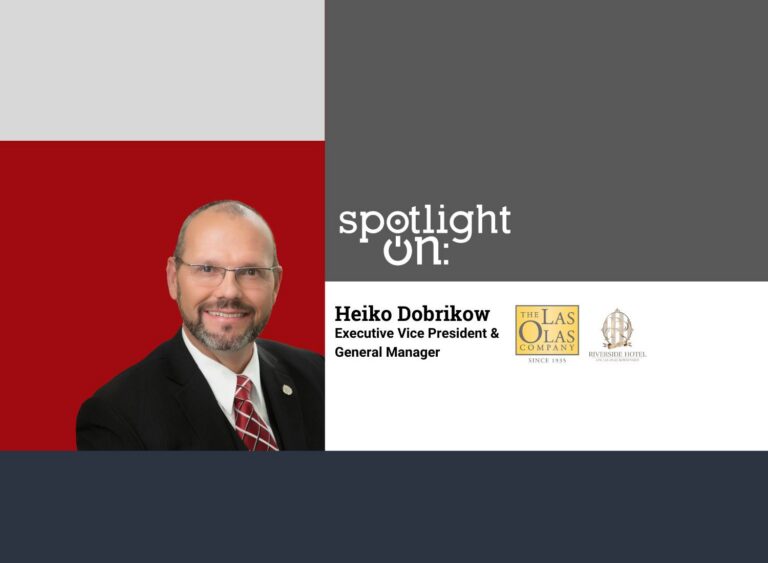






John Davidson, President & CEO, Parmenter Realty Partners
 In an interview with Focus:, John Davidson, president and CEO of Parmenter Realty Partners, shared insights on office market dynamics, tenant expectations, and sustainability. “We’re preparing to enter a period of heavy acquisition,” Davidson said. “There’s opportunity in every market we’re watching.”
What have been the most defining moments for the firm over the past year?
We operate in the commercial office sector, and it feels like things bottomed in 2024 and are improving very slowly in that market right now.
We haven’t closed any deals yet this year, though we are close on a few. We sold an office asset late last year in Doral, Miami, but for this year, there hasn’t been anything I’d call truly defining.
What trends are shaping the office market today?
Transactions are starting to happen again. Acquisition debt is slowly returning, and there are more buyers than we’ve seen in a while. There are deals to be made.
We’re leaning into several transactions now, more in Florida than Georgia, but really across the Southeast. We have equity capital available, mostly opportunistic in nature. The debt, on the other hand, tends to be more focused on stabilized assets, so putting the two together to make a deal happen continues to be a challenge.
How do you view risk and opportunity in the current environment?
We see tremendous opportunity in the office market. There are fewer buyers than ever. Many of our competitors have moved on to other asset classes, but we still see strong office user demand across our portfolio, which makes us bullish on the long-term prospects for office.
Rents are rising, occupancies are going up, and there’s virtually no new supply. In fact, some office buildings are being converted or even demolished altogether. Virtually no new buildings are being developed. So supply is decreasing, while demand remains stable or even increasing.
Tenants who were hesitant about return-to-office mandates are starting to feel more confident. They’ve been cautious and operating in an employee-focused environment, but that seems to be shifting to a focus on productivity and profitability. For the first time in my career, not everywhere, but in most of our markets, tenant incentives are declining. Tenant improvement packages are either flat or decreasing. That arms race with competitors to offer bigger incentives seems to be slowing down as office owners and lenders are more clear-eyed on tenant concessions.
What are tenants expecting today in terms of amenities, flexibility, and lease terms?
Right after the pandemic, flexibility was everything. Tenants wanted their employees back in the office but weren’t sure they could pull it off. So, shorter lease terms were often the main point of negotiation. I think those days are behind us now.
Parking lots are full again. Except for Fridays and sometimes Mondays, our buildings are busy. I don’t think we’ll return to fully occupied buildings on Fridays. Most of our assets are less than 50% occupied that day, reflecting companies continuing to offer hybrid schedules. That said, tenants are still showing up most of the week.
In terms of amenities, we focus on assets near high-quality retail and residential areas, primarily in the suburbs. Tenants want walkable buildings with access to strong retail centers focused on food and entertainment. That applies to our CBD assets as well, when the location fits.
Outdoor spaces remain highly desirable, especially in markets with great weather. We have upgraded these throughout the portfolio to provide places to work, places to socialize, and places to eat with comfortable furnishings, WiFi, and power. Most of our properties already include fitness centers, conference facilities, tenant lounges, and similar features.
We’re also seeing tenants invest more in their own spaces. Many are offering upgraded food options — not just coffee, but real food offerings — and some are even subsidizing or providing free food to enhance their employees’ office experience. In some markets, we’ve partnered with tenants by offering cafe credits to help support food operators and provide added value to employees.
The pendulum has swung. It was tough for employers to bring their teams back, but now the labor market is softening again, employers have a bit more leverage.
I don’t think employers resented the efforts they made to entice workers to return to the office. They wanted people back in the office and were willing to do what it took. Mandates weren’t always effective, so food and other incentives became tools. Whether those stick around long term is unclear, but they served a purpose.
Workplace culture has shifted as well. Attire is much more casual now. We used to have casual Fridays. These days, unless there’s a meeting, casual dress is the norm.
How important are co-investment and joint venture partnerships to your model today?
Historically, we’ve invested alongside institutional partners. We raised five funds over the years, but around 2018, we shifted our strategy. At the time, we were strictly a value-add, opportunistic firm, but opportunities in that space were becoming less compelling as more money flooded into the space. We pivoted toward more stabilized returns available in the core-plus space, so we put the fund model on hold and began cultivating relationships with institutional investors focused on longer holds and stabilized yields.
Today, those institutional investors are generally not investing new equity in the office market until they can reduce their current exposure, as hold periods have pushed-out. It has returned to being a space for hyper-opportunistic investors. That’s very similar to what I saw in the early 1990s during the Resolution Trust Corporation days. Back then, there was an oversupply of office space, and most investors were chasing other property types.
Now, the groups stepping into office are mostly family offices, foreign capital, high-net-worth individuals, and some debt funds that are looking at equity-like positions. These are the investors who recognize that the office sector has been oversold and see the potential created in the capital dislocation.
Throughout my career, I’ve watched other property types dominate distressed cycles. This time, it’s our office, and that’s our space. There’s plenty of product to evaluate, allowing us to be very selective. That’s why we’re enthusiastic. It’s about sifting through the opportunities and finding the right ones.
Where are you seeing the most return on sustainability investments?
Sustainability has been a focus for us for a long time. Before joining Parmenter Realty Partners, I ran a company that handled energy conservation retrofits for commercial buildings. That included projects at Miami International Airport and across Dade and Broward counties. I brought that experience into our firm.
We consistently look for efficiency gains in cooling systems, lighting, and plumbing fixtures. Some of our assets have green roofs. We participate in the EPA’s ENERGY STAR program scoring across the portfolio, and our engineers even compete to see whose buildings perform the best.
Sustainability isn’t a new initiative for us. It has been part of our DNA for years as we’ve always seen the economic benefits associated with reducing energy consumption. That said, we haven’t seen tenants prioritizing sustainability as much as they did five or six years ago. Today, the top concern for most tenants is the size and configuration of their space, followed by amenities.
We saw sustainability early on as a competitive advantage. It helped us cut operating expenses, which increased net operating income and ultimately, asset value. It benefited the environment and our tenants, but it also supported our financial performance. It was a win for everyone.
We’ve looked at solar but have never been able to make the numbers work in a meaningful way. Where we do have solar, it’s limited. Our biggest gains have come from upgrades to lighting, HVAC, and water systems.
What are your top priorities for the next three to five years?
We’re preparing to enter a period of heavy acquisition. Over the past couple of years, our focus was more defensive. We were managing our existing portfolio, navigating market disruption, and addressing lender conservatism. That occurred even in cases where we didn’t have real distress.
We had buildings that were fully occupied but still faced headwinds based on the broad brush assessment that the office sector was in serious trouble, and in many gateway markets, that was the reality. That period seems to be behind us now. The challenges are fading, and we can shift our attention fully to new opportunities.
There’s opportunity in every market we’re watching. South Florida, in particular, is an area we’re very optimistic about. We’re pleased to have a foothold in West Palm Beach, where there’s a lot of energy and momentum. It’s a dynamic market, and we’re excited to be part of it.
We’ve been fortunate in the past to enter markets just before major growth cycles. We were in Nashville at the start of its boom, and in Charlotte just before its major development cycle. West Palm feels like the next one. There’s strong in-migration, a growing talent pool, substantial investment, and plenty of land to support future growth.
From Gov. Ron DeSantis to Stephen Ross, a lot of influential voices are highlighting the potential of West Palm Beach. We feel lucky to be there now and are actively looking for additional opportunities in that market.