Kent Ingle, President, Southeastern University
Invest: sat down with Kent Ingle, president of Southeastern University, to discuss its record-breaking enrollment, commitment to accessibility and affordability, and innovative approaches to learning. “Two of the most exciting developments we are focusing on are competency-based education and subscription-based education, both of which are transforming the way students experience higher education,” he said.
To what do you attribute the university’s recent growth, and how has the university accommodated the higher number of students?
It was another incredible year of record-breaking enrollment, reaching 11,763 students across all of our delivery models, which represents a 12% increase over last year. We were also recognized by The Chronicle of Higher Education, a leading voice in the field, as one of the fastest-growing private nonprofit institutions in the nation. That recognition is a testament to the work we are doing, and I believe this growth is a reflection of our ongoing commitment to innovation, accessibility, and academic excellence.
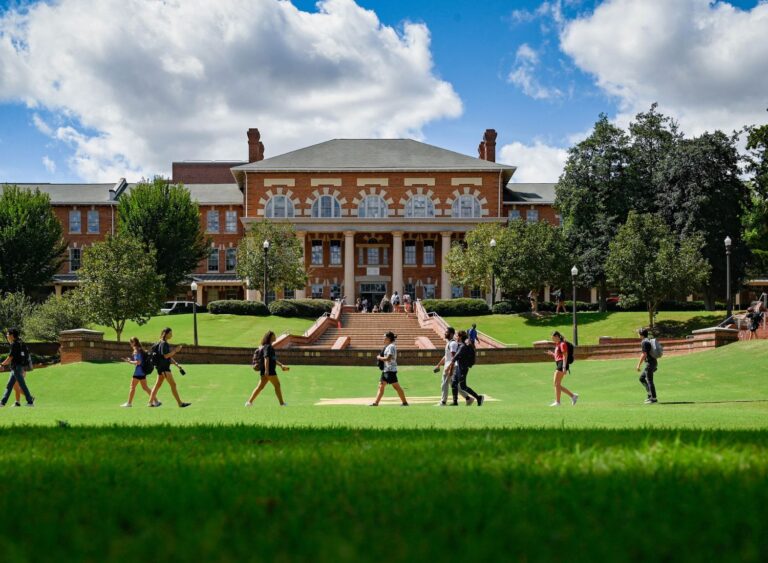
I attribute our success to three key factors, the first being accessibility. Students today need access to education no matter where they are or what field they want to pursue. Because of this, we have worked hard to develop a variety of delivery models to accommodate different needs. Some students are drawn to the experience of attending a traditional campus, which we provide in Lakeland with all of the co-curricular activities and athletic opportunities they might be looking for. Others, however, need a path to earning a degree while remaining in their hometowns, whether due to work, family obligations, or other personal reasons. To serve them, we have developed an extensive network of campuses across the country, often in partnership with faith-based organizations, businesses, and local communities, ensuring that students can receive a high-quality education without having to relocate.
The second key factor is affordability. One of the biggest challenges in higher education today is ensuring that students can earn a degree without taking on an overwhelming financial burden. I have always believed that it is the responsibility of universities to drive down the cost of education rather than relying on external entities like the government to provide solutions. At SEU, we have taken proactive steps to make education more affordable. Our network campus model is a prime example of this. With more than 250 campuses nationwide, we have been able to cut the cost of higher education by two-thirds.
The final factor that I believe contributes to our growth is experiential education. It is crucial for students to have opportunities to apply what they are learning in the classroom in real-world settings. That’s why we have established strong partnerships with organizations across various industries, enabling students to engage in internships — both paid and unpaid — that allow them to develop hands-on experience while still in school.
How does faith influence SEU’s mission and the student experience?
At SEU, faith is not just a component of our identity; it is the foundation of everything we do. Our mission is centered on integrating faith with learning and with daily life. We believe education is more than just earning a degree or preparing for a career, it’s about equipping students to discover and develop their divine design so they can serve and lead with purpose in whatever field they choose to enter.
This faith-driven mission shapes every aspect of the student experience, from the classroom to community life. We want our students to graduate with not only the knowledge and skills needed for success but also with a strong faith foundation that will guide them in their careers and personal lives. Whether they go into business, healthcare, education, ministry, or any other profession, we want them to lead with integrity, compassion, and a heart for service.
How would you describe the state of higher education in Florida?
Higher education is constantly evolving, and in Florida, we’re seeing several key trends that are shaping the landscape. One of the biggest shifts is the growing demand for more flexible and nontraditional education models. More students than ever are looking for alternatives to the traditional four-year residential college experience. We’ve seen an increase in students seeking online learning options, hybrid programs, and network campus models that allow them to balance education with work and family responsibilities.
Another major trend is the increasing emphasis on trades and technology-focused education. Florida, like much of the country, is experiencing a high demand for skilled workers in technical and trade fields, and there is a push to expand educational programs in these areas. We are responding by developing new degree programs and refining existing ones to align with workforce needs, ensuring that our graduates are prepared for high-demand career fields.
One issue that has come up several times in Florida is regarding t[the Florida EASE (Effective Access to Student Education) Grant. The Florida EASE Grant is a vital investment in the state’s future — economically, educationally, and socially. It provides thousands of Florida students with the ability to attend independent, often faith-based, colleges and universities that align with their values, learning styles, and career aspirations. With a return of $3.83 for every $1 invested, the grant contributes significantly to Florida’s economy and helps address critical workforce shortages — particularly in nursing, education, and counseling. Institutions supported by EASE produce over 30% of the state’s nursing graduates and 25% of its teaching degrees, filling essential roles that keep communities strong. The EASE grant isn’t a handout to schools — it’s a tool that empowers student choice and access, reinforcing Florida’s leadership in educational freedom and strengthening its diverse higher education ecosystem. Various state legislators have threatened to remove this critical program over the last few years, and we have had to fight to protect our student’s rights to choose the right educational experience for them.
How is SEU integrating AI and digital learning tools into education while maintaining a strong student-professor connection?
Technology is evolving at an unprecedented pace, and at SEU, we embrace it as a tool to enhance education rather than replace the critical human element of learning. AI, in particular, is transforming many industries, and we recognize its potential to improve the way we teach, learn, and engage with information. That’s why we have incorporated AI-focused courses into our curriculum, helping students understand how to use these tools effectively and ethically. We celebrate AI as an opportunity to make education more accessible, increase efficiency, and equip students with the skills they will need in an increasingly technology-driven workforce.
However, while we recognize the advantages of AI and digital learning tools, we are also committed to ensuring that technology enhances — not diminishes — the relationships between students and professors. At SEU, we prioritize maintaining a personal, interactive learning experience, whether students are in a traditional classroom, attending classes at a network campus, or engaging in online education. We do this by fostering active discussions, using collaborative platforms, and ensuring that our faculty remain highly engaged with their students. We also establish clear ethical guidelines to ensure that technology is used responsibly in academic settings.
What major developments, projects, or improvements are planned for the university?
We are always looking for ways to innovate and expand our offerings while staying true to our mission. Two of the most exciting developments we are focusing on are competency-based education and subscription-based education, both of which are transforming the way students experience higher education.
Competency-based education, or CBE, is a model that allows students to progress through their coursework based on their mastery of skills rather than the traditional credit-hour system. Instead of being required to spend a fixed number of hours in a classroom, students can advance as soon as they demonstrate proficiency in the subject matter. This approach is particularly beneficial for working adults, students with prior knowledge or experience in their fields, and those looking to complete their degrees at a faster pace. It also ensures that graduates leave SEU fully prepared for the workforce, with demonstrated competencies in their chosen fields. Many accrediting bodies are recognizing the value of this model, and we are excited to be at the forefront of implementing it.
Subscription-based education is another initiative we are exploring. Unlike the traditional tuition model, where students pay for credit hours or semesters, this approach allows students to pay a flat monthly fee for continued learning. This model provides greater flexibility, especially for adult learners and working professionals, who can take as many courses as they want at a pace that suits their schedules. It also has the potential to significantly reduce student debt, as students can avoid large lump-sum tuition payments.
Both of these models align with our commitment to affordability, accessibility, and experiential learning. We believe they will revolutionize the way students engage with higher education, making it more flexible, cost-effective, and tailored to individual needs.
Beyond these new models, we are also expanding our academic programs to align with emerging workforce demands. We are developing new degree programs in fields such as technology, healthcare, business, and trades, ensuring that our graduates are equipped for high-demand careers. Additionally, we are strengthening our partnerships with industry leaders to provide more internship opportunities, mentorship programs, and career placement support for our students.