



Adrian Cronje, CEO, Balentine

Adrian Cronje, CEO, Balentine In an interview with Focus:, Adrian Cronje, chief executive officer of Balentine, discussed the firm’s growth, evolving client needs, long-term investment strategy, and commitment to community impact and independence. “Success for us isn’t about being the biggest, it’s about being the best.”

What were the most significant milestones for Balentine over the past year?
What’s been significant about 2025 is our pivot off an announcement we made in January that FJ Management has taken a 20% stake in Balentine, agreeing to be a slow and steady partner that will allow us to remain majority employee-owned and really thoughtful about where growth takes us next. That’s essential, as we’ve promised clients we’ll remain independent and build what we call a “forever firm.” This commitment stands apart from an industry rapidly consolidating as private equity pursues short-term returns.

We’ve also become a true legacy company with the election of Emily Balentine Barbour as a Partner, and with the addition of our Chief Compliance Officer Michael Pearson as a Principal. Emily leads our family and legacy work with our clients and brings her own intergenerational wealth, family and legacy perspectives and expertise to the role. These and other strides have helped us begin to build the bridge to the next generation of leadership for Balentine.

How have your employee and client experience priorities evolved over the past year?
Bringing on a minority equity partner last year gave us the resources to deepen our investment in both the client and employee experience. That move reflects our long-term commitment to independence and thoughtful growth, in contrast to much of the industry, where consolidation and private equity often prioritize short-term returns at the expense of people.

We made strategic enhancements across the board. For clients, we upgraded our reporting technology to give them a more comprehensive view of their financial picture. For employees, we improved operational systems to create a more seamless day-to-day experience.

We also launched the Balentine Foundation, which is entirely employee-led and supports community initiatives in the places we serve. That kind of engagement reinforces our culture and strengthens the bonds between our team, our clients, and our communities.

Success for us isn’t about being the biggest firm, it’s about being the best. We measure that by our ability to retain the clients we started with, and by the strength of the relationships we build. There’s no greater compliment than when a client tells us we’ve become part of their family. One even described us recently as “a family serving families.” That’s what defines success at Balentine: being a firm that families trust for generations.

How has Atlanta’s business environment evolved, and what does that mean for your strategy?

We continue to benefit from a long-term trend of people moving to the Southeast — not just Atlanta, but the broader Sun Belt. That trend accelerated during COVID and hasn’t slowed down. It’s fueling a wave of entrepreneurialism in the region.

Our firm is very focused on serving entrepreneurs and business owners, helping them manage and transition the wealth they’ve created. Over the past year, I’ve also seen Atlanta emerge as a national leader on critical policy issues.

As president of the Atlanta Rotary Club, which is over 110 years old and made up of top business and civic leaders, I’ve watched us take on major challenges: election integrity, affordable housing, and food security. These efforts show that Atlanta is setting an example of how a city can bring business, government, and the community together to address complex problems.

That makes Atlanta not only a great place to live but also a great place to do business.

What role does community engagement play in Balentine’s mission?
Community engagement is core to who we are, whether in Atlanta or Raleigh. Through the Rotary Club and the Balentine Foundation, we’re addressing issues that matter deeply to the communities we serve.

The Atlanta Rotary Club isn’t typical — it tackles problems others can’t. In addition to affordable housing and elections, we’re in the third year of an early childhood education program led by the mayor that I believe could be a national model.

Atlanta, once known as the city too busy to hate, is now showing how business and community can partner to drive real change. At Balentine, engaging in that work isn’t just meaningful, it’s good for business.

What new types of support are clients asking for today?
Entrepreneurs and business owners are asking for more than financial plans or investment advice. They want guidance on their businesses, often their largest asset.

Too often, wealth managers say, “Sell your business so I can manage the money.” We take a different, holistic approach. We provide independent business advisory services and help clients evaluate whether keeping their business might be a better path to building wealth.

There’s also a greater awareness now around working with fiduciary advisers — those who are legally bound to act in the client’s best interest. Many firms are still product-driven, but clients increasingly want advice that is free of conflicts.

More broadly, clients are asking deeper questions: What is this wealth for? How will it affect my family? How do I pass it on successfully? Our role often resembles that of a family counselor — helping define and protect legacy, while avoiding the all-too-common “shirtsleeves to shirtsleeves in three generations” outcome.

Given today’s economic climate, what investment strategies are proving most resilient for your clients?
While much of the financial news centers on stock and bond markets, we’re finding strong opportunities in private markets — investing in companies and strategies not traded daily.

We see long-term potential in areas like artificial intelligence, healthcare innovation, and the Southeast’s demographic growth. These trends are driving demand for housing and new small businesses, and we’re helping clients invest in them. Private market investments typically take five to 12 years to mature but offer healthy premiums for that risk. In a volatile public market, they’ve become a compelling source of returns.

That said, we never begin investing, private or public, without first ensuring clients have enough liquidity for the next two years. We want to avoid selling at the wrong time due to short-term fluctuations. As at the end of 2025, we are modestly overweight stocks and underweight bonds relative to our long-term targets. While we’re mindful of a potential economic slowdown, we don’t yet see signs warranting major de-risking or portfolio shifts.

We are leaning into private markets, where many clients, especially business owners, feel more confident. They prefer investing in businesses they understand and can influence, rather than watching their wealth fluctuate based on headlines. After decades of building control, giving it up to market swings can feel deeply unsettling.

What is your outlook for wealth management, and how is Balentine positioned for it?
The future of wealth management is incredibly bright. We’ve positioned our firm — and our role in the community — to follow a path distinct from many others in the industry. Our equity partner, FJ Management, is a family office from the Mountain West with a 30- to 40-year investment horizon. They chose us, after reviewing dozens of firms, because of our expertise in family and legacy planning, which I’m proud of. This partnership secures our independence and provides access to growth capital when needed. It gives us a strategic edge — we’re not beholden to private equity chasing quarterly returns but working with a partner who values culture, people, and legacy.

Looking ahead, we’re focused on two priorities. First, attracting top talent. People want to work in a place where culture matters, and FJ’s values align perfectly with ours. They invest in what they call “building value to last.”

Second, we’re expanding services based on client demand. We’ve added business advisory, family legacy services, and reporting beyond money management. We’re also exploring areas like strategic tax advice and bill payment because listening to our clients tells us where to go next.

FJ’s investment has been a stabilizing force, allowing us to grow, stay independent, and remain true to our mission of being a family serving families. That’s how we retain clients and continue to be one of the best places to work. I’m passionate about this because I believe in what we do. I encourage our employees to connect with their purpose — not a generic cause, but a reason that drives them. Purpose-driven companies perform better.

If work feels like just a job, that’s where dreams go to die. So we’ll keep pushing forward, staying inspired, and focusing on our clients because that’s how we grow, and why clients keep introducing us to others.
Cheryl Richards, President & CEO, Catapult Employers Association

Cheryl Richards, President & CEO, Catapult Employers AssociationIn an interview with Invest:, Cheryl Richards, president and CEO of Catapult Employers Association, highlighted how current economic pressures are influencing corporate strategies, why organizations are increasingly listening to their workforce, and noted the growing demand for outsourced HR services and AI training. “All the predictions we had for 2025 were essentially set aside in January. Over the past year, Catapult and employers across the region have had to pivot significantly in response to workplace challenges and policy changes we never imagined,” Richards said.

Over the past year, what changes or milestones at Catapult stand out for their impact on members or your strategy overall?

The world has changed dramatically in the last 10 months or so. At our executive roundtables, we discuss what executives have planned to do for the upcoming year. In October 2024, I asked them about their plans for 2025. Our members told us they were concerned about cybersecurity, talent acquisition, talent retention, developing future leaders, and competitive wages. Then 2025 came, and we experienced dramatic changes affecting the workplace, including immigration policy changes followed by inflation, which has continued to plague employers. We encountered new, unplanned developments from the federal government, such as the Department of Government Efficiency, which led to federal workforce cuts, state workforce cuts, and corporations re-evaluating their own workforce. We also saw nonprofits and their funding impacted. In just 10 months, all the workplace norms we’ve expected for decades around diversity, equity, and inclusion suddenly became taboo. In the backdrop, businesses were dealing with tariffs and trying to decide what to invest in, weighing supply chain investments against human capital investments. This, along with economic conditions, led to increased tension between employees and employers. While we entered 2025 with employees in the driver’s seat due to the decline in the workforce population over the last decade or so, this started to change with the rise of AI. Additionally, the new dynamic of political strife entered the workplace. By midyear, we saw situations where employers were concerned about what employees were doing in their personal time. We saw this dynamic play out with the misconduct of a CEO and a CHRO at a concert, which led to extensive conversation around employee behavior during non-working hours. It happened again during the Charlie Kirk assassination, with employers from airlines to governments, universities, fast food companies, and sporting teams firing people for statements made on their personal social platforms that were inconsistent with company values. The rise of artificial intelligence has emboldened employers to replace workforce gaps with technology, and this has led to a shift toward job-hugging, with people opting to stay in their positions for job security. 

It is a truly interesting inflection point that 2025 has become, predicated on numerous factors including economics, social shifts, workplace policy, labor market changes, and the intersection of human capital and technology. All the trends we predicted would happen still did, but we also had to pivot significantly and change at a new rate of speed we never imagined.

How are employers across the Southeast adapting to today’s workforce dynamics? What is changing in how they recruit, retain, and lead?

Employers are still concerned about talent, but it’s shifting in some ways. We surveyed many of our members and asked them about the biggest challenges they are facing, and staffing remains a top priority. Employers are focused on recruitment, retention, and compensation to attract the best and brightest talent. However, economic conditions are challenging how they approach this. The days of double-digit wage increases have tapered down from 10% to around 3%. We believe employers are planning for 3% to 3.5% increases in compensation next year. Employers are still looking for a highly skilled workforce, particularly in the trades and blue-collar jobs, and they are valuing skills over degrees. This has subsequently impacted their approach to white-collar jobs, which is reflected in unemployment statistics for college graduates, who are now facing their highest rate of unemployment in decades. While recruiting has shifted to a focus on skills and experience, employers remain interested in growth, career paths for young professionals, and leadership development.

What are you seeing in terms of employer demand for HR outsourcing versus in-house expertise? Where is that line shifting?

We are experiencing a dramatic rise in outsourced HR or fractional HR at Catapult. By Q3 of 2025, we had exceeded our budget predictions for this line of business, and we predict it will achieve an all-time revenue high by the time we wrap up the year. This tells us that more companies are leaning into fractional human resources and outsourcing their human resources needs. This is particularly true for companies that range in size from 20 to 250 employees. It is often more cost-effective for them to outsource human resources to an organization like Catapult rather than hire in-house human resources professionals at six figures per person and then provide benefits on top of that. The surge we are expecting in healthcare costs will likely drive this outsourcing trend even further since organizations tend to spend between 30%-40% per employee on benefits. To reduce personnel costs, employers can hire an organization like Catapult to manage their human resources and enjoy flexibility in services, reduced costs, and the expertise of an experienced strategic partner.

What blind spots do you think CEOs and HR leaders still have when it comes to building resilient, high-performing teams?

Employers are still investing in leadership training and soft skills, but training in artificial intelligence is certainly an area on the rise. We know the AI genie is out of the bottle, and artificial intelligence will continue to be prevalent in workplaces. We see a wide continuum of AI adoption among our members. There are the early adopters who are leaning into artificial intelligence, and they are pushing their workforce to use generative artificial intelligence and agents to help augment their work. One of our members has tasked their employees with finding 25% efficiency in their roles by using AI agents. We also have members on the other end of the spectrum who tell us that artificial intelligence will never replace their business, asserting that their work is human-centric and cannot be leveraged by artificial intelligence. There is a question regarding how much artificial intelligence will impact our workplaces. It’s hard to predict if there will be fewer jobs because of artificial intelligence, but we know for sure that there will be opportunities for employers to find more efficiency because of artificial intelligence. I think the blind spot may be what training they should provide their employees and how deep they should go with this training. We believe human resources must have a prominent seat at the table during discussions about artificial intelligence, so we have started developing new content to help human resources professionals navigate this landscape. It is not just a technology tool; it is a workforce augmentation tool. Consequently, we are developing new workshops and classes on artificial intelligence training for human resources professionals and for the workforce in general.

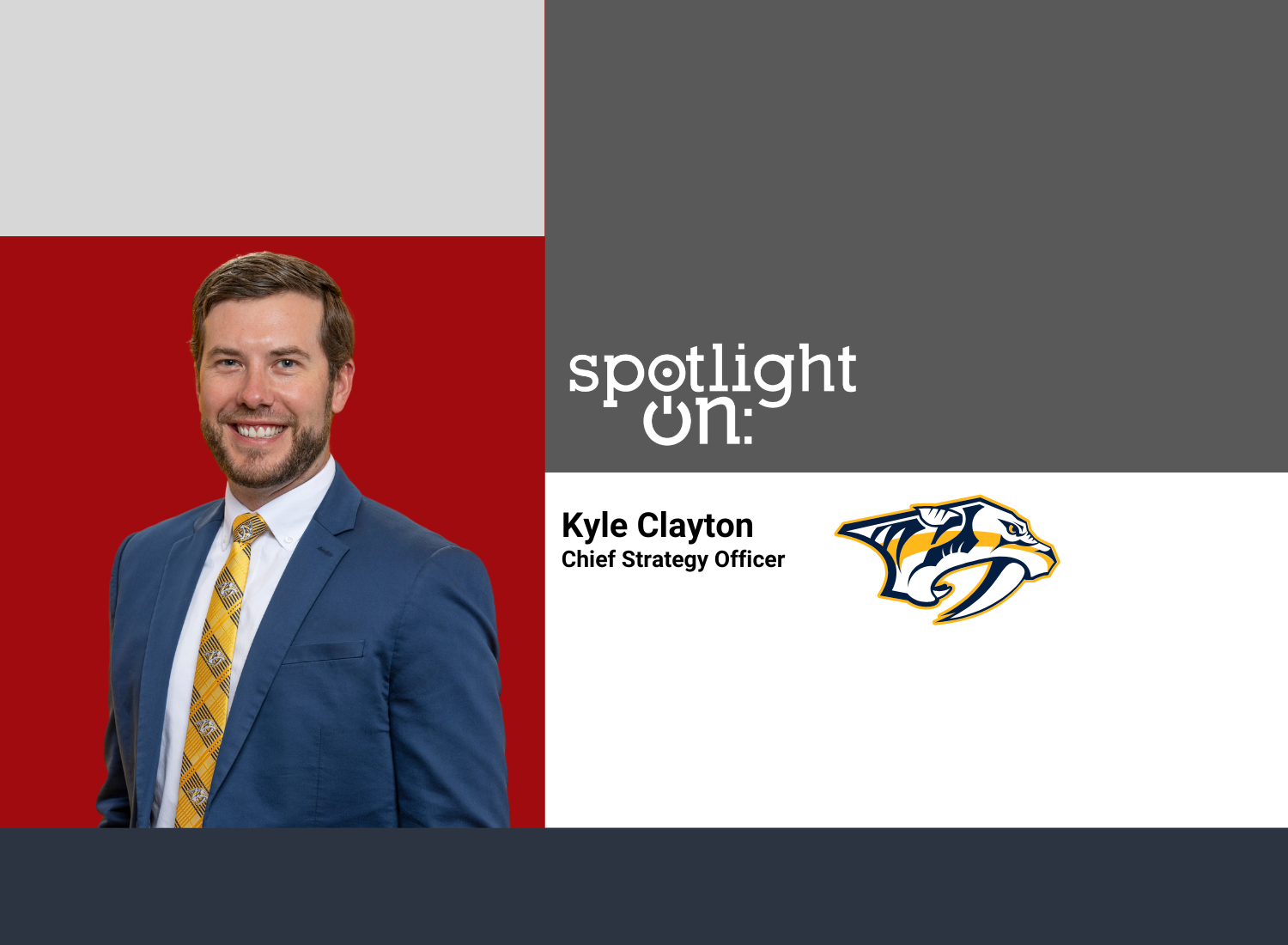
Spotlight On: Kyle Clayton, Chief Strategy Officer, Nashville Predators

Key points:

  • The Nashville Predators are investing $700 million to modernize 30-year-old Bridgestone Arena, positioning it to remain a premier venue and catalyst for downtown Nashville’s growth for decades to come.
  • Rather than relocating or building elsewhere, the organization is committed to its prime Broadway location, calling it an irreplaceable “corner of Main and Main” in the heart of downtown.
  • The transformation combines a full arena renovation, new street-level retail and restaurant space that opens the building to Broadway, and a potential hotel development, creating three projects in one.

March 2026 — Invest: spoke with Kyle Clayton, chief strategy officer of the Nashville Predators, about the vision behind the $700 million transformation of Bridgestone Arena and its role in downtown Nashville. Clayton reflected on the arena’s origins as a revitalizing development and why the organization is committed to remaining in its prime Broadway location. “You could not pick a better location for a downtown sports venue than where we are,” said Clayton.


How would you describe the overall vision for this upcoming arena renovation, and what it means for Bridgestone Arena’s future?

First, you kind of flash back to the original construction of the building. If you go back in time to the mid-90s, downtown Nashville was not what it is today. It was not a place you’d come for entertainment.

Thinking back to Mayor Bredesen’s vision at the time of building a catalyst to spark investment in downtown – that’s what the arena was. It was probably not the greatest plan, but it worked, and it worked tenfold. The building opened in 1996, the team came in 1998 and look at what Broadway has become. We have always thought of ourselves as the catalyst for Broadway’s expansion and development.

Now you flash forward 30 years later, and you can’t pick a better spot for an arena in Nashville. 


Join us at Invest: Nashville’s upcoming leadership summit! This premier event bring together hundreds of public and private sector leaders to discuss the challenges and opportunities for businesses and investors. Buy your ticket now!


As we look at the future of our organization, we asked: What do we need to do? Where do we need to be? We just need to renovate this building. You could give us whatever amount of money, you could give us a new building and all that, but if it’s not in this location, we’re going to pass on it. We’ve decided this is what we want to do and this is where we want to be.

About 10 years ago, we really started thinking about the future of the venue — what we can do to renovate and be here for another 30 years, and to continue to be that catalyst for downtown. The original investment helped spark downtown, and now that activity is helping fund us, with everyone coming to our events and the arena serving as a destination. Tourism tied to those events has gone through the roof. Now it’s our turn again to reinvest in the building.


Explore more from our Nashville coverage:

Invest: Nashville leadership summit spotlights real estate, regional partnerships

Spotlight On: Victor Berrios, Chairman of the Board/President & Owner, Tennessee Latin American Chamber of Commerce/ Jani-King Nash

Regional Review: How Nashville’s new infrastructure is powering global investment


The arena as originally built was all concrete walls and barriers — it feels like a fortress. It’s a very introverted-style building, and we want to flip that by adding glass and more open opportunities. When it was built, it was all concrete walls. There was a police station and a register of deeds office — things that make you think, “Wow, that’s on Broadway?”

Now we’re going to tear down those walls and create four stories of retail and restaurant opportunities, mirroring the Fifth + Broadway development across the street, which has been so successful. You can tell downtown is benefitting from a lot of traffic going over there, so we’ll bring that to our side of the street as well.

It’s also an arena project. This building is 30 years old. At the end of the day, what are new buildings doing? What are renovated buildings doing? You’re looking at premium spaces, partnership activation spaces, seating capacity, and the press box. There are things we weren’t designed for in the 1990s, but now, being one of the busiest concert venues in the U.S. and having a successful hockey team, we have to ask what we’re missing and how we continue to evolve as a building.

The third piece is potentially a hotel. We put out a vision of building a hotel on the corner of Demonbreun and Fifth Avenue. At first it was, “If we could do it, that would be great.” Now, as we get into it, there seems to be strong demand in the market, which is exciting, especially considering how many hotels have been built in the last five to 10 years. That project is gaining more momentum as we move forward.

So, it’s really an arena project first — a 30-year-old building where we want to take care of our fans, partners, performers, players and staff, and make it the best, most up-to-date modern building we can, given our incredible location. Then there’s the Broadway redevelopment, and potentially a hotel on the backside. It’s really three projects rolled into one.

Nashville Predators project rendering
Project rendering. Image provided by Nashville Predators

How do you see sports venues driving traffic, and how has that played out in Nashville?

A lot of teams are looking at a real estate play. They’ll build where they can develop around it. The Battery in Atlanta is a great example — they moved outside the downtown core and developed parcels around it. Even Nissan Stadium here in town is building a new facility on the East Bank and will develop around it.

Here, the development already exists. The folks are already there, and there’s a ton of traffic. It’s a great balance — we drive a lot of traffic, but we also get to take advantage of that traffic. We call ourselves the corner of Main and Main. You could not pick a better location for a downtown sports venue than where we are.

What do you think fans will notice first when they experience the newly renovated arena?

We’re going to take a phased approach. That’s been our mantra for years. We’ve invested roughly $10 million a year on average for the last seven to eight years. We pride ourselves on almost always being in some form of renovation. Every season, when a fan comes into the building for the first time, we want them to notice something different and have a new experience, without negatively impacting their visit. We try to do most of that work in the summer, though sometimes it spills into pre- and post-season.

With this larger transformation, we’ll be balancing a lot, especially with construction along Broadway and on the backside of the building. Our goal is to have minimal impact on the fan journey. We want frictionless entrance, easy access to seats, concessions and the team store, and no negative impact on that experience.

Inside the bowl, we already have one of the best game presentation experiences in the NHL. Our team does an incredible job. As we renovate the exterior, we’re also investing inside — projection systems, lighting systems and other enhancements to elevate the game experience.

Fans will certainly notice the construction, but hopefully they’ll also see the journey toward where we are headed. When fans are in their seats enjoying the game, they’ll continue to have the great fan experience they’ve always had here in Smashville, and hopefully the players on the ice can feed off that as well.

What do you see as the potential for Nashville as a sports town?

The last several years have been an incredible ride for sports in Nashville. Ten years ago, First Horizon Park was built for the Sounds. GEODIS Park opened not long after for Nashville SC. And now, Nissan Stadium is being replaced with a new, state-of-the-art $2 billion football stadium with development around it, and Bridgestone Arena is undergoing a $700 million transformation in the downtown core.

From a sports perspective, the growth in just a decade is incredible. We are collectively transforming the sports landscape in this town. At the same time, you have hotels, development, bars and restaurants expanding across Broadway, SoBro, the Gulch, East Nashville and West End. There’s so much going on.

I’m originally from Middle Tennessee, just south of Nashville, so I’ve been here the whole time and seen it firsthand. I’ve been with the Predators for almost 18 years. Living through all of this has been awesome. There are so many people moving here from California, New York and elsewhere, bringing new energy, ideas and investment.

Nashville is in an incredible position right here, right now in 2026. It’s growing at an amazing rate, and to be in the middle of it as part of the community’s premier sports team is so much fun. After almost 18 years, I’ve never been more excited to come to work. It’s a great time to be downtown and part of this organization.

Spotlight On: Abel Biri, CEO, AdventHealth Orlando

Key points:

  • • AdventHealth Orlando is shifting toward value-based care while integrating AI to enhance quality and efficiency.
  • • Major expansions and national rankings reinforce its role as a regional hub for complex care.
  • • Workforce investment and smart technology adoption are central to long-term sustainability.

Abel Biri spotlight onMarch 2026 — AdventHealth Orlando is both a regional safety net and a national destination for complex care. In his first year as CEO, Abel Biri has focused on strengthening that dual role by expanding advanced services, investing in technology, and growing access points across Central Florida. “My focus for this campus is to make Orlando the incubator for what is new and what is next,” said Biri in an interview with Invest:.


Join us at caa’s upcoming leadership summits! These premier events bring together hundreds of public and private sector leaders to discuss the challenges and opportunities for businesses and investors. Find the next summit in a city near you!


How would you characterize the state of the healthcare industry, and how are you seeing those trends play out at AdventHealth Orlando?

Healthcare is in the middle of a fundamental shift from volume to value. Payers and employers view healthcare as one of their largest and fastest-growing expenses, so they are increasingly focused on ensuring they get real value for the lives they cover. For providers, that means building networks that offer the right access points and deliver high-quality care in the most efficient and cost-conscious way possible. That march toward value rather than volume is very much alive, and as an organization we are focused on doing our part to advance it.

At the same time, artificial intelligence is moving into many aspects of care. We are seeing AI-supported documentation that can generate visit notes in real time, and AI is increasingly embedded in diagnostic technologies that help us quickly analyze images and data in ways the human eye cannot. We view AI, on balance, as something that enhances our ability to provide quality care. There is a saying that resonates with me: AI is unlikely to replace a physician, but a physician who uses AI will replace a physician who doesn’t.

What recent achievements or milestones stand out as especially meaningful for AdventHealth Orlando?

From a high-level standpoint, our recognition by U.S. News & World Report as the No. 1 hospital in the state of Florida and one of the Top 20 hospitals in the country is a significant milestone. Breaking into the national Top 20 is a first in our organization’s history, and for many years we have also been ranked the No. 1 hospital in the Orlando metro area.

What matters most to me is what sits behind those rankings: We have broadened our depth, quality, access, and reputation in a way that now resonates locally, regionally and nationally. Being No. 1 in the state is a gift we get to share with our community because it reflects how hard our teams work to bring high-quality, sophisticated care close to home.

We have also made important advances in how and where we deliver care. We were designated as an ECMO CPR, or ECPR, resuscitation center, which allows us to provide highly specialized cardiac resuscitation earlier in a patient’s journey. Through collaboration with first responders and EMS partners, we can now cannulate patients at the emergency department level instead of waiting until they are in the operating room, and we have already seen lives saved as a result. That same mindset shows up in our growing transplant program and in highly specialized services that historically would have required patients to leave the community.

We are also expanding our physical footprint to keep pace with population growth. Lake County is one of the fastest-growing counties in Florida, and we are responding by opening AdventHealth Minneola and creating an additional access point in the Lake Nona area. On our main campus, we announced a  new tower that is on schedule to open in 2030. This expansion ensures families can access high-quality, whole-person care close to home, across a comprehensive range of specialties.  

Across Central Florida, our broader strategy is to position Orlando as the hub for the most complex 5% to 10% of cases while ensuring our other hospitals can handle the 90% to 95% of care that is more routine. That allows us to aggregate expensive resources and scarce expertise in one place, while surrounding communities can feel confident that world-class capabilities are only a short drive away.

How are you thinking about expanding services and improving access while managing rising costs and ongoing workforce pressures?

One of the enduring challenges in healthcare is that as products and services become more sophisticated, costs tend to rise rather than fall. On the acute-care side, one lever is length of stay. For example, Medicare’s diagnostic-related group methodology might assume a two-day stay for a routine admission; if that patient stays three days because care is not well coordinated, there is a cost to the payer and, ultimately, to the employer and community. Older technologies can also extend length of stay and slow recovery, adding to both direct medical costs and lost productivity.

We are very focused on care coordination so that patients receive the right care at the right time and are able to return home as soon as it is safe to do so. As much care as possible should be delivered in lower-cost outpatient settings, with hospitalization reserved for the situations that truly require it.

Technology can be a powerful ally in that effort. In a prior role, for example, we launched a robotic cardiac surgery program that repairs valves using small incisions rather than a full sternotomy. Clinically, the procedure still addresses the cardiac issue, but the impact on recovery is dramatic. Instead of a six-plus-day stay, patients can typically go home in two to three days, and their overall recovery may be measured in a couple of weeks instead of six to eight. That means far less time away from work and far less financial and emotional strain for families.

The interesting thing is that the procedure itself may not be cheaper on a line-item basis. Where we create value is in reducing the total cost of the episode of care and its ripple effects. If you think of the overall economic impact of an illness as $100, and through better coordination and technology we can reduce that to $80, then we have meaningfully contributed to bending the cost curve even if the individual intervention still costs $10. That is the mindset we are bringing to new services and innovations as we expand access.

Looking ahead three to five years, what is your outlook for the sector and what are your priorities for AdventHealth Orlando?

At the facility level, two priorities stand out for me: workforce and technology. On the workforce side, we are committed to being a strong employer and an attractive place to build a career. Recent “best place to work” recognitions reflect deliberate investments we have made in our team. We have a set of team member promises that we introduced around the time of the pandemic, and those commitments continue to guide how we support, develop and engage our people.

On the technology side, we need to think differently about how we embed AI into our work and even into how we design roles. Before we create a new position, we should be asking what portion of that role could be automated or augmented by AI so that we are hiring people to do the uniquely human parts of the job. The goal is not to replace people after the fact, but to thoughtfully design jobs that marry human expertise with these new capabilities.

There is understandable anxiety that AI will eliminate jobs, and some roles will certainly change. But I also see enormous potential for AI to create entirely new categories of work. Take imaging as an example. We have a vast archive of CT scans and other studies that have been read manually by radiologists. As AI becomes more sophisticated, we could direct it to review lung CTs and flag any nodules that the human eye might have missed, then reach out to those patients for follow-up. That could generate new clinical activity and support roles that simply would not exist otherwise.

For AdventHealth Orlando, the opportunity over the next three to five years is to harness those dynamics in a way that keeps patients at the center. We will continue investing in our people, in advanced facilities and in the technologies that help us deliver safer, more efficient and more personalized care. My focus for this campus is to make Orlando the incubator for what is new and what is next.

Want more? Read the Invest: Greater Orlando report.


Spotlight On: Jake Nellis, Senior Vice President and Office Leader, Tampa, JE Dunn Construction

Key points:

  • • JE Dunn is integrating AI to improve efficiency while maintaining human judgment on complex construction projects.
  • • Healthcare, education, renovations, and mission-critical facilities are driving growth as multifamily and office slow.
  • • Early collaboration, workforce development, and proactive procurement are key to delivering projects in a tight labor and supply environment.

Jake Nellis spotlight onMarch 2026 — Invest: sat down with Jake Nellis, senior vice president and office leader of JE Dunn Construction’s Tampa office, to discuss how shifting demand, workforce pressures, and new technology are reshaping construction in Tampa Bay. “We always want to be an extension of our clients’ business,” Nellis said.


Join us at caa’s upcoming leadership summits! These premier events bring together hundreds of public and private sector leaders to discuss the challenges and opportunities for businesses and investors. Find the next summit in a city near you!


What changes, whether internally or in the market, have had the greatest impact on JE Dunn’s Tampa operations over the past year?

AI is the conversation everywhere, and construction is an industry that tends to adopt change slowly. For us, the biggest impact has been practical: figuring out where AI can make teams more efficient without losing the human judgment our work requires.

We are exploring uses like supporting contract review, helping flag issues in submittals, and improving consistency in day-to-day workflows. We also see potential in early-stage analysis that helps teams ask better questions sooner, which can reduce rework later. The goal is continuous improvement, and we are focused on using tools to strengthen performance, not to replace people.

We also think it is important to be clear about what AI cannot do. You still cannot automate a lot of trade work, and job site execution depends on experienced professionals who know how to solve problems in real time. For us, technology is most valuable when it helps teams make decisions faster and communicate them more clearly.

In your previous interview, you highlighted diversification and renovation work as key differentiators. How has that strategy evolved, and where are you seeing the strongest momentum today?

Multifamily construction has slowed down, largely because the cost of debt has made projects harder to pencil. Additionally, construction costs have risen, and rents have softened a bit, so that segment has cooled.

We have always been diverse in the work we pursue, and we have continued to invest in sectors with steady demand. We have leaned further into healthcare and education, both K-12 and higher education, and those remain strong drivers. We also continue to see opportunity in renovation and repurposing work, especially as owners look for ways to extend the life of existing assets and manage costs.

We also created a group called AFG, the Advanced Facilities Group, tied to mission-critical facilities supporting AI and data infrastructure. That work is influencing how we think about capabilities, supply chains, and how quickly certain types of projects are moving.

Which sectors do you expect to drive the most growth for you?

Healthcare should continue to drive a lot of our growth. Florida is still seeing population growth, and that requires more capacity across the board, from hospital expansions to outpatient and specialized facilities.

Education is similar. Net migration means more schools, and given the finite supply of land, there is also an increased focus on renovations and adaptive reuse, rather than only new construction. We see that trend in both K-12 and higher education, and provides an added challenge of ensuring campuses remain operational while work is underway.

The slower areas of growth remain commercial development, like office construction. Multifamily is also moving at a slower pace than it has in recent years. This is where diversification comes into play. It allows us to stay active in markets that continue to invest.

In a competitive labor market like Tampa Bay, how are you approaching talent attraction, development, and retention as projects become more complex?

We invest early so people understand the opportunities in construction. One example is the ACE Mentor Program, which helps introduce high school students to career paths across architecture, contracting, and engineering. Efforts like that matter because they make the industry visible before students make long-term decisions about what they want to study.

As students move into college, we recruit heavily at universities like the University of Florida and the University of South Florida. I have four new hires starting this summer from the University of Florida. There is also a shift happening: when I was going  to college, many students wanted to leave Florida, and now more of them want to stay. That is an advantage for the region and for employers here.

From the trade side, the challenge is that more people are exiting the trades than entering. That means we have to keep improving training and career paths, while also finding smarter ways to deliver work with fewer hands on site when labor is tight. We see that as both a workforce issue and an innovation issue, because it pushes the industry to rethink how work is planned, sequenced, and executed.

What construction or development trends are most influencing how projects are planned in Tampa Bay right now?

Long lead times still shape project planning. Even as the most acute COVID-era disruptions have eased, owners still want aggressive schedules, and key equipment can dictate timelines.

Items like switchgear, generators, and HVAC equipment need to be ordered early. We get involved with clients earlier in the process so we can help shorten schedules and reduce the risk of delays. Everybody wants their job done tomorrow, so we need to start yesterday.

We are also seeing demand in other parts of the country for mission-critical facilities that can affect availability of certain components and materials. One example is structural steel elements like bar joists, where broader demand can ripple into more traditional projects. The practical takeaway is that procurement strategy is not a back-end task anymore. It is something that needs to be integrated into early planning so expectations are realistic.

Among cost, schedule, and supply chain challenges, where are you still finding opportunity?

The opportunity is early engagement. If we are connected with clients early, we can help influence design decisions, align the project with the budget, and avoid the situation where a team designs in a silo and later discovers it is too expensive.

Early collaboration also improves schedule performance because it lets us identify long-lead risks sooner and plan procurement around real constraints. In many cases, that early alignment is what keeps a project moving when conditions shift.

How does community engagement factor into your strategy in Tampa Bay, particularly as the region continues to grow?

We invest in the cities where we live, work, and play, and I am a believer in servant leadership. I sit on boards locally, including Academy Prep Center of Tampa.

As a company, we also support those efforts financially. For example, we provided Academy Prep Center of Tampa a $150,000 Cornerstone grant. Across the country, each of our offices backed a cause they are already involved in, and in total, we gave back more than a million dollars last year. We are going to do it again this year. That support is part of how we operate, and it is reinforced from the top of the organization.

Looking ahead three to four years, what are your top priorities for JE Dunn in Tampa Bay?

We want to grow alongside our clients, including healthcare systems and education partners that continue to expand. For us, success means showing up as a reliable partner wherever we can help, whether that is budgeting, planning, renovation strategy, or building or renovating the facilities.

We always want to be an extension of our clients’ business, so whatever that means for them. Construction is exciting on our side, but for the end user it is a means to an end. They want the building, so our job is to simplify the process, deliver the product, and support them in the space.

What will success look like for the region’s built environment as Tampa Bay pursues resilient growth?

Transportation has to keep up with growth. Tampa has a lot of momentum, and major development plans will bring even more people and activity. If the region can improve mobility and infrastructure in step with that growth, it will be better positioned to sustain it.

Is there anything you would like to add?

One additional reality is that Florida does not compete as much for certain AI-related facilities because power costs are higher and the region is hurricane-prone. As a result, we are doing more of that work in places like the Midwest, Texas, North Carolina, Virginia, and Atlanta, where the economics can be different.

Want more? Read the Invest: Tampa Bay report.


Jeff Taylor, CEO, MedCura Health, Inc.

Jeff Taylor, CEO, MedCura Health, Inc. Jeff Taylor, CEO of MedCura Health, sat down with Focus: to discuss the organization’s strategic expansion, evolving patient needs, funding challenges, and the growing role of community health centers in delivering accessible, comprehensive care. “Given the current political climate, which appears to be shifting toward reduced government subsidies for medical services, the role of Federally Qualified Health Centers (FQHCs) is becoming even more critical. Many people simply don’t know where to turn for care, and that’s where we step in,” Taylor said.

What have been the most significant changes at MedCura Health over the past year, and how have those shifts impacted your patients and your organization?

We’ve spent a great deal of time and effort expanding our services to the community, whether that means opening new locations or adding new offerings. It’s interesting because our organization includes multiple specialties. From the outside, that looks impressive, but managing those specialties and new sites as they come online has been one of our biggest adjustments over the past year. We’ve also been focused on keeping pace with the constant changes in healthcare. That includes evolving quality measures, shifting government policies that affect funding, and changes in reimbursement structures for health centers. These have been key areas of attention for us as we work to stay aligned with our mission and vision.

What trends are emerging in patient needs across your service areas, especially in terms of access, chronic conditions, and preventive care?

I recently spoke with one of our doctors about patient access, not only to the services we provide but also to resources beyond our scope. Often, patients come to us with needs outside our offerings and don’t know where to turn. We have an enabling services department and referral sources to help guide them, but the greatest need we’ve seen lately is in behavioral health. People are dealing with a lot, whether it’s searching for a job or simply coping with daily life. We’re also seeing many patients who are deeply immersed in social media, where they often receive medical “advice.” That presents a challenge for our doctors, who must navigate those influences during appointments. It’s a wide range of issues, and with healthcare evolving so rapidly, our organization is continually working to adapt. Our goal is to ensure we’re providing effective referral resources and support systems that meet patients where they are.

How are demographic and population health shifts shaping the way you plan and prioritize care delivery?

While the elderly population continues to grow, we’re also seeing a decline in pediatric practices. As a result, many families whose providers have closed or relocated are now turning to us for care. Pediatrics remains a significant portion of our patient base, and that hasn’t changed much over the years. Even with the increase in older patients, our younger population is also expanding, and we’re continuing to meet the needs of both groups.

How do you view the evolving role of community health centers in the broader healthcare landscape?

Community health centers across the country serve 33 million patients annually, making us the largest primary care system in the United States, larger than any other provider network nationwide. At MedCura, we care for about 35,000 patients each year, and we expect that number to grow. Given the current political climate, which appears to be shifting toward reduced government subsidies for medical services, the role of Federally Qualified Health Centers (FQHCs) is becoming even more critical. Many people simply don’t know where to turn for care, and that’s where we step in.

One of our priorities is to monitor patients who are visiting emergency rooms for primary care needs. Those individuals can be better served by a health center instead, and we’re working closely with hospitals to ensure patients are aware of the services we offer so they can receive the right care in the right setting.

What are you seeing in terms of competition from private urgent care and retail clinics, and how does MedCura position itself as a trusted provider in that environment?

We recently expanded our hours to better meet the needs of the community. Previously, we were open from 8 a.m. to 5 p.m. during the week and four hours on Saturdays. Now, we operate from 8 a.m. to 8 p.m. on weekdays and 8 a.m. to 5 p.m. on Saturdays. While urgent care facilities serve an important role, our philosophy is centered on providing a medical home. Unlike urgent care or minute clinics, which focus on immediate, short-term needs, in addition to those services, we aim to support patients with chronic conditions, preventive care, and long-term wellness. Our niche is more holistic. We want to be the place where patients enter a system of care that helps them get and stay healthy. Our vision is leading people to exceptional health, and by offering comprehensive services and a true medical home, we believe we’re making that vision a reality.

How are you thinking about long-term workforce sustainability, especially given the challenges in recruiting and retaining clinical talent?

If I can figure that out, I might be able to do a whole lot of good for everyone. We’re connected to the Department of Health and Human Services through the Health Resources and Services Administration. Increasing funding to help retain providers would be helpful. Recruitment and retention require serious conversations around work-life balance for medical professionals. We’re also focused on monitoring our turnover rate and making sure we’re performing at least slightly better, ideally much better, than national averages.

Another priority is building stronger ties with medical schools, positioning ourselves as a training site for students. That way, when they graduate and enter the workforce, they’re already familiar with our organization. Many students don’t even know what community health centers are, and that’s where federal funding plays a key role, especially with loan repayment programs for doctors who choose to work in facilities like ours. Continuing to promote these opportunities to schools and providers will be essential to our long-term success.

Are there any signs that virtual care or digital tools are meaningfully improving access or outcomes for your patient base?

We believe these efforts are valuable because they give us more touchpoints with our patients, especially those facing transportation challenges. It’s easy for many of us to jump in a car, but for patients without family support, relying on public transportation can mean spending two hours getting here and another two hours getting home. That’s a significant burden. We need to stay mindful of these realities and make sure we’re addressing them consistently in our daily interactions with patients.

What partnerships or community collaborations have been most instrumental in extending your impact or expanding your reach?

Through our partnership with Emory Healthcare and DeKalb County schools, we’ve established school-based health centers in several locations, each staffed with a provider five days a week. These centers function as small, onsite doctor’s offices and have proven to be incredibly meaningful for families. One major benefit is our video visit capability, which allows parents to join appointments remotely. Instead of taking four hours off work to transport their child to and from a doctor’s office, they can take just 30 minutes for the visit and return to work, saving valuable time and income. This partnership has enabled us to be onsite and accessible, streamlining care for students and making the entire system more efficient for families and schools alike.

What are the most promising shifts you’re seeing at the intersection of public health and primary care, especially in high-need urban areas?

It’s tough to keep those conversations going. We often get caught up in our day-to-day operations, working in silos, and before we know it, significant time has passed since we last connected with a community partner. Keeping the dialogue open is essential. The Atlanta Regional Commission for Healthcare Institutes (ARCHI) plays a key role in bringing healthcare leaders together so we can have meaningful conversations. We need to do more of that because there are definitely linkages in the system that aren’t as smooth as they should be.

As you look ahead to the next three to five years, what are your top strategic priorities?

One of our biggest priorities is staying present in the community and creating more access points for our patients. The closer we are to them, the better care they can receive. We’re constantly exploring opportunities for strategic consolidation within the healthcare community to strengthen our reach and impact. Continued expansion, whether through new locations or extended hours, is essential. These are the kinds of steps we must take to ensure we’re meeting the evolving needs of the people we serve.

Jamie Shepherd, CEO, Shepherd Center

Jamie Shepherd, CEO, Shepherd CenterIn an interview with Focus:, Jamie Shepherd, CEO of the Shepherd Center, discussed what specialized neurological rehabilitation can bring for patients. “We are working to partner with people who potentially will find a cure for paralysis, multiple sclerosis, or ways to help traumatic brain injury heal more efficiently,” Shepherd noted. 

What recent changes have most influenced the direction of the center?

We opened two new buildings last year. The Arthur M. Blank Family Residences supports our patients’ families when they are with us. Half our patients come from outside the state of Georgia, and we’re pleased to provide donor-funded housing for the entire length of their loved ones’ stay. Marcus Center for Advanced Rehabilitation has consolidated our research efforts, which were scattered around the facility. We were able to start an innovation institute, as well. We are excited about what it brings to our organization, and to the region. We were also able to offload some of our other departments to the new building, so we can expand and renovate our current facility. Our big 50th anniversary was celebrated last August, and we had some personnel transitions after the previous CEO’s and CFO’s retirement. 

What is your vision in balancing the center’s legacy with the shifting demands of the healthcare environment?

The healthcare environment is ever-changing, and very challenging. We’re proud of the last 50 years. We look forward to taking it to even higher levels over the next 50, becoming a specialized institution that focuses heavily on neurological rehabilitation, brain injury, spinal cord injury, and other neuro-related conditions, through our innovation institute, partnerships, and more product development. We are working to partner with people who potentially will find a cure for paralysis, multiple sclerosis, or ways to help traumatic brain injury heal more efficiently. Another unit is being added to the expanding inpatient capacity, which is going from 152 beds to 175 beds. It is about improving access to specialized care in this population. We believe we’re the best in the country at taking care of these patients, so we want to give them access to our care. 

What are the emerging trends in specialized neurological rehabilitation?

Historically, the No. 1 reason that brings patients here has been car crashes. While that remains true for the patients we admit, falls have become the leading cause for referrals to our center. As the population ages, perhaps falls will be the leading cause of spinal cord injury, and traumatic brain injury. There’s potential opportunity through AI that hopefully will make real breakthroughs on the science side in this space, which will change patients’ lives for the better. 

How are you navigating potential hurdles in the economy?

The center is not consuming a significantly major amount of resources, compared to an acute care hospital that’s doing a bunch of surgeries and has a huge supply budget. However, inflation does affect us. Historically, our supplies would increase about 2% a year. Now, we’ve seen it increase about 5% a year. It makes us work smarter because we’re not getting the reimbursement, in most cases, to overtake and overcome that increase in supply costs.

How will the Beyond Therapy program influence future programming?

A lot of what we’re able to do is dictated by what insurance covers. Beyond Therapy, however, is a self-paid program, and we certainly have scholarship spots available. We are able to let the patients tell us their goals, and give them a lot more flexibility to try new things. Beyond Therapy partners with our innovation institute to set trials and move the needle in different ways. It’s an incredible program, and a big differentiator for us.

How has the long-term wellness service affected patients?

In the past, people thought that patients with multiple sclerosis needed to rest and not exert themselves. We’ve proven through research that it’s just the opposite. It’s great for most patients to exercise, especially for multiple sclerosis patients. Our donor-funded wellness program tracks and studies how our patients are doing through wearable devices. We try to keep our patients as active as they can be to fight the progression of multiple sclerosis. 

How do you recruit and retain the specialized workforce for the center?

It’s still an incredible challenge, though it’s gotten better since COVID. We are seeing fewer agencies and traveling personnel. Furthermore, in a big urban city like Atlanta, there’s a hospital every couple of miles away from another. We have to really value our employees, treat them well, pay them fairly, and take care of them. Otherwise, they’re going to go down the street to what they think is a better place. We’re very intentional about how we treat our employees. They’re the most valuable resources we have. We also try to bring people in when they’re in school, especially technicians, nurses, and residents who can complete their practicum and get exposure here. Specialized rehab is a unique journey that allows us to form a close bond with the patients, and it draws certain types of people. The exposure people get, through tours, residency, or interning, helps us identify the next great leaders, and hire the best culture fit. 

What are your top priorities for the next few years?

Our top priority is to finish what we started, including the $72 million in renovations to be completed over the next two years. We need to then look at our processes, and make sure they’re efficient, as well as adaptive. The world is changing quicker than ever, and we can’t rest on what we’re doing today or yesterday. We have to change with the industry and keep up, whether from a legislative or a technology perspective. 

We’re exceptionally proud to be a top rehab hospital in the country for the past 30 years. Being an independent nonprofit hospital, people don’t come here because we are a part of a system. We don’t have referral agreements. They come here because they choose to, because we’re the best in the world at what we do. We have 20 programs that insurance doesn’t cover, but for which our foundation raises tens of millions of dollars every year because we think it’s the right thing to do for our patients, and it provides them with the best outcomes.

David Jones, Chief Medical Officer, Anthem Blue Cross Blue Shield of Georgia

David Jones, Chief Medical Officer, Anthem Blue Cross Blue Shield of Georgia In an interview with Focus:, David Jones, chief medical officer at Anthem Blue Cross Blue Shield of Georgia, discussed affordability, digital innovation, value-based care, and health equity as the company’s top strategic drivers. “Meaningful progress will only come through strong partnerships and collective action,” Jones said.

What shifts have most impacted the organization’s strategy across Georgia?

Several key shifts have shaped our strategy. At the macro level, the economic climate has affected everyone, including health care. That has made it even more important to stay closely connected with providers, system partners, and members to understand the impact of rising costs and help people maintain coverage.

Healthcare costs, long a concern, have accelerated, contributing to what many now describe as a health care affordability crisis. This is particularly evident in Atlanta, where it affects the entire system.

Expanded coverage through the Affordable Care Act and other plans has increased access, which is a positive development. However, greater coverage typically leads to higher utilization, which can drive costs. Even so, it means more people are receiving necessary care. At the same time, we are seeing higher acuity across the population, with more complex conditions requiring frequent or intensive care, a trend reflected across the industry.

Behavioral health needs are also increasing, representing another major shift influencing our strategy. Finally, changes at the federal level affecting Medicaid and Medicare eligibility, along with potential adjustments to ACA subsidies, require us to remain agile and responsive. Our goal is to help people maintain or gain coverage despite this uncertainty.

What is Anthem doing to improve affordability, access, and quality of care across Georgia?

Our approach is grounded in a whole-health strategy that supports members’ physical health, both acute and chronic, as well as behavioral health and social drivers of health. All three are essential to improving affordability, access, and quality.

Behavioral health is now recognized as equally important as physical health, as each can significantly influence the other. A serious physical illness can lead to anxiety or depression, and untreated behavioral health conditions can worsen physical outcomes.

Social factors also play a major role. Approximately 80% of health outcomes are influenced by factors outside the clinical setting. Where people live, their access to food, transportation, and support systems all matter. Addressing those realities is critical to helping people stay healthy.

What trends are shaping how care is delivered in Georgia?

Care delivery is increasingly focused on providing the right care, at the right time, in the right setting. That includes shifting services from inpatient settings to outpatient care or even into the home through hospital-at-home models. These changes improve both quality and cost efficiency.

From the employer perspective, since many people receive coverage through work, there is growing interest in alternative health plans that complement traditional offerings and give employers and employees more control over cost and access. Even in major metro areas like Atlanta, same-day or next-day access to primary care can be challenging, and these models help fill that gap.

Employers are also seeking clearer data on which programs deliver measurable results. We continue to refine our analytics to provide sharper insights into what is working and to what degree. Predictability is another major need. As cost trends rise, employers want more frequent and accurate forecasts, not just annually, but quarterly, so they can respond proactively.

What are the most promising opportunities to expand value-based care in Georgia?

Value-based care is central to the future of health care. Unlike fee-for-service models that reward volume, value-based care aligns payment with outcomes, including quality, cost, and patient experience.

Nearly 70% of our providers participate in some form of value-based arrangement, making ours the largest value-based network in the state. The opportunity now is to expand these models further and refine incentives to support better outcomes and greater cost efficiency.

While most value-based care has focused on primary care, there is strong potential to extend these models into specialty care. Doing so would reduce unnecessary services, improve coordination, and enhance outcomes. We also see opportunities to design benefits that encourage members to choose providers participating in value-based care, as these providers consistently deliver stronger preventive care, better chronic disease management, and fewer hospitalizations.

How is Anthem using technology and AI to improve health care delivery and the member experience?

Our Sydney app is a cornerstone of our digital strategy. It is user-friendly, highly functional, and widely recognized across the industry. Sydney allows members to access care easily through their mobile devices.

Beyond viewing benefits, members can schedule virtual visits, locate nearby urgent care centers, and search for primary care providers based on language or demographic preferences. The app also sends reminders for preventive screenings, and we continue to expand its functionality.

Artificial intelligence also plays a growing role in our operations. We use AI thoughtfully to enhance accuracy, service, and personalization while maintaining privacy and safety. AI helps streamline customer service, improve claims accuracy, and personalize care, allowing us to deliver more targeted outreach and resources based on individual needs rather than broad population data.

We also leverage HealthOS, our data-sharing platform, which aggregates information from multiple sources and integrates it into providers’ electronic medical records. This gives clinicians a more complete view of a patient’s history, including care received outside their system, improving coordination and outcomes.

What strategies is Anthem using to address health disparities and promote equity in rural and urban communities?

Equity is embedded in how we operate. Rather than treating it as a standalone initiative, we apply an equity lens across all decision-making. One key avenue is our foundation, which funds programs aimed at reducing disparities in care.

Maternal and child health is a major focus. Georgia has some of the highest maternal morbidity rates in the country, and we support care access before, during, and after pregnancy, along with pediatric services. These efforts have helped reduce preterm births and other complications.

In rural communities, we supported a doula training program through a medical school, preparing 25 to 30 local advocates to provide care in underserved areas. Doula support has been shown to reduce hypertension, improve birth outcomes, and support postpartum recovery.

We also emphasize food as medicine. Nutrition plays a critical role in preventing and managing chronic conditions, and we support programs that expand access to healthy food and address food insecurity in both rural and urban communities, including metro Atlanta.

What are Anthem’s top priorities over the next three to five years?

Our priorities remain focused on affordability, outcomes, and simplicity.

Affordability is one of the most pressing challenges in health care. Even if cost growth slows, the impact on individuals remains significant, and managing affordability will continue to be a top priority.

Improving outcomes is equally critical and begins with access. Whether care is virtual or in person, barriers remain, even in urban areas where transportation or logistics can limit access. Removing those barriers is essential.

We are also focused on simplifying the health care system. Its complexity creates frustration for members, providers, and administrators. Through responsible use of AI and improved data-sharing platforms, we aim to make the system more connected, transparent, and easier to navigate.

How is Anthem collaborating with providers and other stakeholders to improve care and address long-term challenges?

Strong collaboration is essential. We view payers and providers as part of a single, interdependent ecosystem. The closer we work together, the better the outcomes.

Our collaboration extends beyond contracts. We engage regularly with providers to understand the challenges their patients face. Since those patients are also our members, these insights help shape more effective solutions. When an issue appears in one setting, we often see it elsewhere, allowing us to identify scalable interventions and outreach strategies.

Addressing long-term challenges such as rising costs and persistent disparities requires shared responsibility among payers, providers, employers, members, and communities. Meaningful progress will only come through strong partnerships and collective action.

Maria Thacker Goethe, President & CEO, Georgia Life Sciences

Maria Thacker Goethe, President & CEO, Georgia Life SciencesIn an interview with Focus:, Maria Thacker Goethe, President and CEO of Georgia Life Sciences, said that collaboration, workforce development, and strategic investment are critical to sustaining Georgia’s momentum in the life sciences sector. “Georgia has every ingredient necessary to lead — world-class academic institutions, diverse communities, available land, excellent weather, affordable living, and unmatched supply chain capacity. But without increased public investment, we risk falling behind. The opportunity is enormous, but it’s ours to lose if we don’t act decisively,” Thacker Goethe said.

What major changes have influenced Georgia Life Sciences’ top priorities and the way you engage with members and partners in the past year?

It’s truly been a year of growth and transformation for us as an organization. We began by rebranding, after more than 25 years as Georgia Bio, we became Georgia Life Sciences to better reflect our evolving ecosystem. The shift was driven by the growing inclusion of medical device and medtech partners alongside our traditional biotech base.

Today, the life sciences sector in Georgia contributes more than $33 billion to our state’s economy and includes nearly 4,000 companies and organizations. With that scale, our focus has been on strengthening connections across the full life sciences spectrum, from biotechnology and medical devices to agri-food and public health, particularly given our state’s unique proximity to the CDC.

Our goal is to ensure these communities are connected with one another and with the resources they need to grow, while also advocating for the policies and programs that enable their success. The past year has really been about deepening those connections and amplifying the collective voice of Georgia’s life sciences industry. 

What major national trends in the life sciences industry do you see having the biggest impact on Georgia in the next few years?

One of the biggest national shifts we’re seeing is the growing number of headwinds facing the life sciences industry. Federal policy changes and ongoing tariff uncertainties are contributing to investor caution, especially among early-stage companies. Even so, Georgia continues to experience strong growth in biomanufacturing, medical device production, and workforce development.

We’re fortunate to have an incredibly proactive Department of Economic Development that recognizes the sector’s potential. Nationally, there’s a major movement toward reshoring manufacturing — and Georgia is exceptionally well-positioned to benefit. We have the land, the infrastructure, and, most importantly, a skilled and diverse workforce supported by one of the nation’s strongest technical college systems. Together, these assets make Georgia a natural hub for the next wave of life sciences manufacturing and innovation.

What are some of the most effective strategies for building and retaining a skilled life sciences workforce in Georgia?

The demand for talent is outpacing supply, and with reshoring accelerating, that gap is only going to widen. To meet this challenge, we’re focused on building and retaining a skilled workforce through clear, connected career pathways that start in middle and high school and extend through higher education, particularly within our Technical College System.

Retention is just as important as recruitment. We’re working closely with employers to ensure that once talent enters the industry, they have opportunities for continuous learning and advancement, through professional development, stackable credentials, and partnerships that help companies grow and keep skilled workers here in Georgia.

We also play a leadership role nationally through the Life Sciences Workforce Collaborative, a nonprofit we helped found, to share best practices across states. Together with our strong bioscience training facilities and technical college partnerships, Georgia is not only meeting its workforce needs but helping shape the national conversation around life sciences workforce development.

Georgia is at a pivotal moment, as the convergence of healthtech, data, and traditional life sciences creates new opportunities for innovation and workforce development. One standout example is our Biotech Teacher Training Initiative, a public–private partnership with the Georgia Department of Education and the Technical College System of Georgia. Through this program, teachers gain hands-on exposure to biotechnology and bring those lessons back to their classrooms, helping students see clear, rewarding career pathways in life sciences. It’s changing perceptions about the industry and showing that manufacturing in our sector offers high-paying, high-impact careers.

Our Equipment Depot program is another great example. We collect surplus or landfill-bound lab equipment from industry partners and distribute it to schools across Georgia at no cost. This not only advances companies’ sustainability goals but also gives students access to hands-on lab experiences that were once out of reach. It’s a simple idea with an outsized impact on both education and industry engagement.

We’ve also launched the Life Sciences Manufacturing Forum, which brings together biopharma, medtech, diagnostics, and industrial biotech manufacturers to tackle shared workforce and growth challenges. The Forum’s Working Group is mapping critical workforce gaps, sharing best practices around recruitment, retention, and upskilling, and exploring opportunities for collective action through grants, incentives, and state or federal partnerships.

Finally, local collaboration has been essential to Georgia’s success. Communities like Johns Creek are emerging as life sciences hubs thanks to visionary local leadership and investment from companies like Boston Scientific, Boehringer Ingelheim Animal Health, and Alcon. These partnerships, between local governments, education systems, and employers, are setting new standards for how ecosystem collaboration can power Georgia’s growth as a national leader in life sciences. 

What gaps still exist for early-stage life sciences companies in Georgia, and how are you working to address them?

Early-stage life sciences companies in Georgia still face several challenges. Talent remains a top concern, but access to funding and facilities is often the biggest hurdle. We’re addressing this by expanding our network of experienced entrepreneurs who mentor startups, helping companies navigate federal funding opportunities, and building stronger connections to investors.

We’re also working to amplify and support the academic programs at our research universities, which are the foundation for much of Georgia’s innovation. These institutions are producing breakthrough discoveries, and we want to ensure their ideas can translate into viable companies that grow here in Georgia.

Infrastructure remains a critical need. We’re fortunate to have Science Square and Portal Innovations supporting startup growth, but there’s still a gap for companies moving out of academic incubators that aren’t yet ready for expensive commercial space. Creating that affordable “next step” environment, and a more connected hub for early-stage companies, is one of our biggest opportunities moving forward. 

What are your top priorities to ensure Georgia not only keeps pace with growth but also emerges as a national leader in the life sciences sector?

I’m incredibly optimistic about where Georgia is headed. Over the next year, we’ll see political shifts with the upcoming gubernatorial election, which could shape the landscape in meaningful ways. At the same time, we’re seeing tremendous momentum in manufacturing and continued breakthroughs across our research universities, making industry–academic collaboration a top priority.

As an association, we’re focused on amplifying Georgia’s voice at both the state and federal levels, especially in our role as trusted advisers to policymakers. One of our most ambitious initiatives this year is the creation of Georgia’s first-ever Life Sciences Ecosystem Roadmap, a comprehensive plan designed to position Georgia as a national leader in MedTech and biotech innovation. The roadmap will identify the gaps and opportunities needed to advance commercialization, strengthen the workforce, enhance infrastructure, and increase access to capital.

While Georgia’s life sciences industry is growing rapidly, we still lack a cohesive strategy to compete with states like North Carolina, and even Tennessee, which is quickly gaining ground through bold public investments. That’s why we’re engaging leaders from industry, academia, and economic development statewide to shape a shared vision for 2026 and beyond. Georgia truly has every ingredient for leadership, world-class research institutions, diverse communities, available land, a strong supply chain, and an outstanding quality of life. The opportunity is enormous — but realizing it will take collective action and sustained investment.

Michael Wahlstrom, CEO, UnitedHealthcare Employer & Individual Plans of Georgia & Alabama

Michael Wahlstrom, CEO, UnitedHealthcare Employer & Individual Plans of Georgia & Alabama Michael Wahlstrom, CEO of UnitedHealthcare Employer & Individual Plans of Georgia and Alabama, is focused on expanding access, affordability, and simplicity for employers and members across two of the nation’s most dynamic healthcare markets. In an interview with Focus:, he discusses emerging trends, persistent challenges, and how UnitedHealthcare is advancing solutions that address both immediate needs and long-term systemic gaps. “We’re investing heavily in expanding behavioral health resources because we recognize that addressing mental health is a foundational piece of improving overall health outcomes in the Southeast,” Wahlstrom said.

Over the past year, what changes across Georgia and Alabama have been most influential, and how are they shaping your strategy going forward?

We’ve had strong momentum in Georgia and Alabama by focusing on affordability, accessibility, and simplicity for our members and employers. Those priorities speak directly to some of the biggest issues affecting the healthcare industry today. Rising healthcare costs are burdening consumers across every segment, workforce shortages are affecting both clinical and non-clinical roles, and demand for digital-first experiences continues to climb.

On the affordability side, we’re balancing the overall cost of care and economic pressures with active cost management and an emphasis on quality. We see our role as being good stewards of member dollars and spend. That means partnering with providers who deliver high-quality, efficient care through value-based arrangements and finding ways to mitigate rising costs without compromising outcomes.

Workforce shortages remain a significant challenge. In response, in 2022 the United Health Foundation launched a 10-year, $100 million commitment to deepen and scale the health care workforce. Through our scholarship program, we aim to support 10,000 current and future healthcare professionals by 2033. For the 2024-25 academic year in Georgia alone, we awarded 79 scholarships totaling more than $450,000.

We’re also proud of our parent company’s strategic partnership with Goodwill Industries — a $4.5 million commitment over three years. Since 2024, that collaboration has provided services to nearly 60,000 individuals, with more than 15,800 finding employment, including 1,600 in healthcare roles. This is a powerful way to increase access to training and career pathways.

On the digital side, we continue to scale virtual behavioral coaching and roll out Surest, our simplified, copay-only plan that offers upfront cost transparency. Surest is available to employers with two or more employees and gives members tools to compare costs easily within the UnitedHealthcare network. On average, members save about 50% on out-of-pocket costs. All of these pieces — affordability, workforce development, and digital innovation — are shaping how we evolve our strategy across the region.

Where do you see the greatest gaps in access to care, and how are you addressing them in underserved parts of Georgia and Alabama?

One of the largest gaps we see today is in behavioral health access. The need has grown significantly since the onset of COVID, and Georgia in particular faces acute provider shortages. UnitedHealthcare now has the largest behavioral health network among our competitors, but the need continues to outpace capacity.

Georgia ranks 48th nationally in the availability of mental health professionals, including psychiatrists, psychologists, licensed social workers, marriage and family therapists, counselors, and advanced practice nurses specializing in behavioral health. That makes it even more important to expand access through telehealth and virtual behavioral coaching. These solutions help us reach people not just in Metro Atlanta, but throughout rural communities where shortages are even more pronounced.

We’re investing heavily in expanding behavioral health resources because we recognize that addressing mental health is a foundational piece of improving overall health outcomes in the Southeast.

What trends are shaping the healthcare landscape in your markets, and how are you navigating them?

Affordability and transparency remain major priorities for employers and consumers. Many employers want more predictable costs, which is why our level-funded and Surest plans have been well-received. Our broader goal is to educate consumers about the total cost of care and give them intuitive tools to make informed decisions.

Digital-first experiences are another significant trend. Members expect healthcare navigation to mirror the simplicity of online shopping or banking. To meet those expectations, we’ve developed tools like Smart Choice and the UHC Store.

Smart Choice uses artificial intelligence to deliver personalized provider searches, cost comparisons, quality insights, and AI-powered suggestions based on similar care journeys. It also includes conversational AI features for real-time support through the UHC app or MyUHC.com.

The UHC Store is a new digital shopping experience available to 6 million commercial members today, with plans to expand to 19 million. It gives members a straightforward way to supplement their health benefits year-round in a more familiar, consumer-friendly format.

Behavioral health expansion and value-based care are also major trends. As costs continue rising, partnering with providers who can deliver high-quality, efficient care is essential. Value-based arrangements allow us to support better outcomes while reducing overall spend.

What are the most significant challenges your industry is grappling with, and how are you turning them into opportunities?

The biggest challenge right now is rising costs. We’ve talked about several strategies to address this, but value-based care remains at the center of our approach. Aligning incentives around outcomes instead of volume is critical to driving efficiency and affordability.

We’re also focused on consumer empowerment. Products like Surest and the UHC Store simplify the experience and provide clearer pathways for members to access care without unexpected financial surprises. The UHC Store, in particular, is designed to transform the way people interact with healthcare by making it more intuitive and accessible.

Workforce shortages are another major challenge. Our $100 million investment in healthcare workforce development addresses that head-on by supporting students entering the field and helping build a talent pipeline in states like Georgia and Alabama. The partnership with Goodwill expands that reach even further, helping individuals access education, workforce readiness, and wraparound support.

These challenges are significant, but they ultimately create opportunities for innovation and more resilient systems.

Looking ahead, what is your outlook for UnitedHealthcare and the broader industry over the next three to five years?

For UnitedHealthcare, we’re going to keep investing in digital tools. A big part of our focus is removing complexity from the healthcare system. Digital innovation and artificial intelligence play a major role in that effort, especially when it comes to affordability, navigation, and personalization.

For Georgia specifically, community health programs will remain a priority. Bringing access to communities across the state — including rural areas and historically underserved neighborhoods — is essential. We see tremendous value in ensuring that all Georgians have pathways to preventive care, behavioral health, and long-term support.

From an industry perspective, I expect to see greater transparency, more AI-driven personalization, and continued emphasis on behavioral health access. Georgia’s growth and strong employer demand for competitive benefits will drive ongoing innovation. The industry will need to keep pace with that demand by developing simpler, more efficient, and more integrated solutions.

Is there anything else you would like to highlight that we haven’t covered?

I’d emphasize community engagement. We’re significantly increasing investment in programs that address food insecurity, transportation, and housing — all of which are fundamental to overall health. UnitedHealth Group supports a wide range of housing solutions, from mixed-income and affordable housing developments to supportive housing for individuals facing complex needs. These investments include new construction, rehabilitation, and preservation across urban, suburban, and rural communities.

In Georgia alone, we’ve helped support more than 2,000 affordable housing units with over $115 million in investments. These initiatives improve stability for families, seniors, and veterans while connecting them to wraparound services that support healthier lives.

I’d like to be clear that we do not use AI to make decisions about coverage or prior authorization denials. AI is a tool that supports human decision-making — not a replacement for it. Ensuring that our processes remain human-led is critically important to us.