Invest: Pittsburgh leadership summit highlights talent needs, partnerships

Key points:

  • • The Invest: Pittsburgh Summit focused on workforce readiness and regional collaboration.
  • • Leaders stressed stronger employer-education alignment and experiential learning to close skills gaps.
  • • Mentorship and adaptable leadership pipelines were highlighted as key to long-term competitiveness.
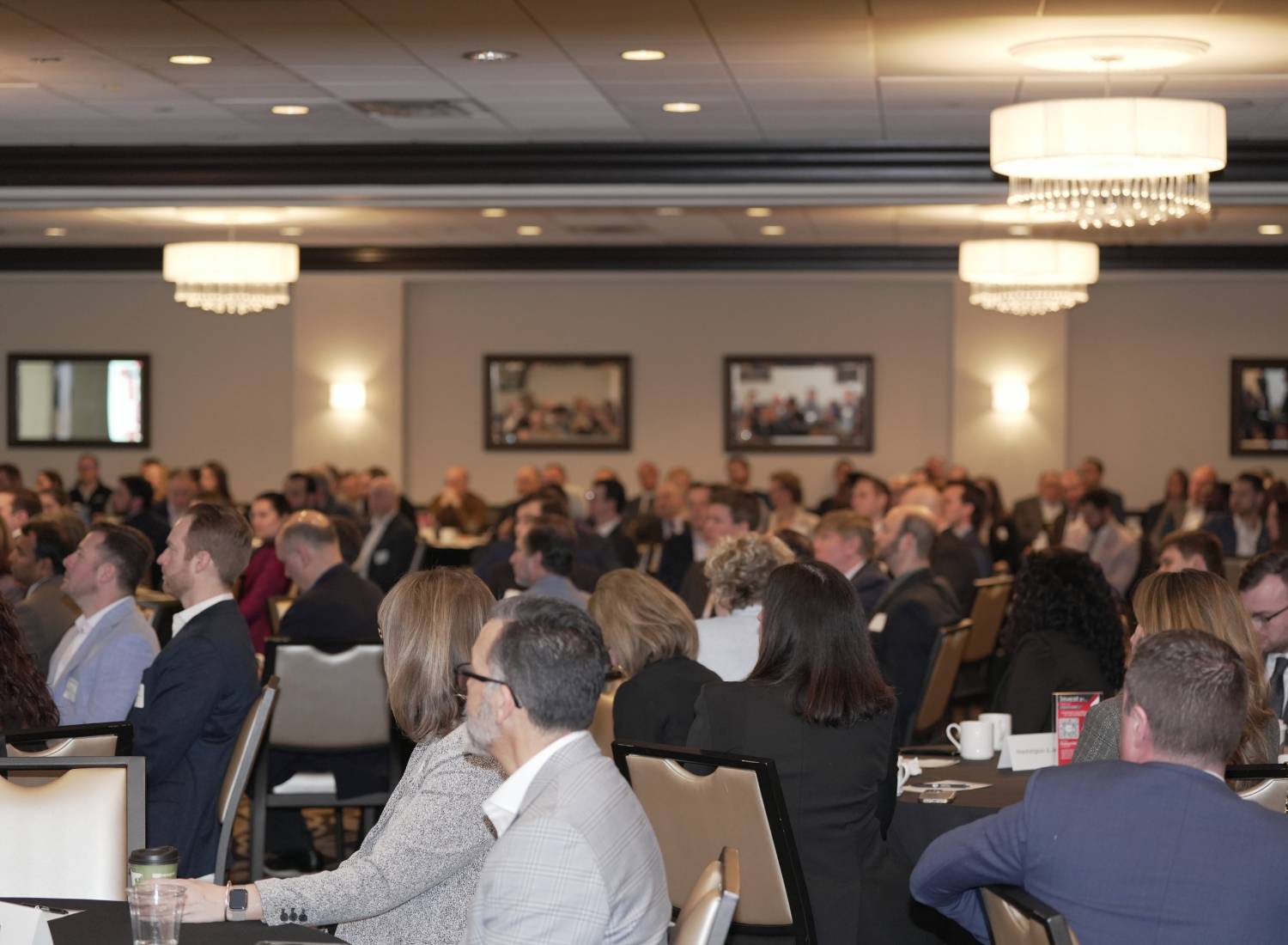
Invest PittsburghFebruary 2026 — Business and civic leaders from across Southwestern Pennsylvania gathered for the Invest: Pittsburgh Leadership Summit, where discussions centered on workforce readiness, leadership development, and the partnerships shaping the region’s economic future.


Join us at caa’s upcoming leadership summits! These premier events bring together hundreds of public and private sector leaders to discuss the challenges and opportunities for businesses and investors. Find the next summit in a city near you!


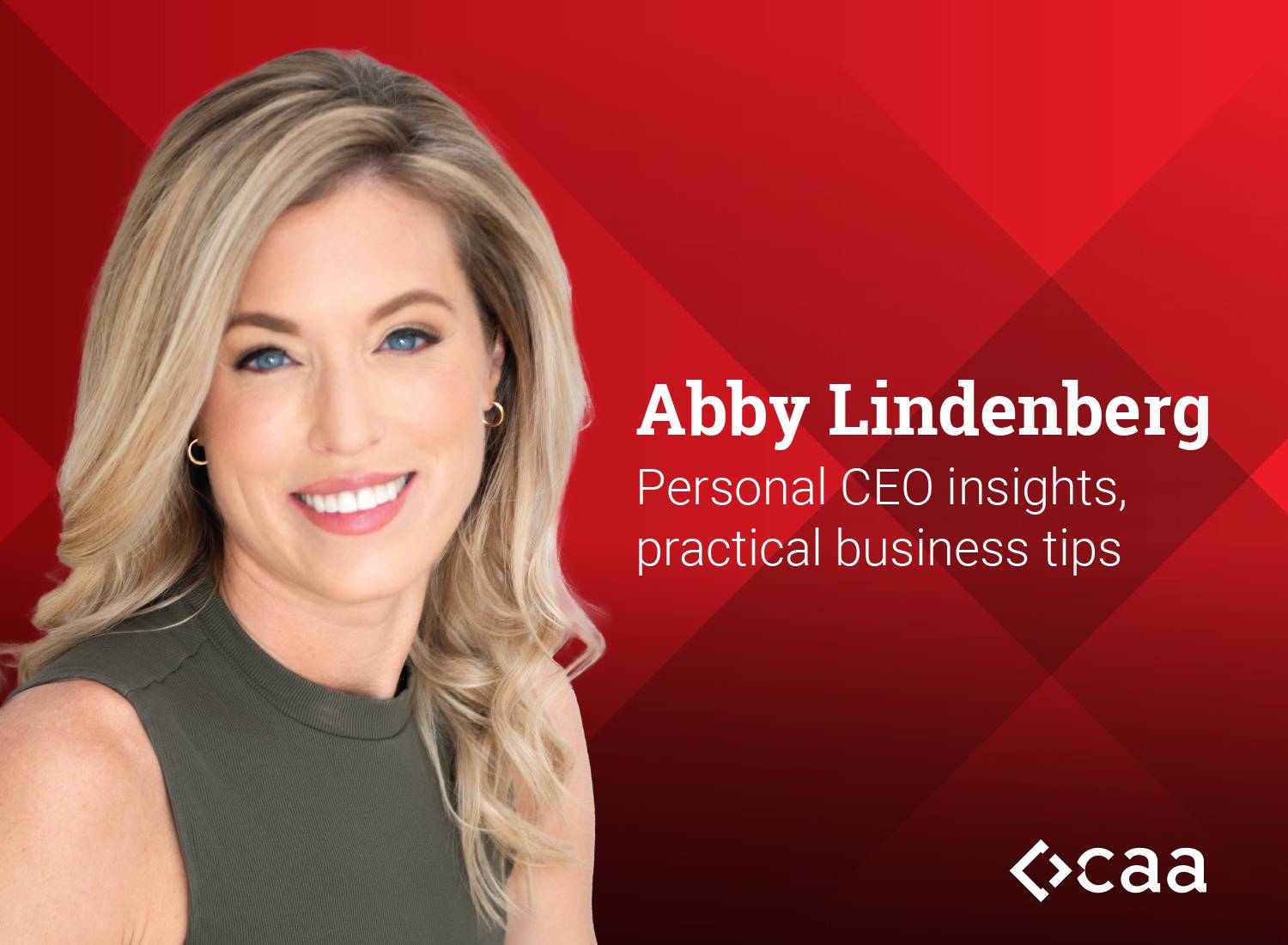
Abby Lindenberg, founder and CEO of caa, opened the program by reflecting on Pittsburgh’s identity — a city defined less by flash than by durability.

“There’s a toughness here. Not flashy. Not loud. Just steady,” Lindenberg said. “You’re a city that went from steel mills to robotics labs. From industrial backbone to innovation hub. You don’t just reinvent — you rebuild. And you do it together.”

The program began with a fireside chat between Corey O’Connor, mayor of the city of Pittsburgh, and Lindenberg, focused on civic leadership, regional competitiveness, and community engagement.

“It’s being active… but also making sure everyone gets a voice,” O’Connor said.


Become a member today to access the latest edition of Invest: Pittsburgh.


Innovation at Work

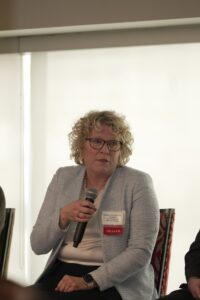
The opening panel, “Innovation at Work: Which sectors are reshaping the skills landscape, and how are employers and educators collaborating to close skills gaps?”, explored how shifting industry needs are influencing Pittsburgh’s workforce and skills ecosystem.

The session was presented by David Adair, senior vice president of health system business development at CarepathRX and UPMC Chartwell, and moderated by Martin Kimmel, president of Kimmel Architecture. Panelists included Guy Amatangelo, president of Mariani & Richards Inc; Christina Clark, president of La Roche University; Prasad Vemala, dean of the Haverlack College of Business at Slippery Rock University; and Sally Schufreider, market leader and general manager at Cigna Healthcare.

Panelists pointed to rapid technological change, demographic shifts, and evolving workplace expectations as forces reshaping hiring and training strategies. Employers and educators, they said, are working more closely to align curriculum with real-time industry needs, expand experiential learning, and support continuous upskilling.

“The reality is there are five generations in the workforce today that work very differently,” said Schufreider.

Speakers emphasized that sustained collaboration between business and academia remains one of Pittsburgh’s competitive advantages.

Next-gen leaders

The second panel, “Next-Gen Leaders: How will the ‘leaders of the future’ differ from today’s leaders, and what can employers do now to train the next-gen pipeline?”, turned to succession planning and leadership development.

Presented by Regis Etzel, president of Etzel Engineer and Build, Inc., and moderated by Karen Wolk Feinstein, president and CEO of the Jewish Healthcare Foundation, the panel featured Bethany Bryant, regional director at Glenmede; Joseph Thompson, senior vice president and branch manager at Baird Pittsburgh Riverfront & Wexford; Ken Scaggs, market president at AON Pittsburgh; and Stephen Girard, vice president, C&I Sales – East Region at NRG.

Speakers argued that future leaders must be comfortable navigating ambiguity, leading hybrid teams, and fostering cultures that prioritize both performance and purpose. Mentorship, structured development programs, and clearer leadership pipelines were cited as essential tools for retention and resilience.

“When people come into the office… I think leadership has to make sure they are available and willing to see people,” Girard said. “They should understand why they are there and what they are doing. I think that’s what makes the difference and can bridge the gap in this hybrid world that we’re living in.”

Panelists agreed that partnerships can accelerate leadership readiness and reinforce the region’s long-term competitiveness.

From campus to company

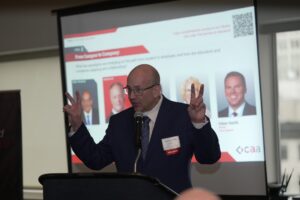
The final panel, “From Campus to Company: What new paradigms are emerging on the path from student to employee, and how are educators and companies adapting and collaborating?”, focused on the evolving transition from higher education to the workforce.

Moderated by David Ballard, vice president at One Mind at Work, and presented by Douglas Chew, commissioner of Westmoreland County, the discussion included Elizabeth MacLeod Walls, president of Washington & Jefferson College; Roger Davis, president of Community College of Beaver County; and Adam Smith, partner at Forvis Mazars.

Discussion centered on experiential learning, employer-embedded curricula, internships, and other models designed to shorten the distance between classroom and career.

“We cultivate skilled, adaptive minds… What I’ve been hearing all morning from the employers in the room is that technical skills are really important but we also need those next-level leaders to step into our organization to be able to adapt and problem solve,” MacLeod Walls said.

Panelists concluded that modernizing education-to-employment pathways is critical to attracting talent, strengthening workforce alignment, and sustaining long-term economic growth across the Pittsburgh region.

To watch the panel discussions from our Invest: Pittsburgh Leadership Summit, stay tuned to our Youtube Channel.

About caa & Invest: Pittsburgh

caa is an integrated media platform that produces in-depth business intelligence through its annual print and digital economic reviews, high-impact conferences and events, and top-level interviews via its video platform, Invest:Insights.

Invest: Pittsburgh is an in-depth economic review of the key issues facing the Southwestern Pennsylvania economy, featuring the exclusive insights of prominent regional leaders. Invest: Pittsburgh is produced with two goals in mind: 1) to provide comprehensive investment knowledge on the region for local, national, and international investors, and 2) to promote the region as a place to invest and do business.

The report conducts a deep dive into the top economic sectors in the region, including technology, real estate and construction, infrastructure, banking and finance, healthcare, education, and tourism. The publication is compiled from insights collected from more than 200 economic leaders, sector insiders, political leaders, and heads of important institutions. It analyzes the leading challenges facing the market and uncovers emerging opportunities for investors, entrepreneurs, and innovators.

For more information, please contact:

Danielle Karlinsky

Executive Director

(305) 340-2730

Invest Pittsburgh

Invest Pittsburgh

Invest Pittsburgh

Invest Pittsburgh

Invest Pittsburgh

Invest Pittsburgh

Invest Pittsburgh

Invest Pittsburgh

Invest Pittsburgh

Invest Pittsburgh

Become a member today to access the latest edition of Invest: Pittsburgh.

 

No Playbook: Leadership in the Face of Uncertainty

Key points:

  • • Rare diseases expose families to profound uncertainty, with most lacking approved treatments.
  • • Leadership is forged in moments without clear answers, requiring action despite incomplete information.
  • • Progress depends on resilience, preparation, and contributing where control is possible.

UncertaintyFebruary 2026 — Every Feb. 28, Rare Disease Day comes and goes. For most people, it’s a date on a calendar. For some of us, it’s a lived reality. When you’re a parent sitting in a doctor’s office hearing, “We don’t know what this is,” uncertainty stops being theoretical. It becomes your life.


Join us at caa’s upcoming leadership summits! These premier events bring together hundreds of public and private sector leaders to discuss the challenges and opportunities for businesses and investors. Find the next summit in a city near you!


The fact is that 1 in 10 Americans is affected by a rare disease. There are more than 7,000 identified rare diseases worldwide. But nearly 95% have no approved treatment. No cure. No clear roadmap.

How’s that for uncertainty? And how on earth do you push through?

What I’ve come to understand — as a mother, as a founder and CEO, and now as vice president of ISMRD — is that leadership is forged in exactly these moments.

Not when the path is obvious, but when it isn’t.

The Diagnosis That Didn’t Come

When my daughter Layla began showing signs that something wasn’t right, I did what any parent would do: I went to doctors. Lots of them.

One.
Two.
Five.
Thirteen.

More than 13 doctors, in America and abroad, and not one could definitively tell me what was happening. It took me close to three years to finally get the diagnosis. Many families go to far more. Some spend years searching for answers.

There is a particular kind of exhaustion that comes from sitting across from experts who don’t have one. You leave with more questions than you arrived with. I grew more unsettled and more frustrated.

Eventually, you realize something every leader recognizes at some point: No one is coming to hand you the solution. If progress is going to happen, you are going to have to help create it.

Leadership Is Not Certainty

What I’ve experienced in my years running my company, caa, is that people often assume leadership means confidence, clarity, decisiveness. But those qualities are often the result, not the starting point.

Real leadership is about what you do when there is incomplete information. When the path to success hasn’t been paved yet.

When I started caa, I didn’t have outside capital. I didn’t have investors guiding the strategy. I didn’t have someone mapping the expansion playbook for me.

I had to figure out what I didn’t know. I then needed the discipline to ask better questions.

When I prepare to interview a CEO, I do deep research. I study the industry. I look for patterns. I push past surface answers. When the stakes are high, preparation matters.

After I finally received Layla’s diagnosis and knew her health was on the line, that same muscle activated, but at a whole different level. I spoke to every parent who would talk to me. I spoke to every association, specialist, and every center with even limited experience in her condition.

The decision to take her to Minneapolis came after relentless research and difficult conversations. It wasn’t convenient. It wasn’t certain. It absolutely wasn’t easy. I was having these discussions fighting back tears. I still have mountains of notebooks documenting each and every conversation, water marks smudging the ink. But I knew all these conversations were essential to make the decision I knew I would have to make: how to give her the best chance at a future.

That is what leadership looks like in uncertainty. You move with the best information available, even when it’s incomplete, because waiting for perfect clarity is a luxury leaders rarely have.

Something Borrowed: Strength in Its Purest Form

For a parent — and for anyone, I imagine — there is nothing worse than watching a child suffer. During Layla’s treatment, which was a bone marrow transplant, there were days when her hair was falling out from chemo. She was so thin because she couldn’t eat. There were wires coming out of her chest to make bloodwork and transfusions easier. A G-tube supported nutrition. Machines and monitors dinging all the time, surrounding a child who should have only known playgrounds and birthday parties.

It was devastating to watch.

And yet, every single day, she got out of bed. Every single day, she ate something; not much, but something. Every single day, she played with therapists and volunteers. Every single day, she put on her princess dresses.

The doctors were shocked at how strong she was. And she gave me strength. When I felt emotionally paralyzed by fear, she modeled resilience in its simplest form: show up anyway.

Leadership isn’t always loud. Sometimes it is quiet endurance.

Taking Control Where You Can

Today, as vice president of ISMRD, I see uncertainty at scale. Families navigating diagnoses without treatments. Researchers racing against time and limited funding. Diseases most people have never heard of.

With rare diseases, we cannot control timelines. We cannot promise outcomes. We cannot will cures into existence. But we can control contribution.

This means funding research, advocating and building infrastructure. It also means bringing the right experts into the room and moving science forward incrementally.

Leadership, at its core, is about taking ownership of what is within your control, and acting there relentlessly. That applies in healthcare, business, and in life.

You may not control market shifts. You may not control economic cycles. You may not control every outcome. But you control preparation. You control effort. You control the questions you ask. And you control the contribution you choose to make.

The CEO Parallel

As CEOs, we operate in uncertainty every day: markets shift, technology evolves, talent moves, and industries disrupt themselves overnight.

The instinct can be to wait — for more data, more assurance, more stability — but the leaders who move organizations forward are those who make informed decisions with imperfect information, rather than waiting for perfect clarity.

Strong leaders do the homework, build strong networks, and ask sharper questions. Then, they take the next step. When doubt creeps in, they borrow strength from mentors and peers. And sometimes even from the unexpected resilience of a child in a hospital bed.

A World of Uncertainty

Rare Disease Day is a reminder of how much uncertainty exists in the world. But it is also a reminder of something else: Progress does not require certainty. It requires commitment.

When there is no playbook, leaders write one.

When there is no guarantee, leaders contribute anyway.

And when the outcome is unclear, leaders focus on what they can control — and move. That is true in both the boardroom and the hospital room.

In both places, I’ve learned the same lesson: You don’t wait for certainty. You lead through it.

Want more? Read the Invest: reports.

How the K-Shaped divide is reshaping US housing

Key points:

  • • First-time buyers are at historic lows as affordability pressures favor equity-rich and investor buyers.
  • • Housing costs now far exceed traditional income thresholds, widening generational wealth gaps.
  • • Supply constraints and investor competition are deepening regional and economic divides.

HousingFebruary 2026 — In America’s K-shaped housing economy, first-time buyers are getting squeezed out of the market, while high-net worth investors continue to capture a greater portion of transactions and exert more sway over pricing. This divergence is repositioning where capital flows and who accumulates wealth through real estate.


Join us at caa’s upcoming leadership summits! These premier events bring together hundreds of public and private sector leaders to discuss the challenges and opportunities for businesses and investors. Find the next summit in a city near you!


“Unfolding in the housing market is a tale of two cities,” Jessica Lautz, deputy chief economist at the National Association of Realtors (NAR), said in a recent analysis. “We’re seeing buyers with significant housing equity making larger down payments and all-cash offers, while first-time buyers continue to struggle to enter the market.”

According to Lautz, homeownership is becoming increasingly concentrated at the top of the K-shape, particularly among higher-income households and older generations.

At this upper end of the market, demand remains relatively stable, despite elevated home prices and mortgage rates. However, for first-time and entry-level homebuyers struggling with low wage growth, the effect is the opposite. 

Generational imbalance

NAR data shows that first-time homebuyers are disappearing in the United States. Baby boomers now account for a larger share of home purchases than millennials, despite millennials being the nation’s largest adult cohort.

According tothe analysis, first-time buyers account for just 21% of U.S. home purchases — near historic lows. Additionally, the typical first-time buyer is now 40 years old, highlighting how the timeline to ownership has shifted compared to prior generations.

As a result, older homeowners have been able to maintain purchasing power, leveraging decades of equity accumulation to outcompete younger buyers in bidding situations.

Sellers, too, are holding on to supply for longer, further constraining inventory. According to the NAR report, existing homeowners spend a median of 11 years in a house before selling — an all-time high.  

“The historically low share of first-time buyers underscores the real-world consequences of a housing market starved for affordable inventory,” added Lautz. First-time buyers today will both accumulate less wealth and move fewer times over a lifetime as a result.  

The growing divide 

Homeownership today is more unaffordable than it was at the peak of the 2006 housing bubble, according to the Atlanta Federal Reserve’s “Home Ownership Affordability Monitor” (HOAM). In fact, as of December 2025, the income required to afford a median-priced home ($398,667) is tens of thousands of dollars higher than what the typical U.S. household earns.  

HOAM’s Affordability Index shows the average household would need to spend roughly 42% of its annual income to purchase a median-priced home — well above the traditional 30% threshold.

That gap has expanded dramatically since 2021, effectively discouraging move-up buyers from purchasing and locking in existing homeowners into sub-4% mortgages. This has limited supply, leaving the market increasingly dependent on higher-income households and equity-rich repeat buyers.

“Affordability is the biggest trend, and it touches everything,” Brian Batten, division president of Lennar Homes, told Invest: Tampa Bay. “For the first-time homebuyer, we need to get home prices and the monthly payment down to a point where it is affordable for the majority of people.”

Regional bifurcation 

In competitive markets, investors are paying significant premiums, sometimes 35% above local median prices. Meanwhile, in more affordable markets, they are targeting lower-priced inventory, placing them in direct competition with entry-level buyers.

This is because investors face fewer headwinds than many typical buyers, according to Danielle Hale, chief economist at Realtor.com.

“With affordability still stretched and inventory tight, many would-be buyers remain sidelined, giving investors a larger share of the market and, in some areas, more influence over prices,” said Hale, as cited by National Mortgage Professional. 

As Hale explained, when investors focus on already competitive price ranges, it can push prices up even further, creating broader macroeconomic stratification and geographic imbalances. 

Performance gaps

As a result of these affordability gaps, the housing market is becoming increasingly unequal in terms of regional performance.  

“(We) have a market that continues to be very bifurcated,” said Selma Hepp, chief economist of the global information services company, Cotality

As Hepp observed, U.S. regions with stronger wage growth and labor markets have seen significant home price gains. By contrast, other markets — particularly those that had relied heavily on in-migration from wealthier households — are now facing greater instability. 

“On the flip side, you have markets that are now in this very uncertain situation because demand (and) in-migration to those markets has slowed,” she added.

According to Hepp, those areas depended on migration from those higher-income households. However, slower growth has led to more lower-income households relative to prior years, raising inventory levels (particularly those skewed to higher-price assets) and leaving conditions on less stable footing.

Barriers at the bottom 

For the bottom 50% of households (nearly 67 million homes), real estate wealth is an increasingly distant target.  According to a policy brief from the Ballard Center at Brigham Young University, this is mostly because of elevated home prices, limited starter-home supply, and higher mortgage rates. 

Housing economists widely agree that homeownership remains one of the most significant drivers of wealth in the United States. Yet, younger households now hold less wealth at comparable ages than previous generations did, limiting their ability to accumulate down payments.

The economic ramifications are significant, according to Jason Tigano, CEO of non-profit community advocacy group LEVEL Communities.  

In many metropolitan areas, for instance, the lack of affordable housing units means higher transportation costs and increased economic inequality, leading to less economic mobility and a widening wealth gap between generations.

“Areas with high percentages of homeowners have higher quality of life indicators, including education, health, civic engagement, and financial stability,” Tigano told Invest: Pittsburgh. “It’s about time we addressed this issue with a lasting solution.”

Like Tigano, NAR executive vice president and chief advocacy officer, Shannon McGahn, believes there are opportunities to rebalance the K-shaped housing market. 

“We need solutions that encourage more owners to sell, revitalize underused properties, streamline local zoning and permitting barriers, and modernize construction methods to build more homes faster and more affordably,” said McGahn in the analysis.

Want more? Read the Invest: reports.

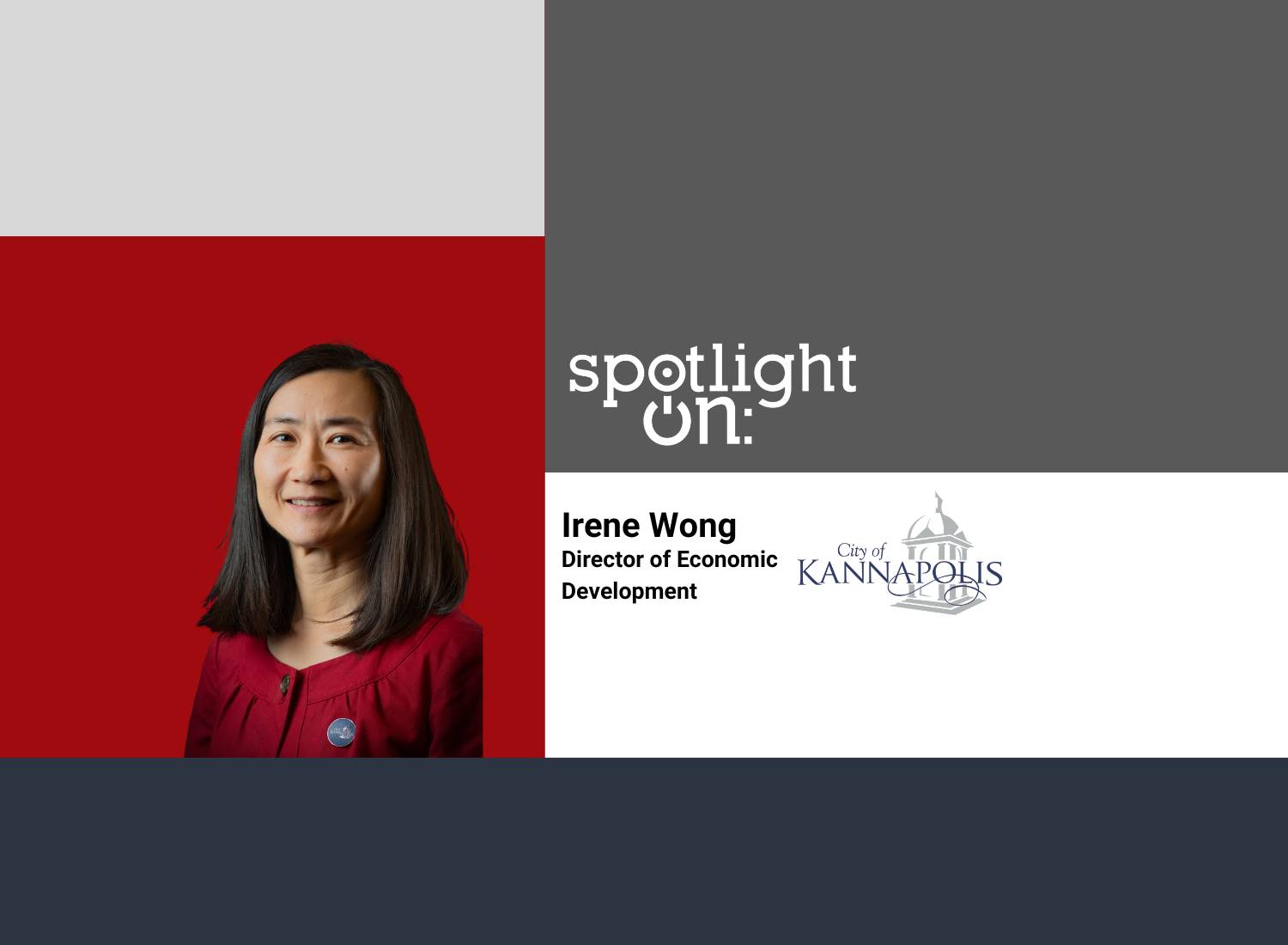
Spotlight On: Irene Wong, Director of Economic Development, City of Kannapolis

Key points:
  • Kannapolis is leveraging $115M+ in downtown investment and rising foot traffic to drive destination-based growth.
  • Industrial expansion, especially in logistics and advanced manufacturing, is accelerating across Cabarrus and Rowan counties.
  • Leaders are balancing infrastructure constraints and historic preservation while targeting quality jobs and research campus revitalization.

Irene Wong spotlight onFebruary 2026 — In an interview with Invest:, Irene Wong, director of economic and community development in Kannapolis, discussed how the city is leveraging downtown revitalization and industrial growth to shape its economic future. She noted a 20% increase in downtown foot traffic and over $115 million in investment. “For those who haven’t visited in a while, it’s a completely different place now. There’s a new energy and excitement downtown,” Wong said.


Join us at caa’s upcoming leadership summits! These premier events bring together hundreds of public and private sector leaders to discuss the challenges and opportunities for businesses and investors. Find the next summit in a city near you!


What developments have shaped Kannapolis’ economic growth strategy over the past year?

We continue to grow with a population of almost 60,000. By regional standards, that isn’t necessarily huge, but we’ve continued to see steady growth as part of the Greater Charlotte region. We are focused on quality-of-life investments like parks, greenways, and repairing aging infrastructure.

One thing we’re particularly proud of is our downtown and how much revitalization has taken place since we began working on it in 2015. We have over 50 new businesses, including a variety of restaurants, that have opened in downtown since 2020. We’ve increased downtown foot traffic by 20% in just the past year. People are now visiting Kannapolis as a destination; they ride the train from Raleigh or Greensboro and spend the day here, which is great to see.

What patterns are you seeing in the types of companies being drawn to Kannapolis?

We’re still seeing strong interest from distribution facilities, largely due to our location along I-85 and proximity to the broader regional market, including Greensboro. We’re well-positioned for that industry.

We’ve also seen growing interest from food and beverage manufacturers, as well as advanced manufacturing, particularly in sectors like batteries and electric vehicles. In addition, international companies are increasingly looking at this area, likely due to factors such as tariffs and workforce availability.

Traditionally, most of our growth has been on the Cabarrus County side of Kannapolis due to its proximity to Charlotte, but that’s starting to change. Growth in Rowan County has accelerated significantly, and we expect to see more development and announcements on that side in the coming years based on current developer interest.

How are you aligning recruitment strategies to maintain momentum in sectors like logistics, distribution, and advanced manufacturing?

We work closely with our economic development partners. Since Kannapolis spans both Cabarrus and Rowan counties, we coordinate with both county-level organizations as well as developers and brokers to keep communication flowing.

It’s important to have a variety of building sizes and types available so companies can find what they need. We’re working to maintain a broad inventory of options to stay competitive.

What makes Kannapolis a compelling location compared to other markets?

We’ve been able to maintain a small-town feel while being part of the growing Charlotte market. People choose to live and work in Kannapolis because of that character. It’s affordable, and the quality of life is high. We’re proud to have preserved that atmosphere. Our downtown truly is a gem for the region.

How do you balance preserving Kannapolis’ historic identity with the modernization needed for growth?

It’s always a challenge to address growth while maintaining that small-town character. As we make quality-of-life investments, we try to keep the city’s history in mind. Kannapolis has deep roots in textile manufacturing, and we want to retain the elements that make it unique.

At the same time, we’re managing more traditional growth — industrial and residential — and working to ensure it doesn’t come at the expense of our identity. Fortunately, our elected leadership shares that priority. We have been able to preserve and restore two historic theaters, and we are looking at ways to bring new life into some older commercial corridors. 

What impact has the downtown revitalization made so far, and how is that momentum shaping future planning?

In 2015, the city bought essentially the entire downtown with the goal of revitalization. Since then, we’ve invested over $115 million. We’ve built a new baseball stadium, added residential development, and increased downtown property values by more than $100 million — about six times what they were before.

We’ve added around 500 residential units, with another 80 expected by spring and more planned. For those who haven’t visited in a while, it’s a completely different place now. There’s a new energy and excitement downtown. We have the Kannapolis Cannon Ballers minor league baseball team, the Bank Food Hall, some unique entertainment options like Game Show Arena and the Slot Car Track, and for music and racing fans, the North Carolina Music Hall of Fame and the Curb Museum of Music and Motorsports. 

With the city’s growth, what are the biggest infrastructure needs?

Cabarrus County is currently facing a significant challenge with limited sewer treatment capacity. That’s a relatively recent issue, forcing municipalities to make difficult decisions about the pace and type of development they can support.

We’re focused on finding cost-effective ways to expand sewer capacity and managing the type of growth we allow as a result. It’s probably our most pressing infrastructure concern right now.

What role do Kannapolis’ cultural and entertainment assets play in placemaking and economic development?

Our downtown has become primarily an entertainment district. We don’t have a lot of office development like a traditional downtown, so it’s evolved into a destination for those seeking entertainment.

We’ve restored the historic Gem Theatre and made it a place the community can enjoy for years to come. We also took over operations of the Swanee Theatre, now a live music and entertainment venue. The ballpark hosts not only Cannon Baller baseball games but also festivals and community events year-round. We are selling out concerts, movies, and events on a regular basis. With nearby free or affordable public parking and a walkable, safe downtown, Kannapolis is a premier visitor location.

All three venues are major drivers of downtown traffic and help connect people to what makes Kannapolis special.

What are you hearing from employers about the local workforce, and how are you working with education providers to strengthen the talent pipeline?

Workforce is top of mind for many companies. We work closely with Rowan-Cabarrus Community College, our main workforce development partner. They’re responsive to industry needs. For example, they’ve built an aseptic lab to train workers for Eli Lilly, which is a major project for the county. That facility will also support future life sciences manufacturing. The college also offers basic training programs, like truck driving and construction, where we still see workforce shortages. Having that training capacity is incredibly important.

What are your top economic development priorities for Kannapolis over the next two to three years?

First, continuing to grow and develop downtown to build on the investments we’ve already made.

Second, we need to chart a new direction for the North Carolina Research Campus. That development is underutilized right now, and we need to rethink how it can better serve the region.

Lastly, on the industrial side, we’ve added about 2.5 million square feet of space in the last five years, with another 5 million planned or underway. Recruiting quality companies with good-paying jobs to fill those buildings is a major focus for Kannapolis.

Want more? Read the Invest: Charlotte report.


Spotlight On: Jeff Burns, Owner & CEO, Affiliated Development

Key points:

  • • Rising costs and constrained equity have made public incentives essential to delivering workforce housing in South Florida.
  • • The Live Local Act and faster entitlements are accelerating approvals and reshaping affordable housing feasibility.
  • • Strong demand persists, but public-private partnerships remain critical to closing the financial gap and scaling supply.

Jeff Burns spotlight onFebruary 2026 — Invest: sat down with Jeff Burns, owner and CEO of Affiliated Development, to discuss how rising costs, constrained capital, and Florida’s affordability crisis are reshaping housing development across the region. “Every project we do is a public-private partnership,” Burns said. He shared why incentives, faster entitlements, and sustained government involvement are now essential to delivering workforce and affordable housing at scale in South Florida.


Join us at caa’s upcoming leadership summits! These premier events bring together hundreds of public and private sector leaders to discuss the challenges and opportunities for businesses and investors. Find the next summit in a city near you!


What changes have you seen in the industry over the past year, and how have they impacted Affiliated Development’s approach?

One of the biggest changes we’ve seen is the growing role of artificial intelligence. Over the past year, at least as far as Affiliated Development is concerned, we’ve started incorporating more AI into various aspects of what we do, and that has had a meaningful impact operationally.

Another major shift has been in deal flow. We’ve seen significantly more opportunities on the land-buying side than in previous years. There are a lot of landowners who are eager to sell, and that’s allowed us to negotiate much more favorable acquisition terms. That has been a challenge in past years, so seeing more flexibility on land pricing has been an important change for us.

How are current market conditions, including capital constraints and housing pressures, influencing how and where you’re choosing to invest?

From a capital standpoint, equity markets are still fairly challenging, but the debt markets have loosened up considerably. Banks and other construction lenders are much more eager to put money out right now, and that has been a positive development for us.

There are still headwinds, particularly when it comes to costs. Development costs remain a challenge. That said, over the past year we’ve seen some relief on the operational side. Salaries haven’t increased at the same pace they did in prior years, and the insurance environment has become much more favorable. Those changes have helped offset some of the pressure.

On the rental side, there has been a significant amount of new product delivered across various markets. As a result, rents have not increased as aggressively as they did in previous cycles. That creates underwriting challenges when expenses continue to rise but income does not increase at the same pace. When that imbalance persists, projects get shelved and stop moving forward.

There’s a statistic we’ve seen showing that there hasn’t been a bigger discrepancy between new housing starts and housing finishes since 1971. That tells us that not much new product has been started over the last year to year and a half. Eventually, that inventory will be absorbed, landlords will regain leverage, and rents will start to increase again. That shift should help more projects begin to pencil out and move forward.

How are rising material and capital costs influencing your project pipeline?

Our business model is different from traditional market-rate development because we rely heavily on public incentives to fund a portion of the capital stack. As costs have increased, we’ve had to secure more incentives to help offset those increases.

Because of that structure, we’ve been less impacted than many market-rate housing developers, who are feeling these pressures much more acutely. The use of public incentives has allowed our deals to continue making sense.

We recently delivered a high-rise project in Hollywood. We’re delivering another project in West Palm Beach in January. Earlier this year, we started a 400-unit project in Fort Lauderdale, and we’re preparing to start a 336-unit project in Boynton Beach. We are still moving projects forward, but it has become significantly more challenging to get them started than it was in prior years.

How has your team’s thinking around affordability or mixed-income development evolved in response to today’s pressures?

South Florida is experiencing an affordability crisis unlike anything we’ve seen before. Demand for workforce housing is extremely strong. Fortunately, our product type is well aligned with that demand. Once our projects are completed, they lease up very quickly.

The most difficult part is simply getting projects built. Making sure they pencil out requires a tremendous amount of coordination and effort. We’re fortunate to have a strong team that has worked very hard to make these developments feasible despite the challenges.

What kind of momentum are you seeing around public-private collaboration, and how is it evolving compared to earlier cycles?

Public-private collaboration is more important now than ever. Workforce and affordable housing is incredibly difficult to deliver under current conditions, and the government has a critical role to play. Without public support, many of these projects simply would not get built.

Every project we do is a public-private partnership. That has always been the case, but today we’re seeing cities, counties, and the state become much more proactive about incentivizing the workforce and affordable housing.

As affordability challenges have expanded beyond South Florida into nearly every major market in Florida, the role of government has grown. One of the most impactful developments has been the passage of the Live Local Act, which has been a major policy win. It’s already having a significant effect and will result in a substantial increase in workforce and affordable housing units across the state.

What local policies or partnerships tend to unlock the greatest potential for meaningful development in Florida?

The Live Local Act has been the most meaningful policy we’ve seen. We have a project that received approvals in just three months.

Without the Live Local Act, that same process would likely have taken at least a year and a half. The ability to move more quickly through entitlements has been transformative. It has fundamentally changed what is possible from a development standpoint and has been a true game changer for workforce and affordable housing in Florida.

Where do you think cities or developers still need to rethink their assumptions about addressing the housing gap at scale?

At the end of the day, the biggest factor is money. Costs are costs. My cost to build a project is the same as anyone else’s cost to build a project. The challenge arises when developers are asked to rent units at prices below market rates. Without support, those deals simply do not pencil out.

That’s why funding incentives and gap financing are essential. They help offset the lost revenue associated with below-market rents. Without that support, projects do not move forward.

Policies like the Live Local Act help by accelerating timelines and improving entitlement processes, but financial incentives remain the determining factor. These deals do not happen unless the government steps in to help bridge the gap.

Another challenge is the uneven financial capacity of municipalities. Some cities have more resources dedicated to affordable and workforce housing than others. In markets with fewer resources, it becomes much harder to make projects work.

Local governments across Miami-Dade, Broward, and Palm Beach counties understand the severity of the housing crisis and the need to incentivize development. Still, developers must compete for land against market-rate projects, condominiums, and hotels that can extract more value and therefore pay more for property.

That reality makes it difficult to deliver workforce housing while absorbing market-rate land and construction costs. Managing that imbalance remains the biggest challenge we face.

Want more? Read the Invest: Greater Fort Lauderdale report.


Yelena Epova, Atlanta Office and International Practice Leader, and Tax Partner, Aprio

Interview with FocusIn an interview with Focus:, Yelena Epova, Atlanta Office and International Practice Leader, and Tax Partner at Aprio, discussed the firm’s growth and evolving strategies in Atlanta. “Atlanta remains our headquarters and has experienced the largest growth,” Epova said, sharing insights on talent acquisition, technology integration, and navigating economic challenges, such as tariffs.


 

Reflecting on the past year, what have been the most significant changes for the Atlanta office of Aprio?

We continue to grow across all locations, but Atlanta remains our headquarters and has experienced large growth. This growth has been primarily organic, although we have also made a few small acquisitions and brought in lateral partners in the region. At this point, we have more than 400 team members in Atlanta, and the office serves as a hub for many of our specialty practices. 

Over the past year, we have significantly expanded our middle-market and high-growth company client base. We have also brought in a substantial amount of global clients and continue to grow our international practice. Our team now speaks more than 60 languages across all offices and markets, Atlanta remaining the most international location, as the global practice originated here. The office has become a true melting pot of languages, with English sometimes feeling like the exception rather than the rule. This diversity brings me great joy, as it reflects the environment and clients we serve across the globe. 

What impact do you believe the acquisition of RSM’s Professional Services+ (“PS+”) Practice will have on your client relationships and opportunities in the Atlanta market?

The acquisition of RSM’s Professional Services+ (“PS+”) Practice involves a network of firms to which we will provide specialty services they currently do not offer. This presents a significant growth opportunity and allows us to expand our service offerings to a broader range of clients.

With lateral partners and other mergers, growth remains a primary focus, but acquiring talent is equally important. These partnerships allow us to strengthen areas where we are already successful while also bringing in new experience, technical skills, and service lines. Some of this talent is based in Atlanta, while other additions are located elsewhere in the country. However, we operate seamlessly as a team, and clients increasingly prioritize talent over physical location. That said, in-person meetings and face-to-face interactions still hold value.

How has your hiring strategy evolved, and what challenges or opportunities are you seeing in attracting and retaining top professionals?

One of the primary challenges is the declining number of individuals entering the profession. Demand for skilled professionals remains high, and competition among firms is intense. However, our position as the 24th largest business advisory and accounting firm in the United States gives us a competitive edge in attracting talent.

Our diverse service lines and global presence are major selling points. Many candidates are drawn to the opportunity to work with international clients in their native languages. In addition, our entrepreneurial culture — marked by rapid growth, expansion into new markets, and continuous innovation — appeals to young professionals seeking dynamic career paths.

The nature of the work has also evolved. When I began my career, much of the work involved data entry and low-level tasks. Today, we leverage AI to balance routine work, allowing our team members to spend more time with clients, focus on analysis, strategic planning, and higher-value tasks. This shift makes the profession more engaging and is another advantage in recruiting top talent.

How is technology, including AI and data analytics, shaping the way your firm delivers services and ensures operational efficiency for clients?

We have a dedicated technology team that continuously evaluates emerging technologies and brings new tools to the table. While there can be some resistance to change, particularly when introducing new software, these tools ultimately save time, improve efficiency, and enable us to work smarter. At Aprio, we believe AI should enhance human intelligence, not replace it. 

Staying ahead of technological advancements is a priority. Clients’ needs are becoming increasingly complex, and automation allows us to focus on strategic initiatives, such as tax planning, rather than repetitive tasks. By leveraging technology, we ensure our team spends more time on high-impact work and delivers greater value to clients.

Looking at current economic conditions, how have tariffs impacted your clients and your firm’s approach?

Tariffs have definitely come into play. About three years ago, we launched a customs and tariffs practice as part of our international group. 

Since then, we have continued building the practice, strengthening our market presence, and expanding our services to help clients mitigate tariff impacts. As a result, our customs and tariff practice has become one of the fastest-growing practices at the firm, and our customs specialists are now in high demand given current market conditions.

Because of our extensive experience in this area, clients frequently come to us when they encounter any tariff-related challenges. In many cases, we can help minimize the impact—not by changing the law, but by identifying applicable exemptions for certain products, such as pharmaceuticals. We also support clients, particularly within our manufacturing and distribution practice, in evaluating potential supply-chain challenges. That includes assessing how goods are delivered, where they originate, and even whether relocating manufacturing operations makes sense.

The goal of these policy changes may be to bring more manufacturing back to the United States, but that is not an overnight process. For clients that outsource production to unrelated companies in China, shifting to another country may be feasible. For those that own factories, the transition is far more complex and time-consuming. We work closely with clients to explore all options and help them remain profitable while adapting to these changes. It’s a dynamic environment, with developments occurring almost daily.

What are the biggest shifts you’re seeing in the consulting services sector, and how are you advising clients to prepare?

One of our key focuses is becoming even more consultative in nature. We don’t simply deliver audits and tax returns; we serve as business advisors across tax, accounting, advisory, wealth management, and legal services. Clients are searching for integrated platforms instead of working with multiple advisors in silos. Our role is to look at the big picture and support clients from multiple angles. We are working with our clients to prepare by strengthening the foundation of how they run the business while thinking more proactively about the future. This includes improving financial visibility, modernizing processes and technology, and approaching decisions with a more strategic mindset. Instead of reacting to change, we are here to set our clients up to be more resilient, scalable, and prepared for growth. 

What are your top strategic priorities for the Atlanta office as you look ahead?

Our priorities include continuing to grow organically in Atlanta, as well as through lateral partner hires and potential mergers or acquisitions, in alignment with the firm’s broader goals.

Another key focus is developing our team’s technical experience and business acumen. We emphasize this early by involving team members in client and prospect meetings, so they understand the business context of our work — not just debits and credits. My goal is for everyone to grasp the broader picture and become exceptional advisors, especially in an ever-changing economic and political climate.

Attracting top talent remains a priority, including professionals who can enhance our existing capabilities and potentially introduce new service lines. Finally, one of our major goals is to become the number one accounting employer in Atlanta — not necessarily by headcount, but by the quality of talent we attract. While the Big Four firms offer strong opportunities, what we provide goes above and beyond what is available elsewhere.

How Tampa Bay schools shape economic growth

Key points:

  • • Tampa Bay’s sustained in-migration is increasing pressure on K-12 systems as a core driver of long-term economic sustainability.
  • • Schools are leveraging partnerships with healthcare, arts, and civic institutions to connect classroom learning to real-world sectors.
  • • Population growth is fueling school expansion, renovations, and adaptive reuse while raising the stakes for quality and workforce readiness.

Tampa BayFebruary 2026 — Since 2020, Tampa Bay has experienced sustained in-migration, with the resident population increasing by about 7.4%, according to U.S. Census estimates. As housing supply expands and communities densify across the region, K-12 education is becoming one of the most important inputs to long-term economic sustainability.


Join us at caa’s upcoming leadership summits! These premier events bring together hundreds of public and private sector leaders to discuss the challenges and opportunities for businesses and investors. Find the next summit in a city near you!


Schools shaping communities

As Tampa’s urban core becomes more connected and institutionally dense, some schools are integrating city assets directly into student learning. Kevin Plummer, head of school at Tampa Preparatory School, described how proximity can translate into daily academic advantage. “Being a downtown school allows us to view the city as our classroom. On the science side, we partner with Tampa General Hospital, BayCare Health System, AdventHealth, and Moffitt Cancer Center,” Plummer told Invest:.

He also pointed to the role of arts and culture as part of a broader educational ecosystem. “Our art students regularly walk across the street to the Tampa Museum of Art, where many of them recently won Scholastic Art awards.” Location enables a smoother blend of curriculum and real-world experience, with Plummer noting, “Our proximity to institutions like the Straz Center makes it possible to integrate real-world experiences seamlessly into learning.”

In a growing region, these partnerships create earlier exposure to key local sectors such as healthcare and the arts and help students connect classroom learning to tangible career paths and community institutions.

How growth raises the stakes

Rapid population growth can boost demand for high-quality schools, but it also tests how institutions maintain identity and outcomes while scaling. Plummer described a challenge that emerges when a region becomes increasingly attractive. “Tampa’s growth has made it an incredibly attractive place to live, and for us, the challenge is finding what I call ‘mission-critical families.’ We want families who buy into our mission to think, create, be yourself, aspire to excellence, and go beyond,” Plummer said.

Families are not only choosing districts but also programs and environments that align with what they want for their children. Maintaining quality, culture, and student support becomes as important as increasing enrollment capacity.

More families means more classrooms

Population growth inevitably drives infrastructure pressure, and schools are part of that equation. Yet as land becomes scarcer and development intensifies, expansion often shifts from new builds to modernization, renovation, and adaptive reuse.

In an interview with Invest:, Jake Nellis, senior vice president and office leader for JE Dunn Construction in Tampa, said “Net migration means more schools, and given the finite supply of land, there is also an increased focus on renovations and adaptive reuse, rather than only new construction.”

Nellis also highlighted a practical constraint that defines education construction in growth markets. “We see that trend in both K-12 and higher education, and it is often tied to ensuring campuses remain operational while work is underway.”

A workforce strategy hiding in plain sight

Tampa Bay’s economy spans healthcare, finance, logistics, tourism, defense and a growing innovation ecosystem. While higher education and technical programs are critical to workforce readiness, the foundation is built earlier. Strong K-12 systems develop the basic and durable skills employers depend on — literacy, numeracy, communication, critical thinking, and teamwork.

As employers look for regions that can supply talent reliably, K-12 quality affects whether companies can recruit and retain employees, whether families see the region as a long-term home, and whether local students can grow into the workforce needs created by Tampa Bay’s expansion.

Want more? Read the Invest: Tampa Bay report.


Spotlight On: Mike Phillips, North Florida Commercial Market President, TD Bank

Key points:
  • • TD Bank is navigating Florida’s high-growth but normalizing economy by staying nimble and closely aligned with clients.
  • • A strong talent pipeline and people-first culture support long-term workforce development and retention.
  • • Through lending, philanthropy, and deep community investment, TD Bank is doubling down on regional economic impact.

Mike Phillips spotlight onFebruary 2026 — Mike Phillips is TD Bank‘s North Florida Commercial Market President. In an interview with Invest:, he discussed the dynamics of a rapidly growing Florida economy, TD Bank’s people-first culture, and the bank’s deep commitment to community impact across the region. As he looks ahead, Phillips sees both normalization and opportunity, with TD Bank doubling down on support for clients and communities. “If you think we’re supporting our communities and our clients now, we’re just getting started,” Phillips said.


Join us at caa’s upcoming leadership summits! These premier events bring together hundreds of public and private sector leaders to discuss the challenges and opportunities for businesses and investors. Find the next summit in a city near you!


How would you describe the commercial banking environment in North Florida, and how is it shaping your initial priorities?

It’s clear how active and dynamic this region is. Tampa Bay and North Florida have experienced significant population growth over the past few years, and while that growth is beginning to stabilize, it continues to drive opportunity across construction, retail, manufacturing, and other sectors. At the same time, clients are navigating higher interest rates, tariffs, and rising supply costs, all of which can change quickly from month to month. Our priority is to stay nimble and close to our clients so we can help them adapt their plans and work through a constantly changing economic environment.

In such a competitive landscape, how is TD Bank approaching talent recruitment, retention, and workforce development?

Banking is a very competitive industry for talent, so recruitment matters, but retention is just as critical. When you have great employees, everyone wants them, so we put a lot of emphasis on creating a culture where people feel supported and can clearly see a path for their careers. We want colleagues to feel that TD Bank is a place where they can grow, contribute, and achieve their long-term goals.

One of the things that has impressed me most, especially stepping into this new role, is how supportive our leadership community is – every market president across the bank reached out to congratulate me, shared their contact information and offered to help whenever I needed it. I’ve been with TD Bank for 18 years, and many of my colleagues have been here for a long time as well. That longevity is a direct reflection of our culture and how we take care of each other.

Are there particular partnerships or programs that support your talent pipeline in Florida?

We are fortunate to have a healthy talent pool in Florida, and we do partner closely with universities and other institutions. In some markets we offer internships that give college seniors hands-on experience inside the bank, and we continue to run credit training programs for new hires. Formal credit training has become less common in the industry, so we see it as a real differentiator that helps us bring in graduates, equip them with strong fundamentals and build careers with TD Bank from an early stage.

I recently served on a panel interviewing internship candidates, and in one day I spoke with eight students. They were bright, motivated, high-achieving young people with business and finance degrees, and by the end of the process I found myself acting as a mentor as much as an interviewer. It reinforced how much opportunity there is to develop the next generation of banking talent here.

From your vantage point, which trends in areas like digital banking, credit demand, and risk management stand out most in Florida today?

The overarching trend is the pace of growth. Florida’s economy has been expanding rapidly, and even as growth normalizes, I expect it will continue to outpace national averages because this is such a vibrant, attractive market. That creates tremendous opportunity but also complexity, because we are supporting so many diverse businesses across multiple industries.

Over the last couple of years, as interest rates, tariffs, and other economic factors shifted, many businesses felt they had solid plans in place, only to see conditions change far more rapidly than expected. A lot of those plans had to be revisited and rewritten. Our job is to stay close enough to our clients that we can help them reassess their strategies, manage risk and remain confident in their path forward.

How are you adapting TD Bank’s commercial strategy to respond to those trends and challenges on the ground?

Our strategy starts with deep relationships. We expect our relationship managers to stay in very close contact with their clients so we’re not simply waiting for year-end financial statements to tell us what is happening in their business. Because those relationships are active and ongoing, we can understand needs and trends in real time and respond more quickly. That allows us to be nimble with structure, timing, and solutions so we can support clients as conditions change, rather than reacting after the fact.

How are initiatives like the TD Ready Commitment showing up across the region, and what kind of impact are you seeing?

When I think about our community involvement, I look at both the numbers and the stories behind them. In the Florida Metro alone, TD Bank provided about $4.7 million in regional community giving, supporting 294 organizations and reaching roughly 7.6 million people. More than 600 of our colleagues volunteered for around 9,200 hours. Those are powerful numbers, but they translate into very real impact on the ground.

Recent examples include a $1 million grant to the Tampa Bay Chamber Foundation and a commitment of $150,000 over two years to Tampa General Hospital. When you see what those investments enable – and you combine that with the fact that TD Bank has been the number one SBA lender in our footprint for many years – it becomes a heartwarming confirmation of our commitment to the communities we serve and to the businesses that drive local economies.

What role do you see commercial banks like TD Bank playing in supporting sustained economic development across Tampa Bay and North Florida?

Commercial banks are essential partners in economic development because we are there through every stage of the cycle. Our role is to provide the credit, banking services and guidance that businesses need to invest, grow and manage through changing conditions. That support spans commercial lending, retail banking and SBA lending, as well as the advisory role our bankers play as they work with clients day in and day out. Layered on top of that is our philanthropic and community investment activity, which supports the broader ecosystem in which those businesses operate. Taken together, that gives us significant influence on economic outcomes in the region, and it is a responsibility we take very seriously.

Looking ahead over the next two to three years, what are your key goals and strategic priorities?

Looking forward, I see an exciting period for both Tampa Bay and TD Bank. As economic conditions normalize and population growth remains healthy, there is considerable upside for the region, and we intend to be right there alongside our clients and communities. We will continue to invest in talent, deepen relationships with existing clients and welcome new ones, while expanding the ways we support the communities where we live and work. If you think we’re supporting our communities and our clients now, we’re just getting started.

Want more? Read the Invest: Tampa Bay report.


Spotlight On: Oscar Gomez, Managing Partner, Chair Litigation Group, EPGD Business Law

Key points:

  • • EPGD Business Law blends entrepreneurial roots with enterprise-level services, emphasizing proactive legal planning as a long-term investment.
  • • Rising litigation in Miami reflects rapid business formation, tech-driven shortcuts in transactional work, and a dense entrepreneurial ecosystem.
  • • Macroeconomic pressures and global trade exposure are increasing risk, making structured agreements and preventative counsel more critical than ever.

Oscar gomez spotlight onFebruary 2026 — Invest: spoke with Oscar Gomez, managing partner and chair of the litigation group at EPGD Business Law, about Miami’s entrepreneur-driven growth, the rising stakes of business litigation, and why proactive legal planning matters. “Legal services is an investment in getting things right, so you don’t have to pay more later,” Gomez said.


Join us at caa’s upcoming leadership summits! These premier events bring together hundreds of public and private sector leaders to discuss the challenges and opportunities for businesses and investors. Find the next summit in a city near you!


What does EPGD Business Law do, and how do you ensure clients receive solutions tailored to their specific business needs?

Our law firm started as a firm geared toward entrepreneurs, or people who were starting businesses. Over the years, we’ve grown into a larger firm. We’re about a 30-attorney firm now.

Today, we tailor services both to entrepreneurs and to enterprise clients, meaning bigger companies. So we support small, medium, and large organizations. But the core reason we can tailor effectively is that the roots of the firm are in entrepreneurship. That’s how we started.

We spent years working with founders on funding, their journey, and the day-to-day realities of building a company. Our attorneys have that background and that mindset. It shows up in how we approach problems and how we communicate with business owners, because we understand the pressures of starting, scaling, and operating with limited time and resources.

Even though the firm has grown, we’ve stayed grounded in that entrepreneurship mentality. That helps us deliver services to clients in a way that feels legitimate and genuine, because it comes from understanding what that journey looks like.

From a litigation perspective, what are the most common legal mistakes small and mid-sized businesses make, and how can they avoid them?

Legal services is an investment in getting things right, so you don’t have to pay more later. One of the most common mistakes small and mid-sized businesses make is not wanting to make that investment.

When you’re starting a company, or you’re still smaller, everything can feel more scarce. So business owners try to hold off on spending money wherever they can, including on attorneys. A lot of times, that’s a mistake. People convince themselves they can do things on their own, but if they scale and become successful, the issues they didn’t address early often end up costing far more on the back end.

The businesses that avoid these mistakes are the ones that plan and prioritize legal services as a form of insurance. They treat it as a way to ensure they’re doing things the right way, so that as they grow, they’re not hit with surprises.

On a basic level, it often comes down to corporate documents and corporate formalities. Those are foundational steps. They’re not even expensive, but they can save a lot of problems in the long run. They also set the framework for building the company the right way, instead of letting it grow in whatever direction happens naturally, without structure or clarity among owners and partners.

There’s also a newer version of this issue now. It’s not new that small businesses use general document services to generate contracts. Today, with AI, it’s even easier to produce a contract or a template quickly. Those tools can help with general understanding, but they’re not individualized solutions. If you want something that truly addresses your industry and your business, that’s much harder to do without guidance, especially if you’re not a lawyer and don’t know what details you should be building into the document.

What role does preventative legal counsel play in the services you provide, and how do you educate clients on proactive legal strategies?

I’m a litigator. Our firm does a wide variety of corporate work, but my focus is on trial work and litigation. The first thing I always tell any C-suite executive or business owner is that any dollar you spend up front, before you have a problem, is probably worth $10 you’re going to spend later if you don’t do it.

The cost difference is real. Doing work up front is significantly cheaper than litigation or anything that happens once there’s already an antagonistic situation. Once there’s litigation, you have entrenched interests that are financially against each other. That makes it longer, more difficult to unpack, and harder to resolve.

Preventive legal counsel is about building the foundation early. It’s about structuring the business correctly, setting expectations clearly, and putting agreements in place that reduce ambiguity. That’s how businesses protect themselves, and it’s how they set themselves up to grow with fewer disruptions.

What emerging trends or shifts are you seeing in business litigation that entrepreneurs and business owners should be aware of?

Litigation in the United States is blowing up. It’s getting bigger, and transactional work is getting smaller for a lot of the reasons we’ve been talking about. More businesses are turning to technology for transactional work. That can make things faster, but it can also build up problems if the work isn’t truly tailored or if companies skip important steps.

When you talk about Miami as a market, Miami has become more than just a place where large companies set up shop. That’s part of the story, but Miami has also become a hub for small entrepreneurs who have dreams and want to build something.

Brickell, in particular, has become an environment where you see young people with a lot of ideas all working on something. They’re hustling, trying to build themselves into something. That shift has become a defining characteristic over the last five to 10 years, and especially since COVID. You have people moving from around the country with an idea and a plan, and they want to come to Miami because they see it as an entrepreneur-friendly place with energy and opportunity.

When you have that kind of entrepreneurial density, it brings a lot of litigation. It’s a natural result of rapid business formation, partnerships, and scaling. That’s also why you see bigger law firms continuing to expand in Miami. It’s not only the large companies coming in; it’s also the volume of entrepreneurs and growing businesses operating in the market.

Traditionally, Miami litigation has been heavily tied to industries like real estate, construction, and healthcare, and those remain major. But now it’s broader. It touches almost everything because business activity is rising across many industries at the same time.

What emerging legal challenges do you think businesses may face over the next few years, and how is the firm preparing to help clients navigate them?

There are challenges already in the market, including tariffs and international instability. Some of those challenges hit Miami more than other markets because so much importing and exporting happens through Miami, and so many businesses here are tied to global activity.

On a broader level, you also have major macroeconomic factors. Interest rates are still fairly high. Inflation has gone down somewhat, but you still have inflation. These are the kinds of conditions that can stress businesses, change consumer behavior, tighten capital, and increase the likelihood of disputes.

What I’ve found is that the U.S. economy has become much more complex over the last 15 to 20 years. It used to feel more straightforward, where people focused on a handful of indicators. Now there are more moving parts, globally and domestically, and they affect businesses in different ways depending on their industry and their exposure.

Many entrepreneurs and smaller business owners are focused on getting their foothold and building the business. They’re not always paying attention to macro signals. But those forces can shape costs, contracts, supply chains, and risk. Our job is to help clients plan, structure relationships carefully, and build agreements that hold up even when the environment gets more challenging.

What makes Miami attractive to entrepreneurs?

The entrepreneurial spirit in Miami is a big angle that gets missed a lot. In my practice, I’ve seen the number of people from around the United States who have moved to Miami over the last five to six years specifically to set up a business. They come here saying they want to be business owners, and they see Miami as a friendly place to do it.

There are a lot of reasons for that, including Florida’s business-friendly environment at the state level and factors like no state income tax. But beyond the policy side, there’s also momentum. There’s a real concentration of people building, taking risks, and trying to scale. That entrepreneurial energy is a defining characteristic of Miami right now, and it’s shaping growth across the region.

Want more? Read the Invest: Miami report.


Building Pittsburgh’s next talent pipeline

Key points:

  • • Pittsburgh’s workforce pressure spans tech, healthcare, and skilled trades, requiring durable, employer-aligned talent pipelines.
  • • Universities are expanding experiential learning and AI-ready curricula to close skills gaps and improve retention.
  • • Construction and healthcare face acute labor shortages, making collaboration across education and industry essential to regional competitiveness.

PittsburghFebruary 2026 — Pittsburgh’s key workforce sits at the intersection of technology, “eds and meds,” and a construction-and-restoration cycle that is putting real pressure on the talent pipeline.


Join us at the Invest: Pittsburgh 3rd Edition Leadership Summit! This premier event brings together hundreds of Pittsburgh’s business and regional leaders to discuss the challenges and opportunities for businesses and investors. Buy your ticket now!


In 2025, 71% of U.S. employers reported difficulty finding the skilled talent they need. That tension and the collaboration required to resolve it sits at the heart of one of the key conversations at the upcoming Invest: Pittsburgh leadership summit.

With leaders spanning the built environment, higher education, and healthcare, the opening panel discussion will reflect what is increasingly true in Southwestern Pennsylvania — that closing skills gaps is less about one-off recruitment pushes and more about building durable pipelines, co-designed with employers and reinforced through experiential learning.

Be part of the conversation at the Invest: Pittsburgh 3rd Edition Leadership Summit, taking place February 26, 2026 (8:00–11:00 a.m.) at the Rivers Club — an opportunity to connect with senior leaders across education, healthcare, construction, and beyond as Pittsburgh scales the next generation of talent and innovation.

Major jobs engine

Pittsburgh’s employer base has long been anchored by higher education and healthcare, with institutions such as the University of Pittsburgh and its affiliated medical center among the region’s largest non-governmental employers, alongside PNC Bank, Highmark Health, and Giant Eagle.

At the same time, the region’s robotics and AI cluster has matured into a major jobs engine. The Pittsburgh Robotics Network describes an ecosystem of 250-plus advanced technology companies supporting more than 7,300 jobs across sectors ranging from autonomous transportation to healthcare and manufacturing.

This creates both an opportunity and an imperative that curricula must move quickly enough to match real-world demand, while still building the “human skills” that remain differentiators as automation accelerates.

In an interview with Invest:, Christina Clark, president of La Roche University, framed the moment as an “AI-driven industrial revolution,” with institutions needing to ensure graduates leave campus with both technical fluency and the judgment to use it responsibly. 

“Employers now prioritize these skills over experience,” Clark said, adding that La Roche moved to ensure “every student graduated with these competencies.” Clark also pointed to the shrinking availability of traditional entry-level roles, emphasizing experiential pathways that translate classroom learning into workplace readiness.

Experiential learning

If skills gaps are the problem, work-engaged learning is increasingly the mechanism for solving them at scale. At La Roche, Clark highlighted the university’s SOLVE Center model, where community partners bring projects and students tackle applied work through courses and faculty-led engagement. La Roche cites National Survey of Student Engagement (NSSE) benchmarking that 96% of its courses include experiential learning, compared with 56% at peer Catholic institutions, 44% at Carnegie-class institutions, and 43% across NSSE institutions overall.

At Slippery Rock University, president Karen Riley described a similar emphasis on outcomes — and the operational discipline required to reach them. “Our strategic plan goal was to increase retention by 0.5% year over year for five years,” Riley told Invest:. “In our first two years, we have increased retention 4.8%, from 81.6% to 86.4%… and far exceeding the national average of 77%.” Workforce partnerships are central to that strategy, she noted, pointing to relationships that shape curriculum and provide hands-on training environments — including safety equipment support and curriculum input from corporate partners, and clinical training pathways with major health systems.

These models reflect a broader higher-education reality: demographic headwinds and intensifying competition are forcing institutions to differentiate through career outcomes and employer alignment, particularly as the “enrollment cliff” reshapes recruitment strategies nationwide.

The skilled-trades squeeze

Pittsburgh’s skills conversation isn’t only happening in labs and lecture halls. It is also happening on job sites, and in the workforce systems that feed them.

Guy Amatangelo, president of restoration firm Mariani & Richards Inc, described the past two years as “an explosion of activity,” with a level of volume he said he “had not witnessed in 20 years.” 

That surge is paired with a familiar constraint: talent. “In the past six to seven weeks alone, we have hired approximately 20 people,” Amatangelo said, adding that if more qualified candidates were available, the company would hire them. He also underscored the recruitment gap facing unions and contractors alike, calling it “an ongoing effort to engage younger generations in the trades and increase interest levels.”

A PublicSource analysis found the Pittsburgh region has lost nearly a quarter (23%) of its skilled trades workers ages 25–44 since 2012, intensifying competition for talent just as infrastructure, redevelopment, and industrial investment demands grow. And local workforce leaders have warned of a longer-run constraint: in 2025, Pittsburgh and Allegheny County leaders anticipated a shortfall of 80,000-plus workers over the next decade, reinforcing the need for training-to-employment pathways that convert potential into job-ready talent.

Designing for budgets, longevity

In architecture, the skills conversation often shows up as a business resilience question: how do firms remain stable through cycles while still building teams and mentoring the next generation?

Martin Kimmel, president of Kimmel Architecture, linked his firm’s growth to a long-term strategy built around diversification and mission-driven delivery — a model he said has helped the company avoid layoffs for decades. “Because of that model, we’ve never had a layoff in 30 years,” Kimmel said, noting that even as segments such as multifamily soften, balance and discipline create stability.

Kimmel also pointed to the firm’s operating philosophy — “Extraordinary Solutions for Ordinary Budgets” — as a differentiator that requires both technical competence and problem-solving creativity. In practice, that means designing waste out of the process so clients can apply budgets where value matters most.

Navigating complexity at scale

Healthcare is one of Pittsburgh’s defining sectors, and it is also one of the most complex talent environments — blending clinical skills, digital systems, customer experience, and behavioral health capacity.

Sally Schufreider, market leader and general manager of Cigna Healthcare, pointed to personalization and proactive support as central to improving navigation for members, describing a strategy built around a dedicated customer experience team and “an office of transformation.” Schufreider also highlighted the cost environment shaping healthcare employers’ priorities, saying the industry is facing the “highest healthcare cost increases in 15 years,” with employers feeling the pressure as healthcare remains a top expense category.

What collaboration looks like now

Across sectors, the most effective approaches connect training to tangible work — through practicums, clinicals, apprenticeships, and employer-led curriculum input. In Pittsburgh and Southwestern Pennsylvania, organizations such as the regional workforce development boards are structuring programs that tie funding to outcomes and support learn-and-earn models. Meanwhile, state-level investments continue to prioritize apprenticeships and pre-apprenticeships in high-demand fields such as advanced manufacturing.

For employers, the question is increasingly less “Where can we find talent?” and more “How do we help build it?” And for educators, it is less “What should we teach?” and more “How do we teach in partnership with the labor market, without losing what makes graduates adaptable over the long term?”

As the region scales its robotics and AI ecosystem, reinvests in neighborhoods and legacy facilities, and continues to lead in healthcare and higher education, the workforce challenge becomes a competitive advantage for those who collaborate early, build pipelines intentionally, and treat skills development as a shared regional strategy.

Want more? Check out the Invest: Pittsburgh report!